
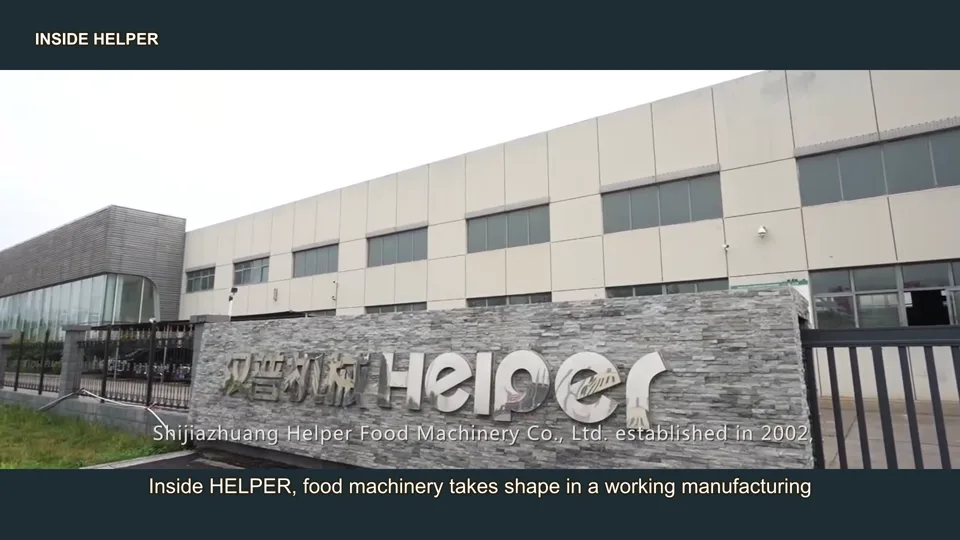
Inside Our Factory
Follow HELPER engineering, component manufacture, assembly and inspection. See the people and equipment behind the production process.
Explore videos →FACTORY · MACHINES · PRODUCTION LINES
Explore our factory, see machines in operation, and discover production solutions for your food business.
31 English equipment films + our factory overview
Follow HELPER engineering, component manufacture, assembly and inspection. See the people and equipment behind the production process.
Explore videos →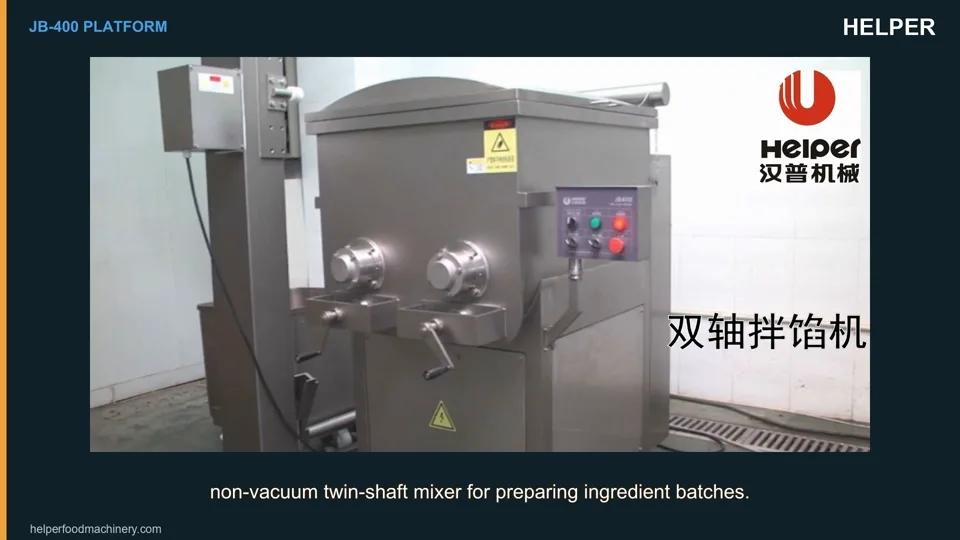
Inspect mixers, sheeters, cutters and supporting equipment. Watch loading, controls, processing action and discharge before discussing your configuration.
Explore videos →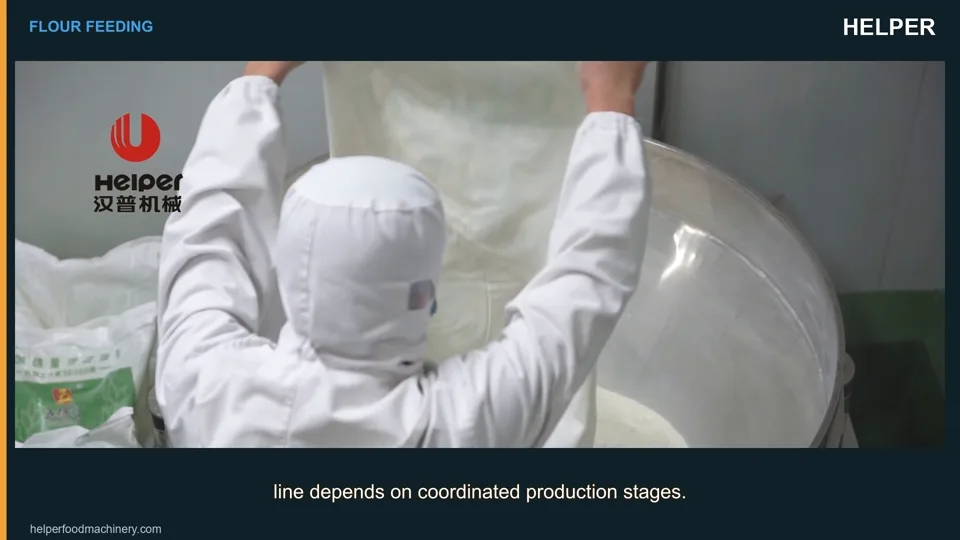
Follow connected noodle, wrapper and meat-preparation routes. Examine how feeding, transfer, forming and collection work together in the shown demonstrations.
Explore videos →Watch each demonstration here, or open its process page for observations, a written summary and related equipment.
32 videos available
No matching video. Try another search.
Inside HELPER, food machinery takes shape in a working manufacturing environment.
A fresh noodle line starts with dough preparation.
Look inside a central kitchen noodle process.
Frozen meat blocks need a suitable preparation step before grinding or mixing.
Vegetable preparation affects the filling process that follows.
Frozen meat flaking prepares blocks for the next size-reduction step.
This Helper grinder demonstration turns prepared frozen meat into particles.
A bowl cutter combines cutting and mixing in one processing stage.
The Helper M two seventy combines dough-sheet forming and noodle cutting in a compact production platform.
The Helper H M three hundred H P is a horizontal dough mixer with bowl cooling for recipe-controlled dough development.
A filling mixer must suit the ingredients, not just the batch size.
This Helper vacuum dough mixer uses a plate-paddle arrangement for dough preparation.
This Helper vacuum dough mixer shows a bar-paddle arrangement inside the chamber.
The Helper J B four hundred is a non-vacuum twin-shaft mixer for preparing ingredient batches.
A frozen meat dicing line connects preparation and transfer before the final cutting stage.
A noodle project is a connected process, not a collection of separate machines.
From flour handling to finished strands, a noodle line depends on coordinated production stages.
This Helper noodle trial highlights a folded dough sheet moving through the roller section.
Different noodle formats start with a controlled dough and sheet process.
Before dumpling forming comes dough-sheet preparation.
A dough sheeter needs more than rollers.
Food-production bins need a controlled cleaning process.
Follow the noodle process from dough preparation.
This supplied factory tour follows dough preparation before noodle forming.
An effective noodle line includes the way operators receive the product, not only the machine speed.
This supplied production footage shows dough preparation for sheet-based foods.
This Helper filling mixer demonstration shows the ingredients moving through a twin-shaft trough.
A filling line needs controlled ingredient handling before mixing.
Ingredient loading is part of filling preparation.
See the control panel and trough of a Helper filling mixer.
A close look at the Helper mixer touchscreen.
This Helper mixer view shows the prepared ingredients in the trough.
The existing workshop archive remains available: 19 earlier demonstrations, assembly checks and delivery views from our official channel.
Assembly views of the frame, mixing chamber, sprockets, chains and pre-shipment checks.
Watch on YouTube ↗ Related page →Vacuum mixing, sheet forming, resting, cutting, air cooling and the shown packing interface.
Watch on YouTube ↗ Related page →Continuous steam cooking, integrated cold-water cooling and preset portion transfer.
Watch on YouTube ↗ Related page →Ingredient dosing, vacuum mixing, compounding, progressive rolling and packing hand-off.
Watch on YouTube ↗ Related page →Stretch-film wrapping and wooden-case preparation for the shown orders.
Watch on YouTube ↗ Related page →A 360-degree view of the working area, frame and discharge arrangement.
Watch on YouTube ↗ Related page →Material feeding and cutting results for three vegetables under the shown setup.
Watch on YouTube ↗ Related page →A shorter factory view of connected forming and transfer equipment.
Watch on YouTube ↗ Related page →Automatic flour feeding, water dosing, mixing and discharge during the shown test.
Watch on YouTube ↗ Related page →Continuous sheet feeding, square cutting, product separation and conveyor discharge.
Watch on YouTube ↗ Related page →Successive rollers reduce sheet thickness while maintaining stable transfer to the next stage.
Watch on YouTube ↗ Related page →Dough feeding, round and square cutting, offcut separation and product discharge.
Watch on YouTube ↗ Related page →Roller stages, sheet transfer, drive sections and discharge are checked as one coordinated line.
Watch on YouTube ↗ Related page →A prepared sheet becomes separated strands while operators inspect width and discharge stability.
Watch on YouTube ↗ Related page →One visual overview of feeding, gradual reduction, cutting, separation and inspection.
Watch on YouTube ↗ Related page →Material feeding, internal processing action, movement and operator inspection from several angles.
Watch on YouTube ↗ Related page →Repeated trials show loading, working sections, machine arrangement and control response.
Watch on YouTube ↗ Related page →Wrapped equipment is positioned by forklift and prepared for truck loading outside the factory.
Watch on YouTube ↗ Related page →PLC operation is shown alongside the physical process, enclosure details and product inspection.
Watch on YouTube ↗ Related page →Send your ingredients, finished-product format, batch or output target and factory layout. We can review the equipment route and the trial questions that matter to your project.
Discuss your project →The films show separate demonstrations and configurations. Recipe, tooling, output and the complete delivery scope should be confirmed for your project.