
Codex Alimentarius
Codex quick-frozen food code Processing and Handling of Quick Frozen Foods (CXC 8-1976)
Directly relevant when formed dumplings or gyoza enter a quick-freezing and cold-chain route after forming.
Dumpling and gyoza production application
Plan wrapper preparation, filling, forming and the required cooking, freezing or packaging route as one balanced production system.
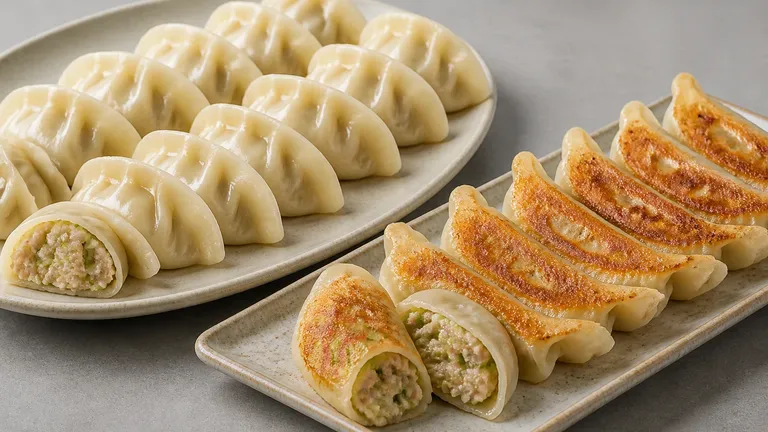
Illustrative finished-product background. Equipment suitability requires sample and engineering confirmation.
Direct answer
A complete line may include dough and wrapper preparation, filling preparation, forming, inspection and the product-specific steaming, boiling, freezing, cooling and packaging interfaces. The correct boundary depends on product weight, wrapper and filling behavior, final treatment and accepted packed output.
Use the list as a scope check. The final process and equipment configuration still depends on samples, output targets and downstream requirements.
Use these official sources to frame product, hygiene and downstream requirements before equipment selection. They are planning references—not a substitute for the laws and standards that apply in the destination market.
Directly relevant when formed dumplings or gyoza enter a quick-freezing and cold-chain route after forming.
Supports hazard-based review of filling preparation, allergen cross-contact, sanitation and process controls where the rule applies.
Use as a general GHP and HACCP reference when defining hygienic zones, cleaning access and control responsibilities around forming and downstream transfer.
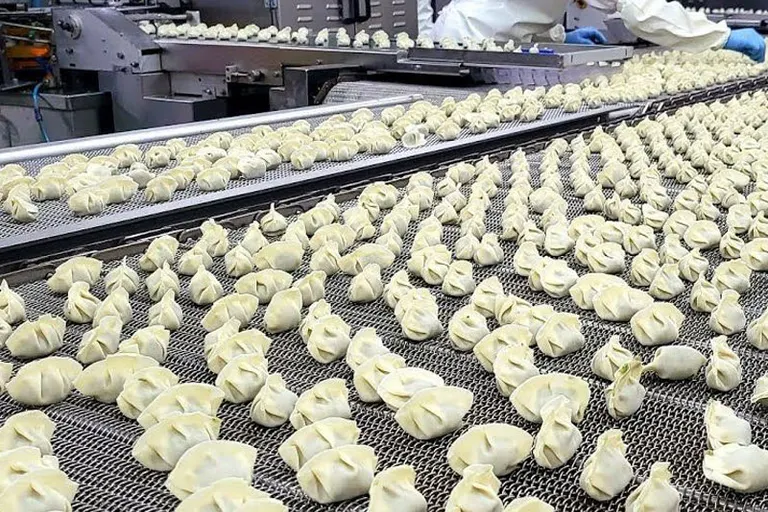
A boiled dumpling, steamed dumpling, pan-fried gyoza and frozen uncooked dumpling may look related, but each places different demands on the wrapper, seal and discharge handling. Define piece weight, wrapper-to-filling ratio, edge pattern, target dimensions and whether the product leaves forming soft, chilled, cooked or ready for freezing.
Include the most difficult SKU in the project brief. Small pieces, thin wrappers, chunky fillings or tight appearance tolerances often expose limitations that an average product does not.
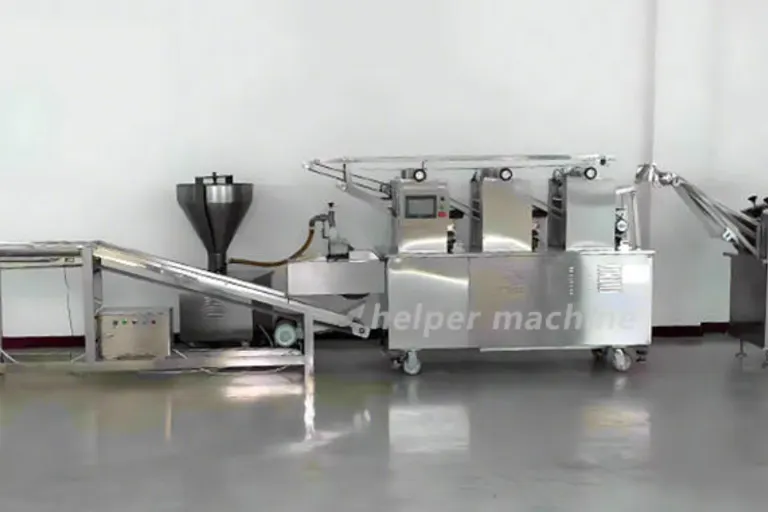
Filling is not described adequately by a recipe name. Record viscosity, free liquid, fat level, maximum particle size, particle shape and how the mixture changes with temperature or holding time. These properties affect stable feeding, portion repeatability and whether filling contaminates the sealing area.
A product trial should run representative filling, not a simplified substitute. Inspect underweight and overweight pieces, incomplete seals, trapped filling and wrapper damage. The acceptance standard should state both visual quality and weight tolerance.
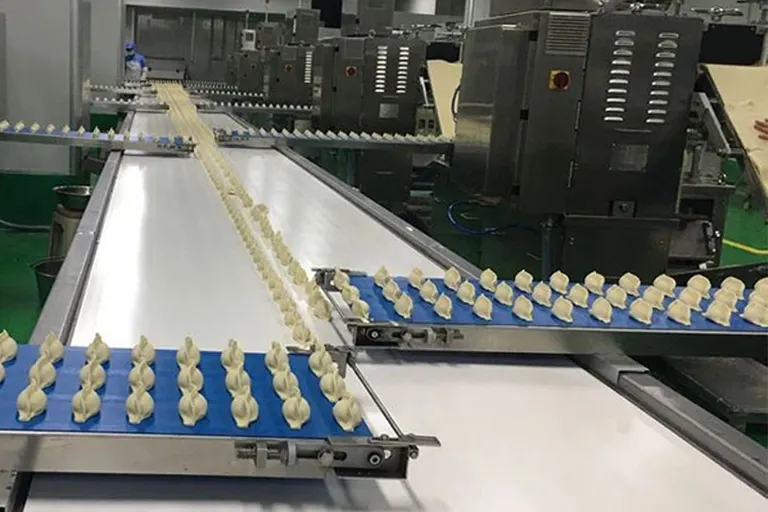
The correct forming machine can still produce a poor line if pieces collide, deform or stick before the next operation. Define whether products transfer to trays, mesh belts, steaming, IQF freezing or direct packing. Belt width, spacing, orientation and accumulation determine the interface.
For frozen products, consider freezer loading, product temperature, cold-chain handling and packaging capacity. For steamed products, include cooking validation, condensate management, cooling and post-cook handling. Effective output is the accepted packed product, not the forming machine’s headline rate.
Use the route comparison to decide which operations and interfaces belong in the proposal. Final scope remains project-specific.
Better inputs reduce assumptions and make capacity, tooling and line-boundary discussions more useful.
Use the guide for context, the tool for structured inputs and the product family only when the route is sufficiently defined.
Answers define the next engineering question; they do not replace product trials or a project-specific proposal.
It depends on the required geometry, tooling, wrapper condition and filling. Do not assume that a product name guarantees compatibility. Send samples and dimensions, then confirm change parts and operating range through technical review or trial.
There is no universal answer across recipes and feeding systems. Record the largest particle, its shape and firmness, plus the liquid phase of the filling. The actual mixture should be tested because a nominal sieve size does not describe feeding behavior.
It is a machine reference, not automatically saleable output. Product weight, filling consistency, stops, changeovers, rejects and downstream bottlenecks all affect the achieved packed output.
Yes when appearance, seal integrity or freezer handling matters. A useful trial follows the product beyond forming where possible, because cracks, sticking and deformation may appear during transfer or freezing rather than at discharge.
Provide the uncooked product specification, cooking target, tray or belt format, steam availability, expected residence time and the required condition after cooling. The steaming section must be sized around both safety and product quality validation.
A complete line is appropriate when several operations must be balanced and the buyer wants defined interfaces and coordinated controls. A standalone former is often better when preparation and downstream systems already exist and their interfaces are documented.
Engineering claim status
Module and line references describe a source configuration—not every recipe, product weight or downstream route.
Steamed-line 500, 1,000 and 1,500 kg/h references and the ZPJ-II 6,000–18,000 pcs/h module reference stay labelled by source scope.
The equipment boundary depends on product condition, cooking or freezing handoff and the selected line configuration.
Piece weight, filling particles, wrapper ratio, freezer or steamer interface and sustained accepted output require trial evidence.
Planning rule: use the capacity calculator for scenarios, then send samples and acceptance criteria for confirmation.
Set the equipment boundary, define wrapper inputs and prepare the trial brief.