
Four-row series table
Use it to shortlist a model class. Do not treat rated vacuum, mixing time or flour batch as a universal recipe or guaranteed hourly output.
Four industrial batch sizes for consistent noodle and dumpling dough—combining vacuum hydration, selectable paddle structures and PLC recipe control from 7.5 to 200 kg flour per batch.
Reduced chamber pressure can limit entrained air and support more uniform water distribution in selected noodle and wrapper doughs. The result still depends on flour, formula, water-addition pattern, mixing energy, time and temperature; it must be verified at the sheet and finished-product stages.

Mixing time and vacuum degree can be programmed according to the dough process.
Match the paddle arrangement to the dough and confirm development in a recipe trial. Mixing does not establish that resting or proofing can be omitted.
Designed for food production, corrosion resistance and more convenient cleaning.
The dedicated structure is intended to simplify replacement of seals and bearings.
Automatic water supply and automatic flour feeding can be configured.
Published choices include 90°, 120° and 180° discharge angles.
What to watch: the frame, mixing chamber, sprockets, chains and drive shafts during assembly, followed by chain-tension and pre-shipment checks.
A focused 44-second machine video showing the current 300L configuration.
Bar and plate arrangements are starting points for a recipe trial. Compare them using the same flour and water-addition basis, then judge the dough after the intended sheeting, forming and cooking process.
| Trial direction | Dough and product to discuss | What the trial should establish |
|---|---|---|
| Bar arrangement | Lower-water noodle or wrapper recipes where a loose, crumb-like discharge is wanted before sheeting. | Water distribution, dry pockets, material gathering around the shaft, discharge consistency and the resulting sheet. |
| Plate paddle arrangement | Recipes seeking a cohesive, extensible dough mass, including selected dumpling, youtiao and flatbread processes. | Development, stickiness, discharge, temperature and downstream forming behaviour with the actual recipe. |
Water percentage needs a definition. State added water in kilograms per 100 kg flour and identify other liquid ingredients. A single water percentage is not a universal bar-to-plate changeover point; flour absorption and the complete formula also matter.
Proofed dough requires a separate review of development, fermentation and temperature. Compare the bakery mixing route. Confirm the shaft drawing and offered configuration for the selected model.
Capacity is dry-flour input per batch, not final dough weight. The catalogue separates paddle speed from mixing-bar speed; final recipes and VFD settings are confirmed during trials.
| Model | Voltage | Vacuum | Power | Mixing time | Dry flour / batch | Published shaft speed | Weight | Dimensions | Model page |
|---|---|---|---|---|---|---|---|---|---|
| ZKHM-40 | 380 V | -0.08 MPa | 5 kW | 6 min | 7.5–10 kg | Paddle 44; bar 88 / 44 rpm, VFD | 300 kg | 1000 × 600 × 1080 mm | View ZKHM-40 |
| ZKHM-150 | 380 V | -0.08 MPa | 12.8 kW | 6 min | 50 kg | Paddle 48; bar 88 / 44 rpm | 1,000 kg | 1340 × 920 × 1375 mm | Series specification |
| ZKHM-300 | 380 V | -0.08 MPa | 18.5 kW | 6 min | 100 kg | Paddle 48; bar 88 / 44 rpm | 1,600 kg | 1800 × 1200 × 1600 mm | Series specification |
| ZKHM-600 | 380 V | -0.08 MPa | 34.8 kW | 8 min | 200 kg | Paddle 48; bar 88 / 44 rpm | 2,500 kg | 2200 × 1240 × 1850 mm | View ZKHM-600 |
Dedicated engineering pages are available for ZKHM-40 and ZKHM-600. ZKHM-150 and ZKHM-300 remain part of this verified series specification. Published in the January 2026 HELPER catalogue; confirm destination voltage, frequency, recipe and the final signed machine specification before production.
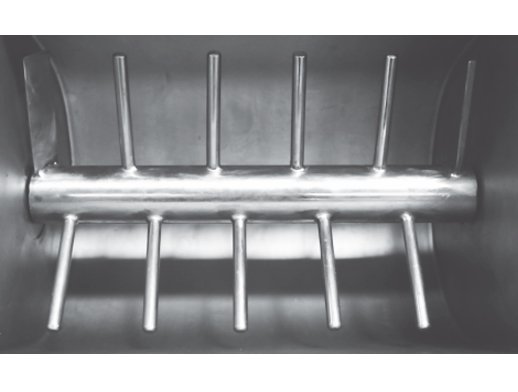
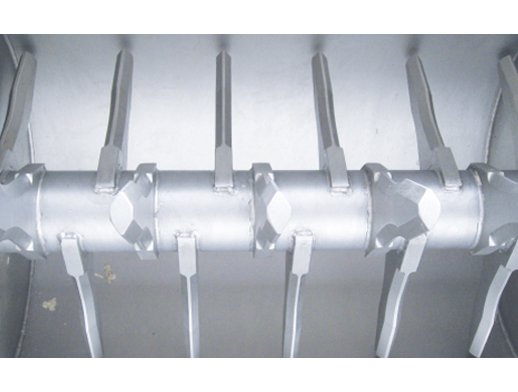
The clearest standard-series applications are sheeted noodles, dumpling dough and wonton-wrapper dough. Bread, buns, pastry and other flour foods have different development and temperature requirements; treat them as trial-required applications and compare the dedicated cooling mixer where dough temperature is a controlling limit.
See the machine exterior, open mixing chamber and available paddle structures. Final appearance and configuration are confirmed against each project.

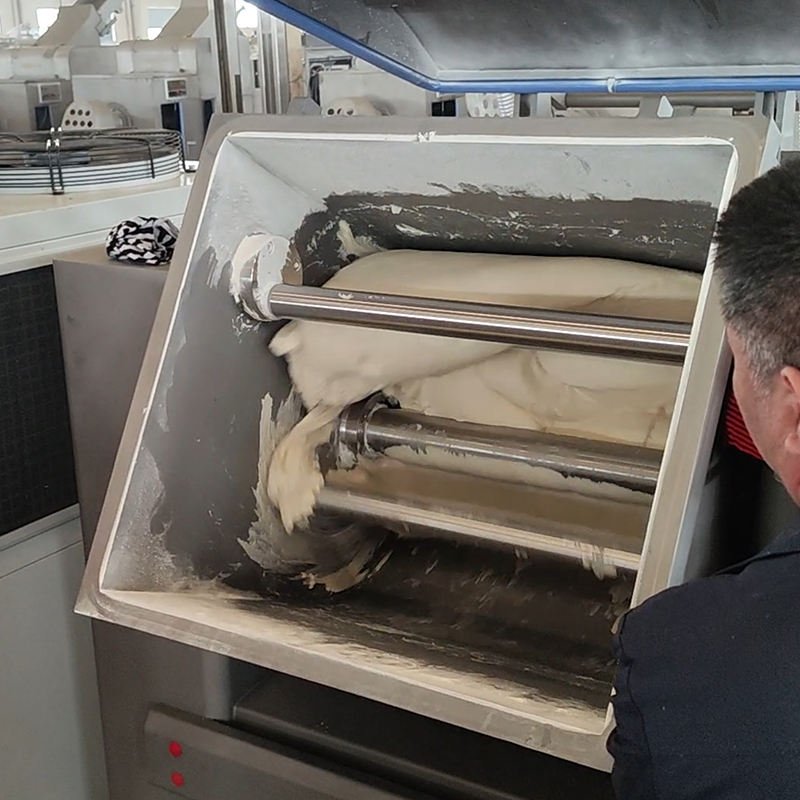
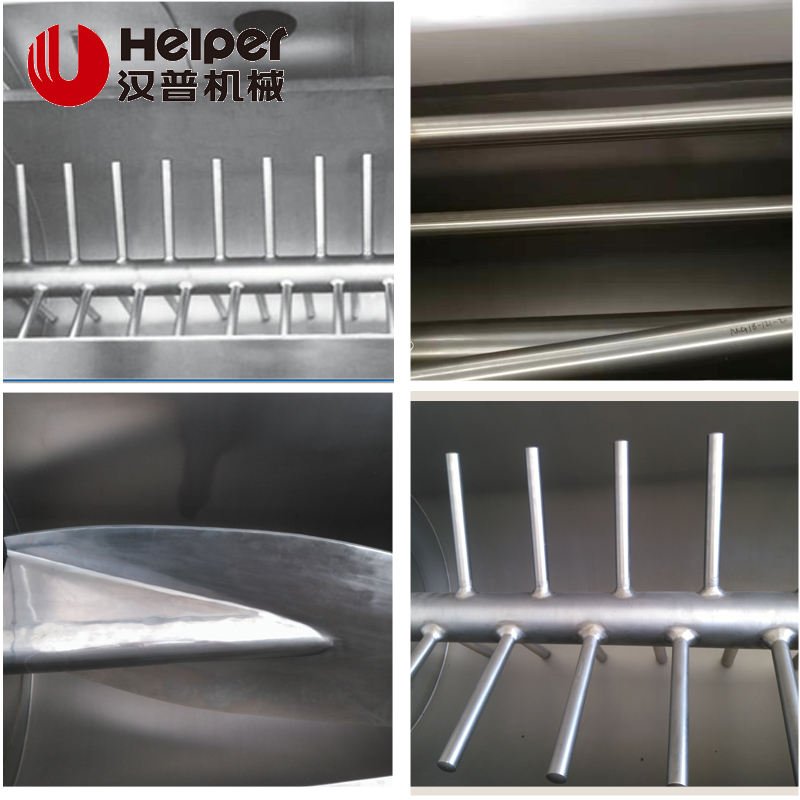
The correct horizontal vacuum mixer is selected from flour mass, total dough mass, hydration, required batch cycle and downstream demand. Noodle dough, dumpling-wrapper dough and wonton dough may use the same equipment family but have different development, temperature and discharge behavior. Model comparison should use kilograms of the real formula per accepted batch rather than chamber volume alone.
Vacuum can support more uniform hydration and reduce unwanted entrained air, but the appropriate level and timing depend on the product. Stronger vacuum is not automatically better: published research found different outcomes by flour and process condition. Paddle geometry and speed influence mixing pattern and heat generation. A factory trial should verify dry-pocket elimination, dough temperature, particle or crumb structure, discharge completeness and the performance of the resulting sheet or wrapper.
Define formula, dimensions, moisture, appearance and the test used to accept finished output.
Match batch or sheet output to upstream supply and the downstream machine’s real demand.
Confirm voltage, air, cooling, drainage, access and service clearances before approval.
Test the actual material for an agreed duration and record output, temperature and quality variation.
Use the real recipe, product dimensions, accepted output and downstream process. Nominal chamber volume or working width alone is insufficient.
Yes. Moisture, thickness, product size, trim, batch cycle and quality tolerances all affect sustainable accepted output.
Agree representative materials, run duration, quality measurements, sanitation checks, changeover scope and utility conditions in the factory-acceptance plan.
Provide formula, photos or samples, batch or hourly target, voltage, utilities, floor plan and upstream/downstream equipment.
Related decision path
The specification table is the current published web reference. No revision-controlled approved datasheet was found in the public local repository during the 2026-09-01 review, so the signed proposal and model datasheet must restate the exact configuration before order approval.
Use it to shortlist a model class. Do not treat rated vacuum, mixing time or flour batch as a universal recipe or guaranteed hourly output.
The local machine demonstration and open-chamber image support visible configuration and operation only.
Usable load, total dough mass, pressure timing, heat rise, discharge and accepted output require a representative trial and complete-cycle record.
Send the flour recipe, batch size, required cycles per hour and downstream machine. We will compare the four standard models or recommend a temperature-controlled alternative.
Ready to discuss your project?
Complete the vacuum mixer worksheet first, then send the generated brief with product samples, formula, layout and utility files.
Prepare trial brief