
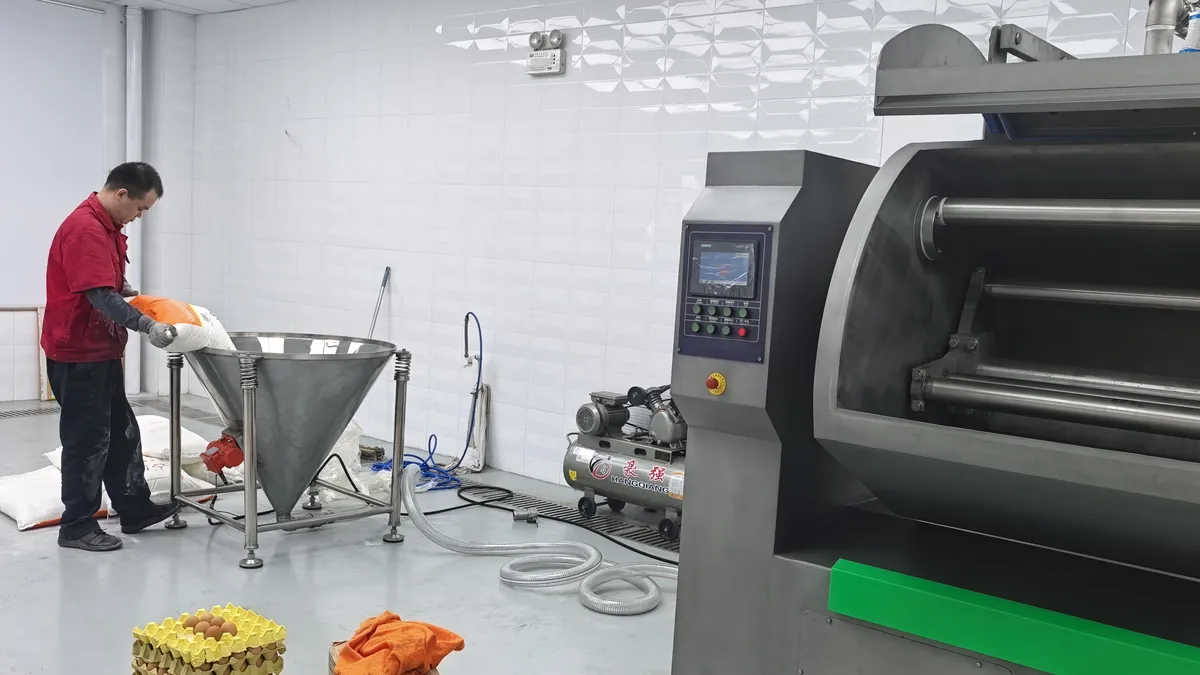
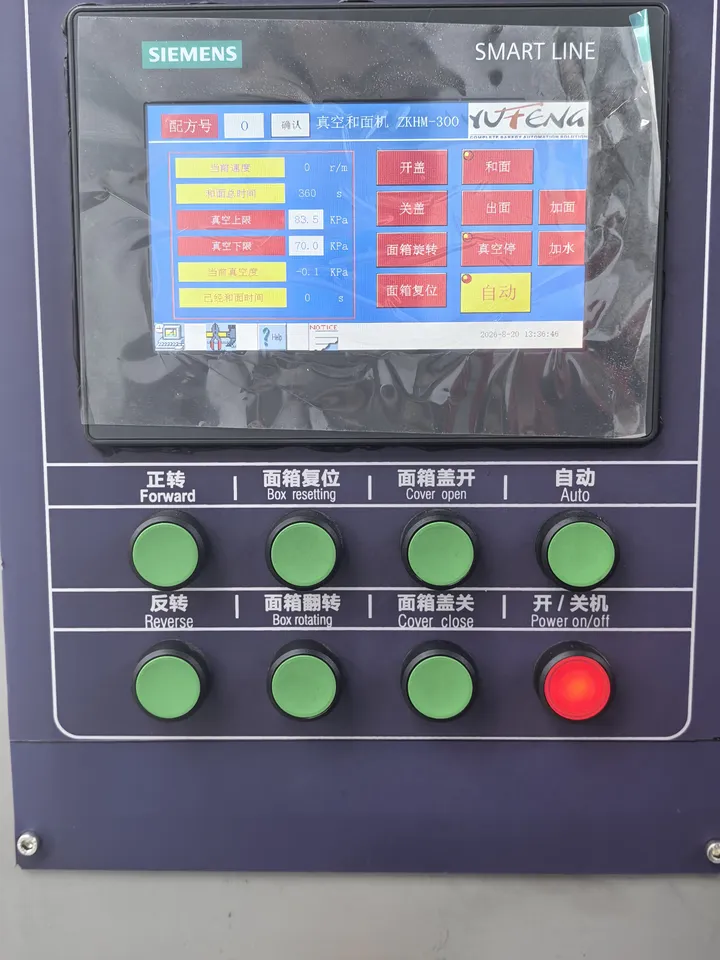
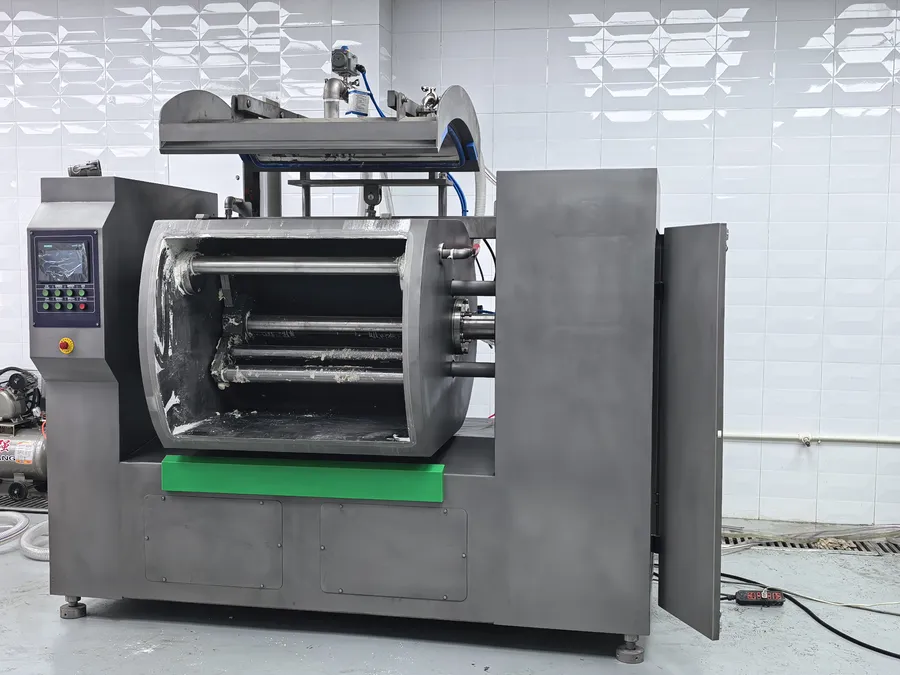
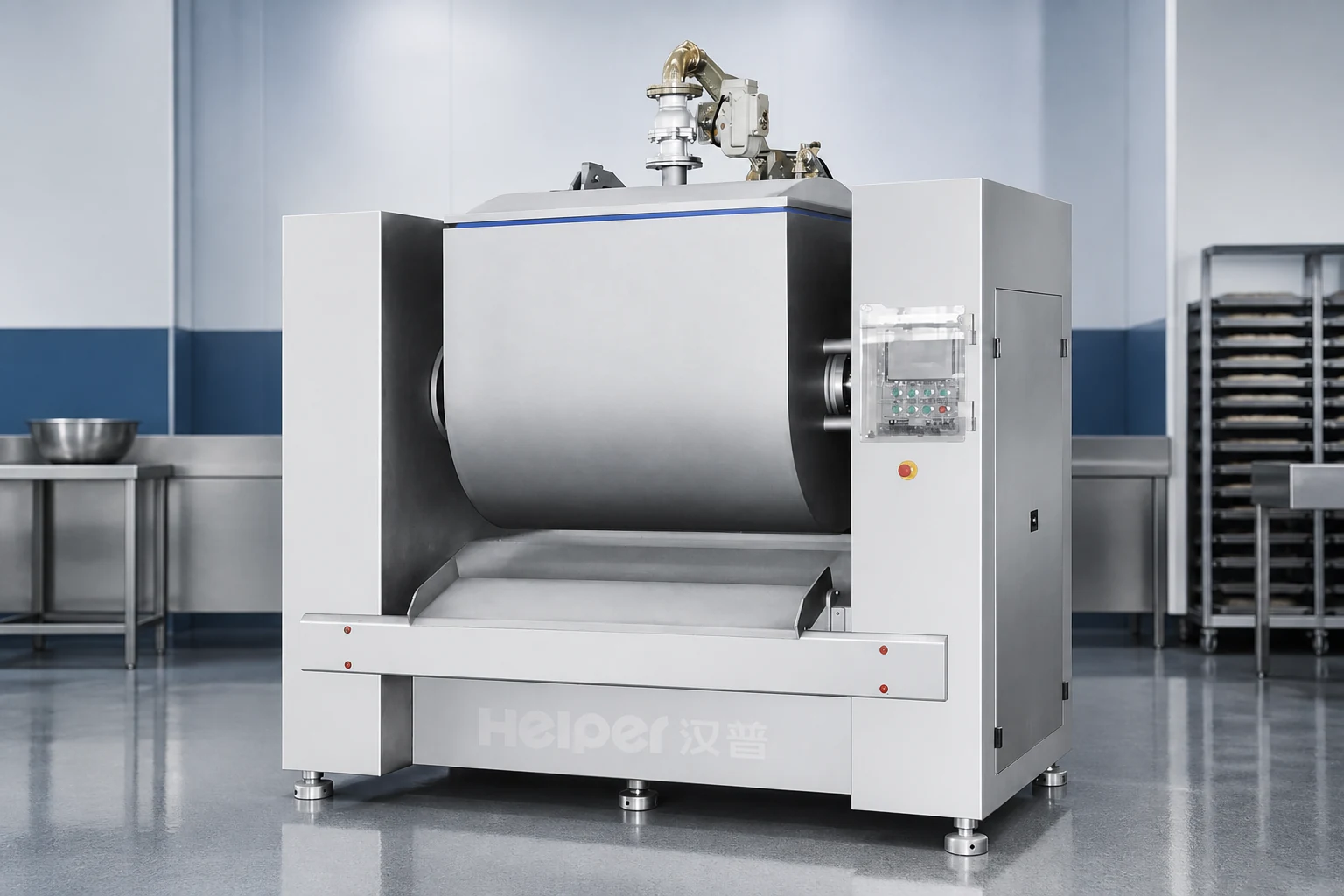
HM-300HP main mixer, automatic flour feeding system and automatic water dosing system.
Factory-context background image; not a customer project record. Image provenance and final configuration require confirmation.
BAKERY · PROOFED DOUGH · BOWL COOLINGHM-150HP / HM-300HP / HM-600HPBakery Dough Mixers with Bowl Cooling
Three industrial horizontal mixers for bread, buns, pizza and other proofed dough. The January 2026 catalogue defines 50–200 kg mixed-dough batches, bowl cooling, a visual recipe interface with data memory, and optional automatic ice-water and flour feeding.
50–200 kg mixed dough16.8–51 kWRecipe memoryBowl cooling
Process sequence
Control every stage as one production system
Stable output requires repeatable raw materials, recipes, utilities and downstream handling. HELPER reviews the complete route before confirming equipment, controls and factory layout.
01PrepareDefine recipe, batch condition and incoming material standard.
02DevelopControl mixing, resting or conditioning before forming.
03ProcessSynchronize the main mechanical and thermal operations.
04TransferProtect product quality through cooling, packing or freezing.
Factory test evidence · HM-300HP
Watch the automatic dough mixing system complete a full test cycle
What to watch: This English-language factory-test video shows the HM-300HP mixer working with automatic flour feeding and automatic water dosing. It documents the tested configuration shown, not a universal specification or a customer-project record.
After negative pressure is established, flour is conveyed from the suction hopper into the mixer.
The shown tested configuration records a water-metering error of 0.3%; confirm the contracted configuration for each project.
Flour feeding, water dosing, mixing and discharge can be sequenced around the approved recipe and process.
Load the suction hopper and transfer flour automatically to the mixer.
Add the preset water quantity through the automatic dosing system.
Set the mixing process for the required dough condition and gluten development.
Complete the programmed cycle and release the finished batch for the next process.
Upstream automation modules
Configure flour feeding and servo water dosing as one controlled system
These are project-configured modules installed ahead of the mixer. They reduce manual ingredient handling and allow the approved flour and water quantities to be sequenced through the HM-300HP recipe program.

Module 01
Automatic flour feeding system
The stainless hopper uses the sealed negative-pressure environment created by the vacuum mixer. Vibration assists discharge while PLC control transfers flour from the feeding area into the mixing chamber.
- Supply
- 380 V
- Power
- 0.04 kW
- Net weight
- 80 kg
- 300-size reference
- 980 × 980 × 920–960 mm
- 600-size reference
- 1150 × 1160 × 1100 mm
The feeder size, pipe route, loading position and controls must be confirmed against the selected mixer and factory layout.

Module 02
Servo automatic water dosing system
A compact hygienic enclosure, operator interface and servo control regulate the added water quantity. Two target quantities can be entered for the configured production sequence.
- Power
- 2 kW
- Metering accuracy
- 2–5‰
- Control accuracy
- 50 g
- Overall size
- 1180 × 1100 × 800 mm
Final accuracy, water conditions, interfaces and acceptance criteria must be written into the project specification and confirmed during testing.
The target dough is smooth and uniform, soft and elastic, non-sticky and easy to stretch. Film formation and recovery should meet the process standard defined for the intended product.
The recipe and mixing process can be adjusted for different gluten-development targets, including toast bread, sweet bread and dinner rolls. Flour strength, hydration, temperature and mixing program still determine the final result.
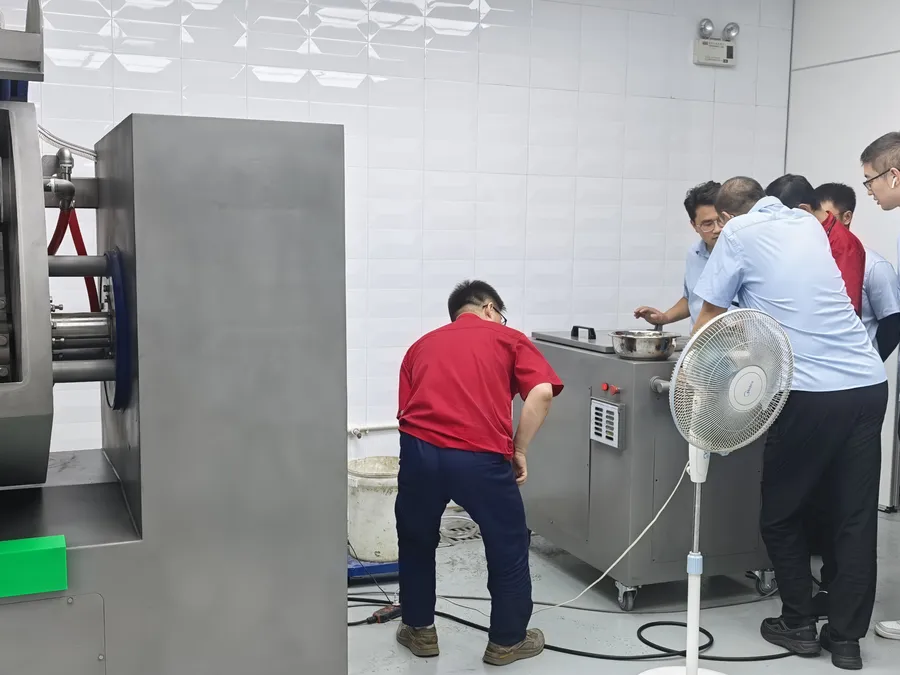
Evidence boundary: images and video in this section are real HM-300HP factory-test material supplied for this page. The 0.3% value and automation sequence describe the shown test configuration and must be reconfirmed in the signed project specification.
3published models
380 Vcatalogue voltage
30–100 rpmrange for 300HP / 600HP
1,400–3,500 kgmachine weight range
Specify dough texture, shaft arrangement and cooling together
For steamed buns, filled buns and bread, describe the required dough development and finished texture before comparing mixer sizes. A firm, chewy product and a soft, airy product need different trial objectives.
YY shaft discussion
Use the YY shaft designation when discussing a proofed-dough trial. Establish the required development, discharge and finished crumb using the intended recipe and fermentation schedule.
Five-star plate discussion
For a firmer steamed-bun target, ask whether a five-star plate configuration with variable speed and jacket cooling is available for the proposed machine. Confirm all three items in the configuration.
These shaft descriptions do not establish a one-to-one mapping to every HM-HP model. The table below remains the model reference; request the actual shaft drawing, cooling arrangement and recipe trial for the offered machine.
Cooling and fermentation are separate process questions. Record ingredient temperature, desired discharge temperature, batch mass and cooling-service conditions. Vacuum mixing does not by itself replace fermentation or proofing.
2026 catalogue data
Compare HM-150HP, HM-300HP and HM-600HP
Capacity in this series is published as mixed dough per batch, not dry flour. The catalogue does not state vacuum degree or a fixed mixing time for these three models, so those values must be confirmed for the project.
| Model | Voltage | Power | Mixed dough / batch | Mixing speed | Weight | Dimensions |
|---|---|---|---|---|---|---|
| HM-150HP | 380 V | 16.8 kW | 50 kg | Variable speed; range not published | 1,400 kg | 1530 × 1070 × 1760 mm |
| HM-300HP | 380 V | 35 kW | 100 kg | 30–100 rpm, variable | 2,000 kg | 2400 × 1250 × 2050 mm |
| HM-600HP | 380 V | 51 kW | 150–200 kg | 30–100 rpm, variable | 3,500 kg | 2600 × 1525 × 2410 mm |
Published in the January 2026 HELPER catalogue. Confirm recipe, destination voltage/frequency, cooling-water conditions, vacuum requirement and the final signed specification before production.
Shown HM-300HP test configuration
Connect the catalogue model to the demonstrated automation scope
HM-300HP · 35 kW · 100 kg mixed dough per published reference batch · 30–100 rpm variable speed.
Automatic flour feeding and automatic water dosing are shown as configured modules, not standard equipment on every mixer.
Manual and automatic modes support a project-defined sequence for flour, water, mixing and discharge.
Confirm ingredients, batch definition, dough endpoint, utilities and metering acceptance in the signed technical agreement.
Planning examples + product fit
Which applications may justify an engineering review?
If your business needs batch-to-batch consistency, low product waste and stable dough quality, the product family may be evaluated.
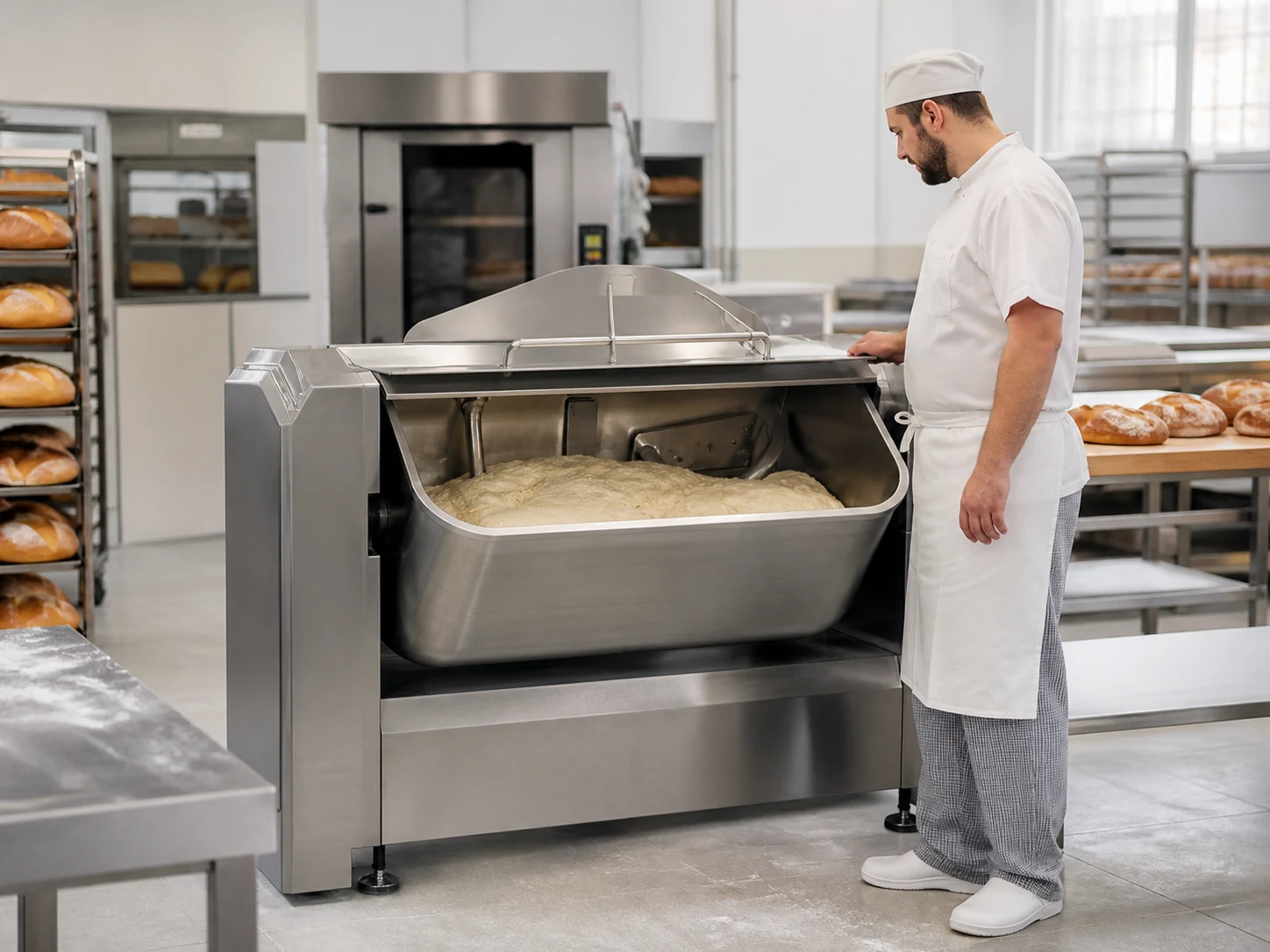
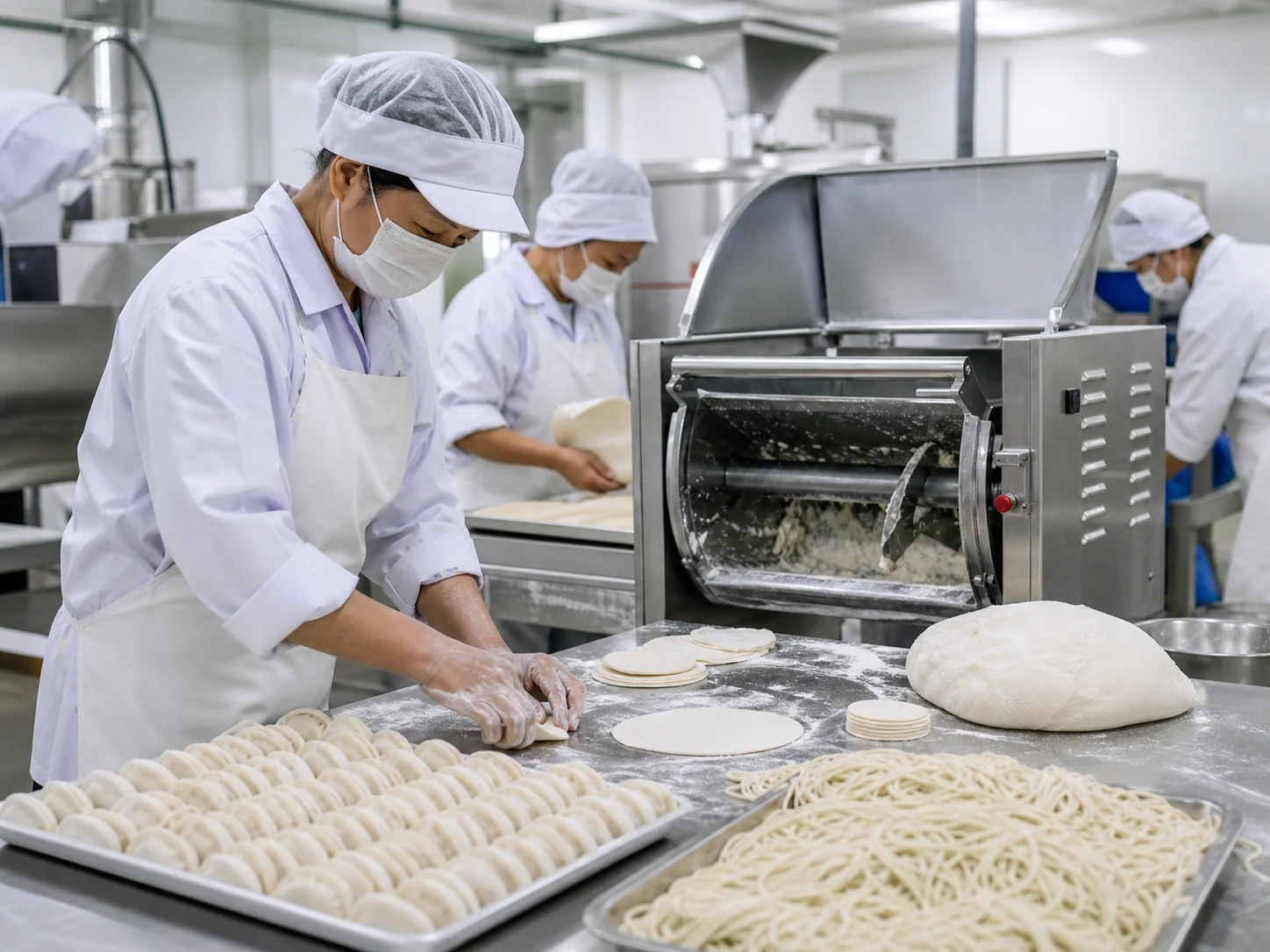
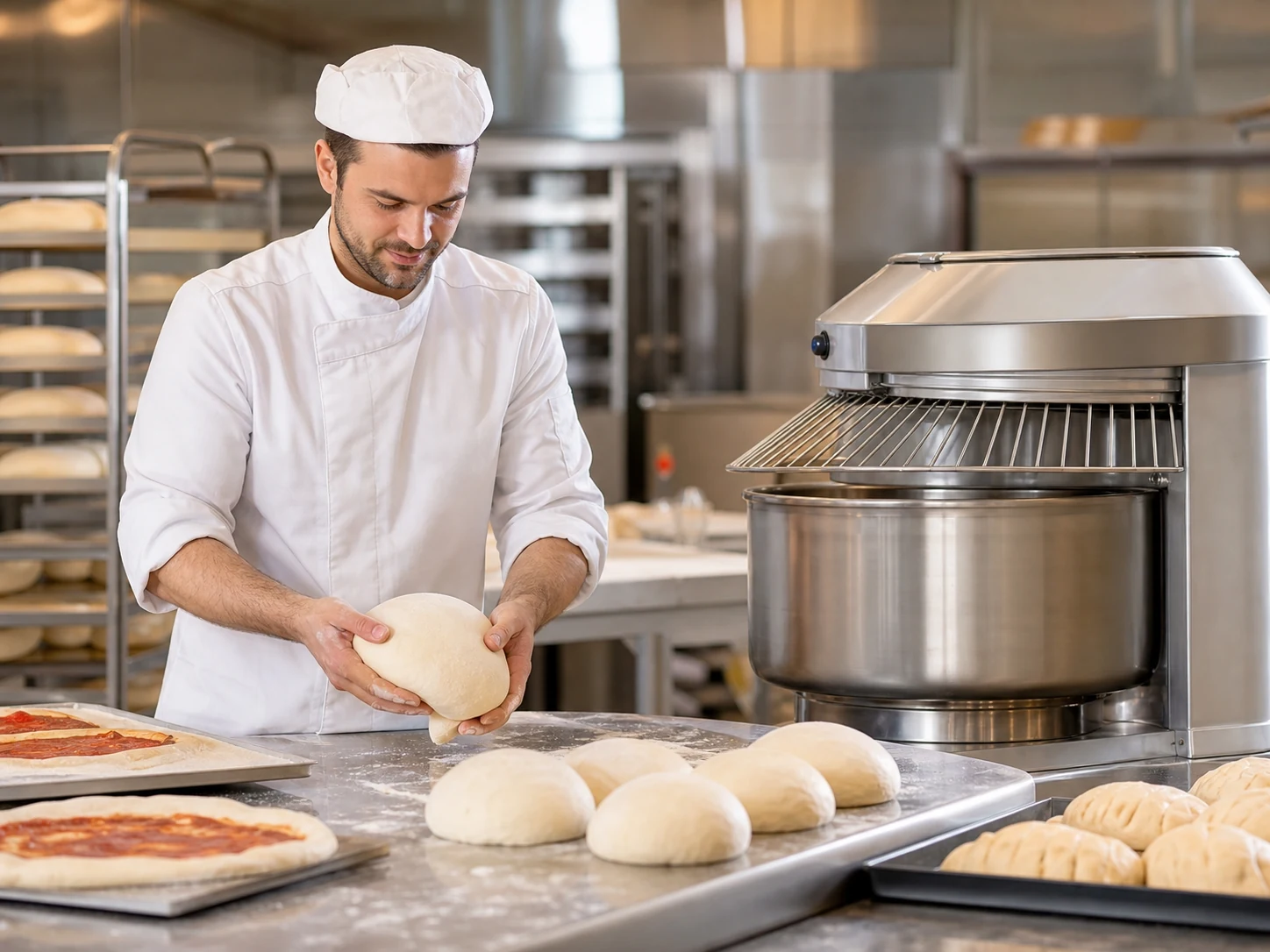
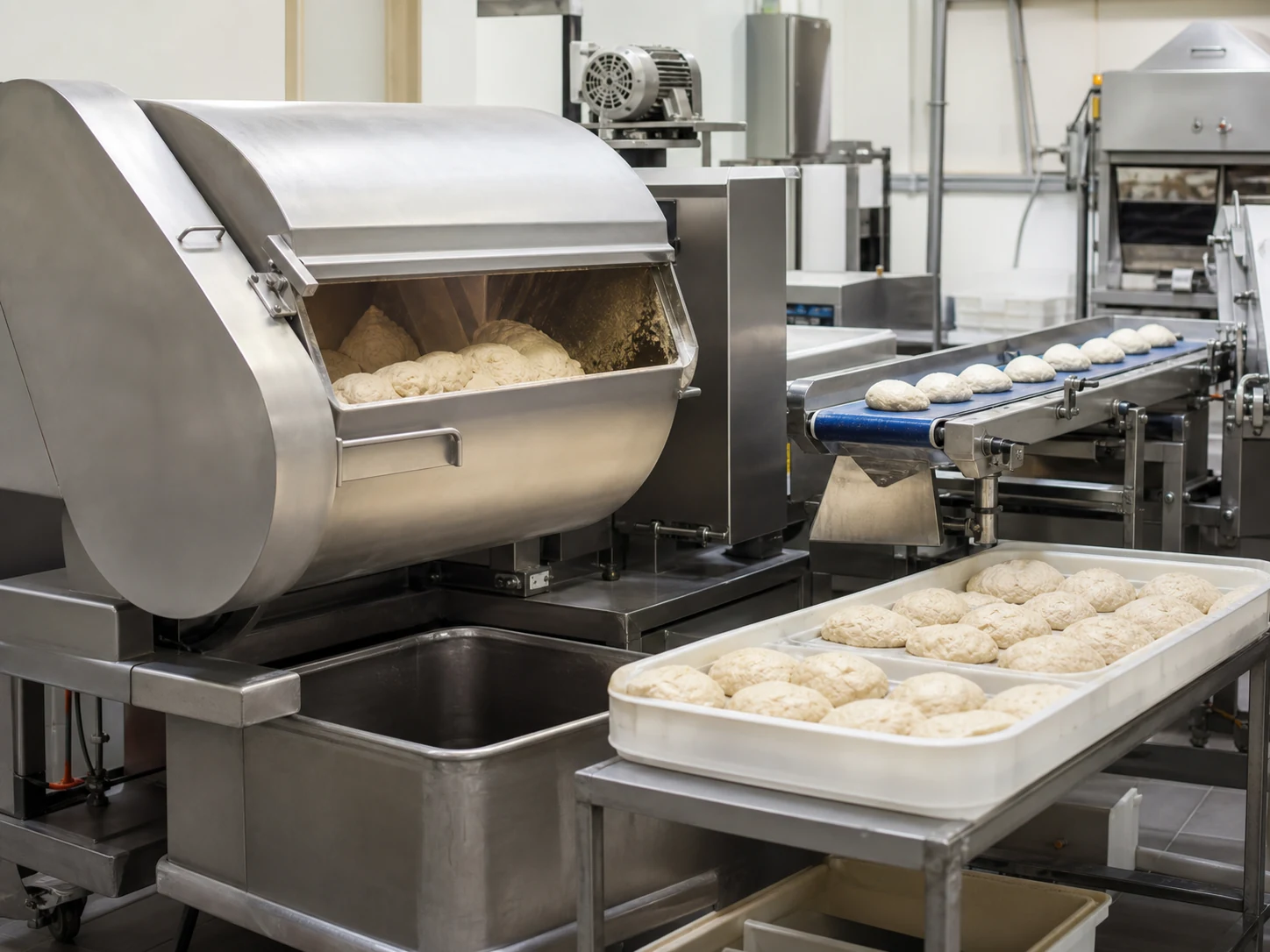
Three-family boundary
Use this HM-HP series when bakery temperature control is required
Standard ZKHM seriesFor noodle, dumpling and wrapper dough; capacity is published as dry flour per batch.
Bakery HM-HP seriesThis page: HM-150HP / 300HP / 600HP with bowl cooling; capacity is mixed dough per batch.
Special HM-H seriesFor tangyuan, taro balls and small glutinous-rice balls; two dedicated batch sizes.
Do not compare kg directlyThe three catalogue groups use different capacity definitions and product conditions.
Product-specific engineering
Why process conditions determine machine performance
Dough temperature is a process output, not merely a machine setpoint. Flour and water temperature, mixing energy, room conditions and batch duration all add or remove heat. Cooling around the mixing chamber helps manage that heat load, while vacuum influences air inclusion and hydration. The required endpoint should be defined from the fermentation schedule and desired dough development, then verified with the actual recipe.
Recipe definition
Provide ingredients, moisture, temperature, batch history and the acceptable finished-product standard.
Capacity definition
State good finished output after trimming, cooking, drying or freezing—not only raw material input.
Utility planning
Confirm voltage, compressed air, water, steam, drainage, extraction and refrigeration where applicable.
Acceptance testing
Agree product samples, output duration, quality tolerances and changeover criteria before manufacture.
Application boundary
Interpret published data in the context of your product
Bakery formulas vary greatly in fat, sugar, eggs, inclusions and preferments. These materials change torque, heat generation, cleaning and discharge behavior. Batch capacity should be confirmed by flour mass, total dough mass and bulk volume. An automated flour or liquid feeding option also requires utility, dust-control and ingredient-accuracy review.
Final specifications are confirmed after HELPER receives the real recipe, product dimensions, required capacity, factory utilities and available floor plan. Where a source does not publish a value, the project quotation should identify it as a confirmed engineering parameter rather than an assumed catalog figure.
ProductSample, dimensions, weight, moisture and quality standard.
ProcessRecipe, temperatures, residence times and sanitation method.
OutputAccepted packs, portions or kilograms per hour.
FactoryLayout, utilities, labor and downstream interface.
Buyer questions
Bakery dough mixer series FAQ
Is the published capacity guaranteed for every product?
No. It defines a reference equipment envelope. Contract capacity is confirmed from the actual recipe, format, acceptance standard and downstream process.
Can the line be customized?
Yes. The mixer, automatic flour feeding, automatic water dosing, recipe controls, discharge interface and downstream handling are configured after product and factory review.
Can HM-300HP automate flour and water addition?
Yes, when these modules are included in the project scope. The factory-test video shows automatic flour feeding and water dosing, including a 0.3% water-metering error for that tested configuration. Contract accuracy and utilities must be confirmed for the final system.
Can the same mixer produce different dough structures?
The recipe and mixing process can be adjusted for different gluten-development targets. Suitability for toast, sweet bread, dinner rolls or another product should be verified with the actual flour, hydration, temperature and required dough endpoint.
What is required before quotation?
Provide product samples or photos, formula, dimensions, target output, destination voltage, utilities, floor plan and the required final process.
How is factory acceptance defined?
The order should state test material, run duration, accepted output, weight or dimension tolerances, sanitation checks and the responsibility for downstream equipment.
Engineering selection guide
Specify the bakery mixer from the finished product backwards
A reliable quotation starts with the product and process target rather than a catalogue capacity alone. Provide recipe mass, ingredient order, temperature, mixing time, vacuum requirement, discharge method and downstream takt. Samples, drawings and representative raw materials allow the supplier to identify the working configuration and any limits that should appear in the signed specification.
Published capacity is a reference condition, not an unconditional guarantee for every recipe. Sustainable performance must be measured as accepted product after normal rejects and interruptions. The acceptance plan should record mixing uniformity, temperature rise, batch repeatability, discharge completeness and accepted batches per hour. Agree the run duration, staffing, utility conditions and sampling frequency before the factory acceptance test so both parties evaluate the same result.
Factory integration
Confirm voltage and frequency, connected load, compressed air, water, drainage, exhaust or refrigeration where applicable. Check loading height, discharge direction, service clearance, floor loading and the real interface with upstream and downstream equipment.
Hygiene and changeover
Review shaft and seal access, residue removal, water management, allergen changeover and sanitation verification. The sanitation method must suit the machine’s electrical protection and the factory’s documented food-safety program.
FAT and site acceptance
Use the intended material and product format. Record start-up loss, stable output, quality variation, alarms, downtime, cleaning time and changeover time. Repeat critical checks after installation with actual site utilities and trained operators.
Information for a proposal
Send product photos or samples, formula where relevant, target hourly output, shift pattern, pack or downstream format, factory layout and utility schedule. Mark mandatory requirements separately from optional future expansion.
Related decision path
Continue from this page
Connect the machine to a wrapper and dough-sheet processContinue with the relevant process, selection or equipment decision.Review noodle-production process requirementsContinue with the relevant process, selection or equipment decision.Review 40l vacuum dough mixerContinue with the relevant process, selection or equipment decision.Review zkhm-600 high-speed vacuum dough mixerContinue with the relevant process, selection or equipment decision.
Engineering request
Configure the equipment around your real product
Send the recipe, sample, target output and factory conditions. HELPER will reconcile the model, modules, utilities and layout.
Ready to discuss your project?
Use our single online inquiry form to send your product, capacity, utility and layout requirements.
Go to contact formBakery & specialty dough · engineering boundary
Confirm dough condition and supply limit before model selection
Vacuum and cooling functions can support process control, but they do not prove suitability for every high-hydration, fermented, sticky, enriched or temperature-sensitive dough.
Named model fields
Published model, power, mixing speed and mixed-dough batch values may be cited only where the current catalogue names them.
Recipe and temperature result
Final dough temperature, cooling duty, vacuum profile, mixing time, load rate and dough development depend on ingredient temperature, hydration, batch mass, ambient conditions and recipe.
Cleaning and downstream hand-off
CIP suitability, fermented-dough operating window, cooling-water conditions and whether supply ends at dough preparation or includes downstream equipment require written engineering confirmation.
Evidence rule: the visuals on this page communicate product-family form and applications only. They are not photographs of the named model, delivered equipment, a customer project, or verified performance.