
Custom food processing solutions
Engineered around your product.
Bring the food, target output, process and factory constraints. HELPER’s design team can configure an existing machine, adapt equipment around the application, or develop an integrated processing line.
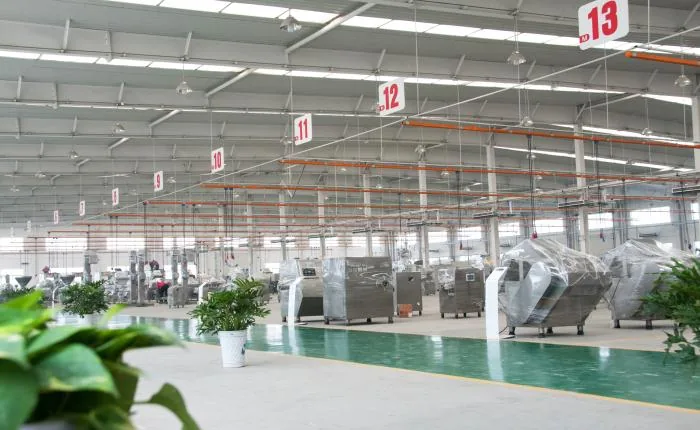
Every HELPER product can be reviewed for engineering customization.
Customization is not a fixed option list. The practical scope depends on product behaviour, required output, sanitation, utilities, installation conditions and the interfaces before and after the machine. Final configuration and performance must be confirmed through engineering review and, when necessary, product testing.
Three levels of customization
Start with the smallest engineering scope that solves the production problem. A mature machine platform may only need configuration; a new product or factory can require application engineering or a connected line.
- 1.0
Configure an existing HELPER machine
Adapt a proven equipment platform without changing its fundamental process role.
- Typical scope
- Capacity, size, material, voltage, controls, tooling, feed direction and interfaces
- 2.0
Application-engineered equipment
Adjust the machine structure and operating method around the food, recipe range, product geometry and required process result.
- Typical scope
- Product handling, forming method, thermal duty, cycle time and cleaning requirements
- 3.0
Integrated processing line
Coordinate multiple process stages, transfers, controls and factory interfaces as one production system.
- Typical scope
- Process route, equipment set, line balance, layout, utilities, controls and packaging handoff
What can be customized
The list below is a project boundary, not a promise that every variable can be changed independently. Changes in one area can affect output, cleaning, floor space, power demand and the operation of connected equipment.
- Finished product
- Shape, dimensions, piece weight, texture, filling ratio and condition at discharge
- Capacity
- Batch size, effective hourly output, shifts, changeovers and acceptable yield
- Process
- Preparation, forming, cooking, drying, cooling, freezing and handling sequence
- Tooling
- Molds, cutters, dies, nozzles, guides and product-contact change parts
- Materials & hygiene
- Product-contact construction, cleaning access, drainage and sanitation boundary
- Controls
- Operating logic, recipes, sensors, safety interlocks and production data requirements
- Factory layout
- Available footprint, working height, access, maintenance zones and operator flow
- Line interfaces
- Infeed, discharge, buffering, conveyors, packaging handoff and control signals
Start with the food, not a machine model
A useful custom project begins with inputs that engineering can test and define. You do not need to arrive with a completed equipment list.
- 1.0
Define the product
Share photos, video or samples, recipe range, dimensions, weight and the acceptable finished condition.
- 2.0
Set the production target
State effective accepted output, working hours, expected changeovers, labor plan and automation objective.
- 3.0
Map the factory
Provide layout, utilities, sanitary requirements, existing machines and the required packaging or downstream connection.
- 4.0
Review and verify
HELPER reviews the process boundary, proposes the equipment scope and identifies any product test or interface data still required.
Follow the project from requirements to handover
Each stage has a different evidence owner. The sequence below is a planning path, not a promise of project-specific output or acceptance.
- 1.0
Requirements and URS
Define the product, accepted output, hygiene, utilities, interfaces and verification method in measurable terms.
- 2.0
Concept and supply boundary
Agree which preparation, processing, transfer, controls and downstream interfaces belong to each party.
- 3.0
Manufacturing handoff
Move the approved configuration into sourcing, fabrication, assembly and controlled inspection.
- 4.0
Verification and FAT
Check the agreed machine and documentation scope. Product acceptance requires the named recipe, test conditions and criteria.
- 5.0
Installation and SAT
Verify site readiness, utilities, interfaces, safety functions and the installed scope before production handover.
- 6.0
Training and handover
Close agreed records, operating guidance, training and outstanding items under the signed project scope.
Use the correct owner for the next decision
These pages support the custom project without competing for the same search intent.
Connect the custom brief to a food route
If your product fits an existing HELPER application or equipment family, use that route to prepare the process discussion. Products outside these published routes can still be reviewed from samples and requirements.
Common questions
Can an existing HELPER machine be customized?
Yes. Configuration can include capacity, dimensions, product-contact materials, voltage, controls, tooling, infeed and discharge direction, and line interfaces. The final scope depends on engineering review of the product and operating conditions.
Can HELPER design around a food sample or local product?
Yes. Photos, video, recipes and physical samples can help the engineering team define product geometry, material behaviour, process stages and test conditions before equipment is confirmed.
Can HELPER connect new equipment with an existing line?
Connection with existing upstream or downstream equipment can be reviewed when the required interface, speed, height, control signals, utilities and available layout are provided.
Bring the production problem.
Share the food, target output, process state, factory location, utilities and required delivery scope. HELPER can then identify whether the right starting point is machine configuration, application engineering or an integrated line.