
Breakfast-food factories
Producers moving from manual shaping toward repeatable weight, length and hourly output.
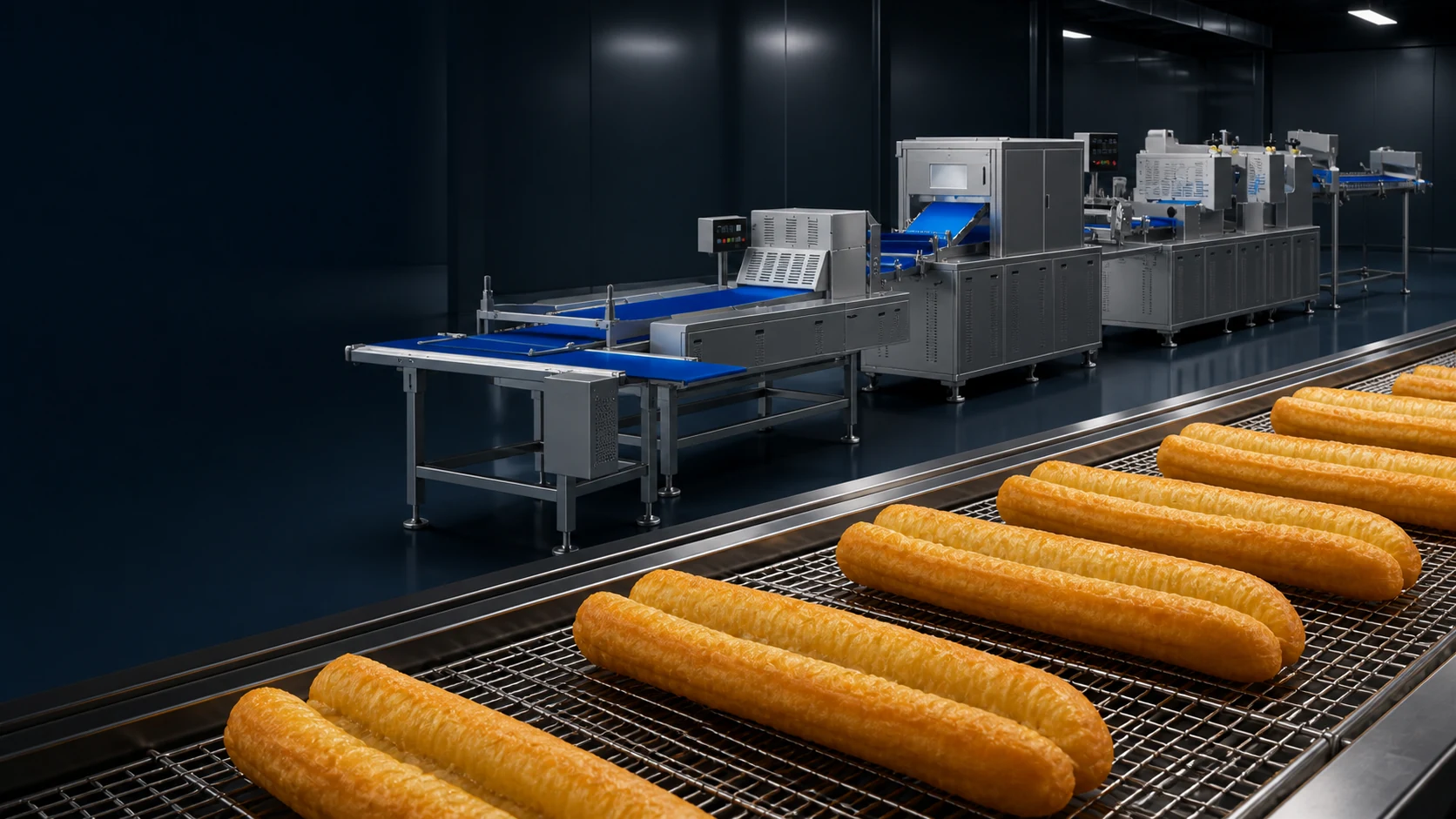
Automatic fried dough stick systems
Youtiao—also searched as Chinese fried dough sticks, Chinese crullers or Chinese donut sticks—requires controlled dough conditioning, forming, frying and finishing. Define the product and factory boundary before selecting the line.
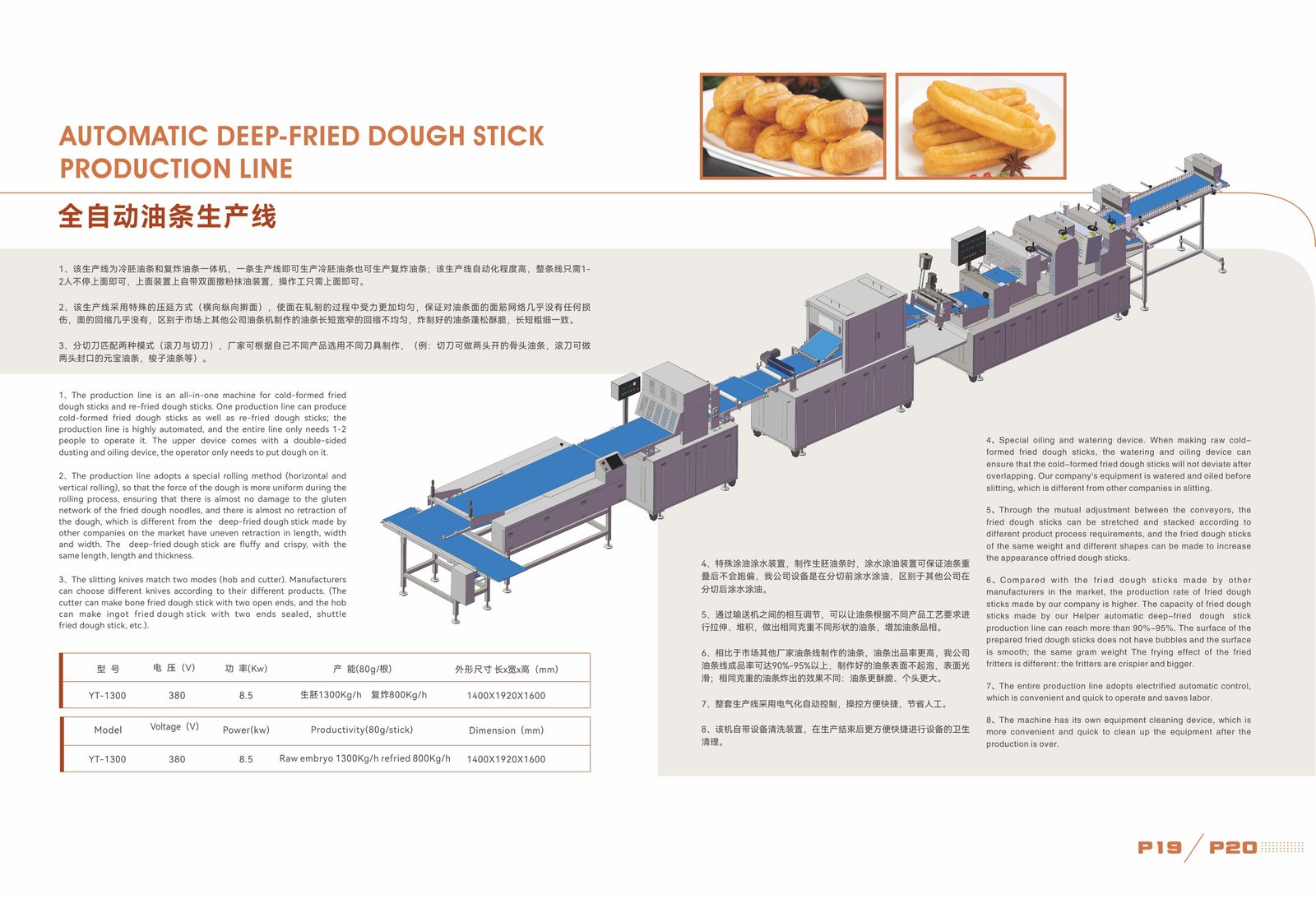
Follow the production route →Production-context visualization based on the HELPER YT-1300 catalogue line and published youtiao product references.
Traditional long paired sticks and shorter regional forms can require different cutter tooling, overlap, stretching and frying conditions. Start with a product sample before choosing the machine boundary.
Compare equipment stages →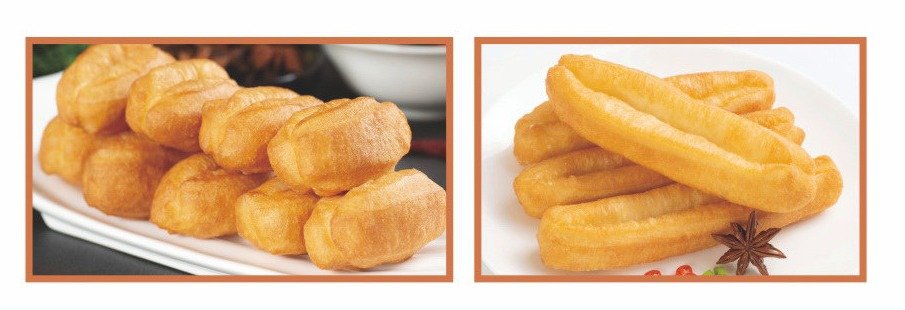
The right buyer is defined by the required product state and production boundary—not by one machine model alone. These are typical operating profiles, not claimed customer cases.
Producers moving from manual shaping toward repeatable weight, length and hourly output.
Restaurant groups that need a defined product specification and a stable preparation route across multiple outlets.
Factories evaluating a chilled, frozen or pre-fried format; the exact process must be confirmed by trial.
Regional manufacturers producing different pack formats or shapes against an agreed product and acceptance standard.
The forming line sits inside a larger process. Resting, frying, cooling and packaging are confirmed as separate modules according to product and factory requirements.
Control formula, hydration, dough temperature and initial resting so the dough enters the line consistently.
Pre-press and cut tray-sized dough blocks. Trays and the cold room are confirmed separately within the project scope.
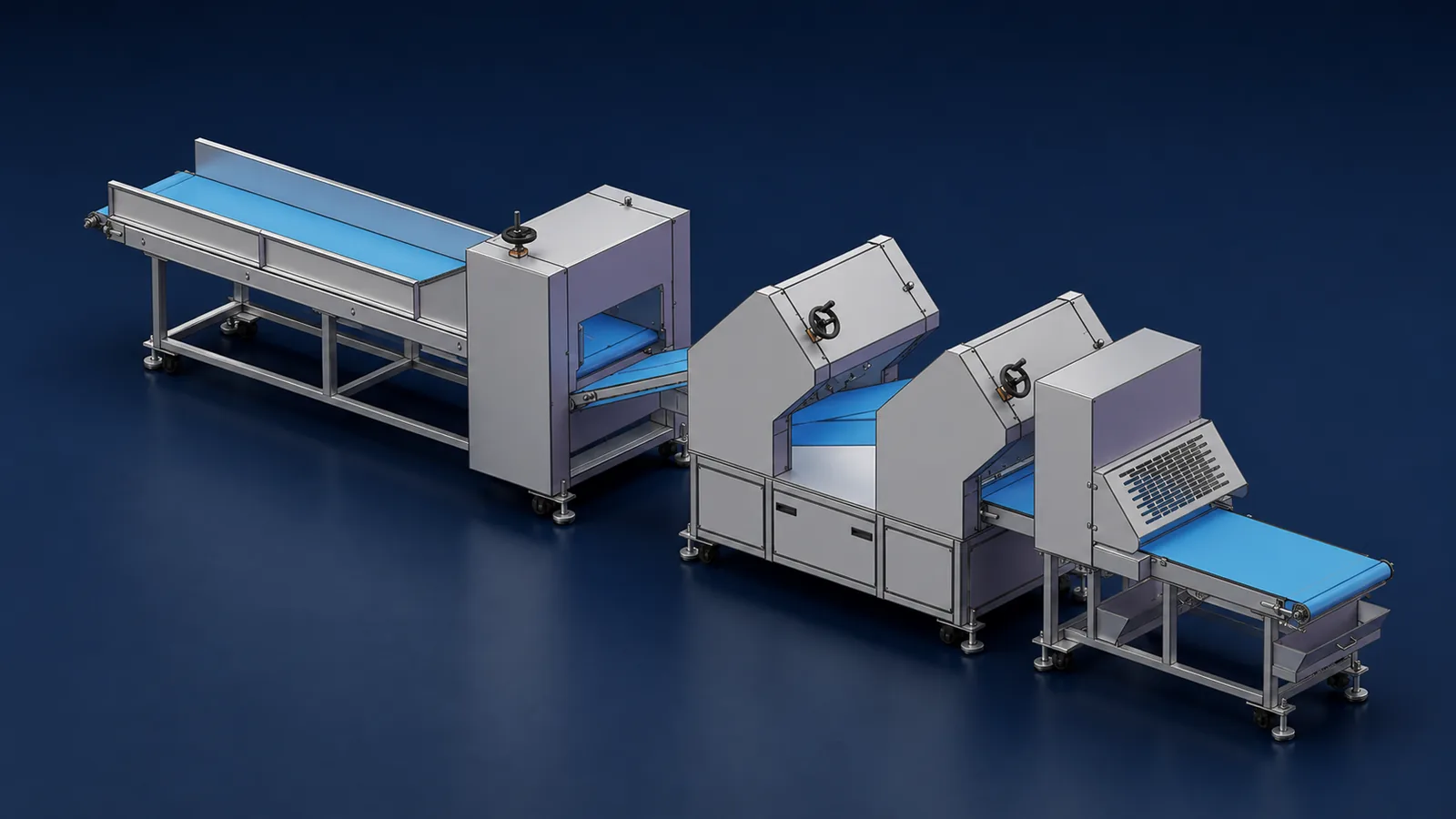
The YT-1300 rolls, treats, slits, cuts, stretches, overlaps and transfers the prepared youtiao pieces.
Specify the fryer, oil management, cooling and packaging as project-specific downstream modules where required.
A line name does not define what is included. Use these three boundaries to make supplier quotations comparable.
Dough block dividing before cold rest and YT-1300 forming and transfer after cold rest, selected according to the product.
Core selection
Confirm exact model, tooling and interfaces.
Mixing, trays, cold room, fryer, oil filtration or treatment, de-oiling, cooling and transfer conveyors.
Project-specific
Include only when individually listed in the quotation.
General arrangement, utilities, inspection, packaging interface, installation responsibility and FAT/SAT criteria.
Agreement required
Approve layout and acceptance basis before order.
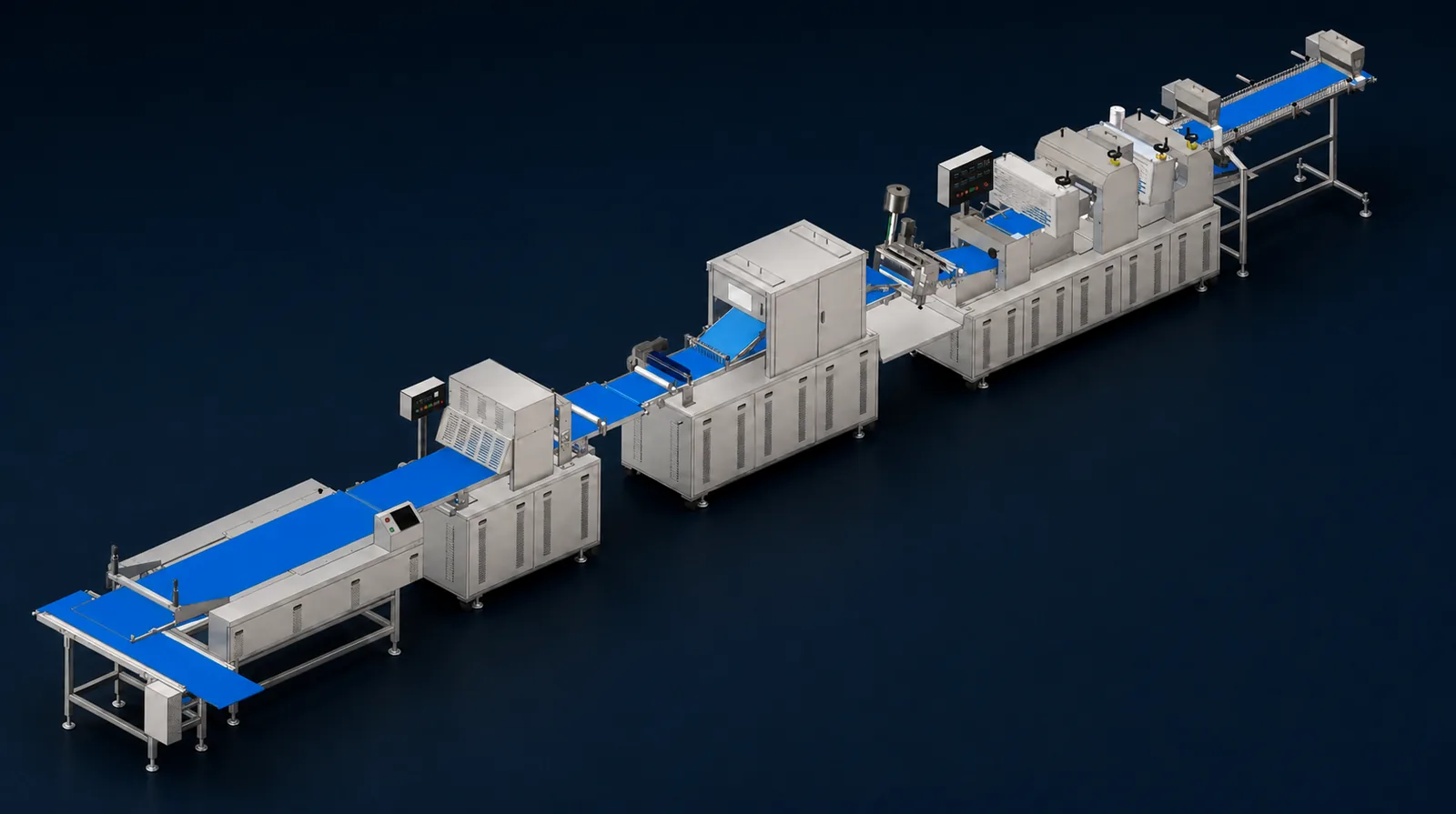
Important: the published catalogue visual presents an integrated production line, but no downstream module should be assumed to be included unless it appears in the signed quotation and equipment list.
These machines perform different jobs. Published figures below are reference values; final configuration follows the dough, product form and accepted output basis.
“Youtiao” can describe products with different lengths, end shapes, weights, textures and delivery states. Those differences change tooling, line speed and downstream handling.
Youtiao knowledge series
Product definition, process logic, eating culture and regional names all affect recipe trials, forming choices, frying targets and how the finished product should be presented to a local market.
Definition, common names, ingredients, texture and traditional ways to serve it.
Process guideMixing, resting, forming, frying and the decisions that matter when production scales up.
ContextHistorical context, the well-known folklore, when people eat youtiao and what accompanies it.
Market orientationRegional names, serving patterns and a practical way to research a target market without invented rankings.
Production decision system
Move from product definition to equipment selection, accepted capacity, troubleshooting and staged automation.
These answers separate published reference data from the items that still need engineering and commercial confirmation.
Do not assume the fryer is included. The published catalogue presents an integrated fried-dough line, but the final quotation must identify the fryer, oil management, transfer, cooling and packaging scope item by item.
The catalogue lists 1,300 kg/h as a raw-dough reference and 800 kg/h as a re-fried reference. Confirm the product state, piece weight, run time and acceptance basis before using either number for factory planning.
The catalogue describes two cutting approaches and conveyor adjustment for different forms. Each target length, weight, overlap and end shape still needs confirmed tooling and a product trial.
Not necessarily. The installed line can also require access space, cold-resting interfaces, frying, oil handling, cooling, packaging and utilities. Use a final general-arrangement drawing for layout approval.
Provide finished-product samples or photographs, formula and dough condition, target piece weight and dimensions, required hourly output, preferred product state, available layout, utilities and the modules already owned by the factory.
A complete project can be discussed, but every module and responsibility must be confirmed in the quotation. Mixing, trays, cold room, fryer, oil treatment, cooling, inspection, packaging, utilities and site services are project-specific unless explicitly listed.
Related decision path