
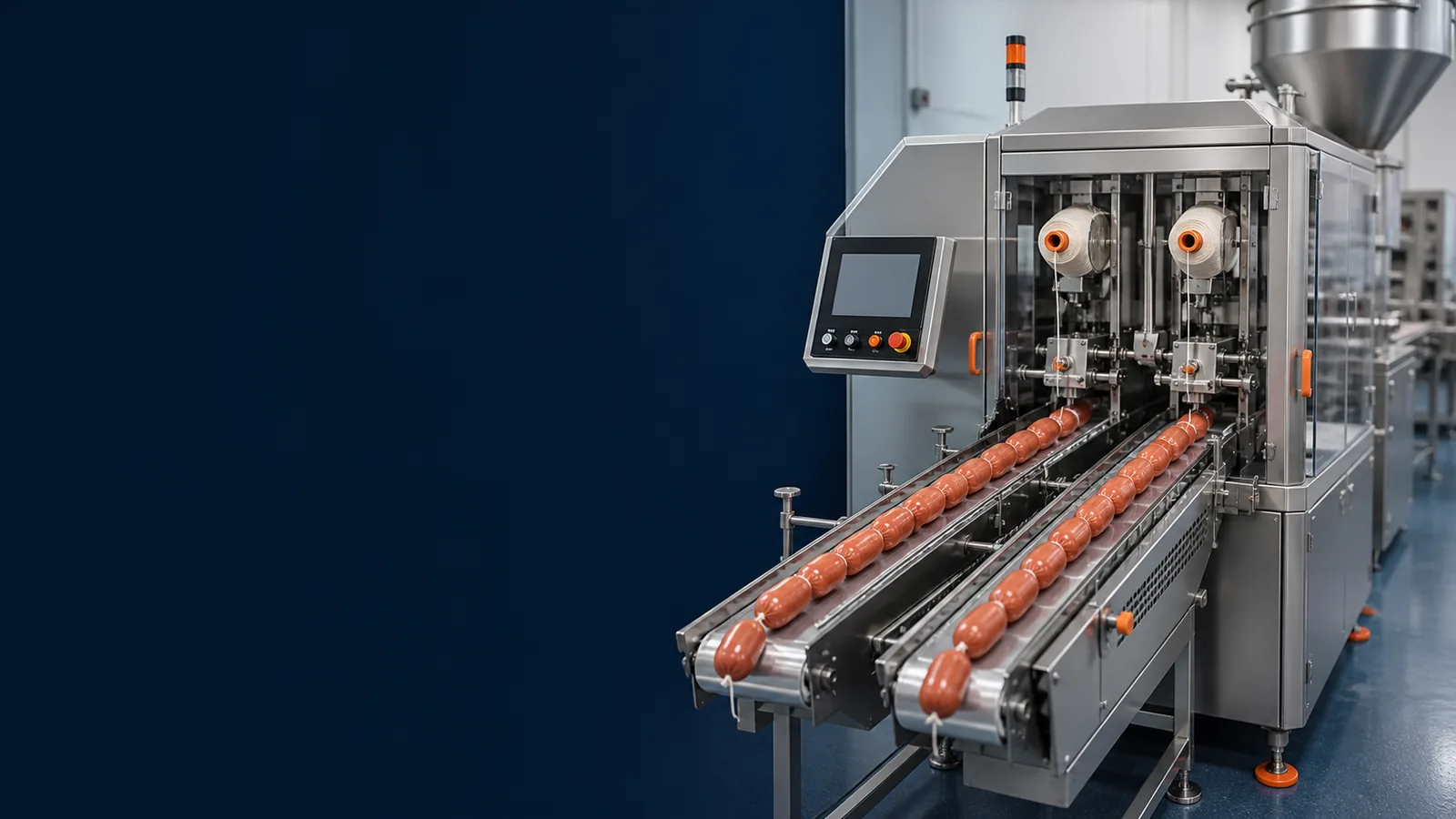
Dual-Track Sausage Tying Machine
Dual-track string tying for a defined linked-sausage arrangement.
Home / Products / Meat Processing / Sausage Linkers & Separators
Compare automatic sausage tying, linking, hanging and separation equipment for continuous industrial production.
Dual-track string tying for a defined linked-sausage arrangement.

Servo-controlled separation of cooked linked sausages.
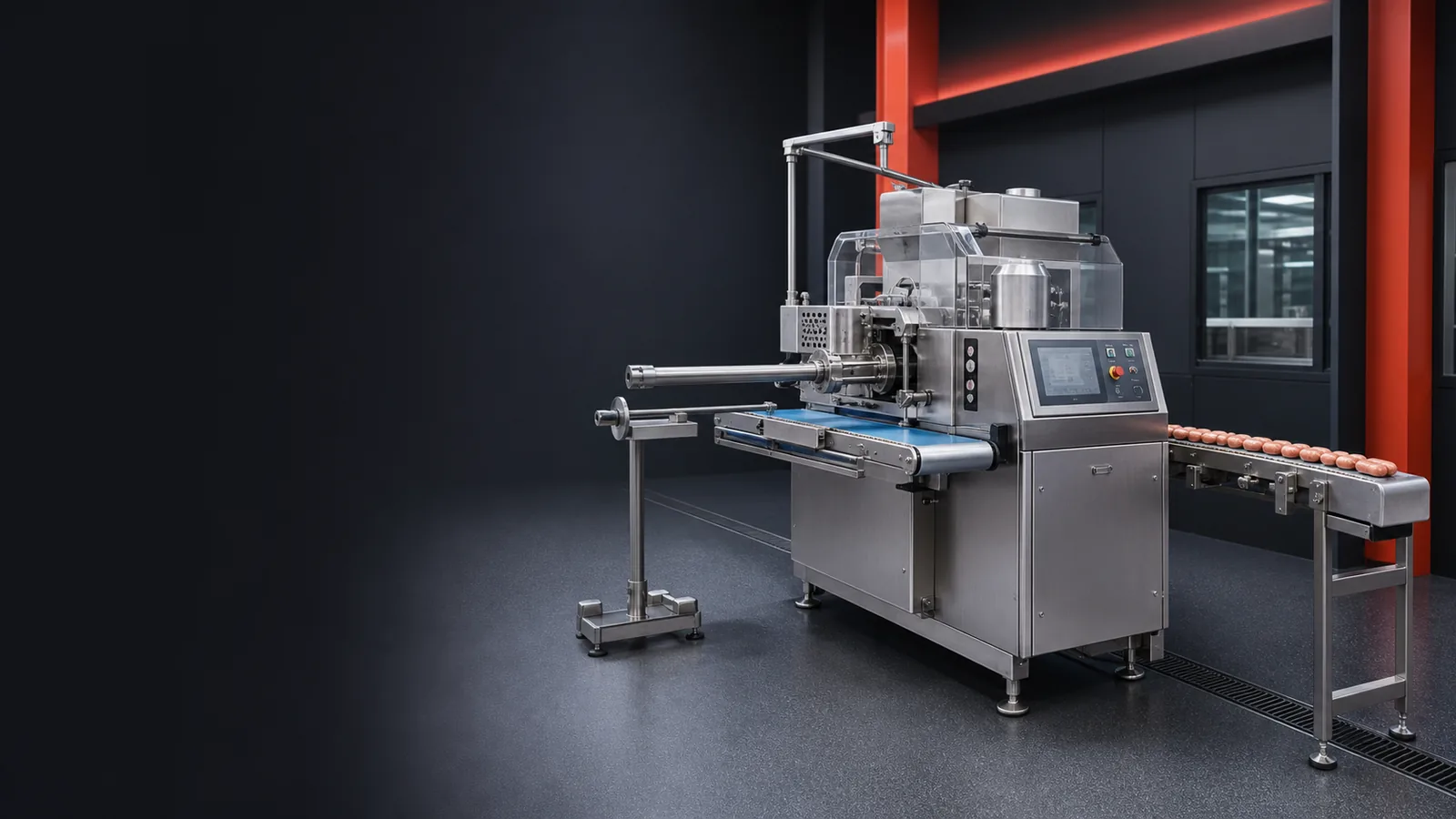
Twisting and linking for integration with compatible filling equipment.

Twin-tube linking coordinated with automatic hanging.
Integrated linking and hanging for review with filler and trolley interfaces.
2026 catalog additions
Linking, tying, hanging and separation solve different jobs. A linker establishes portions by twisting a filled casing; a tying machine adds string at the required positions; a hanging system arranges linked product for transfer to rods. A separator cuts an existing chain into individual sausages. Choose the operation your line is missing before comparing model speeds.
The GN-1200I and GNX-1200II records describe linking or twisting equipment. Review the filler connection, casing supply and finished link geometry on their individual pages.
GN-1200II, GN-1200III and GN-1600III configurations combine the forming duty with hanging. Include the rod, trolley and downstream loading arrangement in the comparison.
The ZX dual-track model uses tying, while the GJ-1000 is a cooked-sausage separator. These are distinct process stages, not interchangeable names for a linker.
Provide the casing material and supplier, filled diameter, link length, portion weight and product temperature. Include an example of the chain or hanging pattern you want. Natural, collagen and other casings can behave differently; a casing range printed for one model should not be transferred to another. The selected model page is the starting point for a configuration review.
Identify the existing filler model, outlet height, filling tube and available control interface. A filler and linker need a compatible mechanical and control arrangement.
State whether product leaves as a chain, on hanging rods or as separated pieces. For a hanging system, share trolley dimensions and the intended rod arrangement.
Compare acceptable finished sausages during a representative run. Twisting cycles, pieces separated and rods loaded describe different rates; casing changes and interruptions also matter.
Bring the actual filling and casing rather than a substitute chosen only for easy running. Discuss portion variation, visible damage, twist definition, hanging consistency and changeover requirements. Record the recipe and incoming conditions with the results so that the same test can be reviewed later. Final settings and acceptance criteria belong to the agreed machine configuration, not a general category page.
Possibly. Linking forms the connected chain, while separation divides a chain at a later stage. The GJ-1000 record specifically describes cooked linked sausages; confirm the product condition before selecting it.
No. The filler, casing changes, product dimensions and receiving stage can restrict usable output. Compare the complete task under the same product conditions.
Send the incoming material, finished product, required output and available factory information. Include the page or model reference so the discussion starts with the right equipment duty.
Send project requirements