
Fresh or chilled
Focus on product temperature, short holding time, portioning and hygienic transfer into packaging.
Plan by finished food
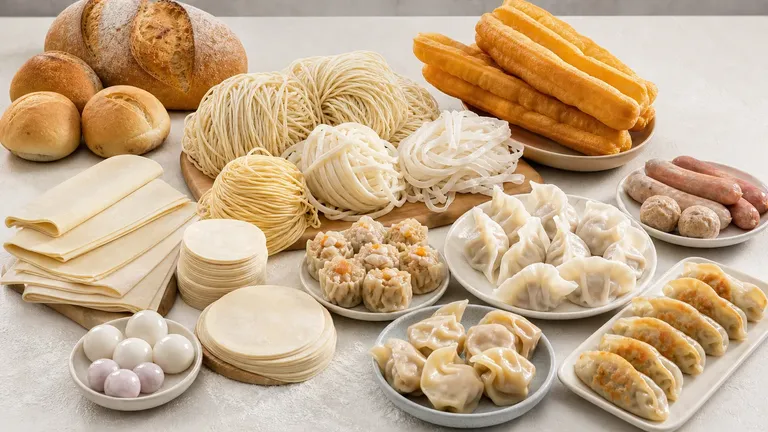
Use the finished product—not a machine model—as the first planning input. These routes help define product condition, process stages, effective output and downstream handling before equipment is compared.
Illustrative finished-food overview. Confirm the required product and process with HELPER before equipment selection.
Each application guide connects a recognizable finished product with the decisions that shape its production route. Eight detailed application routes are now available, including a new vegetable-processing planning route. Each guide preserves its evidence boundary and identifies the project fields that still require engineering confirmation.
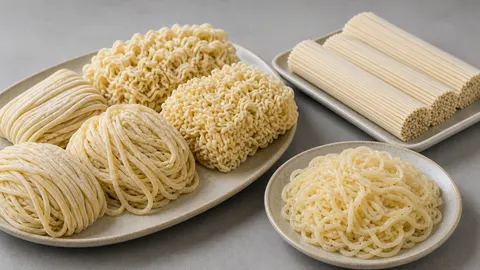
Define strand dimensions, dough development, shelf-life process and packaging handoff before comparing line configurations.
Plan noodle production →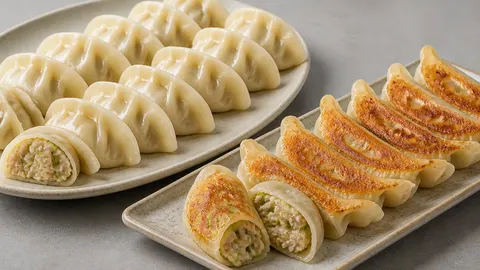
Connect piece weight, wrapper behaviour, filling texture, sealing geometry and cooking or freezing requirements.
Plan dumpling production →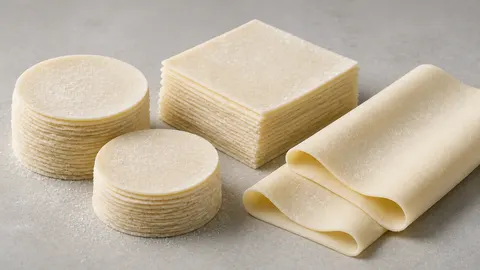
Work from final thickness, dimensions, hydration, relaxation, dusting and the interface required by downstream forming.
Plan wrapper production →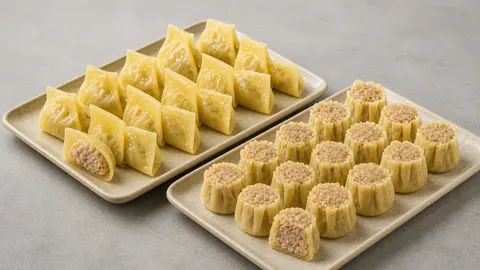
Clarify geometry, wrapper supply, filling portion and discharge handling before arranging a machine trial.
Plan wonton or shumai production →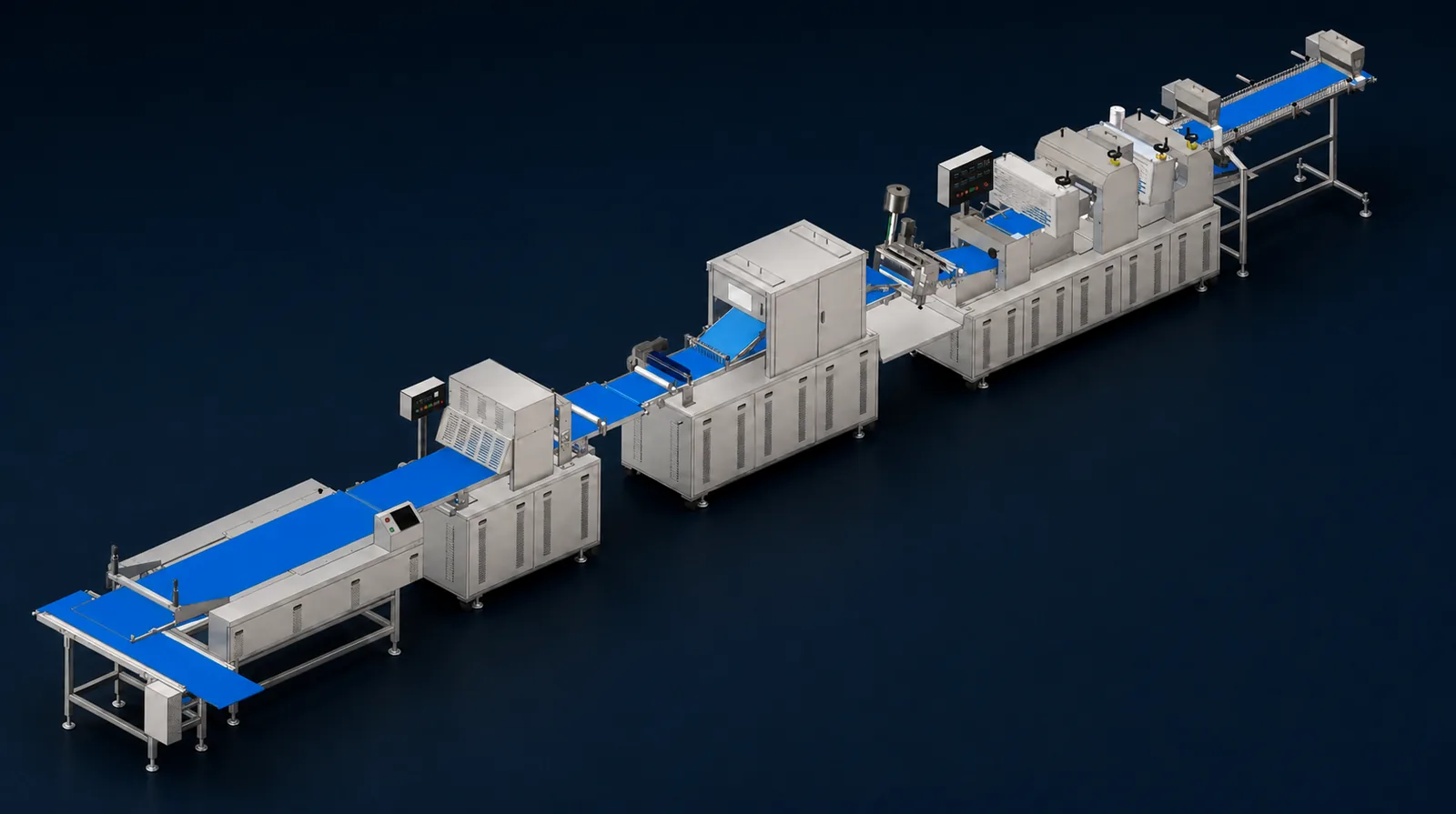
Define geometry, accepted output and the responsibility boundary around frying, cooling and packaging.
Plan Youtiao production →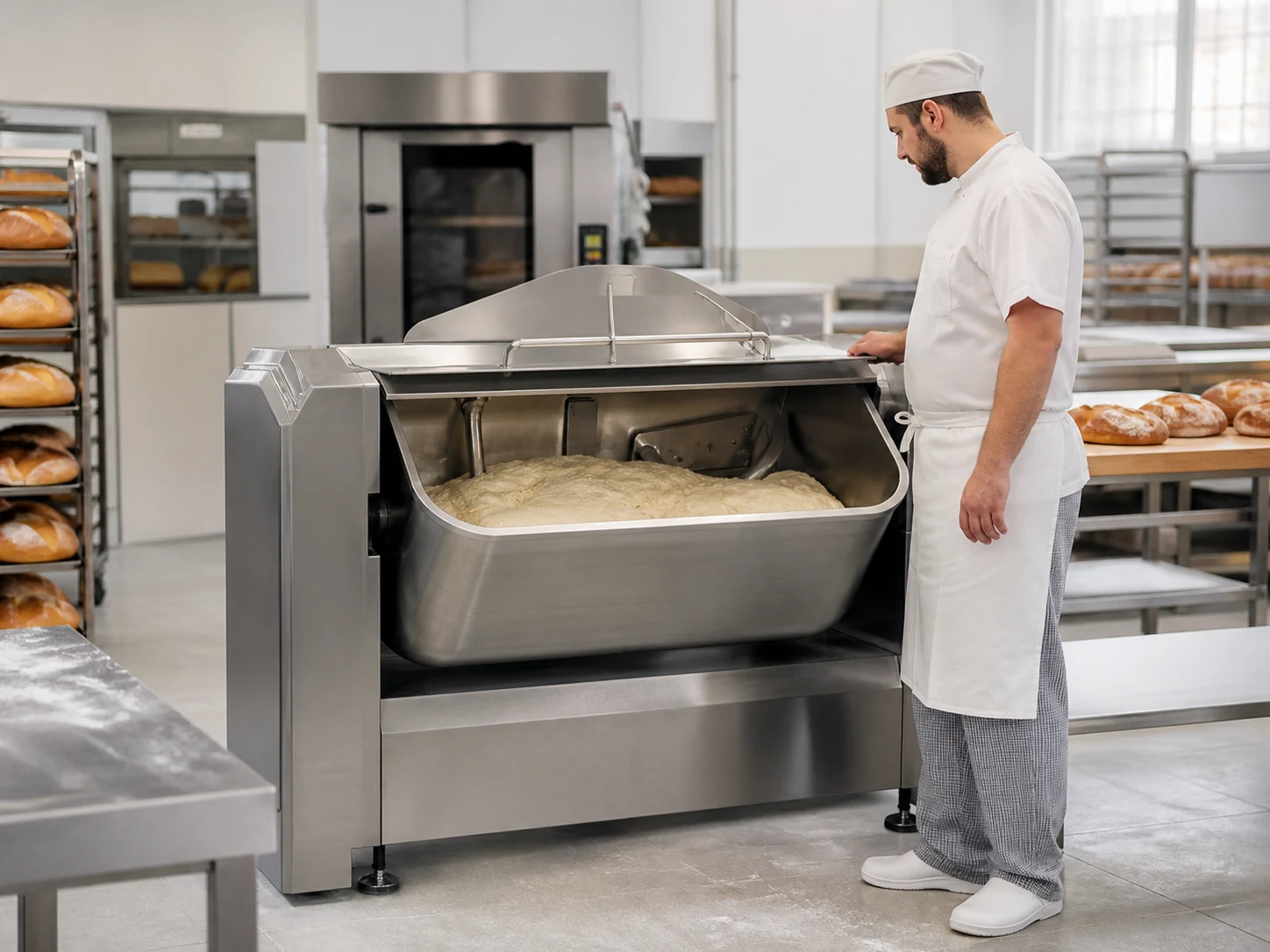
Frame vacuum, cooling and dough-preparation decisions without implying a complete bakery line.
Plan bakery dough preparation →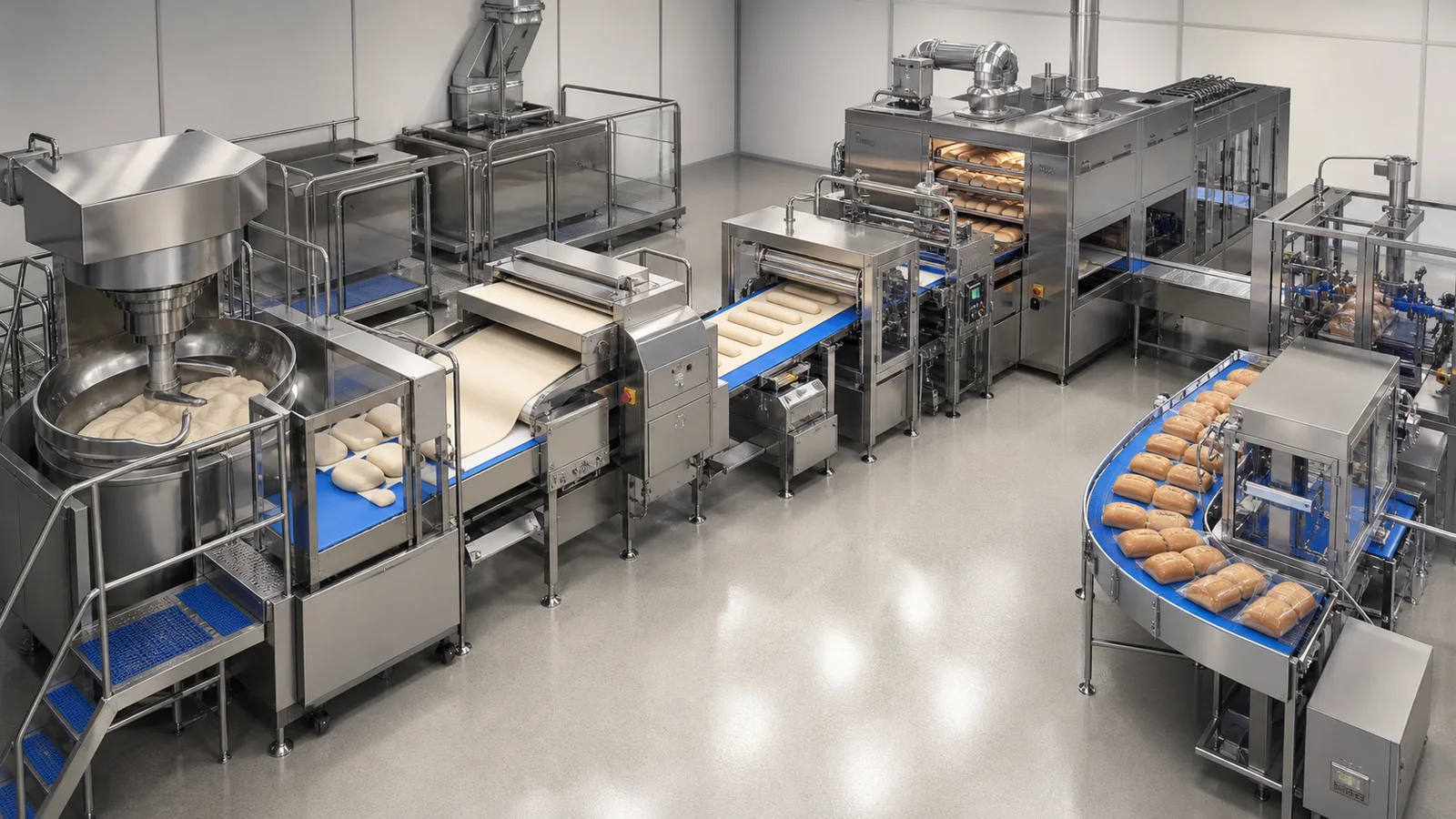
Choose a food-specific route first, then define battery limits and acceptance criteria.
Plan a complete line →Define crop variation, finished geometry, water strategy, hygiene boundary and downstream handoff before selecting equipment.
Plan vegetable processing →“Noodles” or “dumplings” is not a complete equipment requirement. The condition in which the product leaves your factory changes the downstream route, utilities, floor space and control points.
Focus on product temperature, short holding time, portioning and hygienic transfer into packaging.
Add thermal treatment, water or steam control, cooling and protection from sticking or deformation.
Review spacing, surface condition, freezing transfer, cold-chain packaging and the accepted product after freezing.
Define drying method, residence time, final moisture target, cooling and stable packaging conditions.
This is a planning map, not a universal process specification. It shows why equipment selection should follow product definition and sample review.
A useful inquiry does not need a finalized machine list. It needs enough product and factory information for the right process route to be discussed.
Provide photos or samples, dimensions, piece or serving weight, recipe range and the required state at packing.
State saleable output per hour, operating hours, changeovers and the acceptance criteria that separate good product from waste.
Identify preparation, forming, cooking, drying, freezing, cooling and packaging steps already available or still required.
Share available space, utility standards, sanitation expectations, labor plan and the intended packaging connection.
The answer depends on which process stages your factory already controls. A single machine may solve one defined operation; a line project must also manage transfers, buffers and downstream interfaces.
Defined operation
Connected process
Real product samples and operating targets reduce guesswork. HELPER engineering review should confirm machine suitability, line configuration and achievable performance for the actual product.
Short answers for early project decisions. Product-specific conclusions still require samples, operating targets and engineering review.
Start with the relevant application guide and define the finished product first: dimensions, weight, recipe range, final process state and packaging format. Then map the process stages you already have. Equipment families become easier to compare after the inlet, outlet and acceptance criteria are clear.
Catalogue capacity is only one input. Effective saleable output also depends on recipe behavior, product weight, feeding consistency, changeovers, operator practice and downstream bottlenecks. Use your accepted product per hour as the planning target and confirm performance with the actual product during technical review or trial.
Some forming systems can support changes through tooling, settings or feeding adjustments, but the feasible range is model- and product-dependent. List every required shape, weight and recipe before selection. A representative sample set helps confirm changeover scope instead of assuming that one configuration covers all products.
A trial is especially valuable when dough hydration varies, fillings contain larger particles, appearance tolerances are strict, or a nonstandard shape is required. Provide representative raw materials or samples and define what counts as an acceptable product so the trial can answer a specific engineering question.
Yes. The forming discharge rate, spacing, surface condition and product temperature affect the next process. Treat downstream equipment and transfers as part of the same route, even if they are purchased separately, so that the line does not create a bottleneck or damage the finished food.
Share available floor dimensions, ceiling or access limits, electrical standard, water, steam, compressed air, drainage, sanitation expectations and the intended packaging area. Early constraints help determine whether the proposal should be a standalone machine, a connected section or a complete production line.
An Application page begins with the food and explains the decisions that define its process route. A Product page documents a machine family or model. Use Applications while defining the project; move to Products when the required operation, capacity basis and interfaces are sufficiently clear.
Use Resources for project knowledge, Online Tools for structured inputs and Products when you are ready to compare HELPER equipment families.
Use project evidence and layout references after selecting the finished-food route.