
01
Horizontal Vacuum Dough Mixers for Noodles & Dumplings
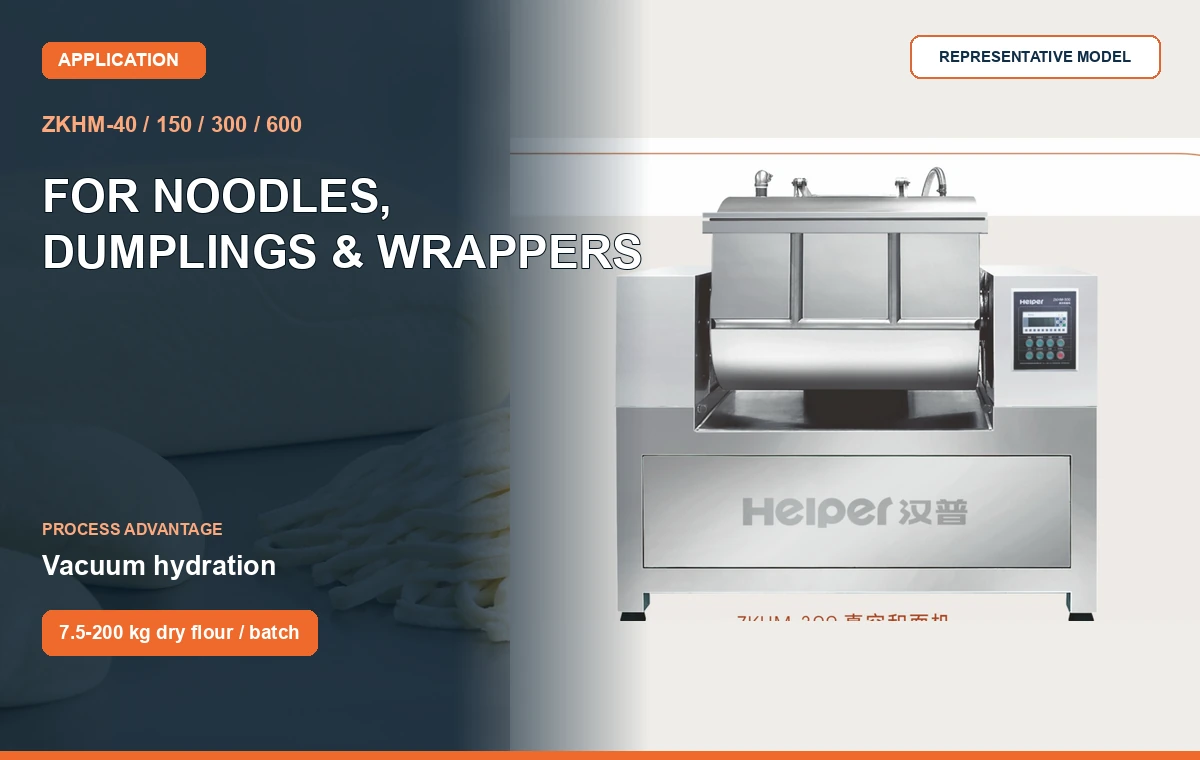
ZKHM-40 / 150 / 300 / 600 standard vacuum mixer series for 7.5–200 kg dry-flour batches.
Compare modelsChoose the mixer by dough behavior and batch definition—not chamber volume alone. Compare vacuum platforms for noodle and wrapper dough, bowl-cooled bakery systems, and high-hydration specialty mixers for tangyuan and taro-ball production.
The current 2026 product catalogue separates the range by dough process and finished-product application. Start with the family page, then compare the published models and batch capacities.
ZKHM-40 / 150 / 300 / 600 standard vacuum mixer series for 7.5–200 kg dry-flour batches.
Compare models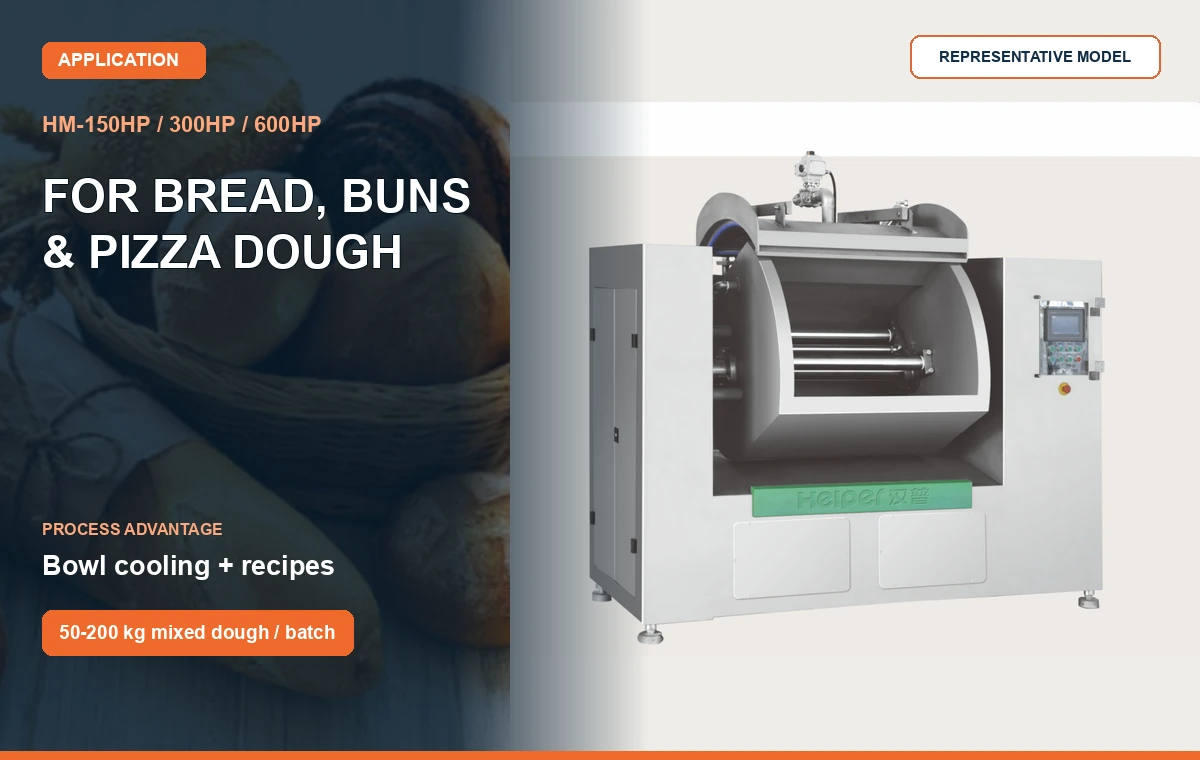
HM-150HP / 300HP / 600HP for 50–200 kg mixed-dough batches, with cooling, recipe memory and optional automatic water and flour feeding.
Compare models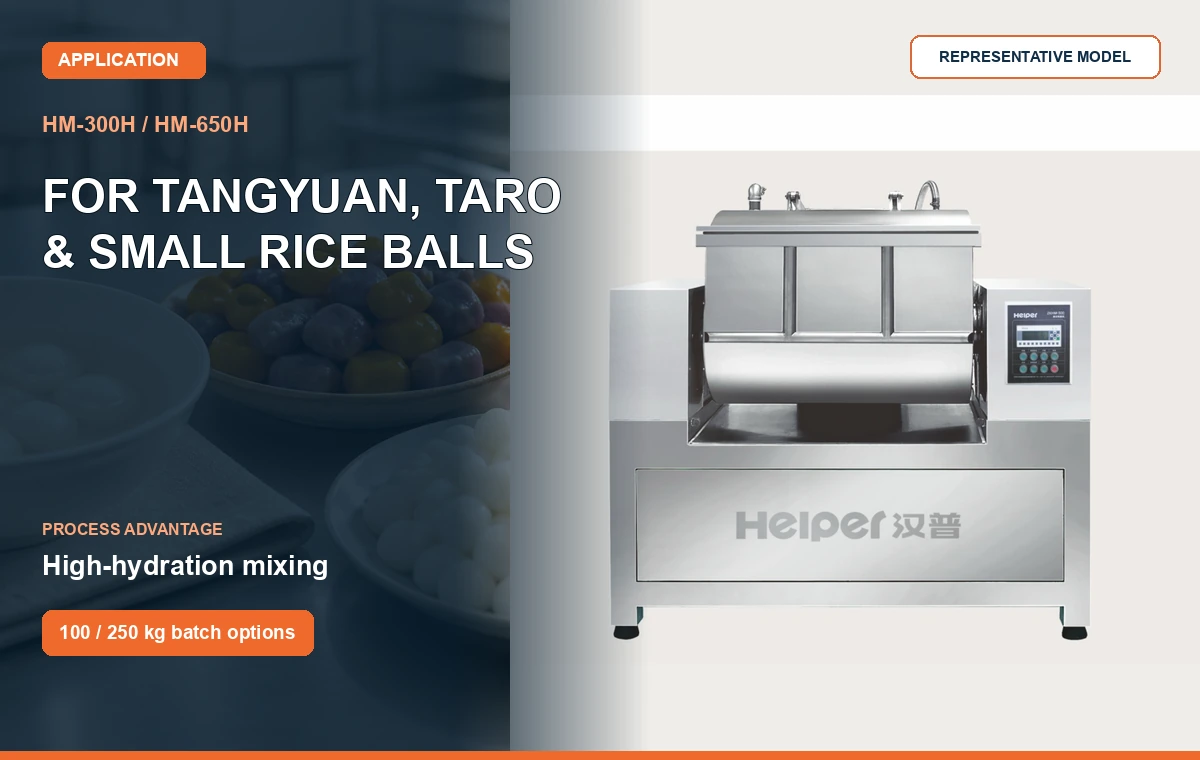
HM-300H / 650H dedicated horizontal mixers for tangyuan, taro balls and small glutinous-rice balls, with 100 kg and 250 kg batch options.
Compare models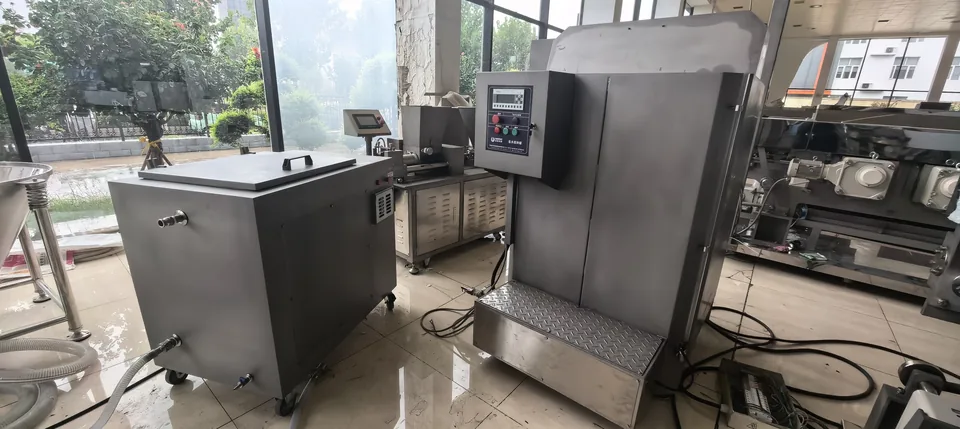
The 1 T saltwater mixing and dosing tank supports noodle, dumpling and wrapper-dough production by mixing the liquid recipe and supplying measured water to the selected dough mixer.
A horizontal shaft and enclosed bowl do not make every mixer interchangeable. The correct platform depends on how the flour hydrates, how much heat the recipe can tolerate, and how the mixed mass must leave the machine for the next process.
The ZKHM standard series is organized around dry-flour batch weight. Vacuum mixing supports more even water distribution in noodle, dumpling-wrapper and related sheeted-dough applications.
The HM-HP series is organized around mixed-dough batch weight. Bowl cooling helps manage temperature during mixing, while recipe memory supports repeatable production for bread, buns, pizza and other fermented doughs.
The HM-H series is dedicated to tangyuan, taro balls and small glutinous-rice balls. The catalogue describes an application water-absorption level of about 80%; the working recipe and result should still be confirmed by a material trial.
The table keeps each catalogue capacity definition visible. This matters because dry-flour weight and finished mixed-dough weight are not the same purchasing metric.
| Family | Published models | Capacity definition | Published batch range | Primary process feature | Typical end products |
|---|---|---|---|---|---|
| ZKHM standard vacuum | ZKHM-40 / 150 / 300 / 600 | Dry flour per batch | 7.5–200 kg | Vacuum hydration; optional automatic water and flour feeding | Noodles, dumpling wrappers and sheeted dough |
| HM-HP bakery with cooling | HM-150HP / 300HP / 600HP | Mixed dough per batch | 50–200 kg | Bowl cooling, recipe memory; optional automatic feeding | Bread, buns, pizza and fermented dough |
| HM-H specialty | HM-300H / 650H | Batch capacity | 100 / 250 kg | Dedicated high-hydration mixing; optional flour and water feeding | Tangyuan, taro balls and small glutinous-rice balls |
*The 7.5–250 kg headline span combines different catalogue definitions. Do not compare those endpoints directly without converting your recipe into dry-flour and total mixed-dough weights.
Model selection begins with the process, then moves to batch size and factory integration. This avoids choosing a larger chamber that still cannot deliver the required dough condition.
Noodle and wrapper dough, fermented bakery dough, and glutinous-rice or taro-ball dough have different hydration, temperature and discharge behavior.
Provide both dry-flour weight and total mixed-dough weight, including water and minor ingredients. Also state batches per hour and operating shifts.
Confirm whether vacuum hydration, bowl cooling, recipe memory or automatic ingredient feeding is required by the recipe and production method.
Share loading height, discharge direction, floor space, power supply, cleaning method and the downstream sheeter, divider or transfer equipment.
The product family identifies the process range. The shaft and paddle arrangement must also match the dough that leaves the mixer: loose crumbs for a sheeting route, a cohesive extensible mass, or developed dough for proofed products.
Discuss bar and plate paddle arrangements using your flour, water addition and required discharge condition. A product name alone does not settle the choice.
Compare bar and plate trial questionsDefine firmness or softness, development and final dough temperature. Confirm the offered shaft arrangement and whether bowl cooling is included.
Review bakery structure and coolingSend both dry-flour and total mixed-dough weight, plus a full batch cycle. Prepare a recipe and trial brief.
With the information opposite, HELPER can identify the relevant family first, then recommend a model and optional feeding or transfer arrangement.
Email your mixing requirementsDry-flour weight excludes added water and other ingredients. Mixed-dough weight includes the complete batch. Always ask which definition a capacity figure uses before comparing two models.
Not across all three families. The standard vacuum series publishes dry-flour batches, while the bakery series publishes mixed-dough batches. Recipe hydration and ingredient additions must be included in the conversion.
When mixing energy, ambient conditions or ingredient temperature can push dough beyond the desired discharge temperature. The actual cooling configuration should be sized from the recipe, starting temperatures and cycle plan.
Flour protein, starch type, hydration, temperature and mixing sequence all change dough behavior. A trial verifies mixing condition, cycle settings and discharge before the final machine configuration is confirmed.
Send your product, recipe and output target to our engineering team.