
Potato, carrot, beet and similar products
Define incoming soil, stone removal, size range, skin-removal target, flesh loss, surface damage and whether the final product is whole, cut or fried.
Compare commercial machines for washing, peeling, precision cutting and dewatering, then build the handling sequence around the crop condition and accepted packed output—not only the nominal feed rate of one machine.
Compare cutting, washing, peeling and dewatering equipment by the operation your crop requires. For crop-by-crop guidance, use the selection guide; for a quick preliminary direction, use the interactive selector.
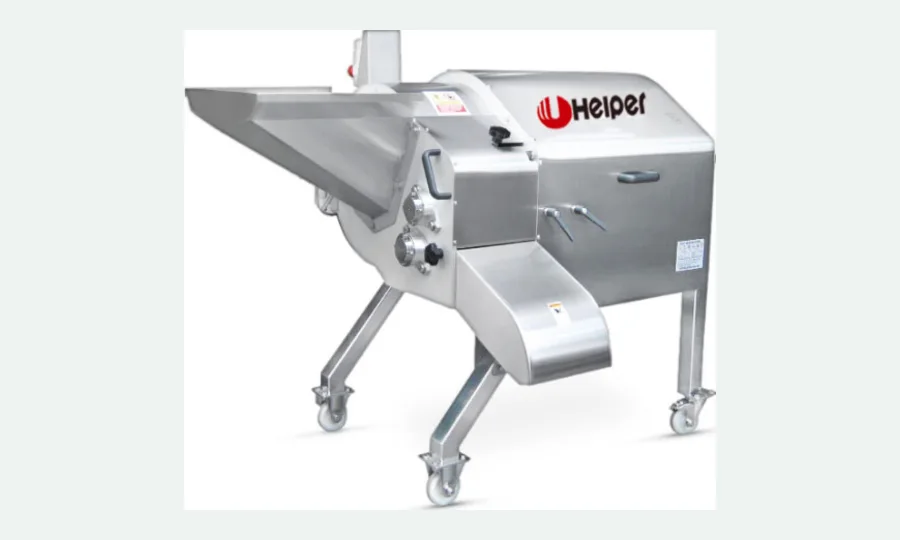
Dicing, slicing, shredding and strip cutting for vegetables, fruit and prepared fillings.
XQD-02II · commercial dicer · multifunction cutter →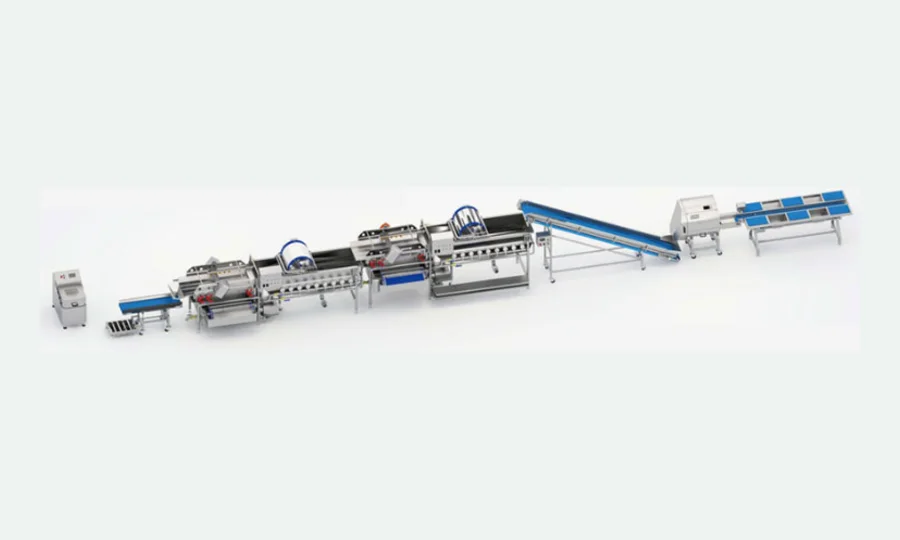
Continuous bubble, vortex and spray washing arranged around soil load, product damage and wash-water control.
Automatic washing line →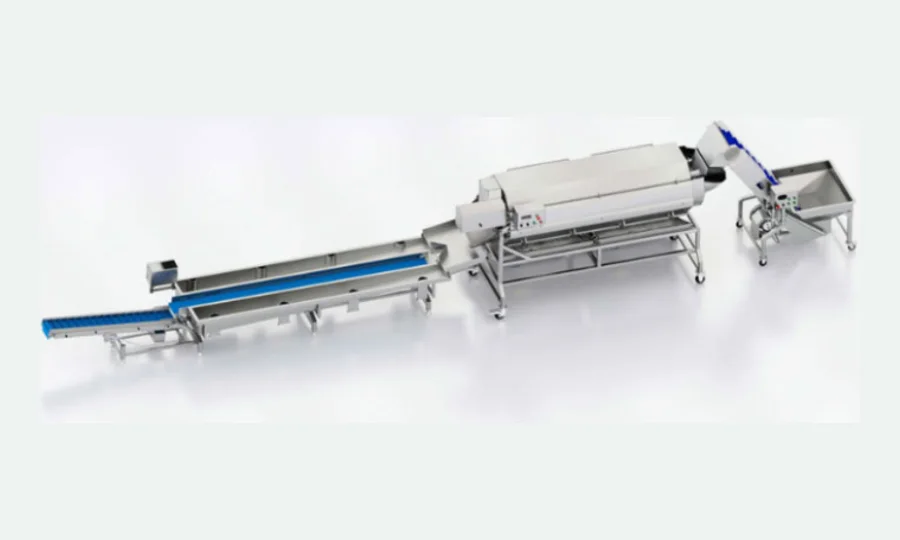
Brush cleaning, polishing and suitable peeling processes for potatoes, root vegetables and selected fruit.
Brush peeler/polisher · potato line →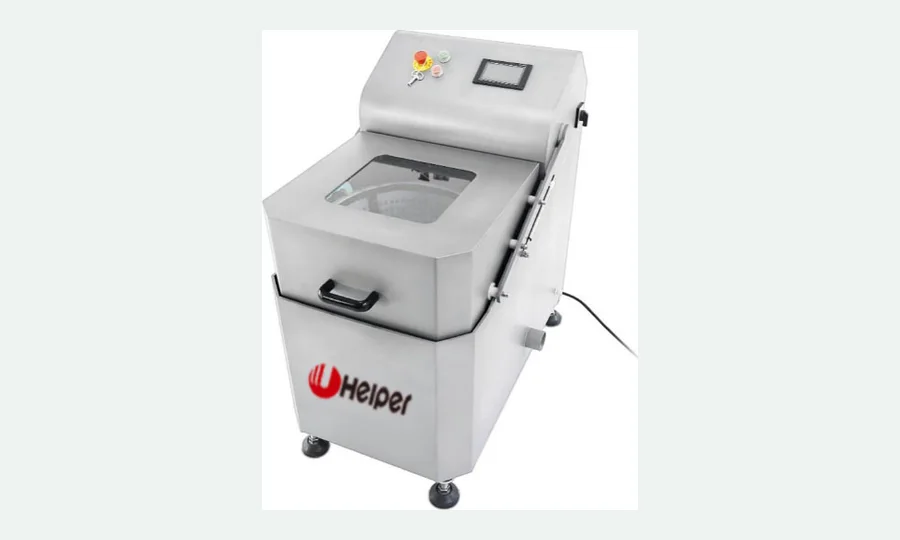
Centrifugal surface-water removal before mixing, seasoning, freezing or packing.
SG-50 / SG-70 salad spinner →Two projects with the same raw crop can require different equipment when soil, maturity, defect level, cut tolerance, sanitation or package condition changes.
Define incoming soil, stone removal, size range, skin-removal target, flesh loss, surface damage and whether the final product is whole, cut or fried.
Control flotation, gentle conveying, field debris, cut-edge damage, wash-water chemistry, dewatering and temperature before packing.
Prioritize tool change, recipe separation, allergen control, cleaning access, batch identification and realistic changeover time.
| Preparation step | Required input | Equipment direction | Acceptance evidence |
|---|---|---|---|
| Inspect / feed | Crop, variety, dimensions, bulk density, soil and foreign material | Inspection conveyor, controlled hopper or manual sorting interface | Stable feed, safe access and removal of defined defects |
| Wash | Soil load, fragility, water source, sanitizer policy and reuse limits | Bubble, vortex, spray or combined washing line | Visual cleanliness, controlled damage and validated water management |
| Peel / polish | Skin-removal target, product shape, flesh-loss and surface-finish limits | Brush cleaning, abrasive peeling or project-specific method | Peel removal, usable yield, damage and wastewater/solids load |
| Cut | Cut drawing, tolerance, orientation, firmness and temperature | Dicer, slicer, strip/shred cutter or interchangeable-tool platform | Accepted pieces, fines, broken product and safe feeding |
| Dewater | Incoming surface water, product fragility and downstream package | Batch or continuous centrifugal dewatering | Residual surface moisture, damage, cycle time and cleanability |
Capacity boundary: compare accepted kilograms per hour after trimming, peeling, cutting, washing, dewatering and rejects. Gross inlet rate alone can overstate the useful capacity of a complete line.
Start with the required surface finish: soil removal, polishing or skin removal. A machine described as a washer or polisher should not be assumed to deliver a specified peeled finish.
Sources and scope: KRONEN's peeling-machine overview establishes the distinction between methods. For HELPER's published range, see the SXJ brush peeler and polisher. Our trial checklist is a purchasing recommendation, not a claimed yield or a substitute for machine instructions.
Video learning reference: Jegerings' peeling-machine segment (2:40–3:13) includes discharge into a collection basket. It illustrates why the collected batch, not only the machine in motion, belongs in a demonstration. This is third-party equipment, not HELPER footage; no capacity, yield or compatibility is inferred from it.
Keep the commercial catalogue, engineering guide and interactive tool as three separate steps.
Use the real crop, accepted product and factory conditions to define the equipment route.
Define the crop and variety, normal and extreme dimensions, maturity, soil load, incoming temperature, finished cut or peel target, damage and fines limit, accepted output, water and sanitation requirements, layout, drainage and destination standards.
Gross inlet rate does not include trimming, peeling loss, off-size cuts, damage, rejects or residual water. Compare saleable kilograms per hour after the required process steps and within an agreed quality window.
Sometimes, but crop geometry, firmness, maturity, soil load and damage sensitivity can change washing, peeling, cutting and transfer requirements. Confirm the required crop range with representative samples and change parts.
Dewatering is used when residual surface water affects mixing, freezing, shelf life or packaging. The equipment and cycle depend on product fragility, batch size and the accepted moisture and damage limits.
Test representative and difficult raw material, then record cleaning result, peel or cut quality, damage, yield, water use, residual moisture, accepted output, changeover and sanitation against the agreed criteria.