
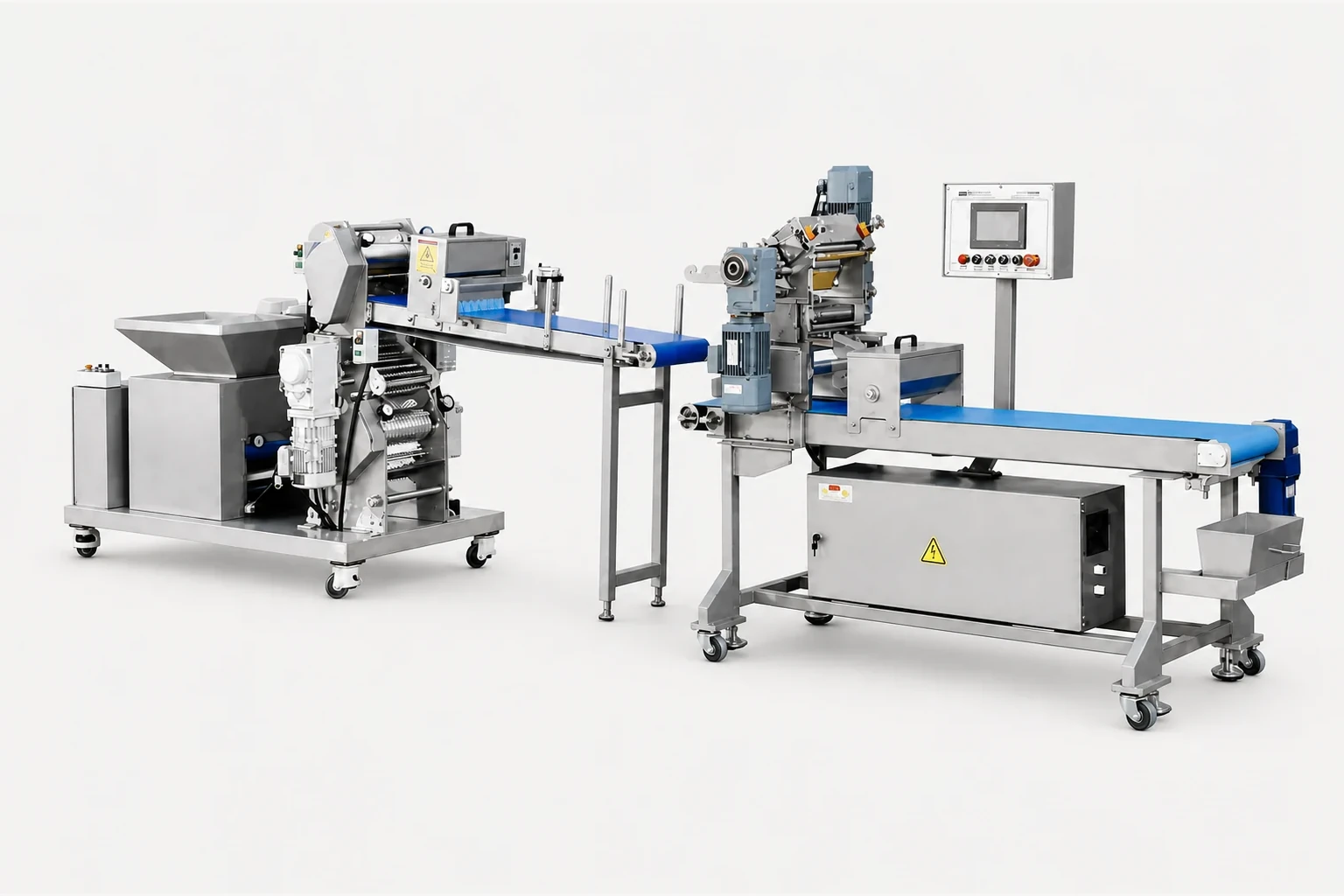
Automatic Compound Dough Sheeter for Dumplings
MY-440 / MY-540 / MY-600 / MY-640 / MY-680 / MY-700 multi-stage sheeting, powdering, slitting and roll-up series for dumpling, wonton and shumai wrapper production.
View productIndustrial dough sheeting systems for controlled thickness, consistent downstream feeding and integration with noodle, dumpling-wrapper or wonton-wrapper equipment.
Request specifications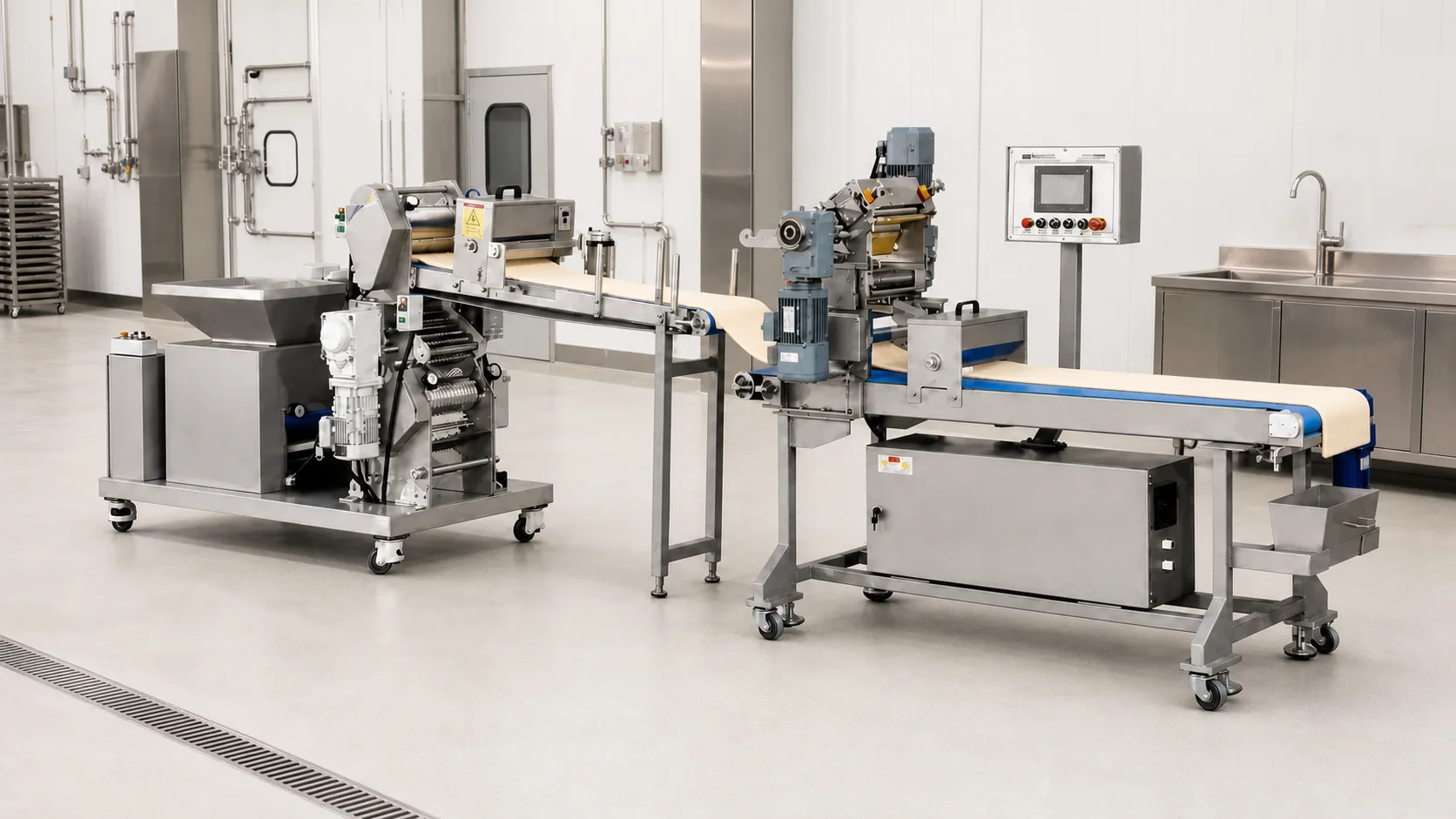
Five current equipment families cover roll preparation, direct forming-machine feed, integrated wrapper production and compact noodle or sheet processing. Use the comparison below to separate working width from finished-product capacity.
MY-440 / MY-540 / MY-600 / MY-640 / MY-680 / MY-700 multi-stage sheeting, powdering, slitting and roll-up series for dumpling, wonton and shumai wrapper production.
View product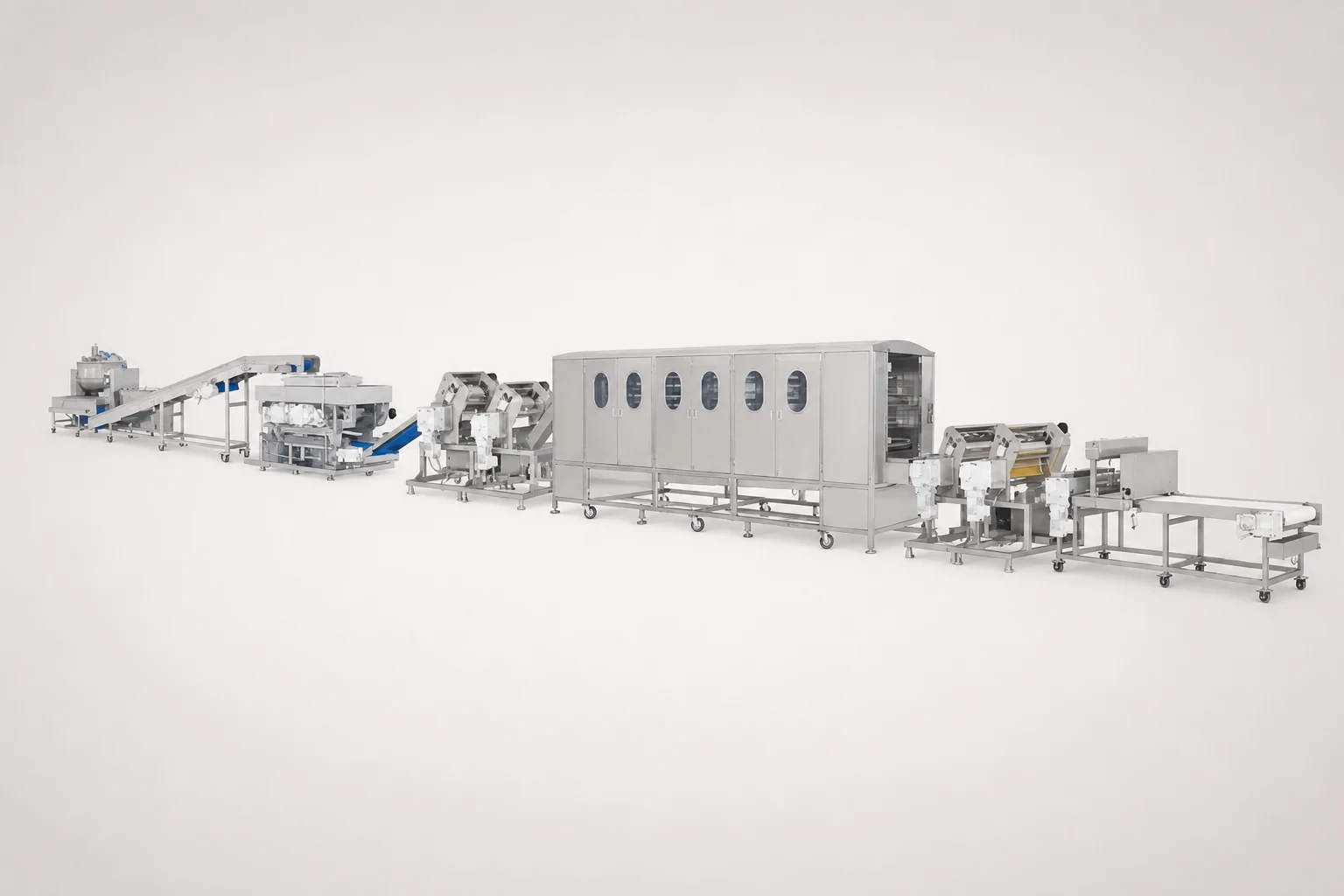
350 kg/h integrated vacuum mixing, rolling, aging, double-side dusting and wrapper forming line.
View product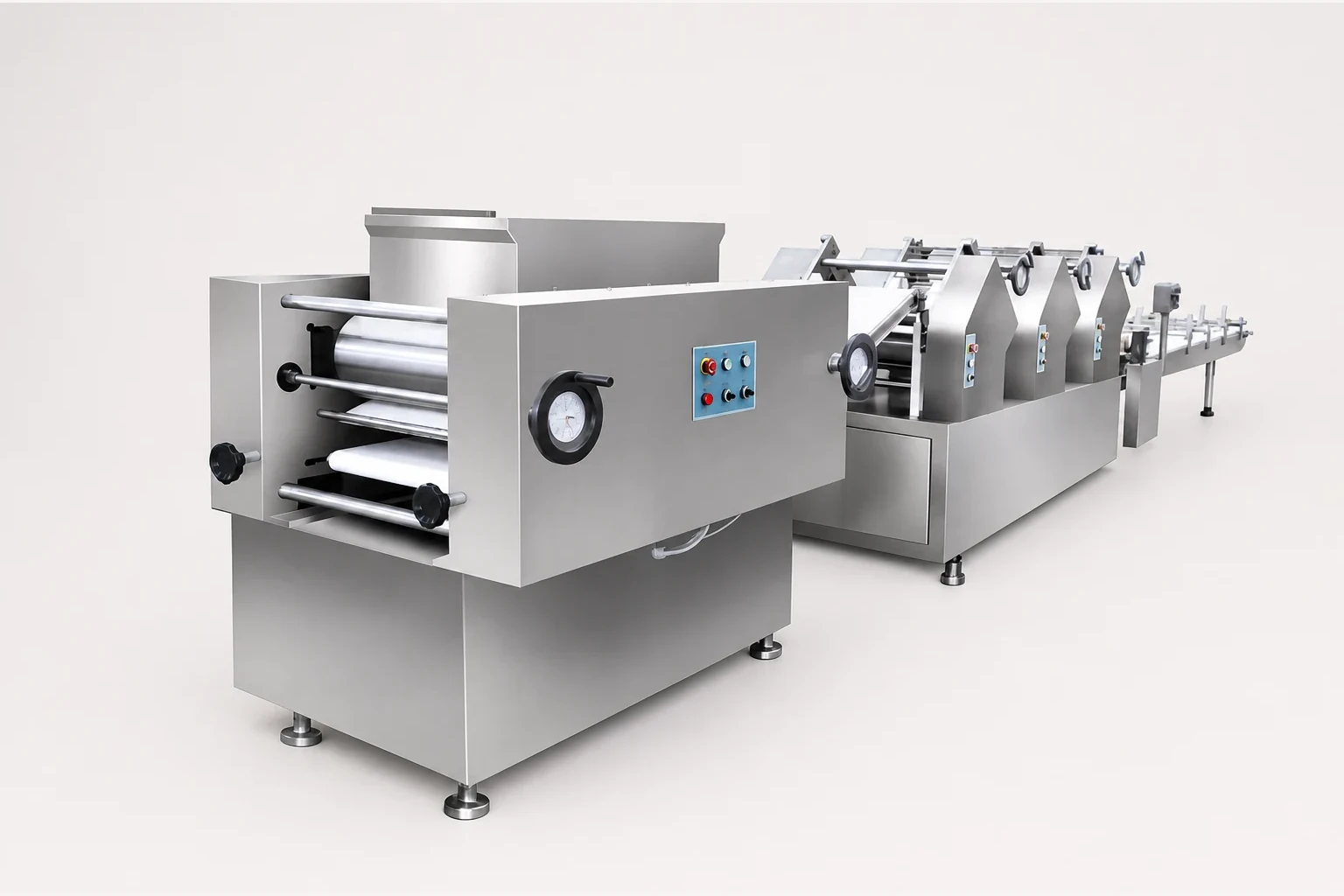
YPJ-225/270 compact four-stage sheeter for two- or three-track dumpling-machine feed.
View product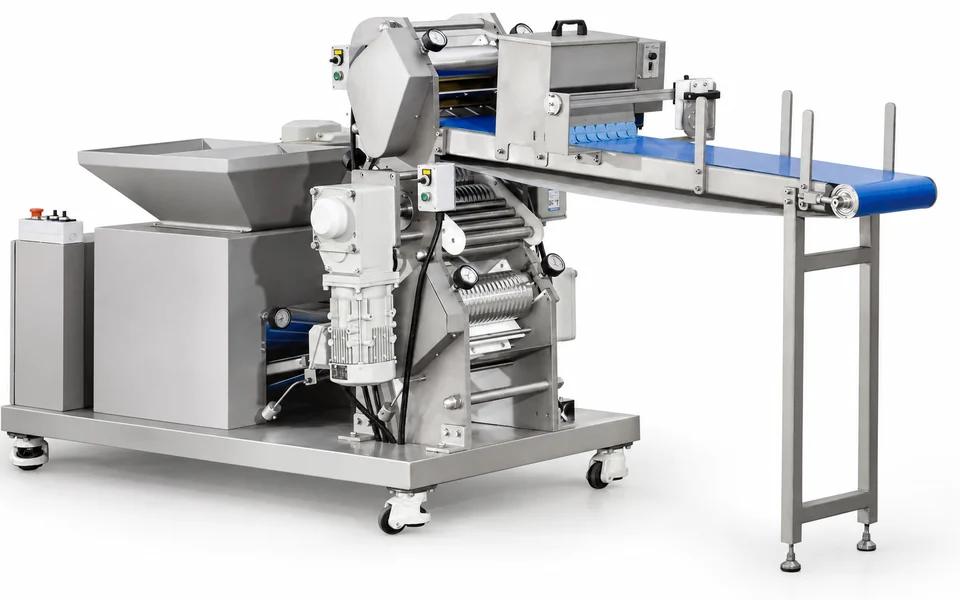
YPJ-270/360 four-stage variable-speed sheeter for 1-6 mm dough bands before noodle, dumpling-wrapper or wonton-wrapper forming.
View product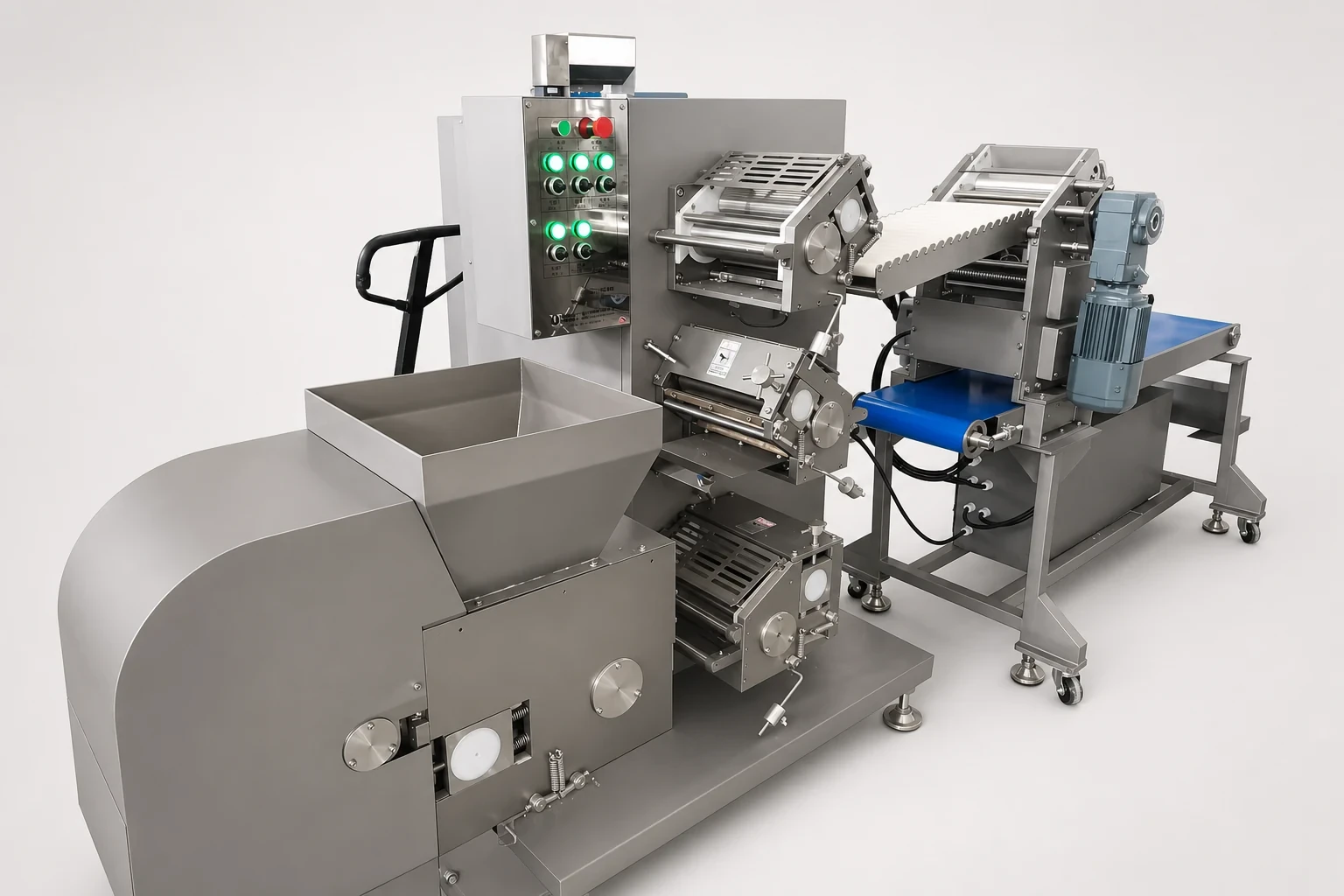
Compact 200 kg/h platform for fresh noodles and configurable wrapper-sheet products.
View productA sheeter is the process bridge between prepared dough and the machine that cuts, forms or portions the final product. The exact modules included depend on the selected family.
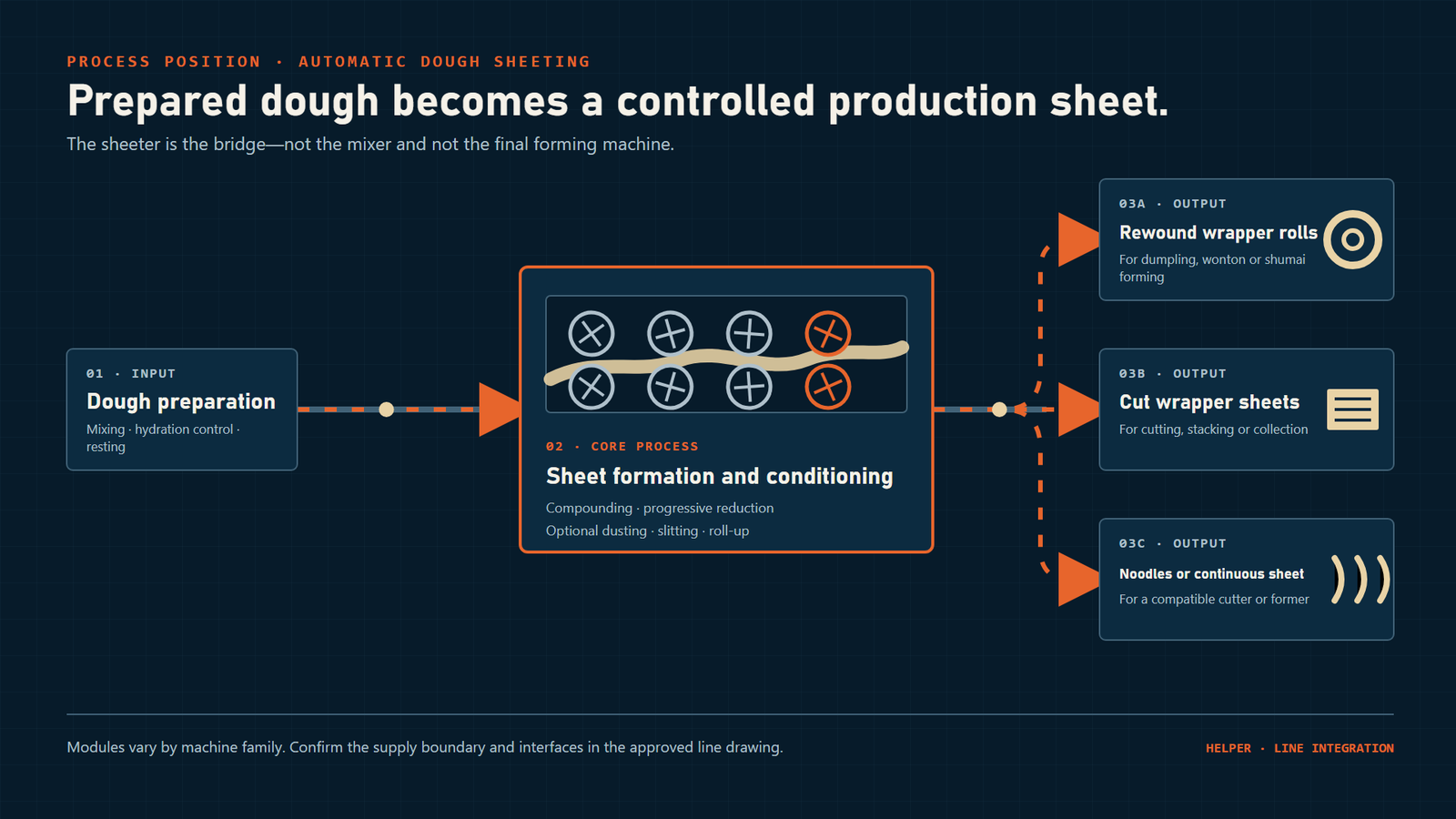
Dough preparationMixing, hydration control and resting establish the incoming dough condition.
Sheet formationCompounding and progressive reduction form a continuous, controlled dough band.
Downstream routesFeed wrapper rolls, cut sheets, noodles or another compatible forming machine.
Published values are selection references. Accepted kilograms or pieces per hour still depend on recipe, thickness, trim, interruptions and downstream equipment.
| Machine | Best fit | Published reference | Typical output or interface | Details |
|---|---|---|---|---|
| MY-440–MY-700 series | Factories preparing stable wrapper rolls for one or more downstream forming machines. | 9.92 kW total power; 0–17 m/min stepless line speed. | Sheeting, powdering, slitting and roll-up for dumpling, wonton and shumai routes. | MY series → |
| 350 kg/h wrapper line | An integrated route from dough preparation to cut wrappers. | 350 kg/h; 0.7–1.0 mm final sheet reference. | Vacuum mixing, rolling, aging, double-side dusting, folding and cutting. | 350 line → |
| YPJ-225 / YPJ-270 | Compact, direct supply to two- or three-track dumpling forming machines. | 225 / 270 mm working width; 3.3 kW; 10 m/min. | Four-roll dough band supplied directly to the matched former. | Compact YPJ → |
| YPJ-270 / YPJ-360 | Variable-width integration before noodle or wrapper forming. | 270 / 360 mm working width; 1–6 mm band; up to 10 m/min. | Continuous dough band for the compatible cutter or forming machine. | Industrial YPJ → |
| M-270 | Moderate-output noodle production with a configurable sheet-finishing route. | 200 kg/h standard; 270 mm roller; 6 kW. | Fresh noodles or project-specific dough-sheet formats. | M-270 → |
The finished format usually determines whether you need a sheeter, a roll-preparation system or a complete wrapper line.
Choose a system that compounds, reduces, dusts, slits and rewinds the band to the width accepted by your dumpling, wonton or shumai former.
Review MY series →Match working width, track count, discharge height and speed range to the receiving forming machine; trial the real dough to confirm tension and release.
Review YPJ feed →When the required output is a collected wrapper rather than a roll, specify the cutting pattern, dusting, stacking or collection method and acceptable trim.
Review wrapper line →Define final thickness, strand or sheet width, portioning and the next process before choosing the rolling platform and finishing tool.
Review M-270 →A quotation becomes meaningful when these six conditions are defined together. Nominal width or catalogue speed alone is not enough.
The sheeter may connect to an automatic dough mixer upstream and a noodle cutter, wrapper cutter or dumpling former downstream. The connection is engineered around the real material flow—not only the nominal model number.
View upstream dough mixers →A dough sheeter develops a controlled continuous band for another machine or for roll collection. A complete wrapper line adds more of the upstream and finishing process, such as mixing, aging, dusting, cutting and collection. Confirm the exact supply boundary in the quotation.
Potentially, when the receiving machines accept the same sheet width, thickness range, speed and transfer geometry. The finishing tool and changeover scope may differ, so both products should be trialled before the configuration is approved.
No. Metres per minute describes sheet travel. Finished kilograms or pieces per hour also depend on width, thickness, density, trim, stops and downstream efficiency. Use accepted product from a defined trial as the capacity basis.
No. Working width describes the dough band or roller. Finished wrapper dimensions depend on lane layout, trim allowance and the downstream cutter or forming tool.
Yes, if the interface is verified. Send the existing equipment model, drawings, discharge and infeed heights, direction, electrical standard, speed range and product samples so the mechanical and control hand-off can be checked.
Send the recipe or representative dough, finished-product drawing or sample, required accepted output, shift pattern, upstream and downstream machine details, factory layout, voltage and sanitation requirements.
Send your product and output target to our engineering team.
Related decision path
Move from machine architecture and reduction control to troubleshooting, line integration and accepted-output planning.