
U.S. FDA
FDA preventive controls rule Preventive Controls for Human Food
Relevant to hazard analysis, allergen cross-contact, flour and ingredient handling, sanitation and documented controls where the rule applies.
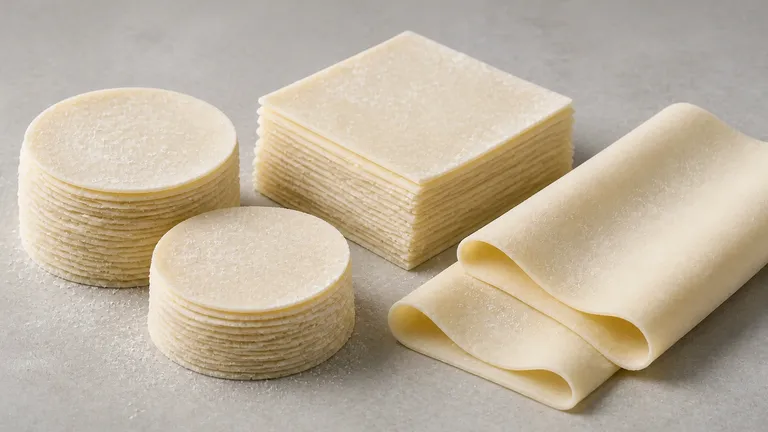
Wrapper and dough sheet application
A wrapper line must deliver the required dimensions and dough condition at the forming-machine interface. Start with the downstream product, not a sheeter model.
Illustrative finished-product background. Equipment suitability requires sample and engineering confirmation.
Use the list as a scope check. The final process and equipment configuration still depends on samples, output targets and downstream requirements.
Use these official sources to frame product, hygiene and downstream requirements before equipment selection. They are planning references—not a substitute for the laws and standards that apply in the destination market.
Relevant to hazard analysis, allergen cross-contact, flour and ingredient handling, sanitation and documented controls where the rule applies.
A general reference for hygienic equipment layout, cleaning access and control points from dough preparation through sheet delivery.
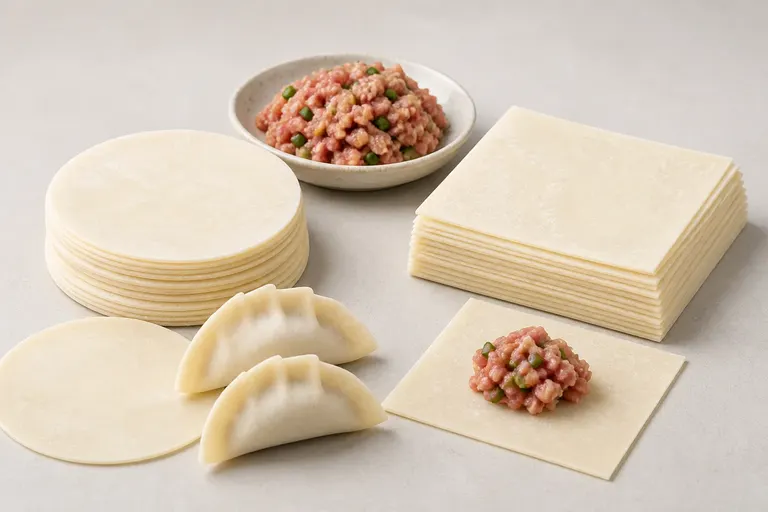
A wrapper is an intermediate product, so its specification comes from what happens next. Record whether the downstream machine needs individual round wrappers, square wrappers or a continuous sheet. Define thickness, width or diameter, dusting level, edge quality, stacking orientation and the time between cutting and filling.
Wrapper appearance alone is not enough. Measure elastic recovery, sticking during stacking, cracking during folding and whether the surface seals reliably after its planned holding time.
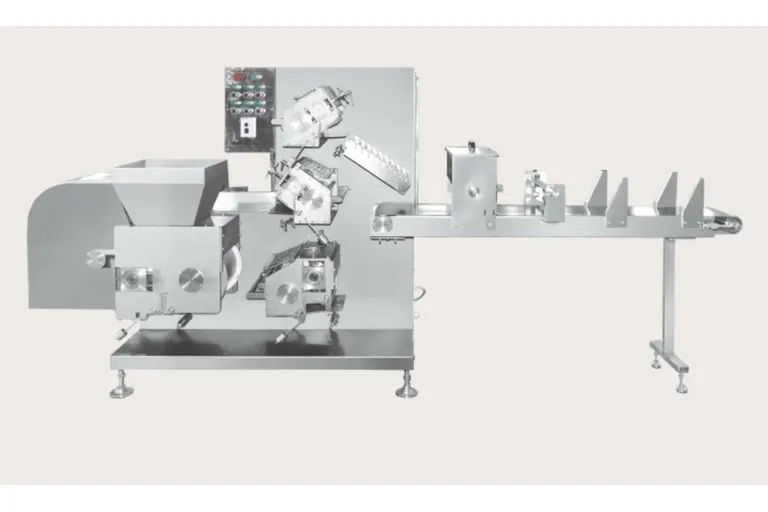
Dough generally needs controlled development from mixing through resting and progressive gauge reduction. Forcing too much reduction into one stage can create tearing, uneven thickness or excessive elastic recovery. The number and arrangement of stages should follow the starting dough condition and the final sheet requirement.
During trials, measure thickness across the web and over time. Observe tracking, edge condition, dusting and whether the sheet remains stable at the intended interface speed.
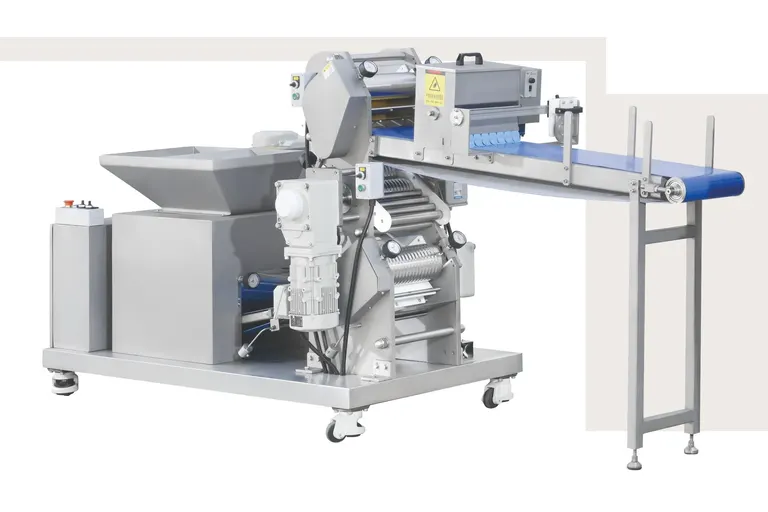
Discrete wrappers need cutting, separation, stacking and controlled presentation. Continuous sheet avoids stacking but requires speed synchronization and a stable web path into the forming machine. Neither route is automatically better; the downstream former and factory labor plan decide.
Also define edge scrap collection, possible scrap return, flour dust control and cleaning access. These details influence yield, housekeeping and the ability to maintain consistent feeding during a full shift.
Use the route comparison to decide which operations and interfaces belong in the proposal. Final scope remains project-specific.
Better inputs reduce assumptions and make capacity, tooling and line-boundary discussions more useful.
Use the guide for context, the tool for structured inputs and the product family only when the route is sufficiently defined.
Answers define the next engineering question; they do not replace product trials or a project-specific proposal.
Start with the downstream forming interface. If it receives individual wrappers, cutting and presentation are required. If it forms directly from a web, continuous delivery may reduce handling but requires speed and tension coordination.
Variation can originate in mixing, resting, uneven feed, roller settings, web tracking or dough temperature. Measure across the width and over a sustained run so the source is not hidden by a single spot check.
Possibly, but the return method and ratio must be validated for product quality and process stability. Returned dough may have different hydration, flour loading and development from fresh dough.
Test the actual stacking count, dusting method, holding time and room conditions. Wrappers that separate immediately may still stick after storage or transport to the forming station.
No. A calculator structures the recipe input, but flour absorption, mixing energy, temperature and resting behavior still require physical confirmation. Use the calculated value as a controlled starting point.
Agree on sheet dimensions, thickness tolerance, line speed, transfer height, web tension or wrapper presentation, control signals, accumulation strategy and the responsibility for the connecting conveyor or interface.
Engineering claim status
Sheet dimensions and headline speed do not establish a stable wrapper process without dough and handoff conditions.
The published YPJ reference covers 1–6 mm thickness, 270 or 360 mm working widths and a 10 m/min maximum reference.
Actual use depends on the target wrapper, continuous-sheet handoff, downstream speed and specified product condition.
The YPJ-270 600/1,000 kg reference conflict, tolerance, hydration, scrap return and changeover require engineering confirmation.
Do not select from thickness alone: document dough state, working width, tolerance and downstream interface in the project brief.
Turn wrapper appearance into measurable geometry, dough-state and delivery requirements.
Move from machine architecture and reduction control to troubleshooting, line integration and accepted-output planning.