
Industrial food processing machinery and complete production linessales@helperfoodmachinery.com
HELPER Food Machinery Contact Us
Vacuum dough mixing · real sample records

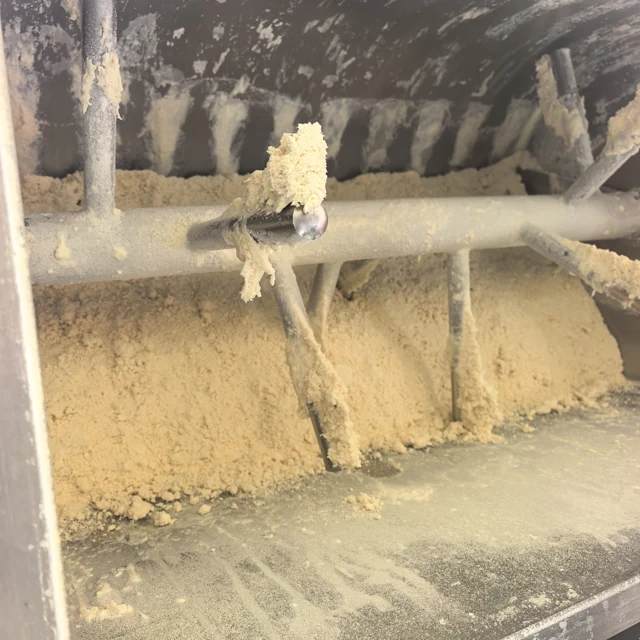
Dough states at different water levels.

Inspect the mixed material before it moves to resting or sheeting. This collection brings together supplied chamber photographs and short handling videos, with the water basis stated for each sample.

The first published record is the 36% water addition condition. Additional records can be compared here as their formula and trial details are confirmed.

Inspect the 36% sample →

36% water addition: watch the sample.

36 kg of added water per 100 kg of flour. Real sample inspected after mixing. Watch on YouTube →

Published sample records.

Compare conditions using the same basis.

Water addition as a percentage of flour weight and total dough moisture describe different quantities. Read the basis on the individual record before drawing a comparison.

For a useful side-by-side trial, record the flour, recipe, batch mass, mixing sequence, temperature, speed, time and vacuum pressure, as well as the water level. A change in appearance alone does not establish the cause.

What the collection can show

  • Granule size, small clumps and visible loose material
  • Material remaining on the shaft and mixing bars
  • How a sample behaves when lifted or separated
  • The condition passed to resting, sheeting or forming

These records show individual supplied samples. They do not establish a universal water target or prove finished-product performance.

Connect the sample to equipment selection.

Compare dough mixer families · Review the water dosing unit · Review the dough mixing unit

Bring your flour and intended downstream process to the discussion so a trial can evaluate the outgoing material against your own acceptance criteria.

Discuss a dough trial