
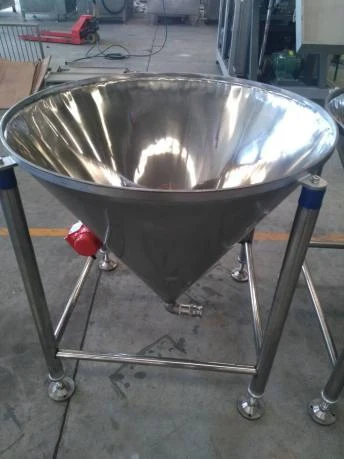
Published equipment specifications
| Voltage | 380 V |
|---|---|
| Listed electrical power | 0.04 kW |
| Net machine weight | 80 kg |
| 300-size dimensions (L × W × H) | 980 × 980 × 920–960 mm |
| 600-size dimensions (L × W × H) | 1150 × 1160 × 1100 mm |
| Control | PLC |
| Discharge assistance | Vibration |
| Construction | Stainless steel; grade not specified |
Values are transcribed from the supplied product brief reviewed on 14 October 2026. Final configuration, interfaces and acceptance conditions should be confirmed in the approved quotation and drawing.
Feed flour using the vacuum mixer’s negative pressure
The supplied brief describes a flour-transfer arrangement that works with a vacuum dough mixer. Under sealed conditions, the mixer creates a negative-pressure environment that draws flour from the flour-feeding area into the mixing bowl. Vibration assists discharge, and PLC control manages the automatic feeding process.
This operating principle depends on a compatible vacuum and sealing arrangement. It should not be treated as a standalone pneumatic conveying plant or assumed compatible with every horizontal mixer. The connection, flour route and control interface need to match the quoted mixer configuration.
Choose the configuration around the actual flour route
Provide the mixer model, dry-flour quantity per batch, flour type, loading location and available feeding time. Include the distance and height between the flour-feeding point and the mixer, plus the proposed pipe route. The product brief does not state conveying distance, transfer rate or permissible elevation, so those values must be confirmed for the installation.
The brief lists separate 300-size and 600-size dimensions. Keep the two sets separate when planning the layout. Confirm which specification belongs to the supplied unit and reserve access for inspection, cleaning and removal of the connected parts.
Confirm the batch and control boundary
The published description confirms automatic transfer and PLC control; it does not establish a weighing system or a flour-dosing tolerance. Decide how the project will define and verify one flour batch. If automatic weighing is required, ask whether it is included in the offer or supplied by another part of the line.
The listed 0.04 kW is the power stated for this equipment record. It is not a total power figure for the vacuum mixer, vacuum generation and all connected auxiliaries. Ask for a complete utility schedule before calculating the whole mixing station’s installed load.
Questions to resolve with your quotation
Can it feed a mixer without a vacuum system?
The supplied design relies on the negative pressure formed by a sealed vacuum dough mixer. A mixer without that arrangement needs a separately confirmed feeding solution.
Does it automatically weigh the flour?
The brief does not specify a flour weighing device or measurement accuracy. Automatic feeding and automatic weighing are separate functions; confirm the batch-measurement arrangement.
What should be checked during a material trial?
Use the intended flour and installation route. Record the accepted quantity transferred, feeding duration, material remaining in the system and the handoff to mixing. Agree the criteria with the supplier rather than deriving a throughput guarantee from the photograph.
Plan the feeding system with your dough mixer
Send the mixer model, recipe, batch quantities and factory interface requirements.
Compare dough mixer families · Automatic Water Dosing System · Saltwater mixing tank