
List every ingredient, variety and condition: fresh, chilled, cooked, softened or otherwise prepared.
Vegetable Cutting Machines
Compare three cutting platforms by ingredient, finished cut and operating context—then define a representative trial before you commit to a machine configuration.
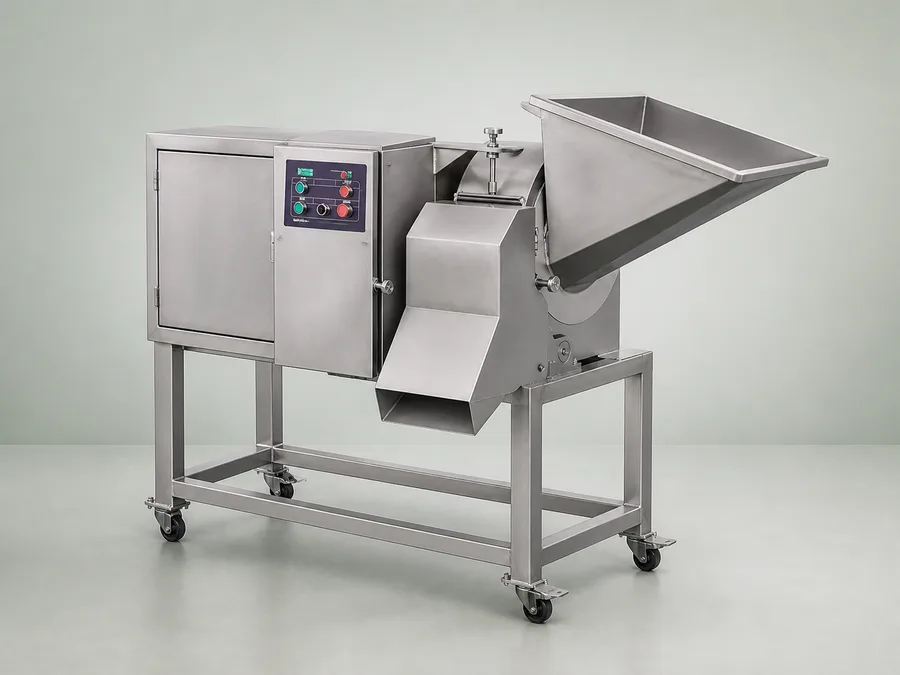
XQD-02II
QD-02 Vegetable & Fruit Dicer
Cut root vegetables, onions, apples, peppers and suitable fruit into cubes, strips or slices using stainless-steel construction and alloy-steel knives.
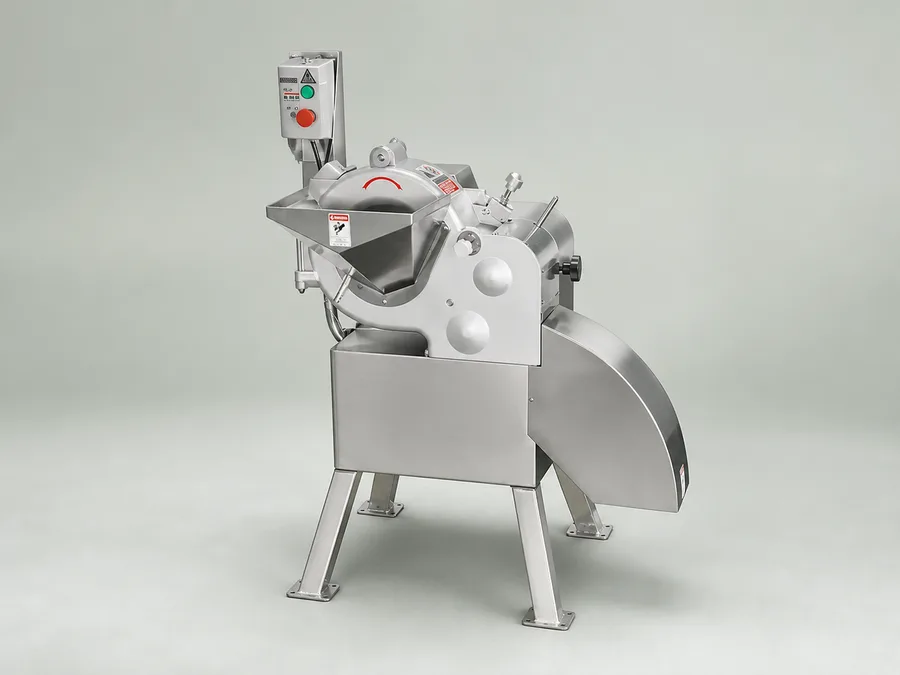
QDS-2 / QDS-3
Commercial Vegetable & Fruit Dicer
Compact commercial series for slices, strips and dice. View product page →
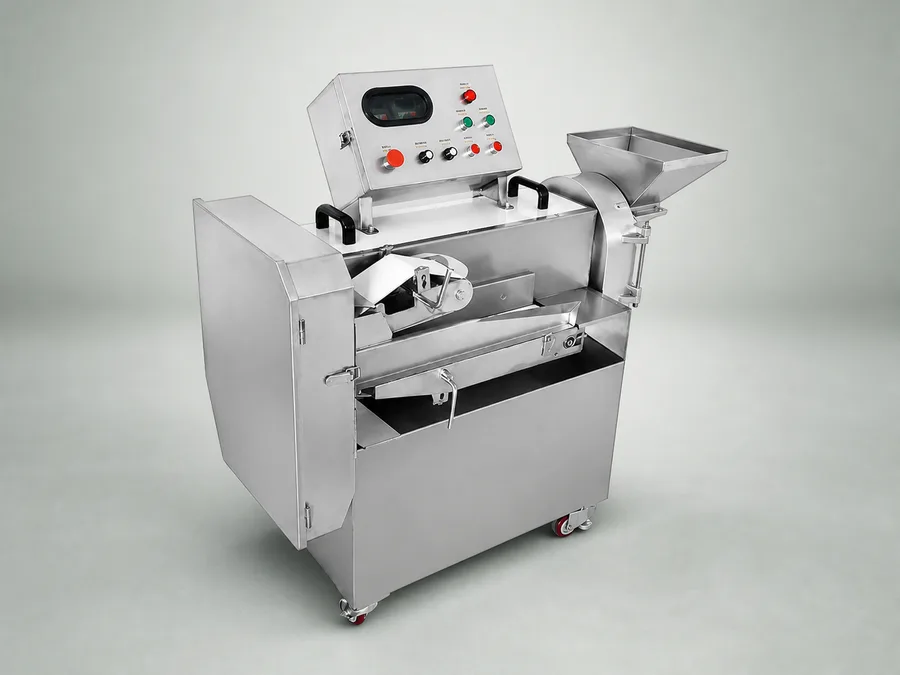
DGN-01 / DGN-02
Vegetable Shredder, Dicer & Slicer
Exchangeable cutting functions for diversified vegetable preparation. View product page →
Choose by production outcome
Which vegetable cutter should you evaluate?
This comparison is a first routing step. Final suitability depends on the actual ingredient, incoming dimensions and condition, required cut, feeding method, purchased tooling and accepted product quality.
| Machine family | Best starting point | Cut direction | Operating context | Validate before quotation | Details |
|---|---|---|---|---|---|
| XQD-02IIIndustrial dicer | Projects centered on repeatable three-dimensional cutting and factory-scale production | Cubes, strips, shreds or slices according to the selected cutting assembly | Dedicated production and line-integration discussions | Representative ingredients, exact cut geometry, feed and discharge method, accepted output | View XQD-02II → |
| QDS-2 / QDS-3Compact dicer series | Commercial or smaller-factory operations that need a compact route to dice, strips or slices | Cut result depends on model, product preparation and installed cutter | Multi-product preparation where footprint and model choice matter | Model, cut size, incoming preparation, texture, damage tolerance and production pattern | Compare QDS models → |
| DGN-01 / DGN-02Multifunction cutter | Mixed vegetable preparation that benefits from separate feed routes and exchangeable tooling | Slicing, shredding, strips or dicing according to the product and cutter configuration | Operations handling both leafy and firm vegetables across multiple products | Each product family, each required cut, feed dimensions, tool set and changeover routine | Compare DGN models → |
Capacity figures on individual product pages are reference conditions, not a guarantee for every material. Confirm accepted net output in a representative test.
Prepare a useful machine brief
Six inputs that prevent a wrong-machine shortlist
A complete inquiry lets engineering evaluate the cutter, tooling and process boundary together.
Provide typical and maximum dimensions, trimming, peeling and any pre-cut preparation.
Send dimensions plus a photo or physical sample of the result you will accept—not only a name such as “dice.”
State accepted product per hour, shift pattern, peak demand and how rejects or fines are counted.
Describe the number of daily products, allergen or hygiene separation needs and available cleaning window.
Share voltage, available space, operator plan, upstream feed and downstream collection or conveying.
Test the result, not the brochure
What a representative cutting trial should record
The goal is to create an acceptance record that can be compared with your real production requirement.
Variety, size range, temperature, firmness and all preparation before feeding.
Model, cutting assembly, tool or knife set, feed route and relevant operating setup.
Test duration, gross feed, accepted output, interruptions and any manual intervention.
Dimensions, uniformity and the agreed tolerance for fines, breakage, bruising or juice loss.
Tools required, access steps and actual time to move from one accepted cut to another.
Accessible product-contact areas, residue points and the cleaning procedure for the chosen configuration.
Selection boundaries
Two assumptions to verify before purchase
Published output is conditional
Material condition, feeding continuity, preparation, installed tooling and the definition of acceptable product can change usable output. Use a model figure for screening, then validate net accepted output with your material.
“Multifunction” does not mean every cut at once
The result comes from a specific feed route and cutter or knife configuration. Confirm every required product-and-cut combination, including the planned changeover between them.
Buyer questions
Vegetable cutting machine FAQ
What is the difference between a dicer and a slicer or shredder?
A dicer is selected when the target requires a defined three-dimensional piece, while slicers and shredders focus on cross-sectional thickness or strips. The installed cutting assembly and feed preparation determine the actual result, so define the accepted cut before choosing the machine label.
Which HELPER family should I start with for cubes?
Start with XQD-02II when the project centers on industrial three-dimensional dicing. Consider QDS-2 or QDS-3 for a compact commercial route. If cubes are only one requirement among several leafy and firm vegetable cuts, evaluate DGN-01 or DGN-02 with each required cutter configuration.
Can one machine process both leafy and firm vegetables?
The DGN family is the first platform to evaluate for mixed leafy and firm vegetable preparation because it uses different working routes. Suitability is still product-specific: test each ingredient and cut instead of assuming one setting covers the full list.
Is the published capacity guaranteed for my vegetable?
No. Published capacity is a reference for screening. Actual accepted output varies with material condition, dimensions, preparation, feeding, cutter configuration and quality tolerance. Confirm net accepted output in a representative trial.
What affects cut consistency?
Important variables include ingredient firmness and size range, incoming preparation, steady feeding, the correct cutter or knife set, tool condition and the permitted level of fines, breakage or bruising.
Should I send material for a cutting trial?
Yes when cut quality, damage tolerance or throughput is important. Send a representative batch together with target dimensions and an accepted-result photo or sample so the test has a clear pass condition.
How should cleaning and changeover be evaluated?
Review them on the exact machine and tooling configuration you plan to buy. Confirm access to product-contact areas, residue points, removal and reinstallation steps, required tools and the available sanitation window. Cleaning, adjustment and maintenance must follow the supplied manual and the factory’s trained safety and energy-isolation procedures.
What information is needed for a quotation?
Provide the material list and condition, incoming dimensions, every target cut, accepted net hourly output, daily schedule, voltage, site layout, upstream and downstream interfaces, cleaning or changeover requirements and destination country.
Send one representative product-and-cut brief
Share the ingredient, target cut photo and dimensions, accepted hourly output, voltage and line interface. HELPER can then identify the machine family and define a useful trial.