
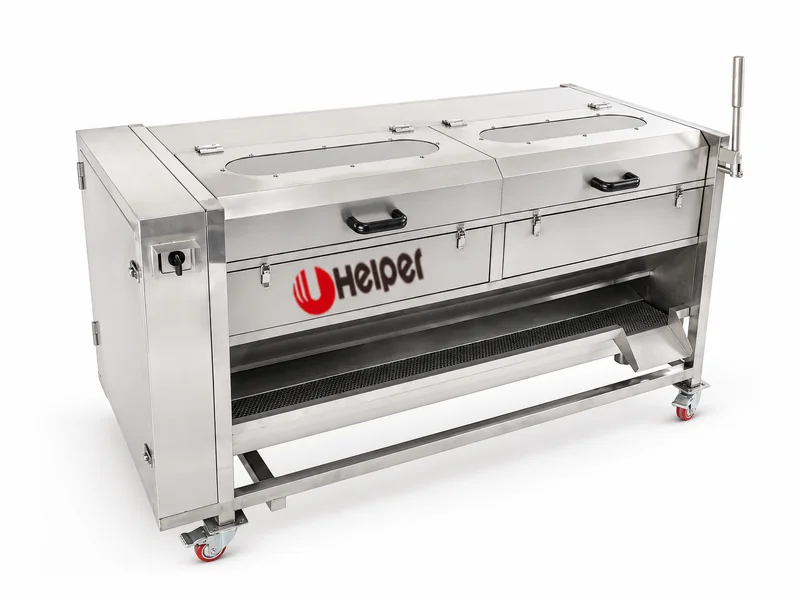

Vegetable Peeling Machines
Compare the HELPER SXJ series, a complete potato preparation line and the JX-series batch brush washer and peeler supplied through HELPER.
A vegetable peeling machine uses a selected surface-treatment method to remove skin or prepare the outside of produce for the next operation. In this range, brush contact can be specified for washing, peeling or polishing. Those are different finished-product requirements: a machine selected for clean, skin-on produce should not automatically be treated as a machine configured for intensive skin removal.
Start with the crop and the result you need, then compare the three equipment routes below. The appropriate choice depends on raw-material condition, usable finished output, loading method and the equipment already in your preparation area.
3 washing and peeling options
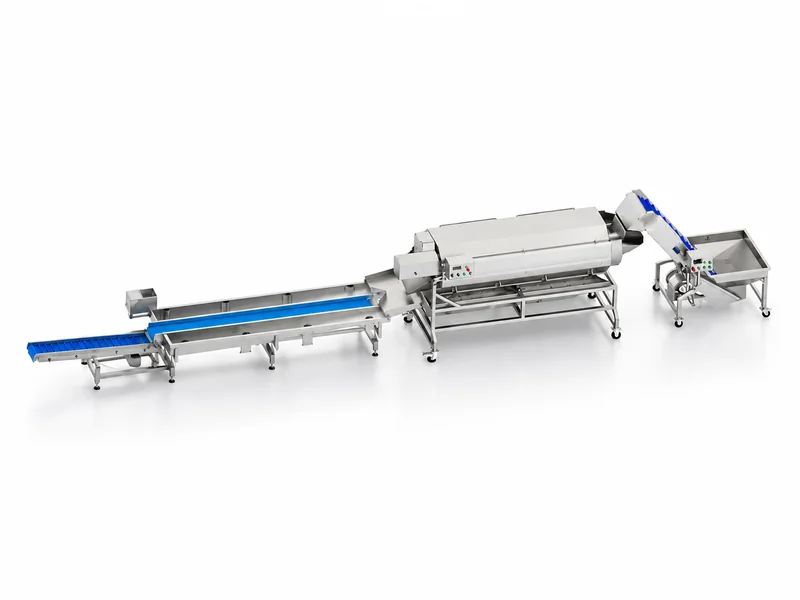
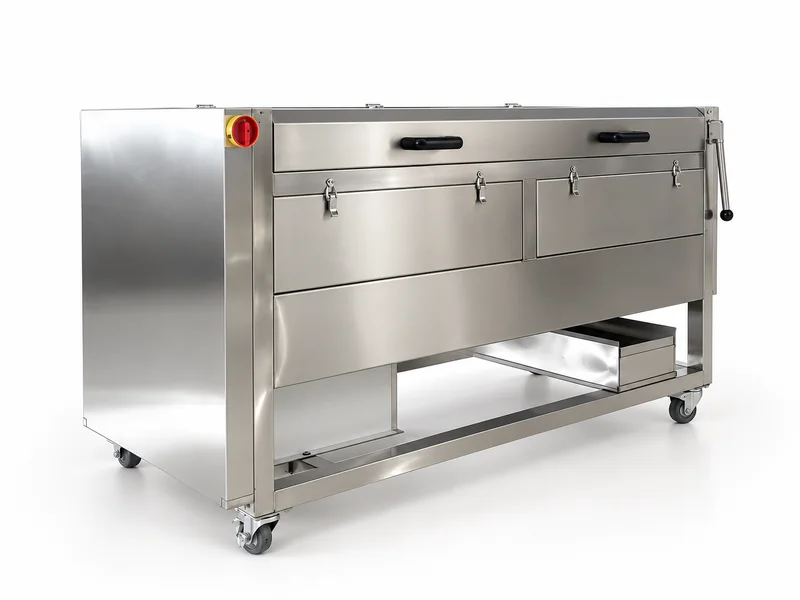
Which vegetable peeling equipment fits your process?
These three routes cover different machine boundaries. Compare how material enters and leaves the equipment before comparing a catalogue output figure. A standalone peeler and an integrated preparation line do not include the same upstream and downstream work.
| Equipment route | What it covers | Selection questions | Details |
|---|---|---|---|
| SXJ brush peeler and polisher series | Standalone brush equipment for crop-specific cleaning, peeling or polishing; four published size configurations. | Which brush specification matches the required finish? How will material be fed, collected and inspected? | SXJ series specifications |
| Automatic potato washing, peeling and polishing line | A broader potato preparation route with feeding, surface treatment and discharge or inspection handling. | Which stages belong in the supplied line? What output and interfaces must the complete route support? | Potato line configuration |
| JX root vegetable brush washer and peeler | Batch-loading root-vegetable brush preparation, offered in five catalogue size configurations through HELPER. | What is the suitable batch load? How long do loading, processing and discharge take together? | JX size comparison |
Published capacities belong to the stated equipment and catalogue conditions. They are not interchangeable guarantees of accepted peeled output. Confirm the crop, finish, complete cycle and supplied equipment boundary in the proposal.
Washing, peeling and polishing are different targets
Washing
The target is to remove soil and surface debris while retaining the desired skin condition. Tell HELPER if the product will be sold or processed skin-on. Brush contact and water handling should be reviewed around that finish.
Peeling
The target is an agreed degree of skin removal. Discuss residual skin, eyes or recesses that may need inspection, and the edible material removed along with the skin. A visibly clean surface alone does not establish acceptable yield.
Polishing
The target is a specified surface appearance rather than simply a deeper peel. The crop, brush arrangement and surface condition determine whether polishing belongs in the same machine or a separate stage.
Brush type and abrasiveness are application choices. Manufacturer guidance distinguishes brushes from coated abrasive rolls and other surface-treatment arrangements; a configuration used on one crop should not be assumed suitable for every vegetable.
Describe your crop before choosing the peeler
Potatoes and firm root vegetables are the main starting point for this category. The JX listing includes carrots, sweet potatoes, ginger, taro and radishes; the SXJ page also covers crop-specific fruit cleaning and polishing. These listed applications define what to discuss, rather than confirming every variety or condition without a trial.
- Potatoes: specify variety, size range, fresh or stored condition, surface soil and the permitted residual skin. Include the need for inspection or trimming after peeling.
- Carrots and other firm roots: describe shape and size variation, the desired surface finish and whether the output goes to cutting, cooking or another process.
- Irregular roots such as ginger: provide representative samples showing recesses and uneven surfaces. Check the actual finish instead of relying on a smooth-potato demonstration.
- Fruit or skin-on produce: state whether the task is cleaning or polishing. Do not apply a root-peeling brush specification without confirming the application.
Leafy vegetables and delicate produce call for a different washing discussion. Review the vegetable washing equipment category when the task is washing rather than abrasive root preparation.
Choose usable output, not a headline capacity alone
Your requirement should describe the weight of acceptable finished vegetables needed by the next operation. Incoming weight, nominal machine capacity and usable peeled output are different measures. A quotation is more useful when it states the crop and accepted finish alongside the output target.
For a batch machine, include loading, treatment and discharge in the cycle. For a preparation line, identify feeding, surface treatment, inspection and downstream handling boundaries. Check where the line might wait for collection or manual trimming rather than judging the brush stage in isolation.
Do not assume that more abrasion is always a better result. Surface removal also needs to be assessed against product loss and the finish you need. Likewise, catalogue size alone does not establish water demand, staffing, changeover time or the production rate of the complete installation.
What should a vegetable peeling trial record?
Agree on the acceptance criteria before the demonstration. Use representative raw material from your intended supply, including the variation that matters to your production. A polished photograph or short video can show movement and appearance, but it cannot replace a documented crop trial.
- Record the input: crop, variety, size distribution, condition and incoming weight.
- Define the finish: washed skin-on, peeled or polished; identify what counts as acceptable and what needs further trimming.
- Record the supplied setup: machine configuration, brushes and relevant trial conditions as documented by the supplier.
- Measure the complete run: input, accepted output, rejected or trimmed material, and elapsed loading-to-discharge time.
- Review the production handoff: collection, inspection and transfer to cutting or other downstream work.
Compare trials using the same acceptance criteria. Ask for a written record and representative before-and-after samples. Water demand, wear-part life and any promised output or yield should be supported by configuration-specific documentation rather than inferred from a video.
Plan the preparation area around the equipment
Confirm the space available for the machine, feeding and collection, as well as access for cleaning and service. Ask for a general-arrangement drawing showing connections, clearances and the equipment included in the supply. Electrical requirements, water connections and drain routing need to match the actual proposed configuration.
Discuss how peel and soil will be collected and separated from process water, and what handling is included. Ask how the product-contact area and brushes can be accessed and what spare parts are recommended. This category page does not prescribe cleaning chemicals or operating procedures; those belong in the supplied machine documentation and your site procedures.
After surface preparation, the next stage may be vegetable cutting, inspection or another operation. Share that next step so the discharge and transfer arrangement can be reviewed together.
Vegetable peeling machine buyer questions
Can one brush machine wash and peel?
Some brush equipment can be specified for both tasks, but the target finish and brush configuration matter. Specify whether skin must remain or be removed, then confirm the result with representative produce.
How do I choose between a batch machine and a complete line?
A batch machine treats a defined load and needs loading and collection around each cycle. A complete line covers more handling stages. Choose according to the output target, available preparation workflow and required supply boundary; use the comparison above to open the relevant product page.
Will the same setup work for potatoes, carrots and ginger?
Do not assume it will. Shape, size, skin condition and desired finish differ. Share the crops you intend to process and ask which configurations and changeovers are needed.
Does the catalogue capacity mean accepted peeled output?
Not automatically. Confirm the stated capacity basis and trial conditions. Ask how accepted output, residual skin and product loss will be measured for your crop and finish.
Is the JX series the same as the SXJ series?
No. They are separate product records and equipment ranges. HELPER supplies the JX equipment with its retained designation; the SXJ range has its own four-size schedule. Use the individual pages for the corresponding dimensions and specifications.
What information should I send for a quotation?
Send the crop, size range, desired finish, usable output target, raw-material photographs, installation space and next processing step. Include destination utilities and whether you need a standalone machine or a broader preparation line.
Bring the crop and finish requirement to HELPER
Start with the matching product page above, then send your preparation requirements for a configuration review. Photographs of the incoming material and the desired output help define the discussion more clearly than a machine capacity alone.
Discuss your vegetable preparation project →Selection references
Equipment-specific information comes from the three linked product pages. General background on brush and abrasive surface treatment: Vanmark’s peeler roll and brush guide and EIMA’s brush peel-removal overview. These explain other manufacturers’ equipment principles; their specifications and performance claims are not HELPER specifications. Reviewed 6 October 2026.