Automatic Potato Washing, Peeling & Polishing Line
A configurable HELPER line for round and oval root crops, combining controlled feeding, soaking, nylon-brush surface treatment, residue collection and final sorting.
Continuous preparation for potatoes and root crops
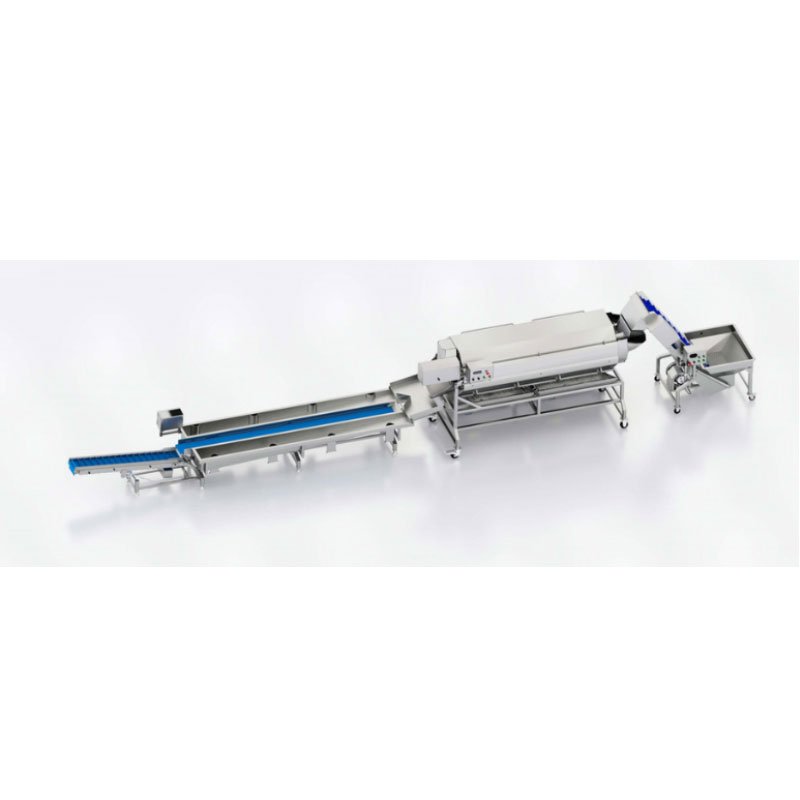
The verified HELPER page describes a production-line solution for round and oval materials, primarily potato-type roots. The official image shows a feed hopper and incline conveyor, a long enclosed processing module and an extended discharge or inspection conveyor. The stated process combines soaking, cleaning, polishing and sorting.
Inside the surface-treatment stage, a variable-frequency drive controls brush-roller speed. Nylon-filament brushes provide grinding, peeling and polishing action. The horizontal brush angle can be adjusted, while the frame uses movable casters. Detachable side panels are intended to improve access to the working area.
This product remains separate from the SXJ-800–1800 family. SXJ is presented as four defined standalone brush machines with published widths and capacities. This record represents a more complete continuous line, but its exact model, throughput, installed power and dimensions are not published. Those values must come from a project-specific proposal and general-arrangement drawing.
From raw potato to inspected output
Peeling outcome depends on potato variety, skin set, storage age, incoming temperature, tuber shape and size distribution. Deep eyes and irregular forms may require trimming after mechanical processing. A line that is optimized for new potatoes may over-peel stored potatoes, while conservative settings may leave excessive skin on rough crops. Recipe and market requirements should define the acceptable surface.
Confirmed features and missing project data
| Item | Verified status |
|---|---|
| Primary application | Potato-type round and oval root crops |
| Functions | Soaking, cleaning, grinding/peeling, polishing and sorting |
| Brush | Nylon filament |
| Drive control | Variable-frequency speed regulation |
| Residue handling | Detachable wedge filter and mobile collection box |
| Construction | Mainly SUS304, sandblasted finish |
| Model, capacity, power, dimensions | Not reliably published; project confirmation required |
Source-quality warning: the exact page contains two paragraphs about vacuum dough kneading and a second feature block describing hydraulic transmission, alloy-steel blades and a meat skip car. These are unrelated copy contamination and are excluded. No exact Group, Chinese-site or official Alibaba counterpart was verified.
Why specifications must be project-specific
The official image represents multiple connected modules. Conveyor length, hopper size, brush chamber length, installed motors, pump duty, water flow, filtration and inspection positions can change with required output and plant layout. Publishing third-party potato-peeler specifications would misrepresent this HELPER line.
The signed schedule should identify every module, motor, water connection, drain, brush material, speed range, control panel and guarding package. It should also state whether infeed grading, final inspection, air drying, cutting or packing conveyors are included.
Design around water, solids and usable yield
Incoming potatoes should be graded to remove stones, metal, rotten product and extreme oversize. The wash-water system must handle soil without quickly blinding filters or recirculating contamination. Drainage should accommodate both routine flow and tank dumping. Peel slurry and settled solids require an accessible disposal route.
Hygienic review must cover the underside of conveyors, brush chamber, shaft penetrations, filter housing, residue box and removable side panels. Determine how brushes are inspected and replaced, and whether cleaning chemicals and hose pressure are compatible with seals, motors and bearings. Establish lockout points for every conveyor, pump and brush drive.
For acceptance testing, run actual potatoes representing minimum and maximum size, normal and difficult skin condition, and the full intended rate. Record gross feed, acceptable output, residual skin, damaged tubers, peel/flesh waste, water use, cleaning time and labor. Calculate usable yield rather than reporting only feed throughput. Demonstrate speed adjustment, brush-angle control, filter removal, solids handling, emergency stops, guards and restart behavior.
Potato peeling line questions
What is the published capacity?
The exact official page provides no reliable fixed capacity. The line must be sized around crop condition, peeling standard, brush contact, water system and inspection requirements.
Is this the same product as the SXJ brush peeler?
No. It uses similar brush principles, but this record is a continuous multi-module potato line; SXJ is a four-size standalone brush-machine family with published model data.
Does mechanical peeling remove every eye and defect?
No. Deep eyes, irregular shapes and damage may require downstream manual or optical inspection and trimming. Define the accepted finished surface during trials.
Is there an official video?
No exact embedded video was exposed on the verified product page, so generic or third-party potato peeling footage has not been substituted.
Engineer the line around your potato crop
Send variety, size distribution, incoming soil and skin condition, required peeled finish, hourly demand, water conditions and available floor space.
Send potato line requirements