
SXJ Vegetable & Fruit Brush Peeler Series
Four brush-width configurations for cleaning, controlled skin removal and surface polishing of root vegetables and suitable firm produce.
One machine, three possible duties
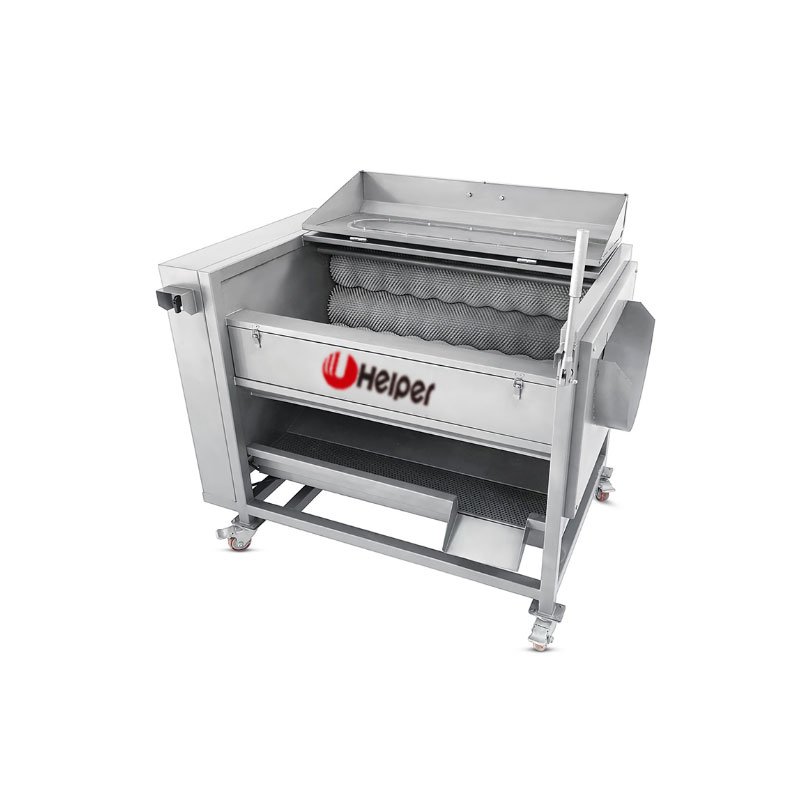
The HELPER SXJ series is described for washing, peeling and polishing potatoes, carrots, onions, beets, apples and other suitable produce. Its long covered chamber contains a working brush section. Product movement and contact with the brushes loosen soil, remove or smooth the outer surface, and discharge the prepared ingredient for inspection or the next process.
Washing, polishing and peeling are not interchangeable acceptance conditions. A soft brush intended to clean and brighten an apple may not remove potato skin. A more aggressive surface that peels a root crop can cause excessive flesh loss or damage delicate produce. The quotation should therefore identify brush material, abrasiveness, roller arrangement and intended duty for every ingredient.
The machine may operate alone or within a longer line after inspection and before cutting. The four models share a published 1.5 kW power rating while increasing brush width, footprint and capacity. Selection should be based on usable peeled or polished output at an agreed loss rate, not brush length alone.
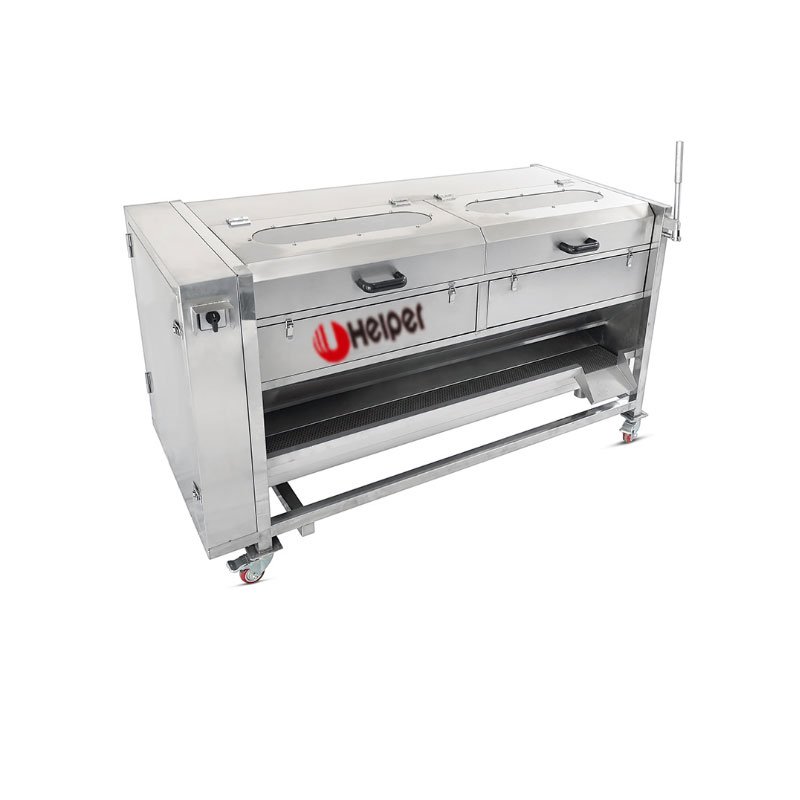
SXJ published technical schedule
| Model | Brush width | Capacity | Power | Weight | Dimensions |
|---|---|---|---|---|---|
| SXJ-800 | 800 mm | 500–800 kg/h | 1.5 kW | 150 kg | 1150×900×1205 mm |
| SXJ-1000 | 1000 mm | 800–1,000 kg/h | 1.5 kW | 160 kg | 1350×900×1205 mm |
| SXJ-1500 | 1500 mm | 1,000–1,200 kg/h | 1.5 kW | 210 kg | 1850×900×1205 mm |
| SXJ-1800 | 1800 mm | 1,200–1,500 kg/h | 1.5 kW | 210 kg | 2200×900×1205 mm |
Evidence note: these values come from the exact HELPER English page. No exact Group, Chinese-site or official Alibaba record was verified. Voltage, water demand, brush material, roller count, batch/continuous operating details and peeling-loss values are not reliably published and require confirmation.
Control contact, water and product loss
Incoming variety, maturity, size distribution, skin adhesion and storage condition can change results even at the same machine setting. Potatoes with deep eyes, irregular ginger, long carrots and rounded apples present different contact patterns. Pre-sorting improves uniformity and allows the brush specification to be optimized for a narrower product range.
Plan water, drainage and inspection
Define whether the machine receives dry soil-covered produce, prewashed produce or a graded intermediate product. Provide potable water and drainage appropriate to the soil and peel load. Downstream equipment may include inspection tables, cutters, dicers, blanchers or packing systems. A buffer may be needed so peeling output does not overwhelm manual trimming.
Hygienic review should verify access under lids, around brush shafts and bearings, inside discharge paths and beneath the frame. Determine how brushes are removed, cleaned, inspected and replaced. Avoid relying on external hose-down alone: retained peel fragments and soil can create microbial and allergen-control risks.
Measure clean product and yield together
Run the actual crop at minimum, normal and maximum incoming sizes. Record gross feed, acceptable cleaned or peeled output, residual soil or skin, removed peel, damaged product and flesh loss. Photograph representative samples and agree a grading method. Track water consumption, processing time, loading labor, discharge behavior and cleaning time. Test the machine after brushes are wet and under steady production conditions, not only on a short demonstration batch.
Safety testing should cover lids and access points, emergency stop, restart behavior, drive guarding and lockout. Confirm brush-change tools, safe lifting method, spare brushes and bearing protection. Utilities, floor plan, drain load and any anchoring requirement should appear in the signed schedule.
SXJ series buyer questions
Can the same brush clean fruit and peel potatoes?
Not necessarily. Brush material and abrasiveness must match the duty. A product trial should define acceptable cleaning, peel removal, surface damage and flesh loss.
Why do all four models publish 1.5 kW?
That is the exact source schedule. Buyers should confirm motor nameplate, voltage and full-load current for the quoted configuration before purchase.
Is SXJ the same as the automatic potato peeler?
No. SXJ is a four-size long brush machine for cleaning, polishing and peeling multiple produce types. The separate potato-peeler record uses another compact structure and should remain its own product.
Is an official SXJ video available?
No exact embedded product video was exposed on the verified page, so unrelated brush-peeler footage has not been used.
Select brushes with your actual crop
Send produce variety, incoming size and soil condition, required cleaning or peeling standard, acceptable loss, hourly demand and factory water conditions.
Send peeling requirements