
P-440 Automatic Wrapper Production Line
From controlled vacuum mixing and progressive sheet development to dusting, layered folding and final wrapper forming—engineered for repeatable thin skins at industrial scale.
Develop structure before the final cut
The system manages hydration, gluten development, progressive reduction and resting before converting the stable sheet into thin wrappers. Final forming modules are selected for wonton or dumpling geometry.
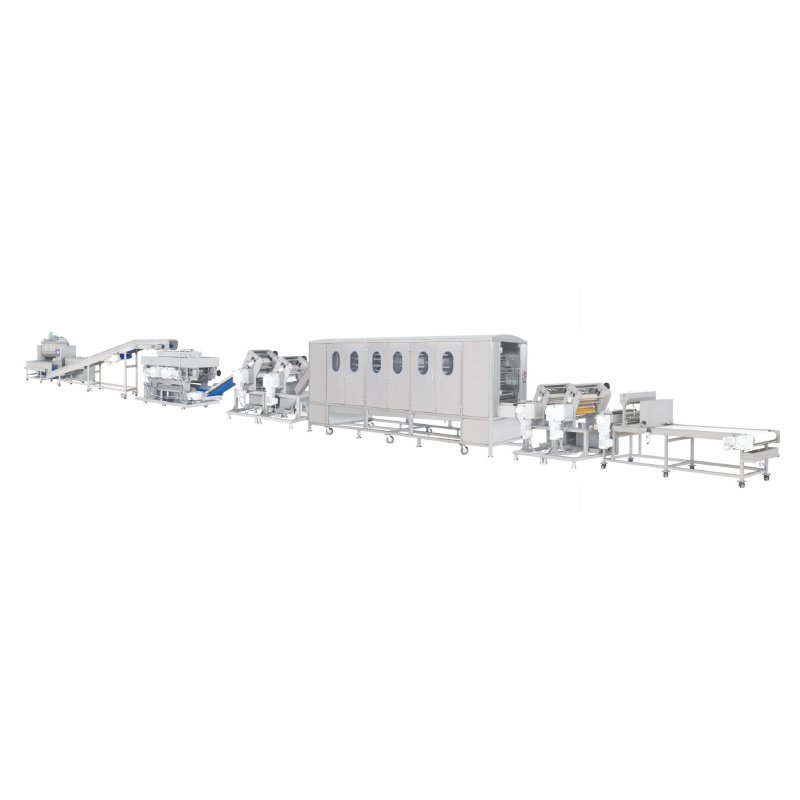
A complete line, not a stand-alone sheeter
Supports easier cleaning and material handling than an elevated mixing layout.
PLC coordination can integrate flour and water dosing for recipe repeatability.
Multiple roller groups develop a continuous sheet without relying on a single heavy reduction.
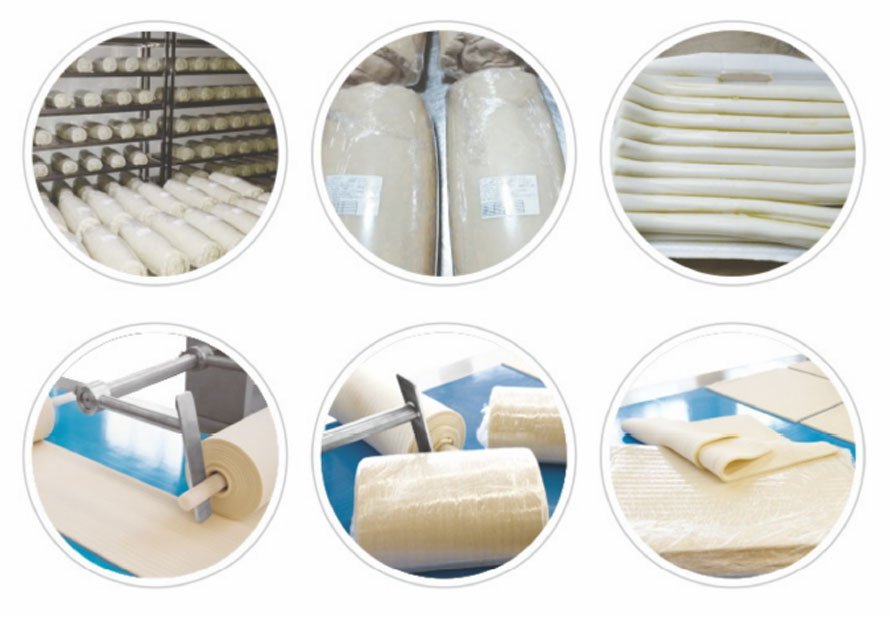
Rod-hanging or horizontal sheet-aging arrangements are project options.
Controls sticking before the sheet is layered and transferred to final forming.
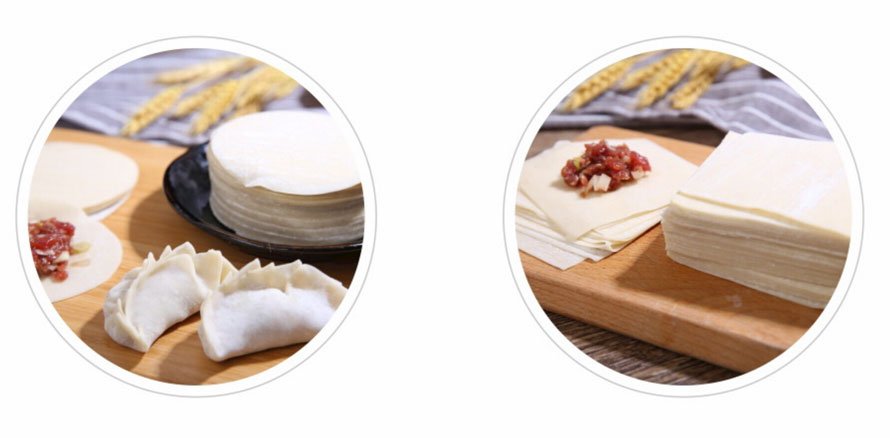
Wonton and dumpling skins require different downstream cutting and handling modules.
Technical basis for project engineering
| Configuration | Capacity | Final sheet | Maximum published length | Primary applications |
|---|---|---|---|---|
| P-440 automatic wrapper line | 350 kg/h | 0.7–1.0 mm | 20 m | Wonton, dumpling and related thin skins |
The 2026 HELPER noodle-line catalogue identifies this configuration as P-440. The complete installed-power schedule is project-specific. Final module count, power, dimensions and utilities must follow the approved layout and product trials.
Sheet quality and downstream product formats
What must be confirmed before quotation
350 kg/h wrapper-line engineering
This line combines dough reduction and wrapper cutting for industrial wonton or dumpling-skin production. The published 350 kg/h class must be interpreted as a forming envelope: saleable wrapper output changes with diameter, thickness, moisture, flouring and trim percentage. Accurate cutting is only one part of quality; the sheet must remain even and relaxed enough that wrappers do not shrink or distort before filling.
A complete proposal defines wrapper diameter, thickness, unit weight, shape, stack count and whether trim is recycled. Automatic stacking or counting requires control of static, flour dust and wrapper adhesion. If wrappers are packed rather than fed directly to a dumpling former, cooling, interleaving and packaging time should be included in acceptance trials.
Define formula, dimensions, moisture, appearance and the test used to accept finished output.
Match batch or sheet output to upstream supply and the downstream machine’s real demand.
Confirm voltage, air, cooling, drainage, access and service clearances before approval.
Test the actual material for an agreed duration and record output, temperature and quality variation.
automatic wrapper production line FAQ
How should the model be selected?
Use the real recipe, product dimensions, accepted output and downstream process. Nominal chamber volume or working width alone is insufficient.
Can published capacity change with the product?
Yes. Moisture, thickness, product size, trim, batch cycle and quality tolerances all affect sustainable accepted output.
What should be tested before delivery?
Agree representative materials, run duration, quality measurements, sanitation checks, changeover scope and utility conditions in the factory-acceptance plan.
What information is needed for a proposal?
Provide formula, photos or samples, batch or hourly target, voltage, utilities, floor plan and upstream/downstream equipment.
Specify P-440 Automatic Wrapper Production Line from the finished product backwards
A reliable quotation starts with the product and process target rather than a catalogue capacity alone. Provide sheet thickness, dough temperature, hydration, rest time, cutting format and downstream transfer. Samples, drawings and representative raw materials allow the supplier to identify the working configuration and any limits that should appear in the signed specification.
Published capacity is a reference condition, not an unconditional guarantee for every recipe. Sustainable performance must be measured as accepted product after normal rejects and interruptions. The acceptance plan should record sheet uniformity, product dimensions, moisture, texture, trim rate and accepted kilograms per hour. Agree the run duration, staffing, utility conditions and sampling frequency before the factory acceptance test so both parties evaluate the same result.
Confirm voltage and frequency, connected load, compressed air, water, drainage, exhaust or refrigeration where applicable. Check loading height, discharge direction, service clearance, floor loading and the real interface with upstream and downstream equipment.
Review flour dust, dough residue, roller access, belt release and recipe changeover. The sanitation method must suit the machine’s electrical protection and the factory’s documented food-safety program.
Use the intended material and product format. Record start-up loss, stable output, quality variation, alarms, downtime, cleaning time and changeover time. Repeat critical checks after installation with actual site utilities and trained operators.
Send product photos or samples, formula where relevant, target hourly output, shift pattern, pack or downstream format, factory layout and utility schedule. Mark mandatory requirements separately from optional future expansion.
Related decision path
Continue from this page
Define the wrapper before defining the machine
Send representative samples or dimensions, formula, target output and floor plan. HELPER can confirm the rolling stages, aging route and final forming module.
Ready to discuss your project?
Use our single online inquiry form to send your product, capacity, utility and layout requirements.
Go to contact form