

Noodles and sheets
Dough development, reduction, cutting and fresh, dried, cooked or frozen downstream paths.
Complete flour-food line planning
Use this page to organize process stages, battery limits, accepted output, layout and utilities across HELPER and third-party equipment.
Category context image with provenance under review; not a delivered-project or final-layout record.
“Flour food” is a planning portfolio, not one universal process. Select the finished product before combining modules, utilities or layout assumptions.
Dough development, reduction, cutting and fresh, dried, cooked or frozen downstream paths.
Wrapper, filling, forming, steaming or freezing interfaces for dumplings, wonton and shumai.
Recipe, resting, temperature control, forming and project-specific fryer or downstream bakery boundaries.
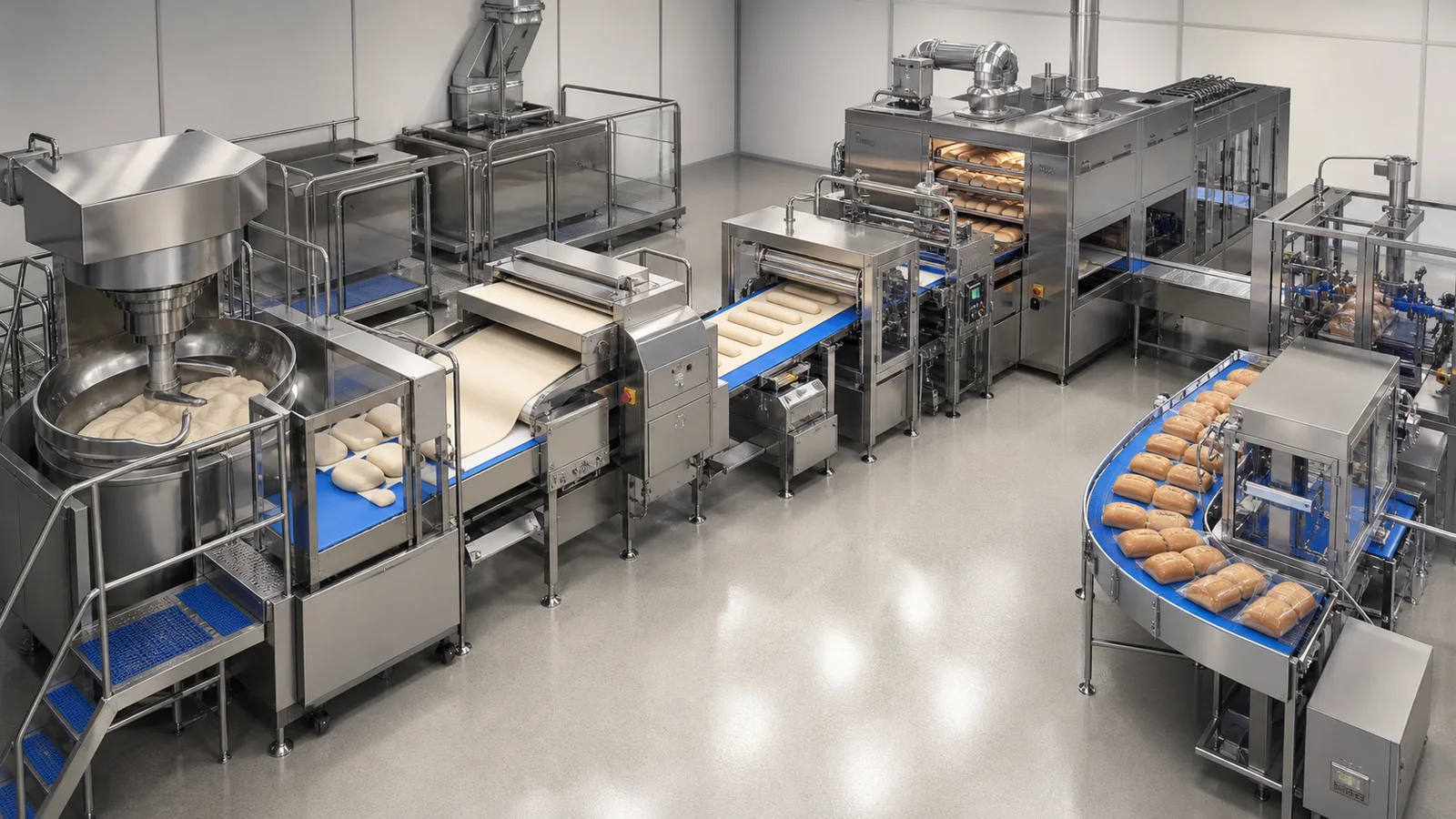
Start with accepted saleable output and product weight. Map each module’s inlet, outlet, batch or continuous basis, buffer, changeover and reject assumptions.
The lowest effective stage governs the route. Catalogue speeds should not be added together or treated as a line guarantee.
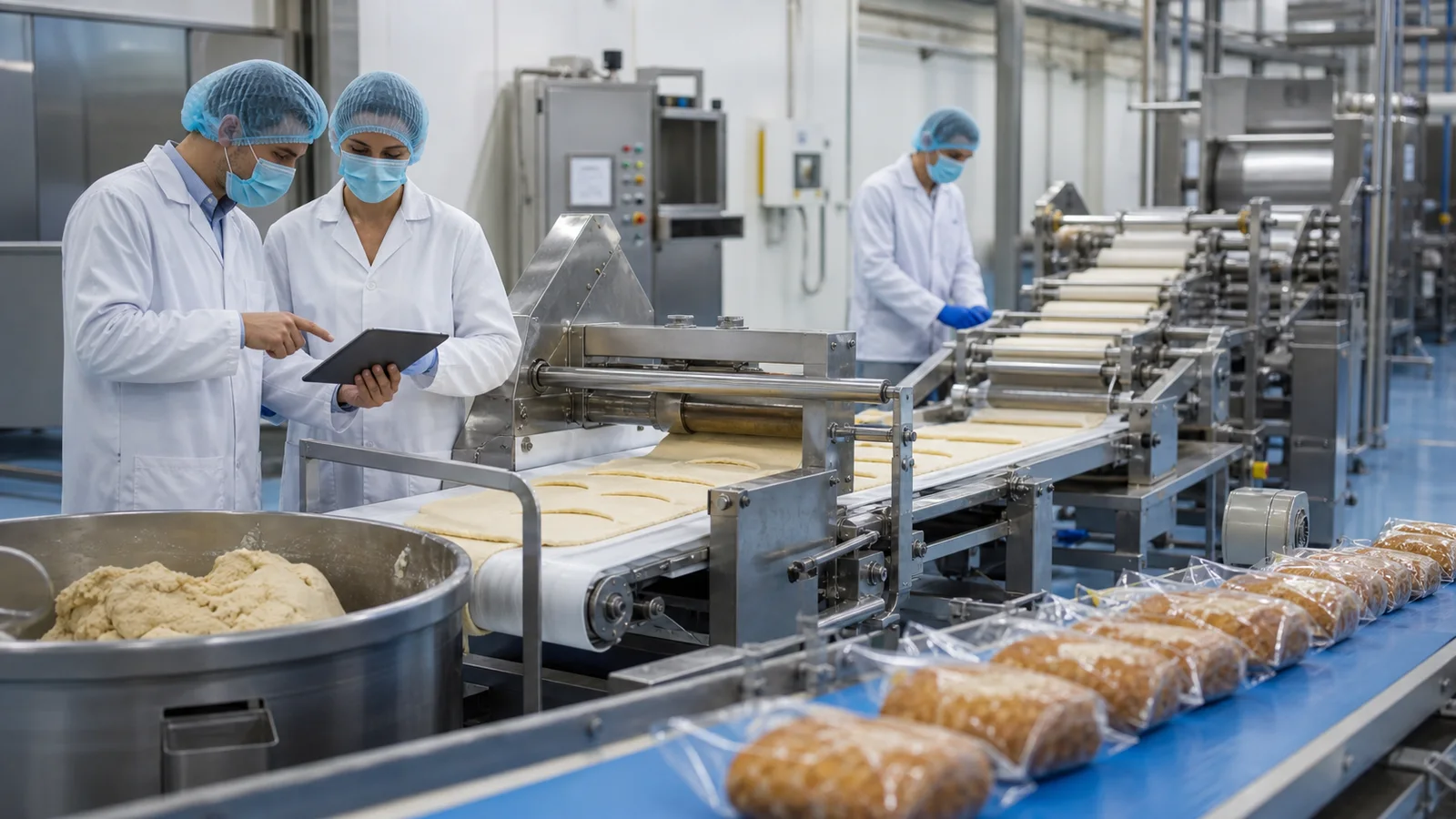
For every HELPER or third-party module, name mechanical transfer, product condition, electrical and controls connection, utilities, drainage, hygiene boundary and responsible party.
FAT and SAT should test agreed products, duration and acceptance limits. A generic “complete line” label does not define what is supplied or accepted.
Engineering claim status
No universal footprint, staffing, energy, output, delivery boundary or commissioning result is claimed.
Current local pages document noodle, dumpling, dough, forming and related equipment families.
Capacity balance, interface, layout, utility, FAT and SAT frameworks are valid only with named inputs.
Third-party scope, footprint, staff, utilities, OEE, yield, installation and accepted output remain project-specific.
Use the tools as input structures, not as final engineering or quotation outputs.
These answers define the scope process; they do not replace a signed configuration.
No. Each food family creates different processes, utilities and acceptance criteria.
No. Layout and staffing depend on modules, access, sanitation, packaging and automation.
Rated output belongs to named conditions; accepted output is saleable product measured by an agreed test.
Define every product, mechanical, controls, utility, hygiene and responsibility interface.
No. They are technical planning illustrations, not customer evidence or final drawings.