
Automatic Dumpling & Noodle Steaming Tunnel
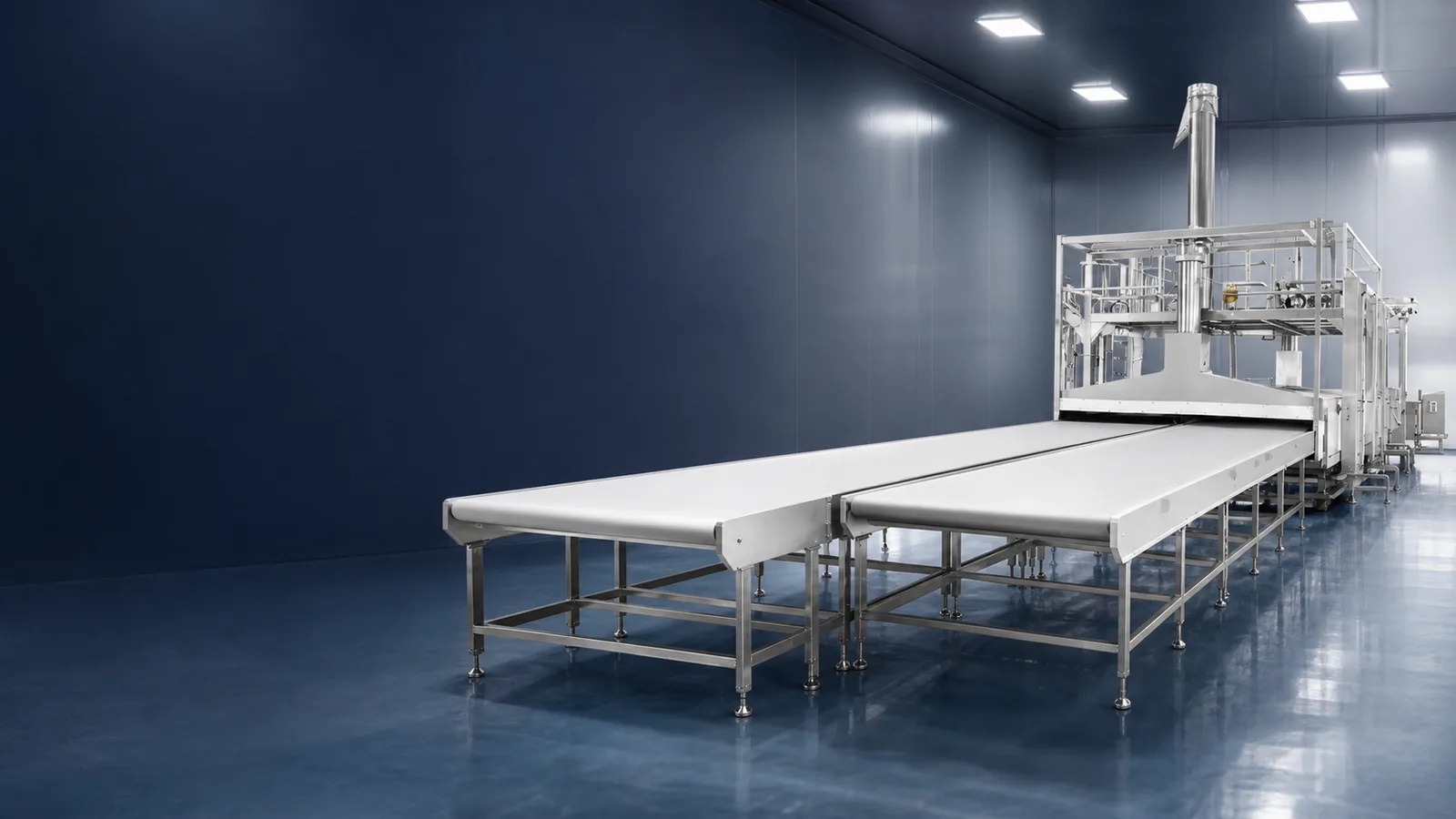
A project-engineered continuous tunnel combining controlled steam distribution, SUS mesh-belt conveying, automatic cleaning, steam extraction and strong-air cooling before freezing or packing.
Control heat transfer and cooling as one process
The tunnel is sized around product weight, incoming temperature, forming-machine output, required core cook and downstream freezing conditions.
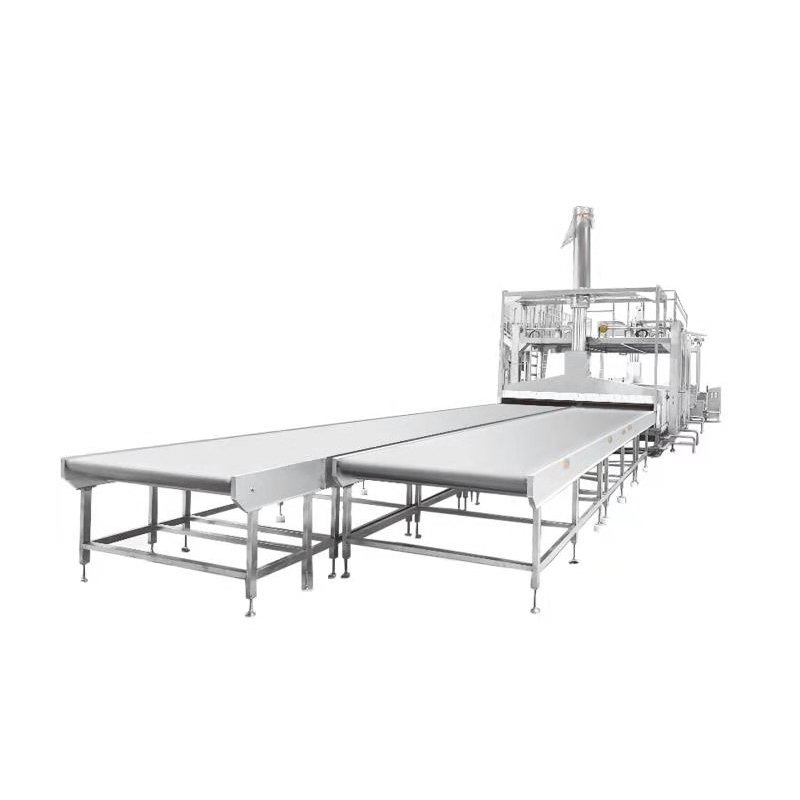
Built around the actual food load
Temperature sensors monitor steam-box conditions section by section.
Internal distribution targets controlled top, bottom, left and right heat balance.
Multi-stage high-pressure water cleaning supports repeatable sanitation.
A normally closed inlet valve shuts steam on power loss.
PLC-controlled access supports maintenance and cleaning procedures.
Inverter control and automatic tensioning match residence time to the product.
Parameters required for tunnel sizing
HELPER publishes no single standard power, length or steam-consumption figure for this product because every tunnel is configured by food type, output and factory layout.
Size residence time, steam and cooling from the real food load
A continuous steaming tunnel cannot be selected from belt width alone. Product mass, thickness, inlet temperature, loading density, required core cook and belt pattern determine heat demand and residence time. HELPER therefore publishes this as a customized project rather than one fixed catalog model. Forming output establishes mass flow; trials and factory steam conditions establish length, zones and belt speed.
Multi-section sensors monitor the steam enclosure while the distribution system balances heat around the belt. Published targets are ±1.5°C across the overall heating environment and ±1°C within the top, bottom, left and right areas of a section. These describe controlled tunnel conditions; commissioned core-temperature validation remains part of the plant food-safety plan.
Pressure, flow, dryness, inlet control and condensate return influence stability. A normally closed inlet valve isolates steam on loss of power.
Outlet extraction contains vapor and limits heat and humidity in the room. Duct routing and plant exhaust capacity are engineering inputs.
The published system cools below 40°C, reducing freezer load and frost risk. The attainable endpoint depends on food load and ambient conditions.
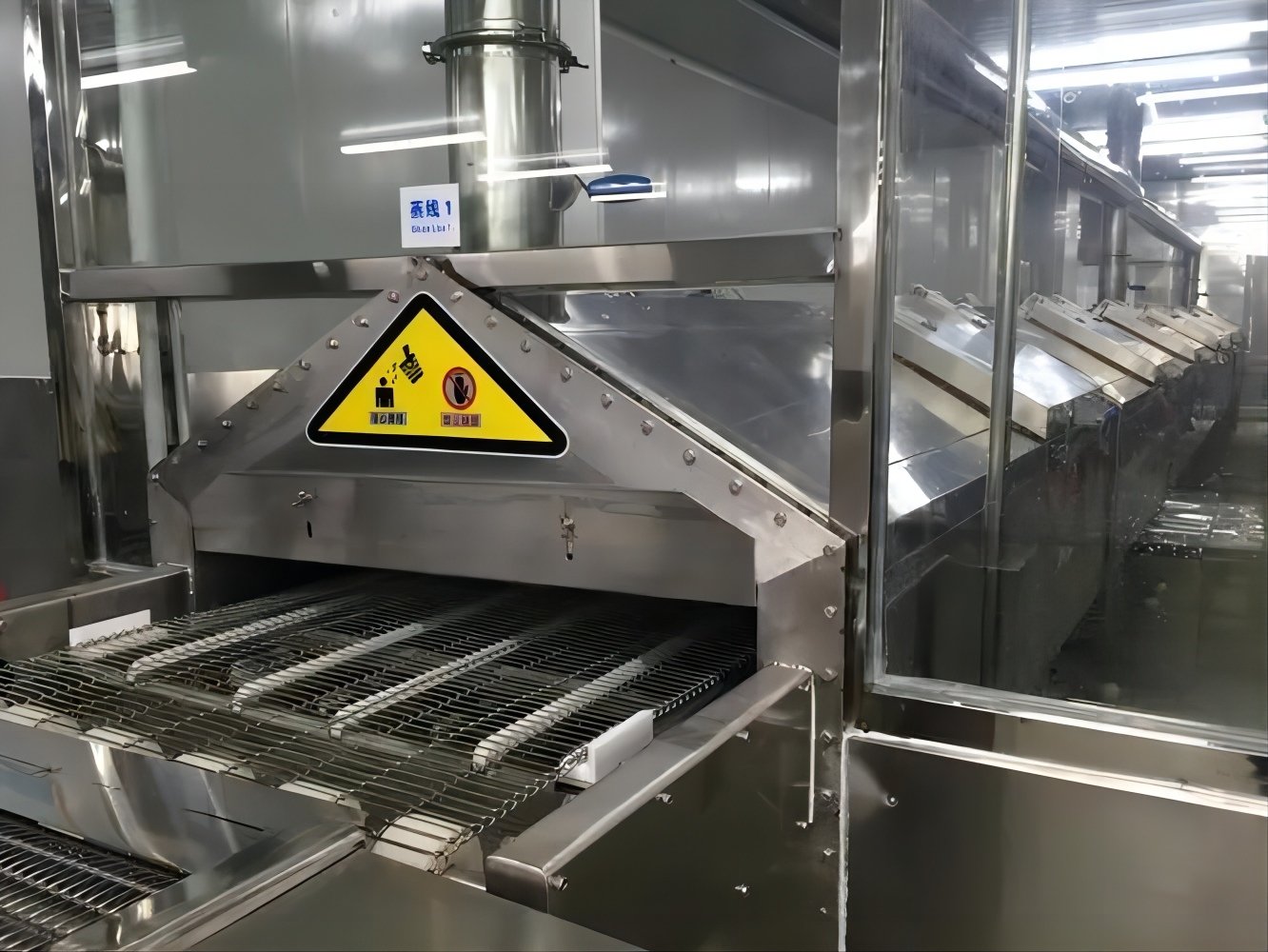
SUS304 or SUS316 mesh belts, inverter speed control and automatic tensioning support stable transport and cleaning.
Cleaning and access
Multi-stage high-pressure cleaning covers the belt and internal areas. Water temperature, chemical compatibility, drainage and residue handling should be defined. PLC-controlled lid lifting supports inspection after the automatic cycle.
Downstream interface
Cooling must match the freezer or packing step. The proposal needs discharge temperature, belt elevation, spacing, surface-moisture limit and time before freezing. These determine fan duty and cooling length.
Dumpling and noodle steaming tunnel FAQ
Why is no standard length or power shown?
The tunnel is sized from product, throughput, steam conditions, cooking target and cooling requirement; one figure would misrepresent customized projects.
Does below 40°C mean ready for packing?
It is a published cooling target, not a universal packing specification. The acceptable endpoint depends on the product and next process.
Can one tunnel process dumplings and noodles?
Yes, but loading, belt arrangement, residence time and steam zones require validation for each recipe.
Which utilities must be supplied?
Provide steam pressure and capacity, electrical standard, process and cleaning water, drainage, exhaust route and the downstream conveyor or freezer interface.
Tunnel, conveyor and food-cooking application
Related decision path
Continue from this page
Size the tunnel from product trials
Send the formed product, throughput, target cooking result, steam conditions and freezer interface. HELPER can prepare the residence-time and layout proposal.
Ready to discuss your project?
Use our single online inquiry form to send your product, capacity, utility and layout requirements.
Go to contact form