
Turnkey Steamed Dumpling Production Line
Engineer filling and dough preparation, forming, continuous steaming, controlled cooling, quick freezing and packaging as one validated process for retail and food-service dumplings.
Start with the steamed dumpling specification
A dependable line is designed backwards from the finished product. Define dumpling shape and weight, wrapper thickness and hydration, filling formulation and particle size, dough-to-filling ratio, seal geometry, required steam treatment, cooling route, freezing target and retail or food-service pack format. Those decisions determine each machine, conveyor interface and hygiene zone.
The official HELPER scope states that forming-machine models are selected for different dumpling shapes and weights. It also describes customizable solutions for different sizes and fillings. This does not mean one mould or one process recipe makes every product: each nominated SKU should be trialled with its actual dough, filling and thermal target.
Flour absorption, mixing energy, rest time and temperature affect sheet smoothness, elastic recovery and sealing.
Fat level, particle distribution, free water and feed temperature influence depositing and safe thermal processing.
Steam profile, cooling rate, surface moisture and freezer residence time determine safety and eating quality.
One controlled flow from raw materials to cold storage
The final arrangement is built around product flow, people flow, sanitation access and the capacity of the slowest validated operation.
Modules available for an integrated HELPER project
The official HELPER page identifies the equipment families below. The signed quotation should state which modules, conveyors, controls, utilities and services are included.
| Process area | Published HELPER equipment scope | Key engineering input |
|---|---|---|
| Filling preparation | Vegetable washer and cutter; meat grinder, dicer and chopper; filling mixer | Raw-material temperature, particle profile, dewatering and batch size |
| Dough and wrappers | Vacuum dough mixer; multi-roller wrapper rolling machine | Flour absorption, dough temperature, rest time and wrapper thickness |
| Forming | Model selected for dumpling shape and weight | Piece geometry, fill ratio, mould set, lanes and accepted output |
| Steaming | Continuous tunnel with double-lift hood | Steam profile, belt load, core-temperature target and cleanability |
| Cooling and freezing | Optional water spray or multi-layer cooling; tunnel or spiral quick freezer | Product surface condition, cooling curve, freezer load and exit temperature |
| Packaging | Pillow packer, vertical packer or tray film-coating machine | Pack format, target weight, shelf-life plan and cold-chain interface |
500, 1,000 and 1,500 kg/h standard designs
HELPER publishes three current steaming-line capacity levels and also offers custom designs. These figures describe nominal project classes; final accepted throughput must still be established with the actual dumpling mass, steam treatment, cooling load, freezer duty and packaging format.
| Design class | Published nominal capacity | Typical selection work |
|---|---|---|
| Standard A | 500 kg/h | Confirm forming lanes, tunnel belt loading, recipe and shift pattern |
| Standard B | 1,000 kg/h | Balance parallel preparation, steam supply, cooling and freezing |
| Standard C | 1,500 kg/h | Validate factory logistics, redundancy, utilities and packaging cells |
| Custom | Project-defined | Engineer from required accepted output and product portfolio |
Capacity should be written into FAT/SAT criteria as saleable kilograms per hour at an agreed recipe and quality standard—not simply conveyor nameplate speed.
Steamed dumpling production references
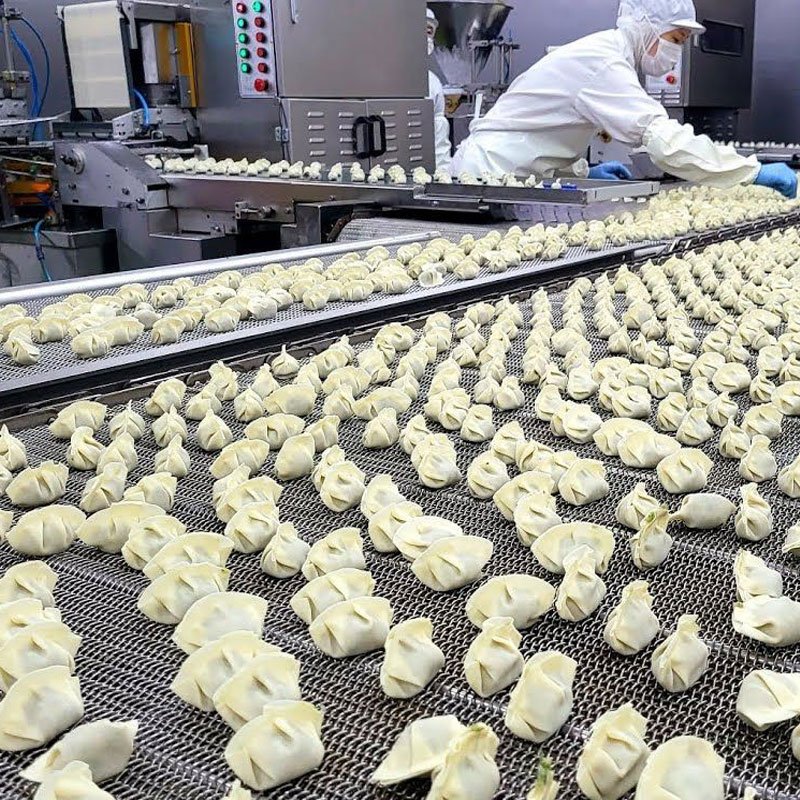
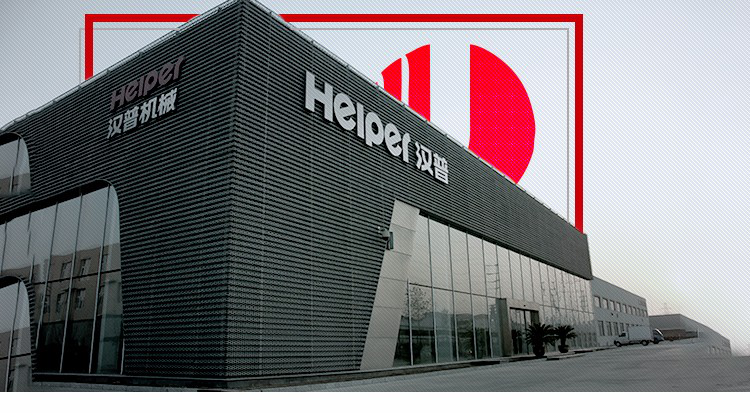
The factory image is exact official HELPER media; the production-floor image shows HELPER forming output relevant to the line. The hero is a concept visual, not proof of a delivered installation.
Media note: the official project page contains a “Video” heading but exposes no attributable video file or player. A generic clip has not been embedded as evidence of this exact project.
Validate the thermal process before sizing the freezer
Steaming performance depends on piece mass, wrapper thickness, filling temperature, belt loading, steam quality and residence time. The target is not merely a hot surface: the agreed time-and-temperature treatment must be demonstrated at the product’s coldest point while controlling wrapper hydration, sticking, collapse and condensation.
HELPER’s tunnel uses a double-lift design so the hood can be raised for cleaning. Optional water spray and multi-layer cooling can be configured when the recipe needs rapid heat removal before freezing. Cooling must reduce product temperature without creating excessive surface water. A tunnel freezer or spiral freezer is then selected from actual heat load, product spacing, target core temperature, defrost schedule and available floor area.
Design sanitation and segregation into the factory
Raw meat, vegetables, flour dust and ready-to-freeze product create different hazards. The layout should separate raw-material movement, operators, waste and finished-product traffic while retaining access for cleaning and maintenance. Drainage, floor slopes, refrigeration plant, electrical distribution, compressed air and wash-water points should be approved before equipment foundations and services are fixed.
Cleaning plans must cover filling-contact parts, dough residue, wrapper trim, conveyors, forming moulds and freezer access. Where allergens or multiple fillings are produced, establish a documented changeover sequence, dismantling scope and verification method. Hygienic performance depends on the complete room and operating practice as much as stainless-steel machine construction.
Map raw meat, washed vegetables, dough, formed product, frozen product, packaging and waste as separate flows.
Review tool-free access, removable contact parts, water-sensitive components, drainage and safe lockout.
Confirm voltage and frequency, connected load, refrigeration duty, compressed air, water and exhaust.
Accept the line on saleable steamed dumplings
A factory acceptance test should use representative dough and filling, agreed moulds and the intended pack. Record accepted pieces per hour—not only mechanical strokes—together with piece-weight variation, filling giveaway, wrapper thickness, seal failures, malformed-product rejects and operating interruptions. Freezer tests should verify belt loading, residence time and product-core temperature. Packaging tests should include target weight, seal integrity, label or code checks and metal-detector challenge standards.
Site acceptance repeats the critical measures with the installed utilities, refrigeration system and production team. Include sanitation duration, product changeover, allergen cleaning where relevant, start-up yield and operator training. This creates an auditable boundary between standard machine data and project performance.
Steamed dumpling production line FAQ
What capacities does HELPER publish for steamed dumpling lines?
The official project page lists 500, 1,000 and 1,500 kg/h designs and states that custom designs are available. Final accepted capacity must be confirmed for the real dumpling, thermal process, freezer load and pack format.
Why is cooling required after the steaming tunnel?
Freshly steamed dumplings carry sensible heat and surface moisture. Controlled cooling protects product shape, reduces the refrigeration load and prepares the surface for reliable quick freezing. HELPER states that water spray and multi-layer cooling can be configured according to process requirements.
Which quick-freezing system can be supplied?
The official scope includes both quick-freezing tunnels and spiral quick freezers. Selection depends on entering product temperature, required kg/h, residence time, belt loading, floor space, sanitation access and defrost strategy.
Which packaging formats are supported?
HELPER lists pillow packaging, vertical packaging and tray film-coating machines. The correct option depends on whether the dumplings are loose or trayed, target weight, presentation, shelf-life plan, secondary packing and cold-store logistics.
Related decision path
Continue from this page
Build the line around your dumpling
Send the recipe, piece drawing or sample, target accepted kg/h, steam-treatment target, pack format, factory plan and utilities. HELPER can then define module scope, interfaces, trials and acceptance criteria.
Ready to discuss your project?
Use our single online inquiry form to send your product, capacity, utility and layout requirements.
Go to contact formApplication fit
Applications for Turnkey Steamed Dumpling Production Line
Best suited to industrial frozen or steamed dumpling production, from prepared dough and filling through forming and the selected thermal, freezing or packing stages. Final suitability should be confirmed with representative product trials and the agreed acceptance criteria.