
Fresh bone-in meat, frozen meat blocks and dense bones describe different cutting applications, but they do not automatically require three different saws. Start with two separate questions: what condition is the product in, and what will the blade pass through? Then compare product support, feeding arrangement and the required portion. A species name or motor rating alone does not establish suitability.
This guide helps buyers describe an application and understand configuration choices. It does not prescribe product temperatures, blade settings or handling procedures. For the machine range, use the JGJ industrial bone saw series; the actual product and selected configuration still need to match.
Separate temperature condition from bone structure
“Frozen” describes condition; “bone-in” describes composition. A frozen block may contain no bone, while a bone-in joint may arrive chilled or frozen. In this guide, chilled means refrigerated and unfrozen; it is not a legal temperature definition. “Fresh” on its own does not tell a machine supplier the actual product temperature or firmness.
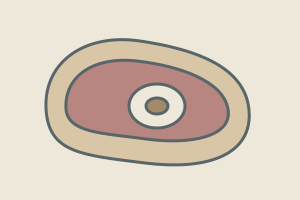
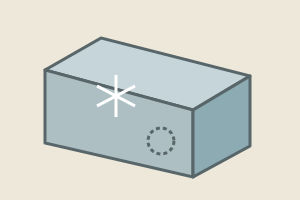

Original explanatory illustrations, not product photographs, anatomical measurements or HELPER trial results.
| Broad request | More useful application description |
|---|---|
| “Cut beef” | Chilled bone-in rib sections for individual portions. |
| “Cut frozen meat” | Boneless frozen blocks, with block dimensions and required output shape. |
| “Cut bones” | Separated leg bones, identifying the section and intended cross-cut. |
Fresh or chilled bone-in cuts: consider the whole section
A pork loin with bone and a beef rib section both combine meat and bone, but that shared label does not make their shapes or support needs identical. Describe the cut that is required, including its direction relative to the bone and the form of the incoming piece.
EASYBEAR lists fresh bone-in meat separately from frozen products and heavy-bone cutting in its blade application range. This is useful evidence that “bone saw” is too broad a specification. It does not establish that a particular blade, table or feeding system suits every fresh joint.
For portioned chops, discuss the intended thickness and presentation as well as whether the raw piece is regular or irregular. Cutting a joint into portions and breaking down a large section are different tasks even when the species is unchanged.
Frozen blocks: define the block, not just the freezer state
Specify whether the block is boneless, contains bone, or is a collection of pieces frozen together. Include its shape and the intended cutting pattern. A rectangular outline alone does not describe its internal composition or establish how it can be held.
Freezing does not automatically mean a separate machine is necessary. PSV's SS2500 technical sheet and Kolbe's K330S page both describe fresh and frozen applications for their named equipment. Those are product-specific statements, not approval of the same applications on every JGJ model.
Nor does “frozen-capable” establish a production rate. Compare the complete loading, feeding and discharge arrangement for the intended portions. Do not calculate accepted output from motor power or blade speed alone.
Dense bones: do not assume a coarser blade is the answer
A bone-dominant leg section deserves its own application review. EASYBEAR's guide specifically recommends a finer tooth pitch for dense bones within its range. That is a reason to question the shortcut “harder material means fewer teeth,” not a universal tooth recommendation.
Keep blade choice tied to the machine's permitted specification and the named product. The separate bone saw blade selection guide explains the specification fields; this page does not replace that compatibility check.
Manual feed, sliding support and automatic feed are different choices
The JGJ upright series uses operator-controlled feeding. A sliding table supplies moving support; it does not by itself make feeding automatic. Table versions, fences and feed directions vary across the catalogue.
The JGJ-6580A automatic-feed saw uses servo-controlled feeding with a top gripper and lower pin row. That architecture changes how the product is presented. It still needs a compatible product shape and holding arrangement; automation is not a universal answer to irregular material.
A useful shortlist therefore joins three decisions: the product condition and structure, the required portion, and the feeding configuration. Read the cutting-window and table guide for space comparisons without assuming that physical clearance proves complete suitability.
Frequently asked questions
Can the same bone saw cut fresh and frozen meat?
Some manufacturers specify both for named machines. Confirm the selected model, blade and product configuration; a general category description does not approve every combination.
Does fresh meat have to be frozen before sawing?
Not as a universal rule: manufacturers publish fresh-meat applications. Follow the specified process for the actual product; this guide does not provide chilling or freezing instructions.
Is a more powerful motor enough for dense bones?
No. Motor power alone does not establish application suitability. The machine, compatible blade, product section and feeding arrangement must be considered together.
Is a sliding table the same as automatic feeding?
No. A moving support surface and a powered feeding system are different arrangements. Check the supplied configuration rather than judging automation from a table photograph.
Sources and scope
Original manufacturer pages checked 9 November 2026. Application examples are specific to the named manufacturer's equipment or blade family; none proves universal JGJ suitability.
- EASYBEAR food-processing blade range and selection guide. Undated; one source family. Distinct product applications and dense-bone guidance.
- PSV SS2500 technical sheet (PDF). No issue date shown; fresh and frozen applications for that model.
- Kolbe K330S manufacturer page. Undated; fresh/frozen application statement. No competitor performance numbers are transferred.
- HELPER JGJ series and JGJ-6580A. Configuration descriptions, not new product-trial findings.