
Choose a meat bone saw blade by confirming its compatible length, width and thickness first, then selecting the tooth configuration for the actual product. “3 TPI” or “4 TPI” is only one part of the specification. Neither a familiar machine model nor a matching blade length proves that the complete blade is suitable.
This is a purchasing and terminology guide, not a blade installation or adjustment procedure. Use the JGJ bone saw series page for machine dimensions, table configurations and accessories. The approved blade specification for the supplied machine remains the starting point for replacement orders.
Read four different specification fields
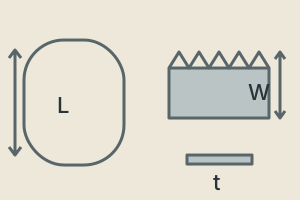
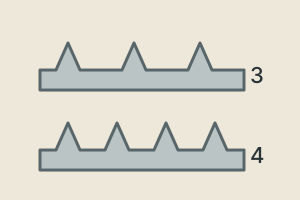
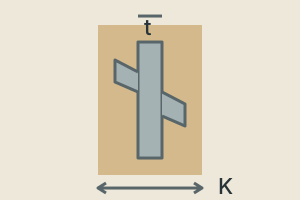
Original explanatory diagrams, not dimensioned drawings of a JGJ blade.
| Field | Meaning and purchasing check |
|---|---|
| Length | The complete welded loop length. Confirm the specified length and tolerance for the machine. |
| Width | The distance from the tooth tip to the back of the strip. Confirm the permitted width, not just the visible strip body. |
| Thickness | The blade body's thickness. Check the approved specification and wheel compatibility. |
| Tooth configuration | TPI, tooth form and setting describe different features. Include the supplier's complete designation. |
Munkfors defines these dimensions separately. EASYBEAR likewise treats machine compatibility as a prerequisite. A blade with the right loop length but a different width or thickness is not automatically an equivalent replacement. Ask for the complete specification rather than ordering by length alone.
What do 3 TPI and 4 TPI mean?
TPI means teeth per inch. A 3 TPI blade has fewer teeth over the same distance than a 4 TPI blade. Tooth pitch describes the spacing between successive tooth tips; the two terms are related, but a TPI number does not describe the tooth angle or setting.
For conventional constant-pitch blades, lower TPI indicates a coarser spacing. That does not make every coarse blade suitable for every bone. Product condition, section size and the required cut face still matter.
| Product | How to discuss the tooth choice |
|---|---|
| Frozen meat or fish | MESI describes 3 TPI as a common choice. Confirm the actual product, section and compatible blade family. |
| Fresh meat with bone | MESI describes 4 TPI applications. Bone size and the selected saw configuration still need consideration. |
| Dense leg bones | EASYBEAR specifically recommends a finer profile for its dense-bone applications. Do not assume “harder bone means fewer teeth.” |
These are manufacturer-specific starting points, not interchangeable product approvals. Request the blade supplier's recommendation for the named food and machine instead of treating a general comparison as a purchasing guarantee.
A thicker blade is not automatically a better blade
Thickness affects how the band behaves around the wheels as well as its cutting behaviour. EASYBEAR cautions against choosing an oversized thickness for a small wheel. Do not upgrade thickness merely because the current blade bends or a heavier product is planned.
Also distinguish thickness from kerf, the width of material removed by the cut. Munkfors explains that tooth setting contributes to kerf together with blade thickness. Two blades described by the same TPI can therefore differ in cutting characteristics. A lower material-loss claim needs a comparable product trial; it cannot be calculated from TPI alone.
Prepare a complete replacement request
Use the installed machine identification and its approved consumable record. The current JGJ series schedule gives cutting heights, power and table information, but it does not establish a full blade specification for every listed model. For example, JGJ-2600 is not evidence that its blade loop is 2600 mm long.
- Machine
- Exact model, serial number and fitted configuration.
- Blade
- Approved length × width × thickness, units, tolerance and complete tooth designation.
- Product
- Species, bone-in or boneless condition, fresh/chilled/frozen state and section size.
- Required result
- Portion geometry, cut-face condition and the existing blade reference where available.
A useful request joins all four records. “A blade for frozen meat” leaves the machine dimensions unresolved; “the same length as before” leaves the tooth configuration unresolved. If a blade label and the equipment record disagree, resolve the specification before ordering.
Keep blades, guides and scrapers separate
The JGJ wear-parts section shows nylon guides, scraper blocks and a copper assembly. These are separate from the cutting band. Their photographs do not establish blade compatibility or a universal spare-part fit. Describe the component and machine together when discussing replacements.
Frequently asked questions
Can I order a replacement by machine model alone?
The model starts the identification, but confirm its fitted configuration and approved blade record. Do not convert a model number into an assumed blade length.
Is 3 TPI always better than 4 TPI for bone?
No. The product and blade design matter. Published manufacturer guidance includes different choices for frozen products, fresh bone-in meat and dense bones; confirm the specific combination.
Will a thicker blade solve a crooked cut?
That symptom alone does not establish the correct thickness. Ask for a specification and machine-condition review rather than substituting an unapproved blade or copying tension settings from another saw.
Does matching length mean two blades are interchangeable?
No. Width, thickness, tooth configuration and the machine's approved specification must also match the intended application. Keep the complete blade designation in the purchase record.
Sources and scope
Original manufacturer pages checked 9 November 2026. The guide explains purchasing terminology; it does not approve a blade for a particular JGJ machine or replace its manual.
- Munkfors: How to select the right blade. Undated manufacturer terminology page; dimension, tooth pitch and kerf definitions.
- EASYBEAR: Band Saw Blade Selection Guide and blade FAQs. Undated pages from one manufacturer; compatibility and dense-bone guidance are product-specific.
- MESI: Differences between bandsaws for meat and fish, 4 September 2026. Application examples, not a universal tooth prescription.