
Choose a meat bone saw by checking the product opening and table arrangement separately. Cutting height describes vertical clearance; throat depth describes lateral clearance between the blade and frame. Table height, table area and sliding travel answer different questions. A machine can clear a product vertically yet still be unsuitable for its width, support or intended cutting route.
Use these distinctions to compare drawings before purchasing. This guide does not give operating settings or approve a cutting method. The JGJ bone saw series lists verified catalogue data and configuration choices; the dimensioned drawing for the ordered version must resolve missing clearances.
Three views make the dimensions easier to read
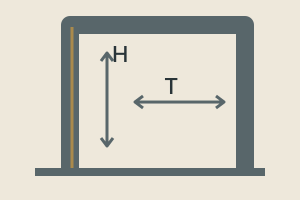
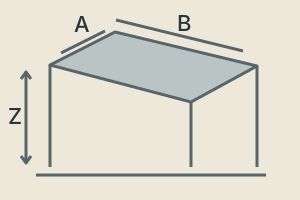
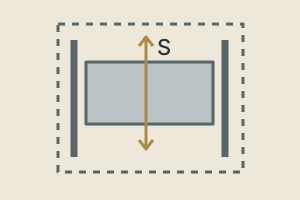
Original conceptual diagrams, not JGJ engineering drawings. Positions and proportions are illustrative.
| Field | Purchasing meaning |
|---|---|
| Cutting height | How much vertical product clearance is available above the table? |
| Throat depth / width | How much lateral space is available between blade and frame? |
| Table height | Where is the working surface relative to the floor? |
| Table area | What support surface is provided around the cutting location? |
| Sliding travel | How far can the moving table travel in its specified configuration? |
Cutting height is not the machine's overall height
Guardian's buyer guide defines height of cut using the space between the table and upper guide. King Canada separately publishes depth of cut, frame-to-blade capacity and floor-to-table height. Read the drawing and field definition together: a catalogue's word “depth” does not always identify the same axis.
The floor-to-table figure concerns working position; the overall machine height concerns room and installation space. Neither establishes the height of meat that can pass through the cutting opening. Compare the largest product in its proposed orientation, including protruding bone, rather than its average thickness.
In the supplied HELPER schedule, JGJ-2600 has a listed cutting height of 260 mm and table height of 800 mm. Catalogue designation 370 has a listed cutting height of 330 mm. These examples show why a model designation must not substitute for the actual specification.
Throat clearance depends on the planned cut
The throat is the lateral opening toward the frame. It is not the table's full width, the blade loop length or the thickness of the finished portion. For a proposed cut, identify which part of the product occupies the frame side of the blade. Confirm that dimension on the selected machine drawing.
A long bone and a broad rib section can pose different geometry questions even at the same height. Likewise, rotating a rectangular block changes which dimension occupies the opening. That is a reason to review the cutting route, not permission to rotate or reposition material during operation.
A dimension marked “maximum cutting width” needs context. Ask whether it means frame clearance, a fence adjustment range or capacity with a specific carriage fitted. The JGJ series schedule currently does not establish throat clearance for every model; its overall width cannot fill that gap.
Separate table size, travel and room space
DMS lists sliding-table dimensions separately from the cutting-side opening and other machine dimensions. That separation matters: surface length does not establish slide stroke. A fixed table and a sliding table also present the product differently, so compare the ordered arrangement rather than the accessory photograph alone.
Review the full table movement, loading side, receiving side and access around the machine on a layout. A closed-machine footprint describes only part of that space. A larger tabletop also does not establish its permitted load or replace confirmation of product support and suitable handling.
A worked example: a height check is only the first filter
Suppose a hypothetical block is 240 mm high, 280 mm across the proposed frame-side section and 450 mm long in the feed direction. These are example inputs, not a HELPER trial or recommended operating dimensions.
- A catalogue height of 220 mm is below the block's 240 mm height, so that orientation fails the initial height comparison.
- A listed height of 260 mm exceeds 240 mm by 20 mm. This arithmetic does not establish an adequate operating margin or approve the machine.
- The proposed 280 mm lateral section still needs a confirmed throat dimension. The 450 mm feed length requires separate support and table-movement review.
Until those checks are resolved, the result is “candidate for configuration review,” not “fits.” There is no universal allowance to add to every meat block.
Frequently asked questions
Does a bigger table mean a wider cutting capacity?
No. The tabletop provides support, while the blade-to-frame opening limits lateral clearance. Compare both dimensions and the fitted fence or carriage.
Can a block equal the maximum cutting height?
Do not approve a purchase from equality alone. Product variation, the fitted configuration and the intended handling route need review against the manufacturer's drawing and procedure.
Is sliding-table length the same as travel?
No. Length describes the surface; travel describes movement. Request the stroke and layout for the exact table version.
What should a complete selection request contain?
Product dimensions and condition, proposed cut direction, target portion, selected model and table version. Confirm missing dimensions with HELPER; use the blade selection guide for consumable specifications.
Sources and scope
Manufacturer pages checked 9 November 2026. This is a terminology and purchasing comparison guide, not an operating procedure or a declaration that a product fits a machine.
- Guardian: How to choose a butcher bandsaw. Undated buyer guide; vertical and lateral opening definitions and layout considerations.
- King Canada: KC-10MBN specifications. Undated manufacturer page; separate capacity, table surface and floor-to-table fields. Its specifications are not JGJ specifications.
- DMS: K 330 S specifications. Undated manufacturer-hosted table showing different opening and table fields; no competitor dimensions are transferred to HELPER.
- HELPER JGJ series catalogue schedule. Supplied catalogue and owner-confirmed model mapping; throat dimensions and slide stroke require separate confirmation.