
18/22 slices/lb means 18–22 slices per pound, not 18 divided by 22 or 18–22 slices in every pack. lb means pound. 18/22 Style is manufacturer wording: the cooked example below compares raw-bacon thickness. Read the declared pack quantity separately. None of these numbers alone gives an exact thickness in millimetres.
1. Count by weight and thickness measure different things

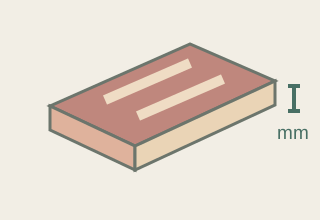
Original conceptual drawings, not measured slices or HELPER trial results.
Wright’s official thick-sliced bacon page explicitly specifies 10–14 slices per pound. That is useful count wording for that named product, rather than a universal definition of “thick.” [1] A North Country Smokehouse sheet separately lists slice count and thickness for one product. Treat the two fields as separate specifications, not a conversion chart for every belly. [6]
For a fixed weight, fewer complete slices mean a greater average mass per slice. That does not establish thickness without considering the slice geometry. A short, narrow slice and a broad slice should not be compared by count alone. See the raw-material receiving guide for belly and lot differences.
2. Read the quantity after the number
| Wording | What it describes | Avoid this inference |
|---|---|---|
| 18/22 slices per pound | Wright product 10253620616 explicitly uses 18/22 as an 18–22 slices-per-pound range. [7] | 18–22 slices in every package, or an exact millimetre thickness. |
| 18/22 Style, fully cooked | Hormel product 82869 relates its thickness to an 18/22 raw-bacon slice count. [2] | 18–22 finished cooked slices necessarily weigh one pound. |
| 288 slices — declared unit | A total piece quantity in Hormel’s “Slice Pack” listing; identify which packaging unit it covers. [3] | A slices-per-pound range or a cooking yield. |
| Case count: 12 per case | The cited North Country sheet lists one-pound product units and a 12-pound net case. [6] | Only 12 individual bacon slices in that case. |
These examples are product-specific. Style alone does not mean fully cooked and is not a universal millimetre grade. The cited Hormel page separately declares fully cooked status and explains its raw-bacon comparison. [2] For product-state terminology, see the smoked bacon product-state guide.
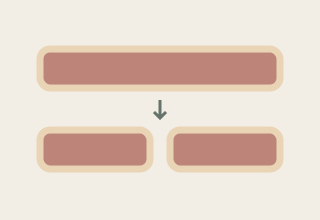
Half slices require another distinction. Hormel’s half-slice sheet lists two packages of 288 half slices, totalling 576 half slices. That is not a declaration of 576 full-length strips. [4] Specify whole slices, half slices or another portion; do not silently count broken pieces as accepted whole slices.
3. Calculate average slice mass, not an invented thickness
Fictional example: 20 raw slices together weigh one pound
Assume 20 complete raw slices have a net product weight of exactly one avoirdupois pound, excluding the packaging. NIST defines that pound as 453.59237 grams. [5]
- Convert the total: 1 lb = 453.59237 g.
- Divide by the count: 453.59237 g ÷ 20 slices ≈ 22.68 g per slice.
- Round for discussion: 22.7 g average raw slice mass.
This is an average, not an individual-slice requirement. It does not establish a millimetre setting, individual tolerance, cooked serving weight or machine capability. The assumed 20 slices are not a HELPER test result.
Likewise, the midpoint of an 18–22 range is not a promise that every pound contains exactly 20 slices. Confirm how the specification is applied and sampled before treating a nominal count as an acceptance tolerance.
4. Compare the same product stage and counting unit
Consider two illustrative descriptions: “18–22 slices/lb, raw” and “288 cooked slices per pack.” The first is a count range against weight; the second is a total of cooked pieces. They cannot be compared as if both counted slices in one pound. Their product weights and piece formats also matter.
Read offers in this order: product state; slices per pound or total count; whole or half format; net product weight; thickness and its stated tolerance. Keep packaging units separate from food pieces. A case containing several packs has more than one counting level. For illustration, 2 packs × 288 whole slices per pack = 576 whole slices per case. That calculation is valid only when those packaging levels and counts are actually declared; it is not the half-slice example above.
For equipment discussions, pair the target thickness with slab geometry and accepted slice format. The meat cutting equipment range is a starting point for matching cutting duty; no machine should be assumed to meet a commercial count from a code alone. Use the slice-defect guide for breakage and separation issues.
Keep raw and cooked mass comparisons consistent. The cooking-yield guide explains weighing boundaries and yield calculations. Return to the bacon production overview for the complete route.
What does the finished portion look like? Compare bacon shingling, stacking, layout and paper placement →
Frequently asked questions
What does 18/22 bacon mean?
When specified as slices/lb, it means 18–22 slices per pound, not a division calculation or an automatic pack total. A cooked Style description needs its manufacturer’s explanation.
Does a lower count mean thicker bacon?
It means greater average slice mass at the same total weight. Greater thickness may accompany it, but different slice dimensions prevent a universal count-to-thickness conversion.
Can I convert slices per pound directly into millimetres?
No unique conversion follows from that count alone. Obtain the actual thickness specification; average mass does not determine slice geometry.
Is 18/22 Style cooked bacon counted per cooked pound?
Do not assume that. The cited Hormel product relates the style to raw-bacon thickness. Read its declared pack quantity separately. [2]
Are half-slice counts equivalent to full-slice counts?
No. State the piece format and packaging level. The cited two packs contain 576 half slices in total, not 576 full-length strips. [4]
Does case count always mean the number of bacon slices?
No. It can count product packs inside the case. Check the unit size and net case weight alongside that field. [6]
Does Style mean the bacon is fully cooked?
No. Read the separate product-state declaration. Hormel explicitly identifies the cited product as fully cooked; the word Style alone does not establish that status. [2]
Sources and scope
Reviewed 4 November 2026. Manufacturer documents illustrate their own products, not universal trade tolerances or HELPER customer cases. Diagrams and the arithmetic scenario are original illustrations, not factory measurements. Confirm the current specification for the actual product.
- [1] Wright / Tyson Foodservice, product 10000042402, undated. Named 10–14 slices-per-pound example.
- [2] Hormel Foodservice, product 82869, undated. Fully cooked 18/22 Style and its raw-bacon thickness comparison.
- [3] Hormel BACON 1 sell sheet, copyright 2022, page 2. Style descriptions and declared Slice Pack quantities.
- [4] Hormel half-slice sheet, copyright 2020, page 2. Two packages of 288 half slices.
- [5] NIST Handbook 44, 2026, Appendix C. Exact avoirdupois pound-to-gram conversion.
- [6] North Country Smokehouse, product 20052 specification, undated. Unit weight, case count, slice count and thickness.
- [7] Wright / Tyson Foodservice, product 10253620616, undated. Explicit 18–22 slices-per-pound specification.