
The Japanese ramen guide
Japanese ramen.
From noodle to bowl.
Japanese ramen, from the first ingredients to the finished bowl.
Explore the styles, alkaline noodles, broth and toppings. Then follow the process into a ramen shop, central kitchen or noodle factory.
Explore the bowl Here for noodle equipment? →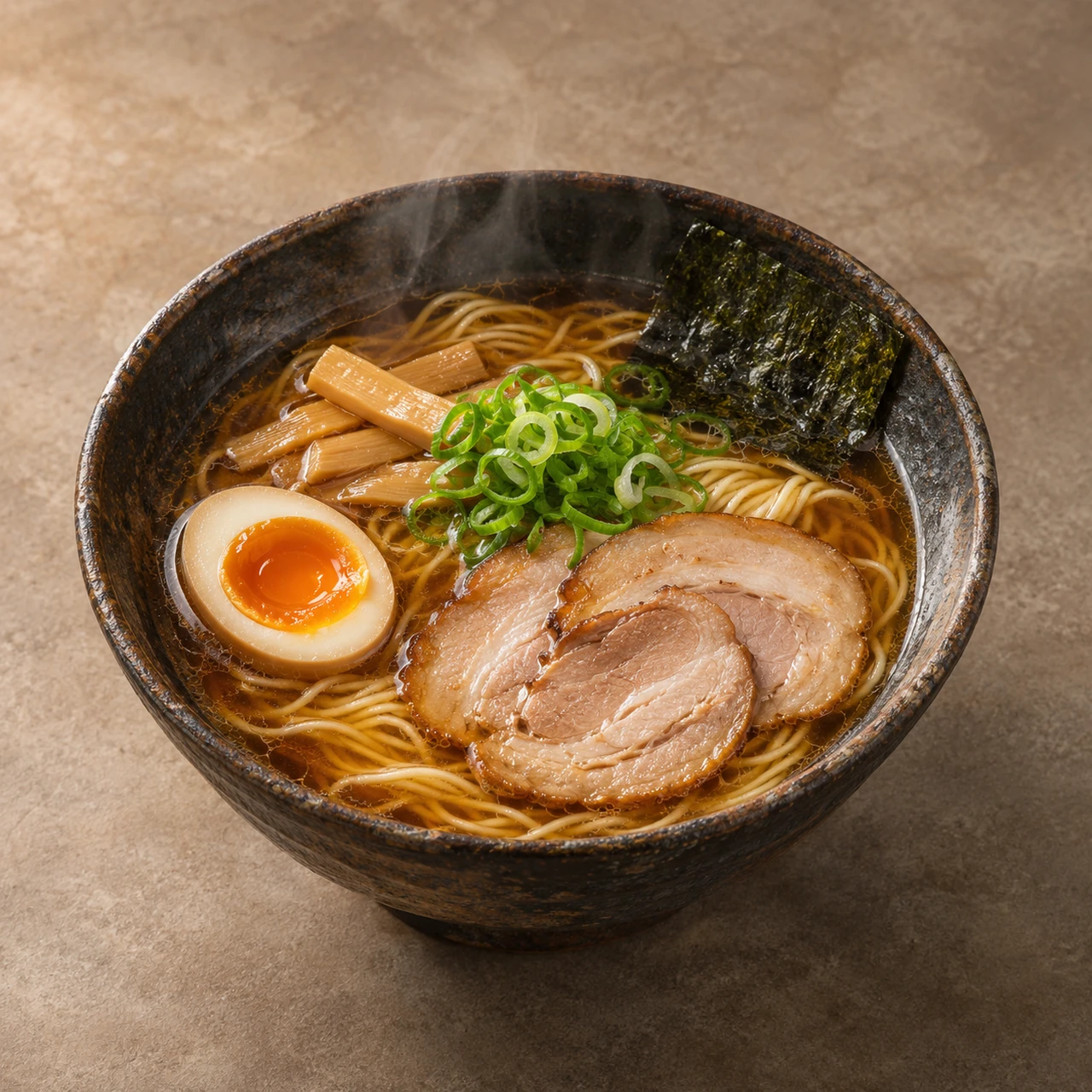
01 / Understand the bowl
Five elements. One balanced bowl.
The noodle, soup and finishing ingredients work together. Changing one can change the whole eating experience.
- 01Noodles
- Alkaline wheat noodles, with a chosen thickness, shape and bite.
- 02Broth
- The soup foundation: for example, pork, chicken, seafood or vegetables.
- 03Tare
- The concentrated seasoning that sets the bowl’s flavor direction.
- 04Aroma oil
- A finishing layer that carries aroma across the surface.
- 05Toppings
- Chashu, seasoned egg, menma, scallions and other recipe choices.
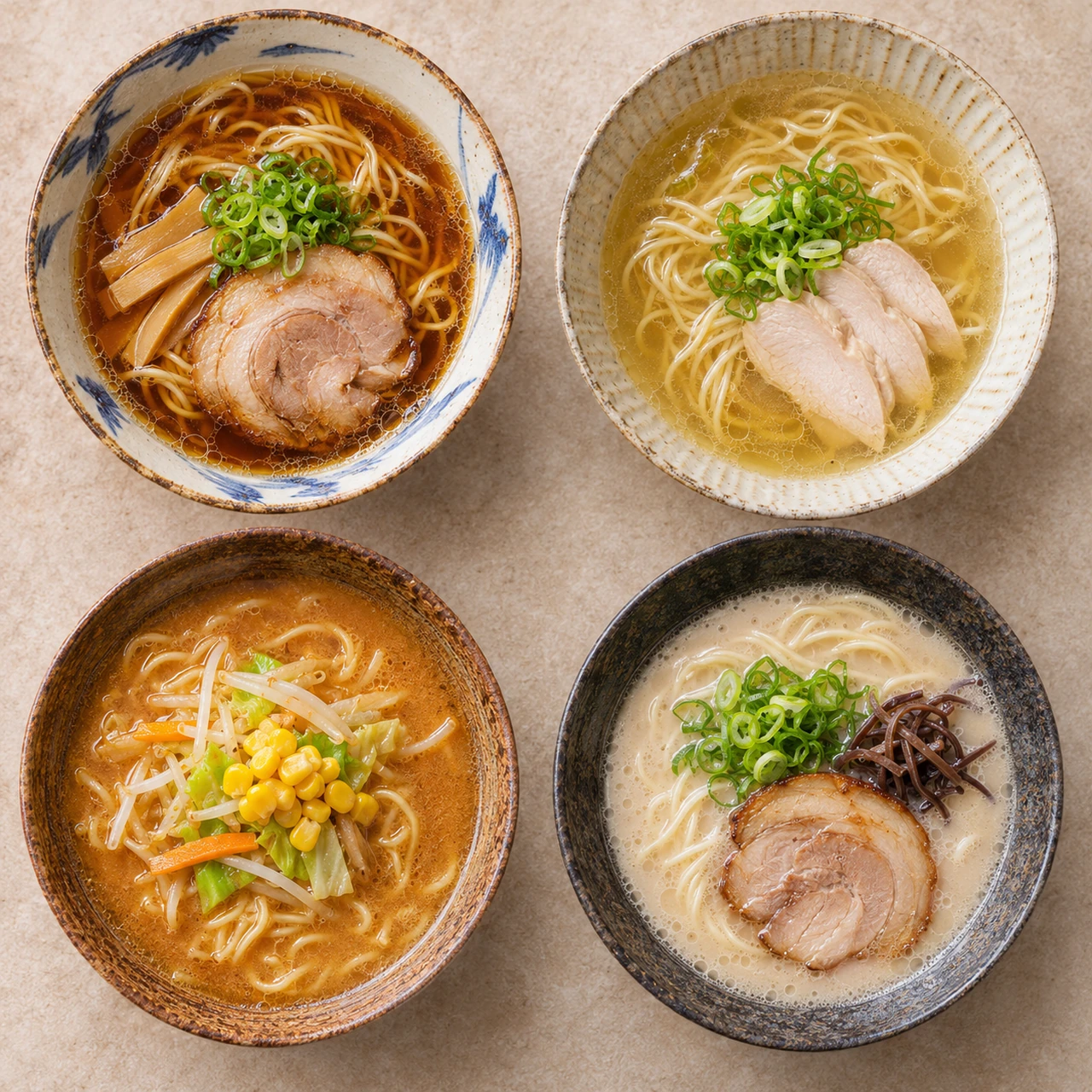
Serving illustrations; recipes and toppings vary.
02 / Find your flavor
Four familiar names.
Different ways to describe flavor.
Shoyu
Soy-sauce-seasoned ramen, often associated with an amber soup.
Shio
Salt-seasoned ramen, often served with a lighter-looking broth.
Miso
Miso-seasoned ramen, strongly associated with Sapporo.
Tonkotsu
A pork-bone broth style, associated with Kyushu.
A useful distinction: shoyu, shio and miso describe seasoning; tonkotsu describes the broth base. They are not four mutually exclusive recipes.
Regional styles, tsukemen and terminology →Background: Japan National Tourism Organization · Highlighting Japan
Beyond the soup bowl
Soup, dip or mix?
Ramen noodles also appear in closely related dishes with a different way of serving. Start with the menu format, then test the noodle for that eating experience.
- Soup ramen
- Noodles arrive in the broth. Check the bite after the expected time in the bowl.
- Tsukemen · dipping noodles
- Noodles and dipping soup arrive separately. Dip a mouthful at a time.
- Mazesoba · mixed noodles
- Mix the noodles with their sauce and toppings. There is little or no soup to dilute the seasoning.
Culinary background: JNTO ramen guide. Trial checks are HELPER planning suggestions.
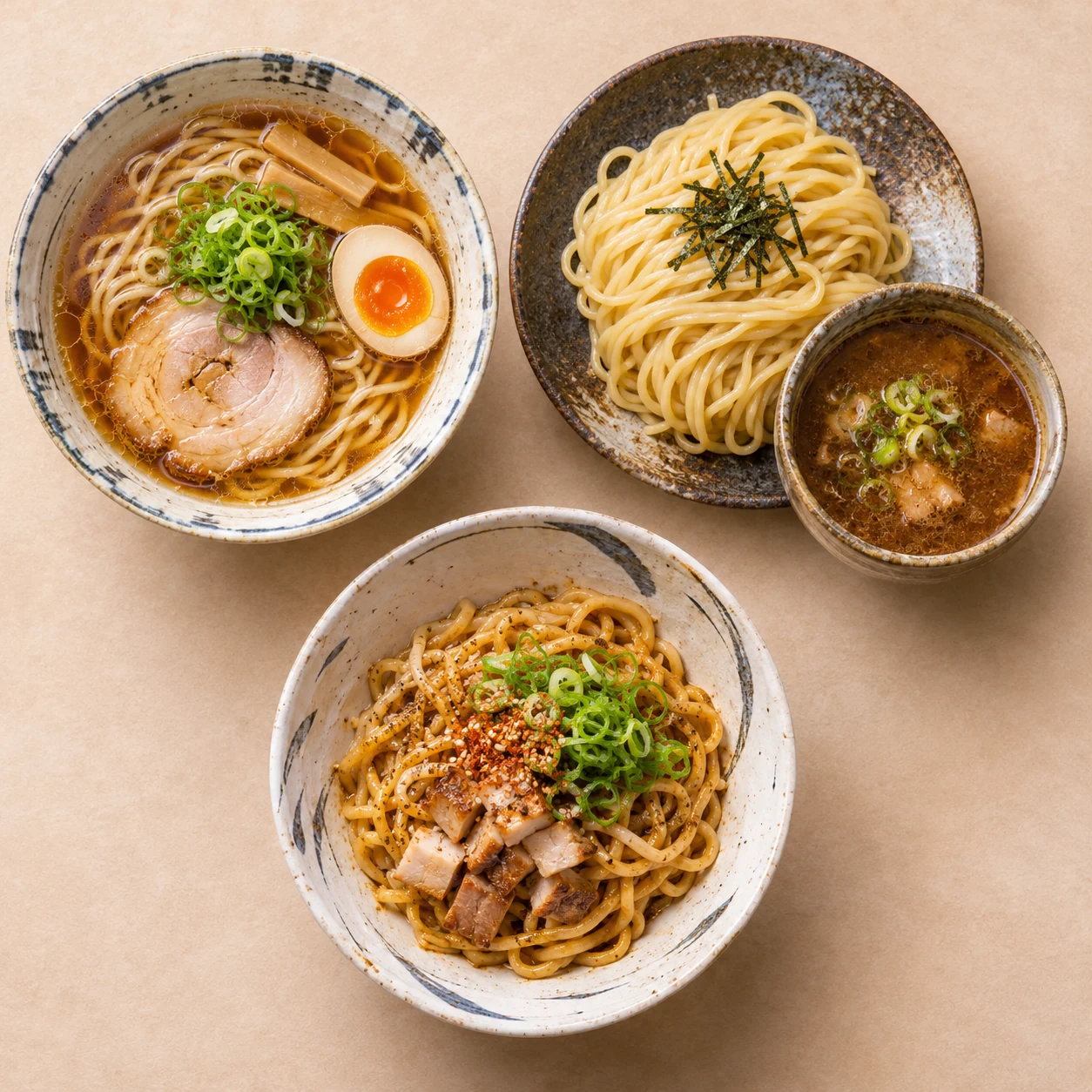
Below: mixed noodles. Serving illustrations; recipes vary.
A taste of place
Four places to start exploring.
Regional names are useful menu references. Individual shops interpret them in their own way.
- Sapporo
- Miso ramen
- Hakodate
- Shio ramen
- Tokyo
- Classic shoyu ramen
- Hakata / Fukuoka
- Tonkotsu ramen
Regional references: JNTO · Hokkaido Tourism Organization
Look at the strand
Two choices to see.
Then a texture to test.
Compare strand size and waviness separately. A noodle can be thin or thick, straight or wavy; the final choice belongs with your recipe and serving style.
Thin & straight
Thicker & straight
Thin & wavy
Thicker & wavy
03 / Follow the noodle
From flour to a noodle
with the right bite.
Flour, water, salt and kansui are the starting point. Mixing, resting and rolling turn the recipe into a consistent strand.
- 01
Mix
Distribute water and ingredients through the flour.
- 02
Rest
Allow the dough to hydrate and relax between stages.
- 03
Sheet
Build the sheet, then reduce thickness progressively.
- 04
Cut & portion
Set strand width, shape and the raw portion size.
- 05
Cook & evaluate
Compare the bite in the intended soup and serving routine.
The practical taste test
Choose the noodle
for the bowl you serve.
Thickness, hydration, flour and strand shape affect texture. Evaluate them with your broth and cooking method, rather than choosing a machine from a noodle name alone.
Process background: Yamato Noodle
- Before cookingCheck sheet consistency, strand dimensions and portion weight.
- At servingCompare bite, broth pickup and the intended appearance.
- After holdingRepeat the test after the realistic wait before eating.
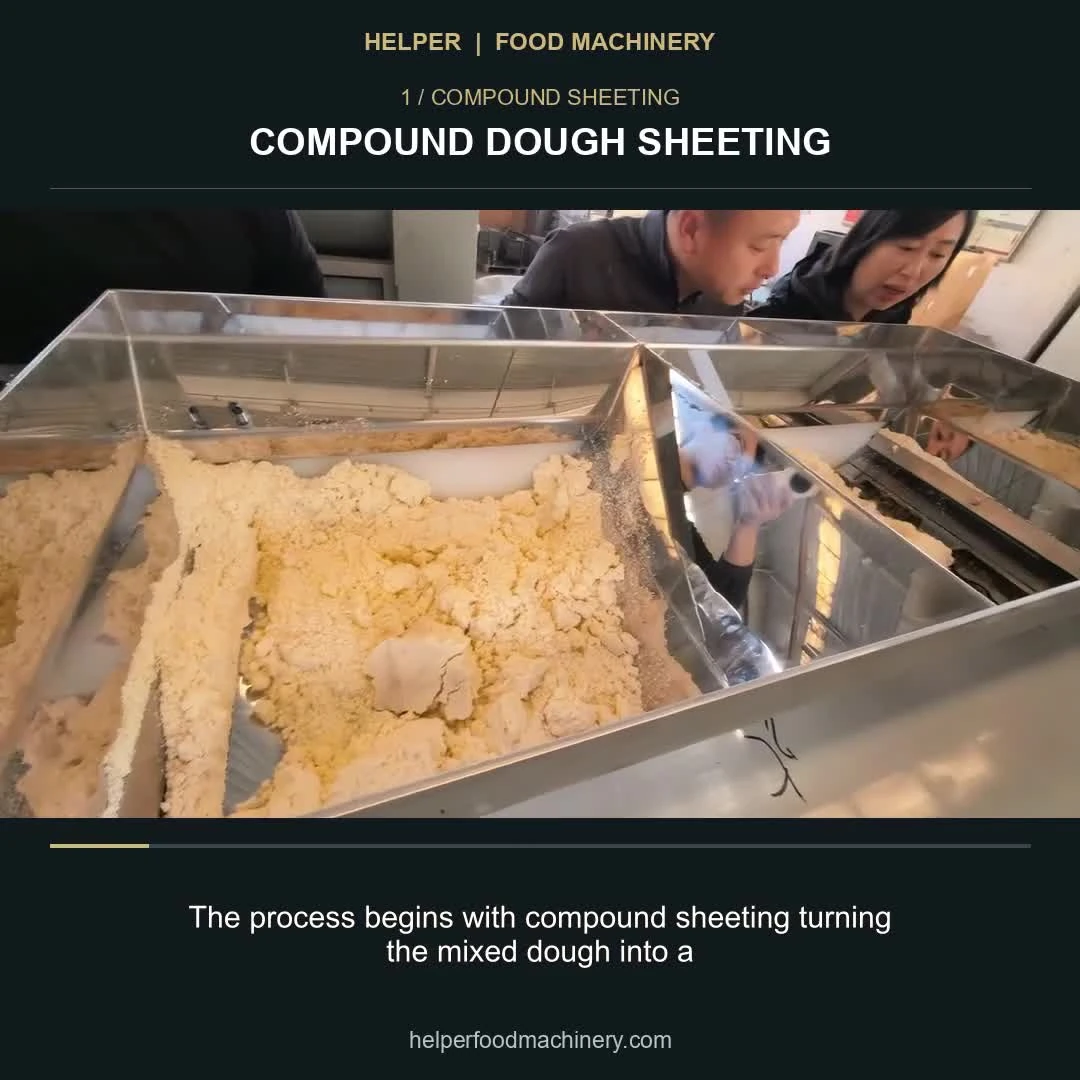
Inside the workshop
Watch the process.
Follow the dough.
See the 440 line in actual workshop footage, from compound sheeting to cooled, cut noodles.
- Build the sheetCompound sheeting and wave-profile rolling.
- Rest, reduce and formDough resting, smooth-roller reduction and noodle forming.
- Cool and cut to lengthThree-tier air cooling followed by final length cutting.
Use this demonstration to understand the equipment sequence. Evaluate flour, kansui, hydration and cooked texture in a trial for your own ramen recipe.
Explore the 10-unit production line →Watch on YouTube ↗04 / Connect the process to equipment
See how a noodle line fits together.
The M440 page shows the rolling, resting, cutting and cooling units in an integrated fresh-noodle route.
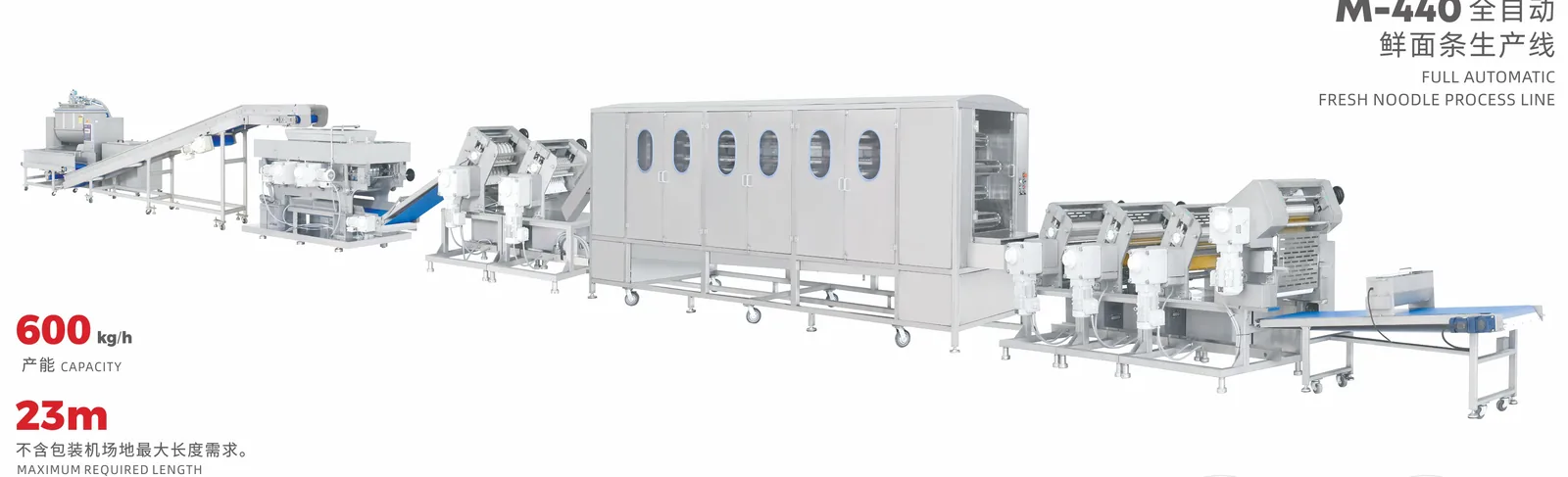
Define broth cooking, refrigeration and packaging separately when planning a complete kitchen or ready-meal factory.
05 / Plan around your operation
A ramen shop and a noodle factory
need different production plans.
Ramen shop
Work backward from service peaks, menu variety, daily noodle demand and the team preparing each bowl.
Central kitchen
Coordinate noodle and soup batches, portioning, delivery schedules and the finishing work at each outlet.
Noodle factory
Define accepted output, fresh or frozen format, packaging, cold-chain duties and consistent cooking performance.
Read the complete topic
Go deeper, one question at a time.
Know the ramen vocabulary
Regional styles, the four familiar flavor names, tsukemen and noodle terminology.
02 / IngredientsBuild the noodle recipe
Flour, kansui, salt, hydration and what to record in a trial.
03 / Noodle processFollow the production stages
Mixing, resting, compounding, rolling, cutting and cooking checks.
04 / The finished bowlBring the components together
Broth, tare, aroma oils, chashu, seasoned eggs, menma and service.
05 / Business planningPlan the right production model
Shop, central-kitchen and factory workflows, utilities and project boundaries.
06 / Product qualityPrepare for storage and distribution
Fresh and frozen formats, packaging, allergens and product-specific validation.
Before you start
A few useful distinctions.
Are ramen, udon and soba the same noodle?
No. They are different noodle traditions. Specify the actual ingredients, forming method and finished product.
Does ramen always contain egg?
No. Check the actual noodle and topping recipes. An egg topping does not tell you whether the noodles contain egg.
Is ramen the same as hand-pulled lamian?
Japanese ramen commonly uses alkaline wheat noodles formed by rolling and cutting. Hand-pulled lamian uses a different forming tradition.
Can one recipe be sold both fresh and frozen?
Compare the recipe, freezing route, package and cooking instructions for each format. Shelf life requires product-specific validation.
Is ramen vegan or gluten-free?
Standard wheat ramen noodles contain gluten. A meat-free-looking bowl may still contain fish stock, animal fat or egg. Check every component and the preparation arrangements; vegan and gluten-free are separate requirements. Read the ingredient and allergen checklist →
What is the difference between fresh and instant ramen?
Fresh noodles and pre-cooked, dehydrated instant noodles use different production routes. Instant noodles may be fried or air-dried. Compare fresh, frozen, dried and instant formats →
How do you order and eat ramen in Japan?
Some shops use a ticket machine; others take your order. Follow the shop’s system. Slurping is accepted, and noodle firmness or extra noodles may be offered on the menu. See the short ordering guide →
Your ramen project
Start with a noodle sample.
Build the process around it.
Share the recipe or sample, portion size, target output, selling format and available floor plan.