
Automatic Sausage Sorting & Thermoforming Packing Line
Orient bulk sausages, stabilize the product flow, load pack patterns robotically and vacuum-seal them in a continuous thermoforming system.
Turn random bulk flow into repeatable retail packs
The HELPER system connects a lifting conveyor, disc sausage sorting machine, sorting conveyor, rejecting conveyor and feeding conveyor with robotic placement and a continuous automatic thermoforming vacuum packaging machine. The purpose is not simply to move hot dogs faster. It is to create a controlled, correctly presented product stream that the robot can pick and arrange reliably.
Bulk sausages arrive with mixed orientation and spacing. The upstream modules elevate, separate and align them before the feed conveyor establishes a predictable pickup condition. A robot then places the requested count and pattern into formed package cavities. The thermoforming machine advances the lower web, forms cavities, receives the product, applies the upper web, evacuates and seals the package, then indexes it toward separation.
This architecture is suitable for industrial sausage and hot-dog plants seeking less manual handling between cooking or cooling and final packaging. The exact scope must be engineered around product dimensions, casing, surface moisture, temperature and pack format.
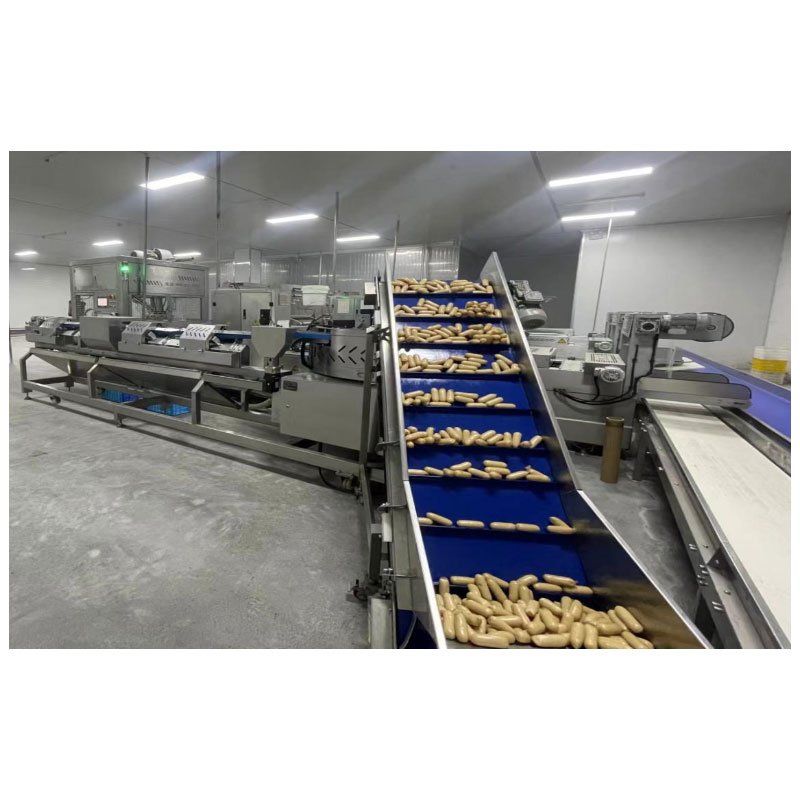
Seven controlled handoffs protect line efficiency
The official page lists a rejecting conveyor but does not publish its sensing criteria. Buyers should confirm whether rejection responds to orientation, spacing, product detection, dimensional limits or another rule. Likewise, “sorting” should not be interpreted as weight or length grading unless that function is explicitly included in the signed proposal.
Configuration confirmed on the exact product page
| System area | Published component or function |
|---|---|
| Product infeed | Lifting conveyor |
| Presentation | Disc sausage sorting machine and sorting conveyor |
| Flow control | Rejecting conveyor and feeding conveyor |
| Loading | Robotic arm placement into the packaging machine |
| Primary package | Continuous automatic thermoforming vacuum packaging |
Engineering note: the exact official page does not publish capacity, film width, forming depth, cavity layout, utilities, footprint or vacuum specification. These are project parameters, not values to infer from photographs.
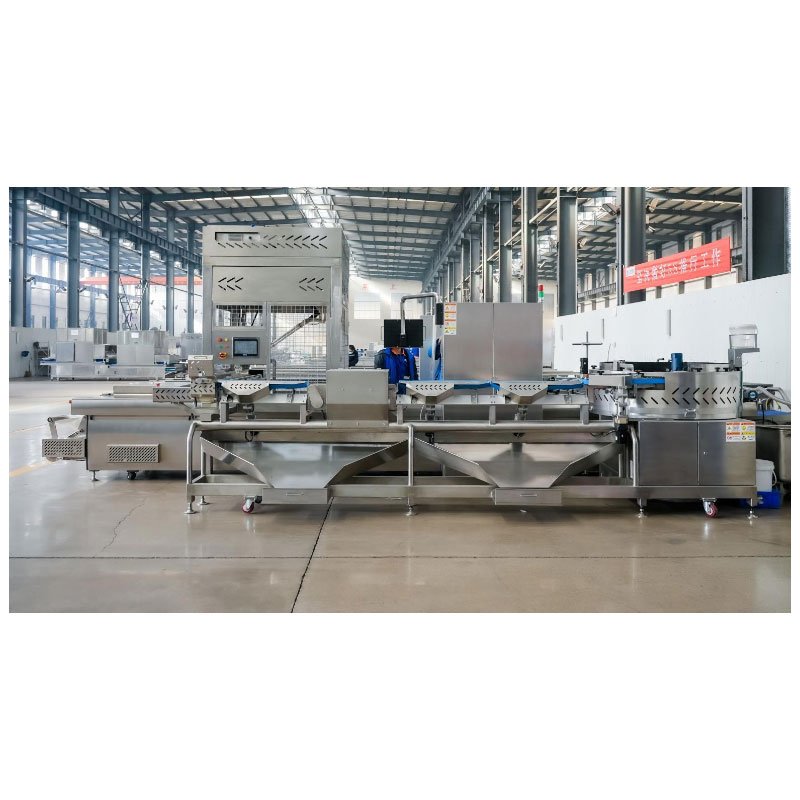
See the sorting and packaging concept
This video is the exact media exposed by the HELPER product page. Review how products are presented, transferred and loaded, then compare every visible module with the final equipment list.
A project may require different conveyor lengths, robot reach, gripper design, cavity pattern, coding, inspection or finished-pack handling. Video evidence explains the operating principle but does not replace a signed technical specification.
Configure the line around the real sausage
Provide minimum, nominal and maximum sausage length and diameter, unit weight, straightness, casing type, link condition and acceptable surface defects. State whether products are chilled, frozen or warm, their surface moisture and whether oil, brine or condensation is present. These details influence belt material, separation behavior, sensing and robot gripper design.
Define pieces per pack, row arrangement, cavity dimensions, package pitch, lower- and upper-web structure, forming depth, seal width and label position. Confirm whether vacuum only, modified atmosphere or skin-style presentation is required. Coding, label application, checkweighing, metal detection and vision inspection should be listed as included equipment or future interfaces.
Design the interfaces before ordering
Upstream output must not flood the lifting conveyor, and downstream cutting or inspection must accept the pack pitch. Buffering and accumulation logic should prevent one short stop from emptying or overloading the whole line. Ask for alarm priorities, automatic restart conditions and product-recovery procedures.
Factory layout must include sanitation access, film-roll replacement space, safe robot guarding, maintenance clearance and drainage. Product-contact components should be removable or accessible for the plant’s validated cleaning method.
Prove accepted packs—not empty-machine cycles
A factory acceptance test should use normal production sausages and final packaging film. Record input rate, accepted packs per minute, correct piece count, correct placement, robot misses, damaged casing, sorting rejects, film waste, seal contamination, package leaks and downtime by cause. Run each critical product and pack pattern long enough to expose replenishment, film changes and natural product variation.
Inspect seal strength and package integrity at startup, stable operation and restart. Verify no-product/no-pack logic, missing-piece detection where specified, reject confirmation, downstream blockage response, guard interlocks and emergency stops. If gas is used, measure residual oxygen and consumption. If vacuum is the selected format, define the validated vacuum and leak-test method.
The signed schedule should state achievable accepted output for each format, utilities, footprint, operator count, changeover time, hygienic construction, controls brand, spare parts and remote-support scope. This converts a promising automation concept into an auditable production commitment.
Sausage sorting and packing questions
Does the machine grade sausages by weight or length?
Not according to the published exact-page information. It confirms sorting and presentation equipment, but weight or length grading must be specified separately.
What package does the line produce?
The published system loads sausages into a continuous thermoforming vacuum packaging machine using lower and upper film webs. Final cavity and pack design are project-specific.
Is a packaging speed available?
No numerical speed is published on the exact official page. A guaranteed accepted-pack rate should be established through product and film trials.
Can it handle different hot-dog sizes?
Potentially, within the engineered range. Product dimensions, straightness, casing and pack pattern determine conveyor settings, gripper design and change parts.
Send sausage samples and pack drawings
Include product range, temperature, casing, pieces per pack, film structure, target accepted output, inspection needs and available floor space.
Request a packaging-line configuration