
BZJ-420 Fresh Noodle Vertical Packing Machine
Measure, feed, form, fill and seal fresh noodle packs with servo film control at a published 25–30 bags per minute.
Connect portioned noodles to a repeatable retail pack
The HELPER BZJ-420 is an automatic vertical form-fill-seal packaging machine presented for fresh noodle factories. With a suitable metering or portioning device, the system completes product measurement, feeding, filling, bag formation, date printing, venting and finished-pack discharge. It is intended to reduce repetitive manual packing while moving fresh noodles toward supermarkets, noodle shops and central kitchens.
Roll film is drawn through the forming section, wrapped around the forming tube, longitudinally sealed and cross-sealed into individual bags. A coordinated feed releases the noodle portion only when the package is ready. Servo-controlled, synchronous-belt film feeding stabilizes the web position, while automatic correction helps reduce film drift and waste.
Fresh noodles are soft, cohesive and moisture-sensitive. Successful integration therefore depends on the upstream portion shape, product temperature, surface flour or oil, drop height and funnel geometry—not only the nominal packaging speed.
Six synchronized steps from portion to sealed bag
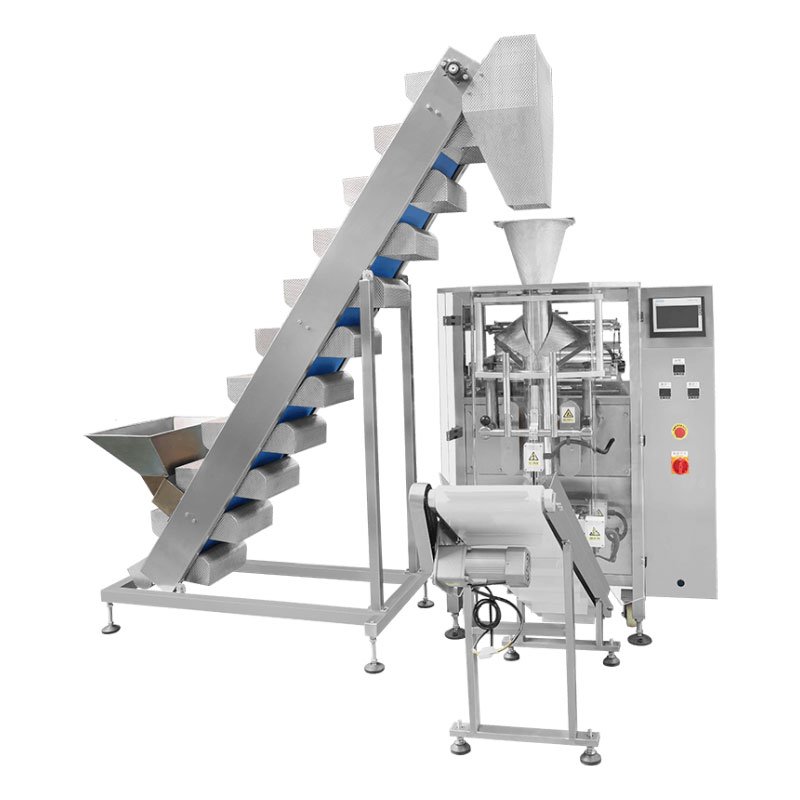
The official description says the packaging machine works “when paired with a metering device.” Buyers should not assume the photographed elevator is a precision weigher or that every portioning system suits fresh noodles. Define whether upstream portions arrive as loose strands, folded nests, bundles or trays, then match the feeder and timing logic accordingly.
BZJ-420 verified parameter schedule
| Item | Official value |
|---|---|
| Model | BZJ-420 |
| Packing speed | 25–30 bags/min |
| Film width | 120–420 mm |
| Film thickness | 0.04–0.09 mm |
| Bag width | 50–200 mm |
| Bag length | 60–300 mm |
| Published bag types | Back-seal, corner stand-up and hanging-hole bags |
| Machine weight | 400 kg |
| Dimensions | 1410 × 1170 × 1700 mm |
Scope note: the source does not publish power, voltage, air demand, dose range, accuracy, seal width or film laminate. The stated footprint should also be reconciled with any elevator, metering device and discharge conveyor included in the final line.
What the controls contribute
The official page confirms standardized servo film positioning, synchronous-belt film transport, automatic film correction and multiple alarm protections. These functions improve repeatability and reduce loss when properly commissioned, but they do not replace validation with the final printed film.
Bag tracking, registration marks, coder location, seal temperature and alarm recovery should be tested for every format. Confirm recipes, user access levels, production counters and upstream/downstream handshake signals in the controls schedule.
Review the machine in operation
This video ID is embedded on the exact HELPER BZJ-420 page. It appears after the process and specification sections so viewers can compare the operating principle with the published schedule.
Check the product feed, bag former, film path, cross-seal motion and discharge. Any module visible in a video remains illustrative until it appears in the signed equipment list.
Protect fresh noodle quality at every transfer
Provide noodle strand width and thickness, cut length, portion weight, moisture, product temperature, stickiness, surface treatment and maximum acceptable compression. Long strands may bridge at a narrow funnel; soft bundles can deform during a high drop; oily surfaces can contaminate sealing areas. A representative factory trial is the safest way to select the feeding arrangement.
Send the final film roll and bag artwork. Confirm laminate structure, thickness within the published range, roll diameter, core, print pitch, registration mark and heat-seal window. Bag width and length must fall inside the published limits, while the former and sealing jaws must match the chosen format.
Shelf-life requirements belong in the specification
Packaging protects a validated cold chain; it does not create shelf life by itself. State whether the pack is vented, air-filled or requires another atmosphere, and define residual oxygen or leak limits when relevant. Product microbiology, sanitation, film barrier and storage temperature must be validated together.
Plan cleaning access around the elevator buckets, hopper, funnel, guards, belts and sealing area. Confirm which parts are removable, allowable wash method, water protection of electrical parts and condensate control in chilled rooms.
Measure accepted bags and noodle damage
Run normal production noodles and final film across each intended format. Record requested and accepted bags per minute, portion deviation, noodle bridging, product in seals, film tracking faults, failed codes, seal defects, bag-length variation, damaged noodles, film waste and stops by cause. The published 25–30 bags/min range should be validated as accepted output for the actual portion and bag.
Challenge low-product conditions, missing film marks, film end, coder fault, open guard, emergency stop and downstream blockage. Inspect seal strength and leakage after startup, stable running and restart. Confirm changeover time, recipe recovery, operator tasks and safe access for film-roll replacement.
The final agreement should state included metering and conveying modules, utilities, total installed footprint, controls brands, spares, commissioning, operator training and performance criteria. This prevents the compact packer dimensions from being mistaken for the space required by the complete packaging cell.
Fresh noodle packaging questions
What is the published speed of the BZJ-420?
HELPER publishes 25–30 bags per minute. Actual accepted output depends on portion behavior, bag size, film and seal requirements.
Does the machine weigh noodles by itself?
The official description states that it operates with a metering device. The required weighing or portioning module must be defined in the project scope.
Which bag sizes are supported?
The published range is 50–200 mm wide and 60–300 mm long, using 120–420 mm-wide film between 0.04 and 0.09 mm thick.
Can it extend fresh noodle shelf life?
It can create the specified sealed package, but shelf life also depends on hygiene, product formulation, atmosphere, barrier film and cold-chain validation.
Send noodle samples and printed-film drawings
Include portion weight, noodle dimensions, temperature, bag format, film specification, shelf-life target and required accepted output.
Request a BZJ-420 configuration