
Twisted products
The catalog lists natural and collagen casing sausages.
A roller and auger separation machine for twisted sausages in natural or collagen casing.
View specifications Request a quotation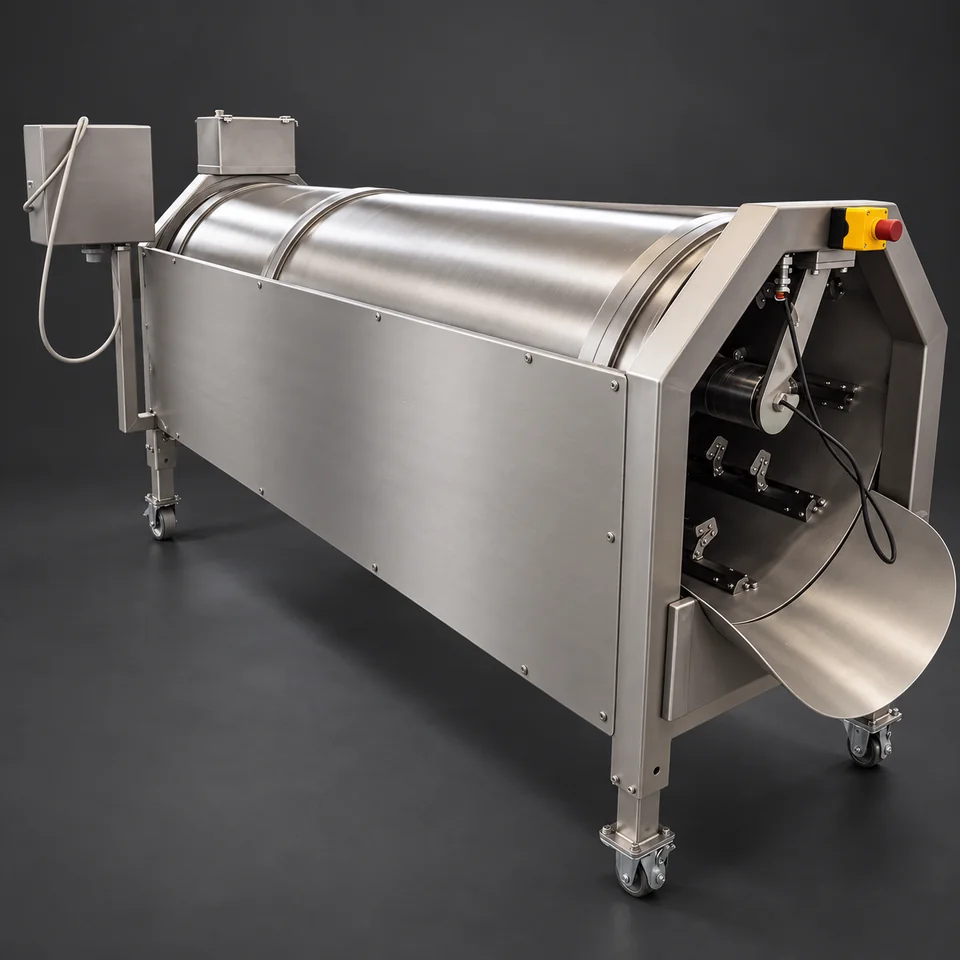
The catalog lists natural and collagen casing sausages.
Frequency converters control both working motions.
Configure the machine around the sausage length.
The machine can be positioned within the production line.
| Model | GQC-3000 |
|---|---|
| Productivity | 1–2 t/h |
| Product length | 25–130 mm |
| Sausage diameter | 14–39 mm |
| Power | 1.3 kW |
| Voltage | 380 V |
| Weight | 1500 kg |
| Dimensions | 3200 × 1250 × 1555 mm |
Capacity depends on the material and process. Confirm the selected configuration, utilities and acceptance conditions in the quotation.
Explore the long drum body, end opening, controls and internal guides. Select an image to view it larger.
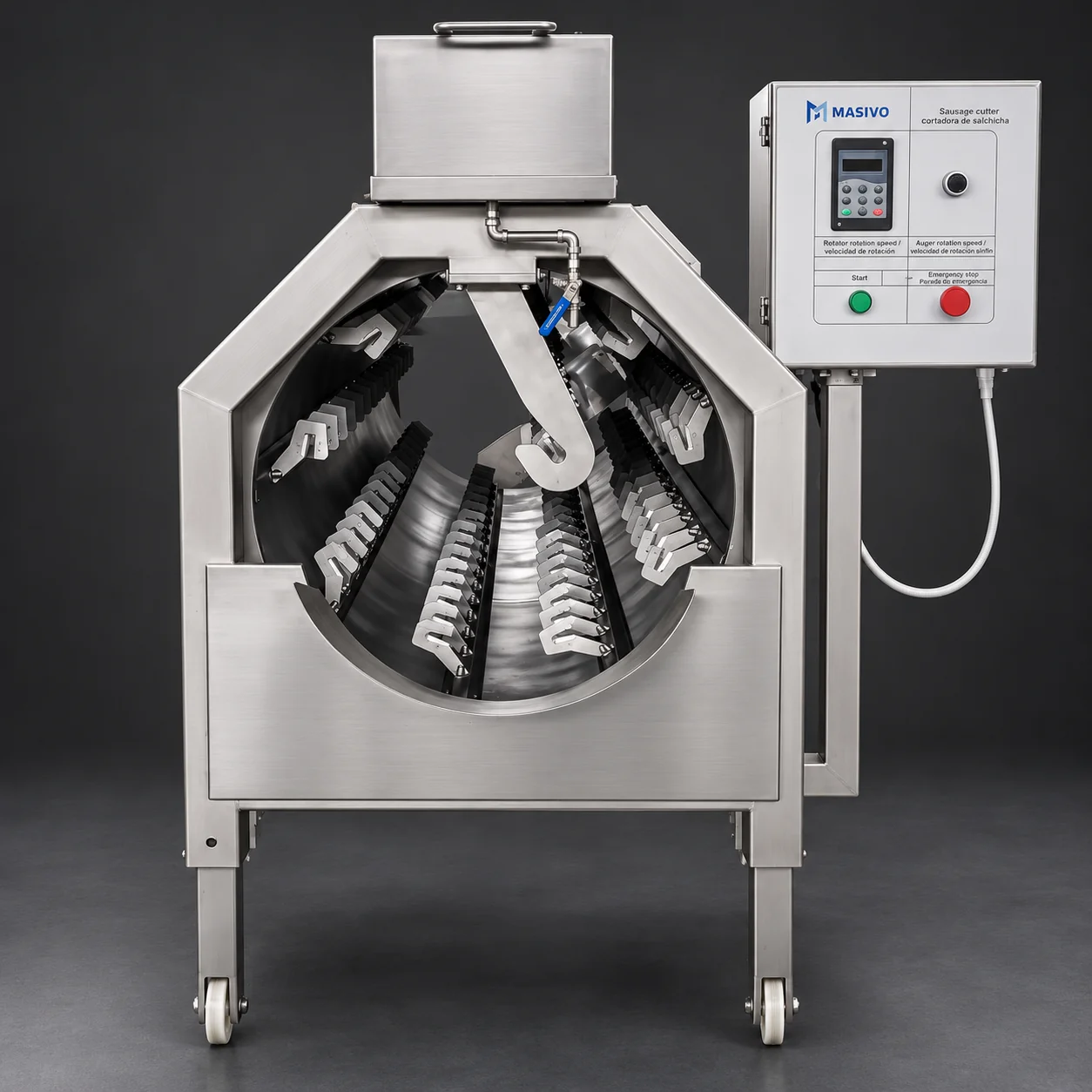
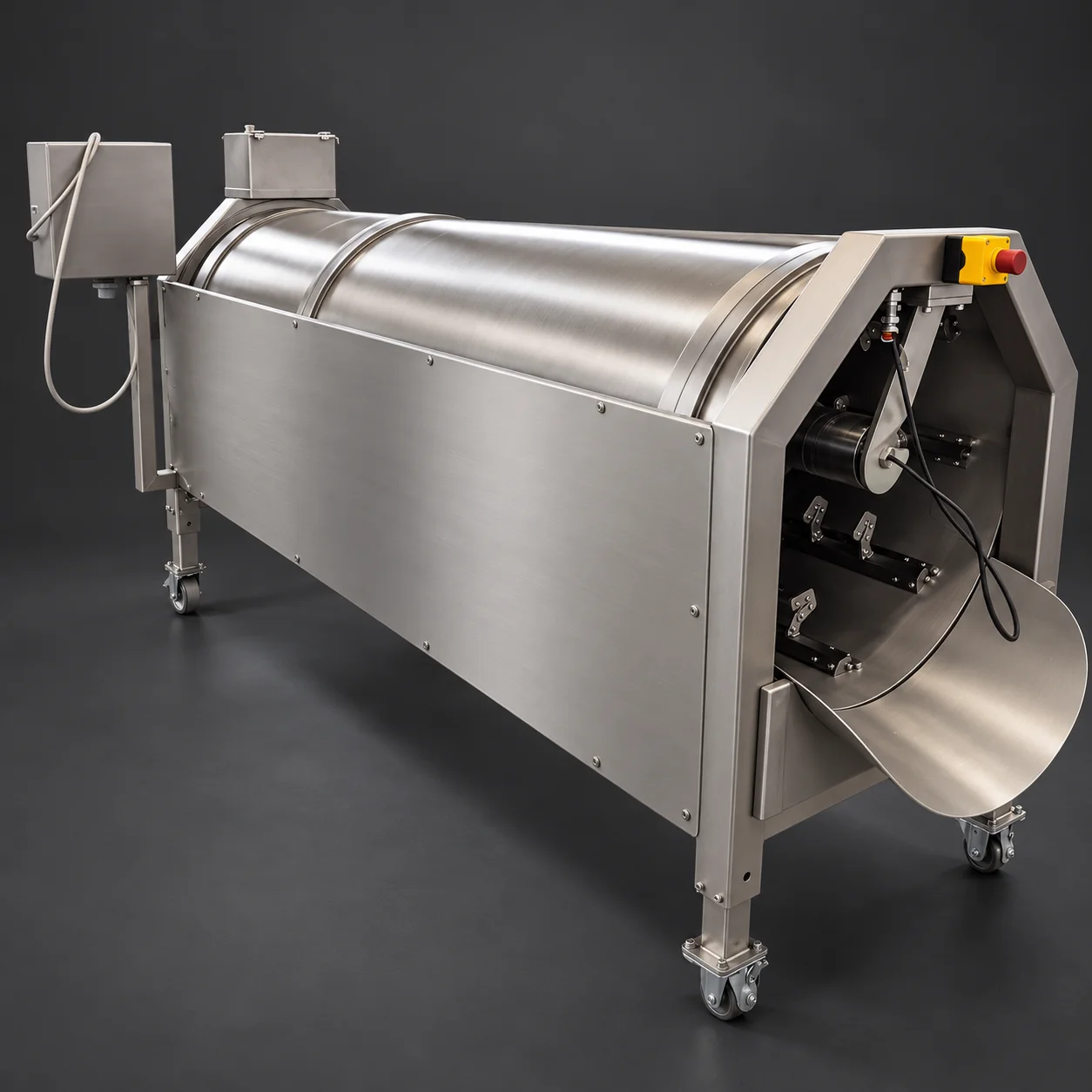
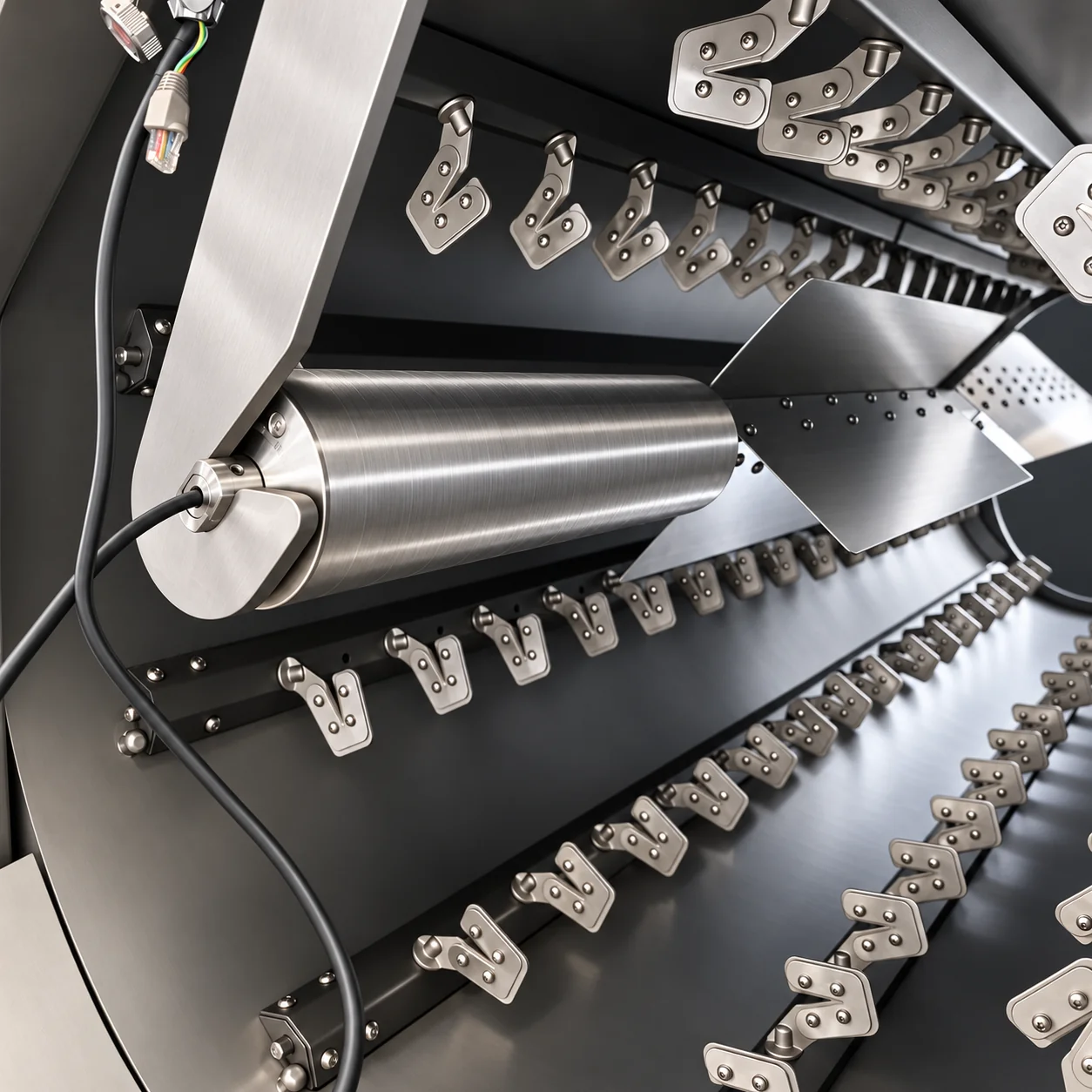
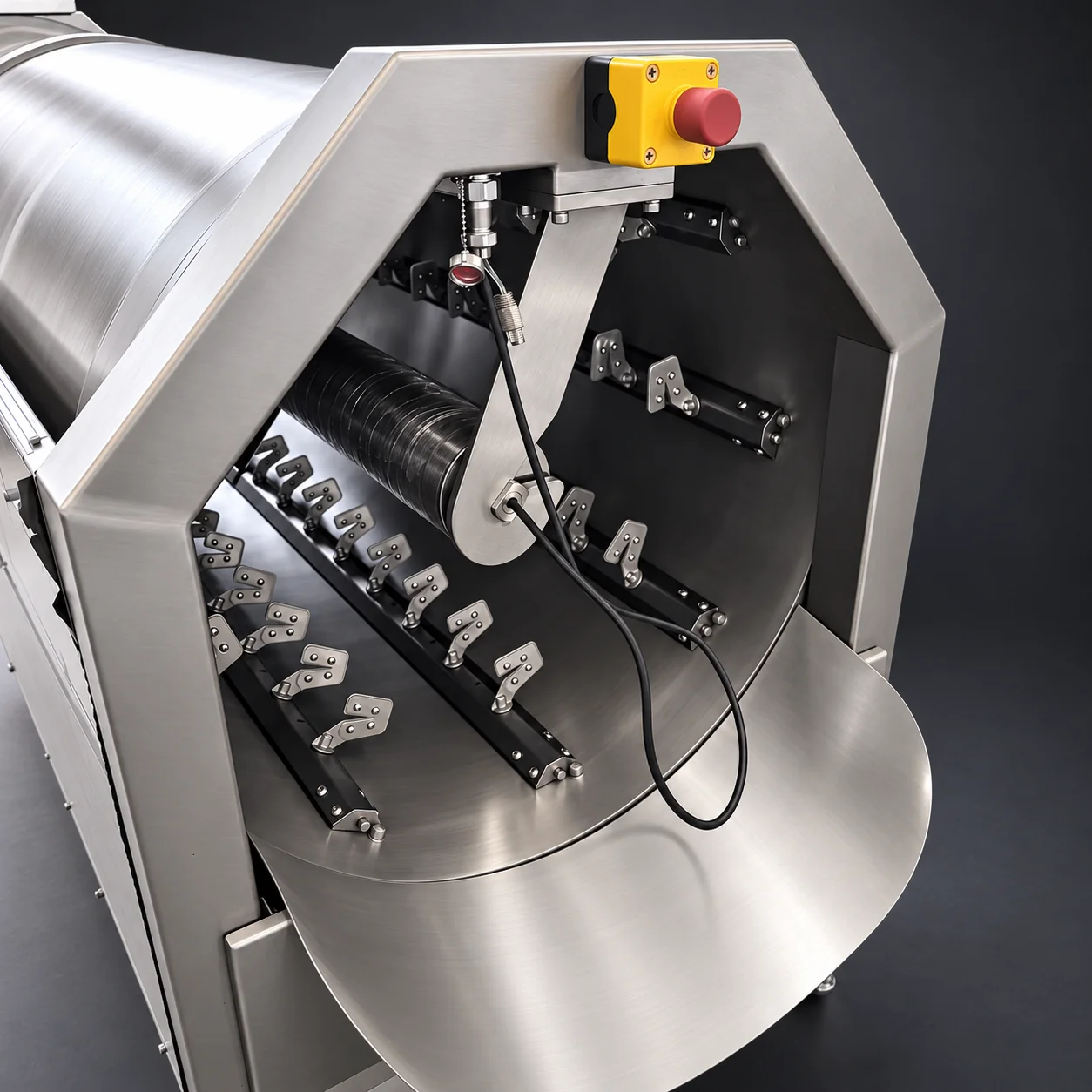
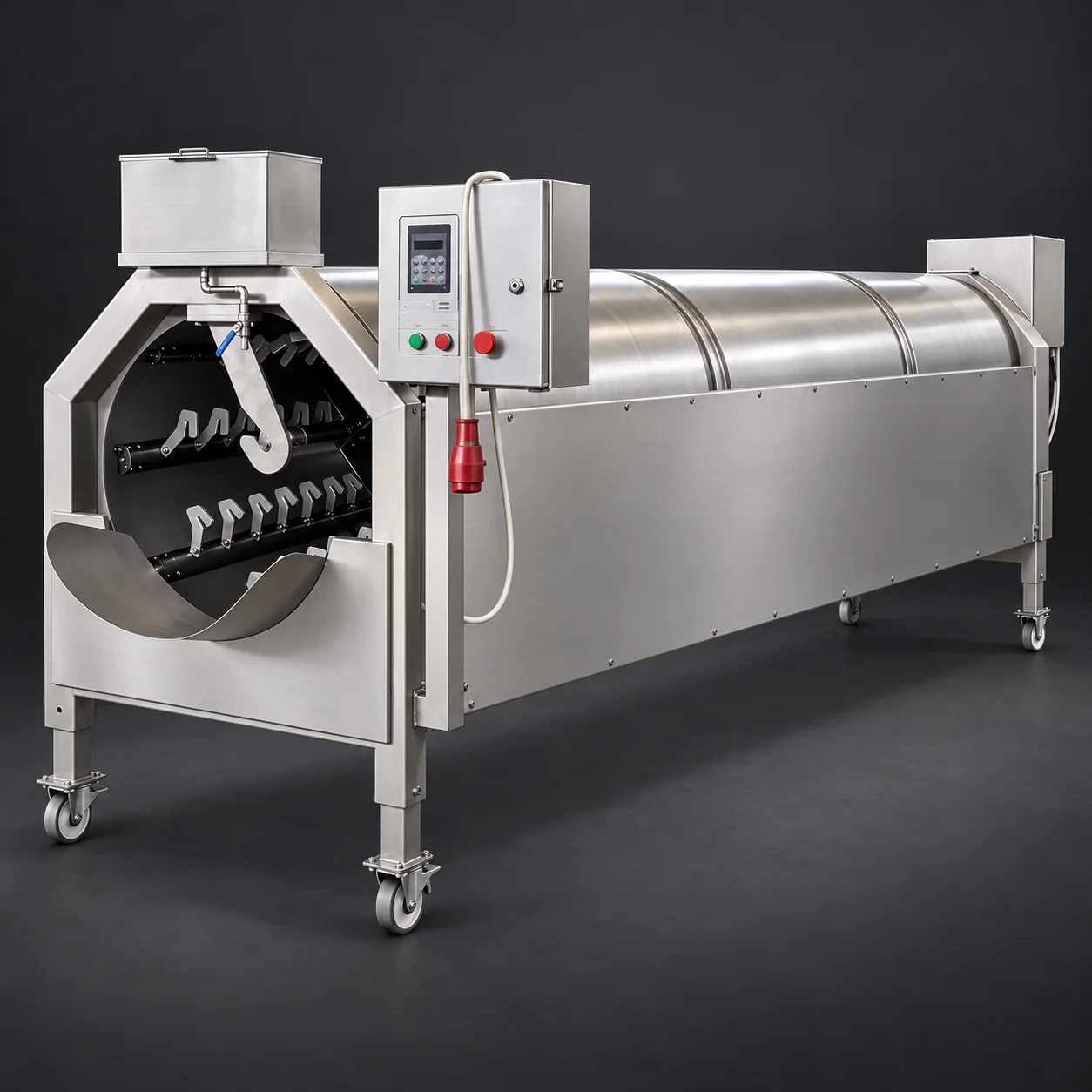
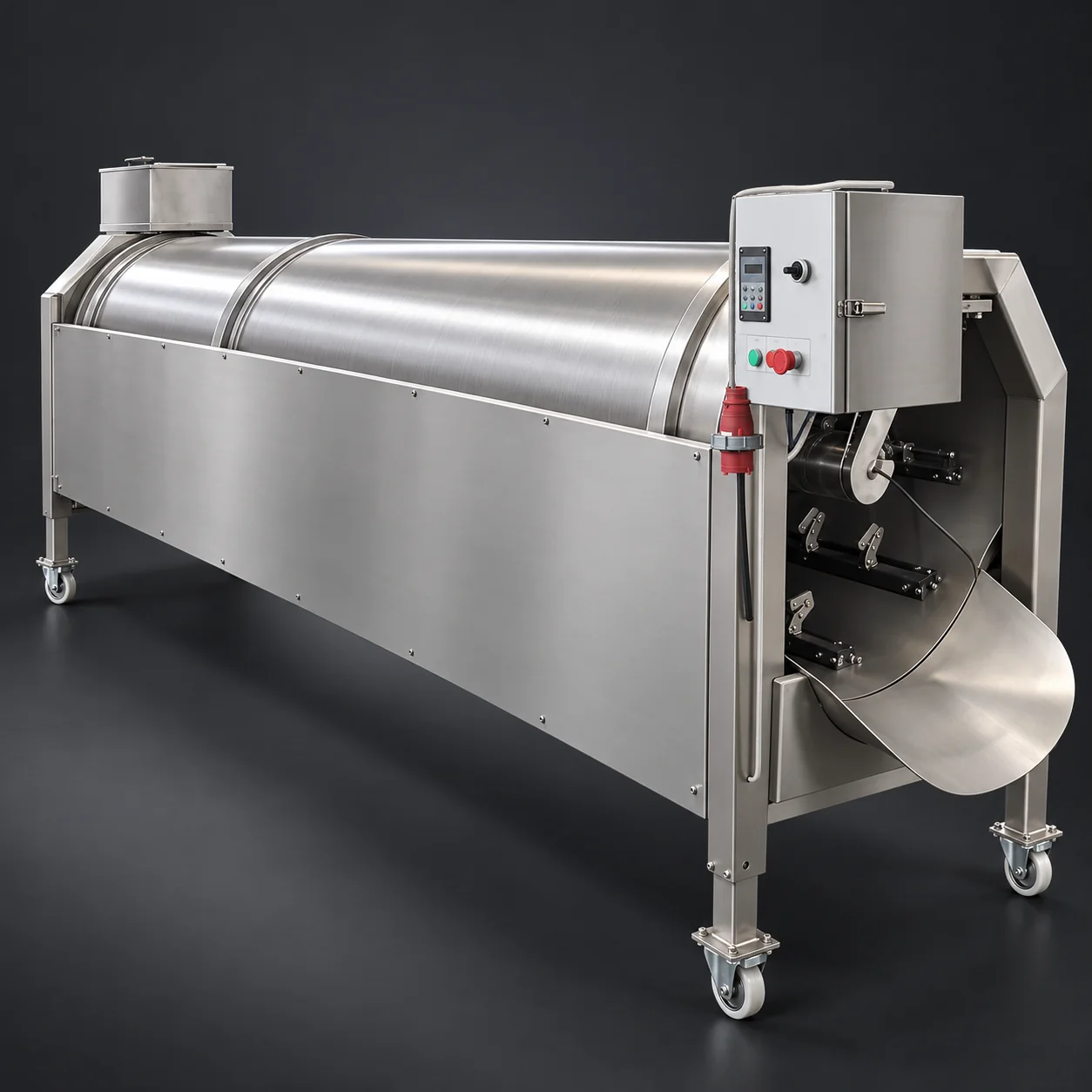
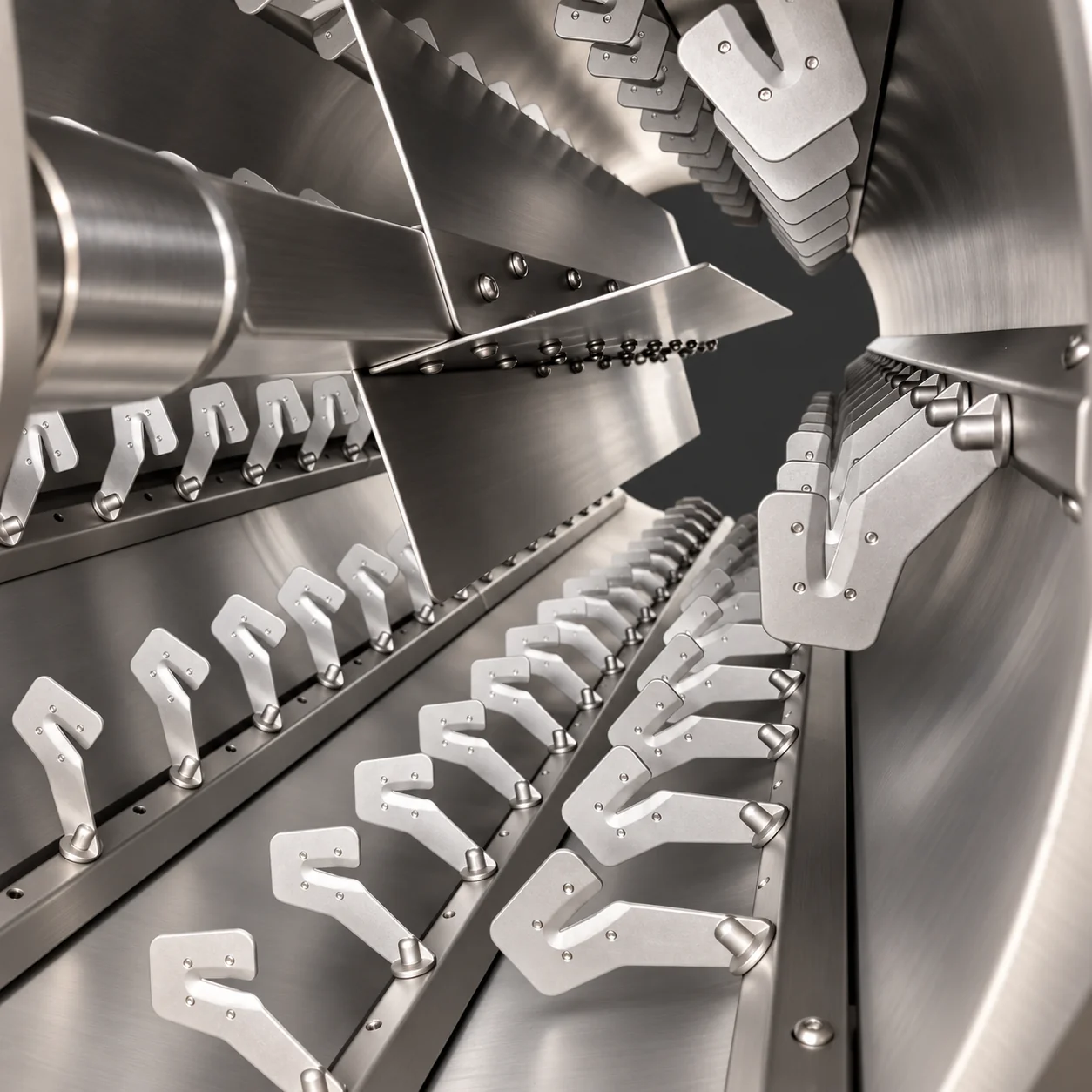
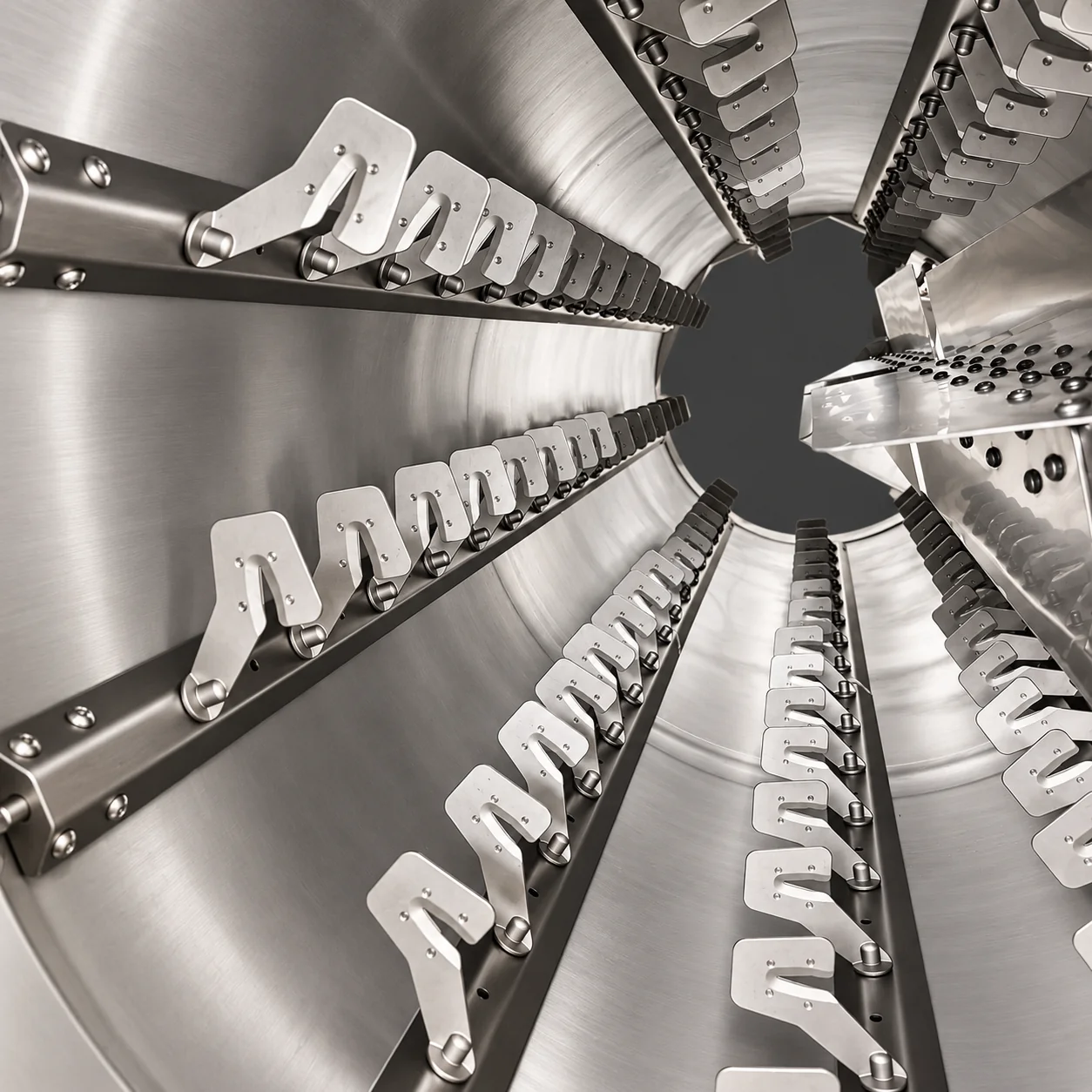
Use this process demonstration together with the model-specific technical schedule above.
GQC-3000 is a downstream separator for sausages that already have defined twists. The roller and auger arrangement is intended to guide and separate natural- or collagen-casing products; it is not the machine that fills or creates the original twist.
The published window is 25–130 mm product length and 14–39 mm diameter. Casing strength, twist definition, curve, surface moisture and product firmness still determine whether links feed and separate cleanly, so samples are essential before final configuration.
The listed 1–2 t/h is an input reference. Purchase acceptance should be based on good separated links per hour after jams, damaged casing, uncut connections and rejects are counted.
Run straight and naturally curved chains from normal production. Observe transfer into the rollers, orientation at the auger and behavior when spacing or twist quality varies.
Count complete separations, missed connections, casing cuts, opened ends and deformed links. Agree on an acceptable defect rate for each casing and size rather than judging only a short visual demonstration.
Set the machine for the shortest and longest products and the smallest and largest diameters to be purchased. Record adjustment points, recipe settings and changeover time for the operator.
Confirm infeed and discharge height, accumulation after the cutter, guarding, emergency stops and access to rollers and auger for sanitation. The surrounding conveyors must not force or stretch the sausage chain.
Send sausage samples or clear dimensions for casing type, diameter, length, twist pitch, product firmness and chain format. State the upstream linker or hanging method, target good links per minute, discharge direction, available 380 V supply and cleaning restrictions. A video of the normal chain leaving the preceding machine helps identify transfer risks before the trial.
Review linking equipment · Return to sausage filling and finishing equipment
Send the product, incoming condition, required output and available factory space. Include the required electrical supply and the machines before and after this operation.
Contact HELPER