
Qualify
Confirm block dimensions, core temperature, packaging removal, bone content and foreign-material controls.
Combine primary frozen-block breaking with Ø250 mm screw grinding in one enclosed machine. Process standard frozen meat plates—or validated poultry skeletons—into controlled particles without a separate pre-breaker transfer.
The PSQK-250 first uses counter-rotating crushing knives to reduce a standard frozen plate into smaller pieces. Those pieces fall directly into the grinder hopper, where an auger meters them toward a pre-cut plate, rotating knife and outlet plate. Screw pressure then discharges the selected particle size continuously.
This removes an intermediate bin transfer between a guillotine or flaker and a grinder. It can simplify labor and containment, but it also couples two operations: incoming geometry, crusher load and grinder plate must be balanced so neither stage starves or overloads the other.
Confirm block dimensions, core temperature, packaging removal, bone content and foreign-material controls.
Opposing low-speed knives break the frozen plate into pieces suitable for the grinder feed throat.
The auger presents material to the knife-and-plate set for continuous shearing and extrusion.
Measure accepted output, particle distribution, temperature rise, motor load and retained material.
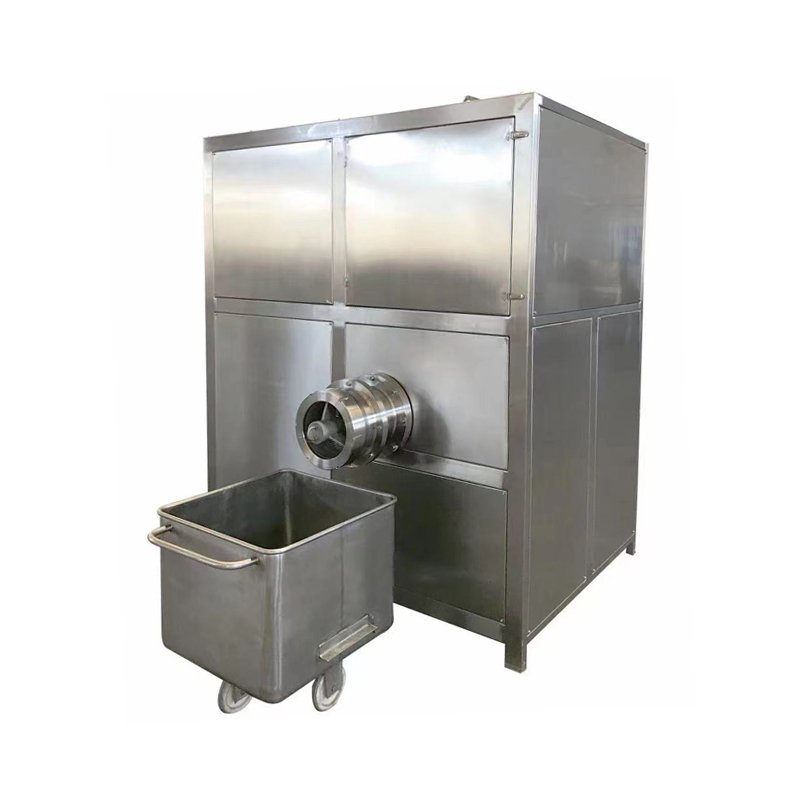
The exact source does not publish maximum block dimensions, approved temperature, stainless grade, plate-hole options or bone percentage. These require product trials and a signed configuration.
| Parameter-table model | PSQK-250 |
|---|---|
| Published productivity | 2,000–2,500 kg/h |
| Outlet diameter | Ø250 mm |
| Total power | 63.5 kW |
| Crushing speed | 24 rpm |
| Grinding speed | 165 rpm |
| Axis speed | 44 / 88 rpm |
| Machine weight | 2,500 kg |
| Published dimensions | 1940 × 1740 × 225 mm — source record requires confirmation |
The model-page video is positioned after the process and parameters so buyers can assess feeding, crusher behavior and grinder discharge with the correct engineering questions.
Observe loading orientation, crusher bite, transfer continuity, grinder load and output collection. Check whether pieces bridge between stages and how the final remnant is handled.
Video confirms architecture, but it cannot prove capacity, particle size or temperature rise for a buyer's product. Test the coldest and largest production blocks and the intended plate.
Sample across the run and quantify oversize, target fraction and fines for the selected plate.
Measure block core, broken pieces and discharged mince; friction and pressure can affect fat structure.
Trend crusher and grinder current to identify bridging, plate restriction, knife wear or overfeeding.
Weigh input, accepted product, retained material, purge, trim and sanitation loss.
The machine is documented for sausages, ham, fish balls, savory flavors, spices, condiments, chicken essence, chicken powder and pet-food production. Poultry skeleton material can also feed a downstream bone-mud mill, but the complete line must be validated for hard-particle size, wear and final-product requirements.
Choose an integrated system when the production recipe is stable, floor-space and transfer reduction matter, and both stages can share one throughput window. Separate pre-breaker and grinder machines provide more buffering, independent maintenance and flexibility when several grinders or changing particle requirements are involved.
Compare total installed power, staffing, sanitation time, intermediate handling, spare parts and downtime consequences—not only equipment count.
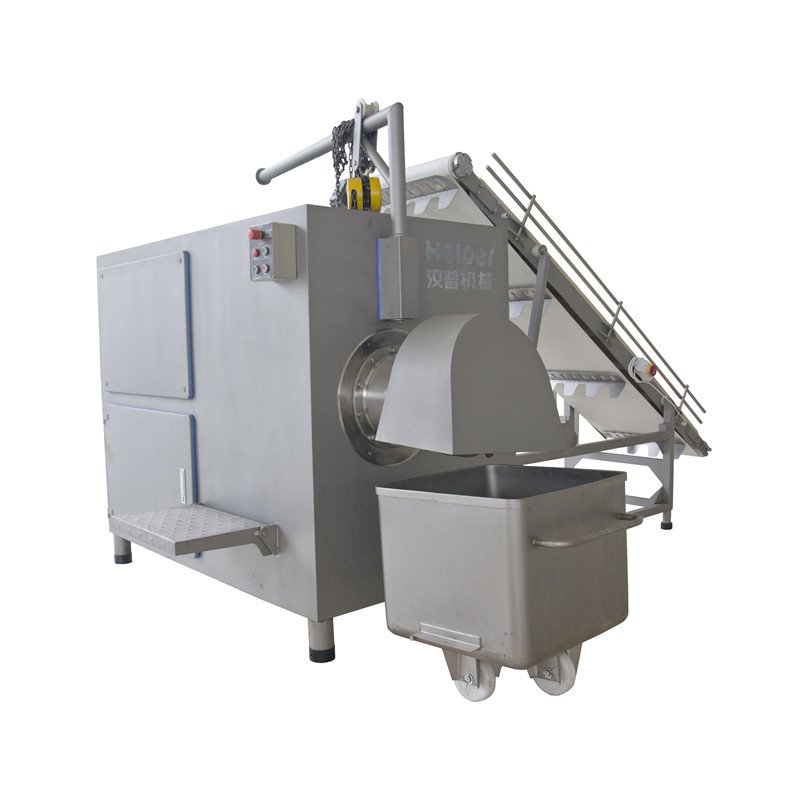
Hazards include block loading, crusher knives, the auger, grinder knife and plate, trapped pressure and heavy removable parts. Verify interlocked access panels, emergency stops, restart prevention, overload response and locked-out jam recovery. Use rated lifting aids for plates, knives and auger components where required.
Factory acceptance should run representative full blocks at actual core temperature. Record accepted throughput, particle distribution, temperature rise, motor current, vibration, noise, bridging and interventions. Demonstrate overload, stop controls, access interlocks, disassembly, cleaning, reassembly and restart. Inspect crusher pockets, transfer throat, auger, knife, plates, seals and discharge head for retained soil.
That is the exact page's stated purpose, but maximum dimensions and temperature are not published. Validate the buyer's largest and coldest block.
The source description uses PSJR-250 while its technical table uses PSQK-250. This page adopts the table value and requires nameplate confirmation in the quotation.
The official page says compatible chicken and duck skeletons can be processed and the output can feed a bone-mud mill. Wear and particle acceptance require trials.
Yes. The official exact page exposes video ID oPAbdPlqx2A, embedded after the process and specification sections.
Receive a configuration review covering crusher loading, grinder plates, utilities, hygiene and FAT.