
Fresh Meat Slicer & Strip Cutter
Cut small pieces of boneless pork, beef, mutton, fish and fat into uniform slices or strips on a compact stainless platform. Two coordinated knife groups can process the product directly into shreds while the cantilever layout supports changeover and sanitation.
Direct strips without a manual cross-feed step
QSJ-360 uses upper and lower knife groups that work together inside the cutting chamber. With both groups operating, small prepared pieces can be cut directly into strips rather than being collected and rotated for a second pass. The machine is positioned for food factories, central kitchens, hotels, restaurants and other operations that need controlled fresh-meat preparation without the footprint of a wide conveyor cutter.
The accepted product envelope matters. The exact table publishes a 300 × 90 mm inlet, so incoming pieces must be trimmed to pass safely and consistently. This is a boneless-meat machine; species alone does not establish suitability. Fat content, connective tissue, surface temperature, firmness and fiber direction all influence cut quality.
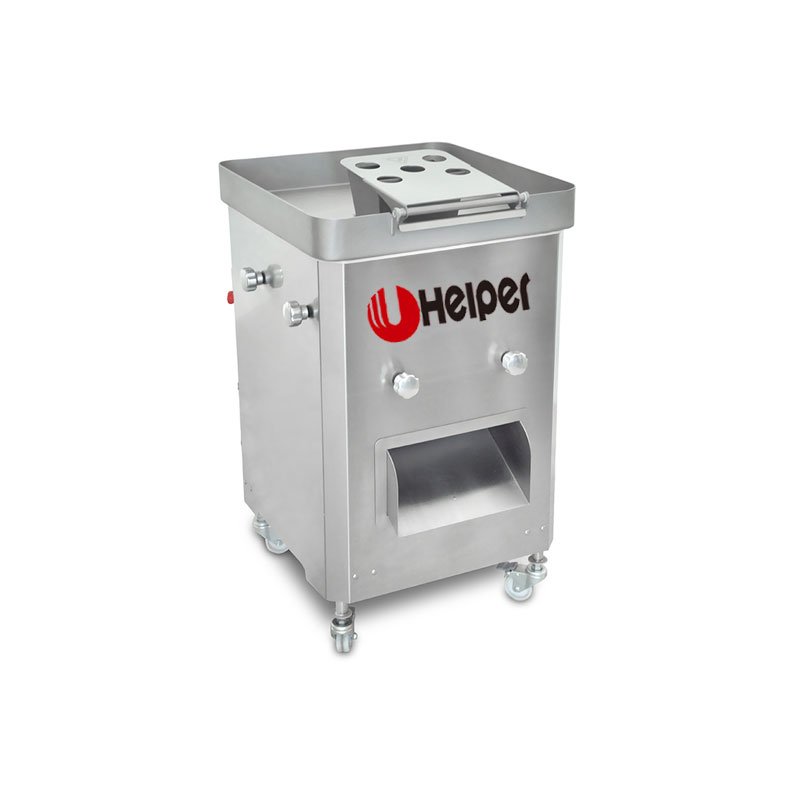
Designed for frequent fresh-food changeovers
Two coordinated assemblies support direct shredding and consistent ingredient thickness.
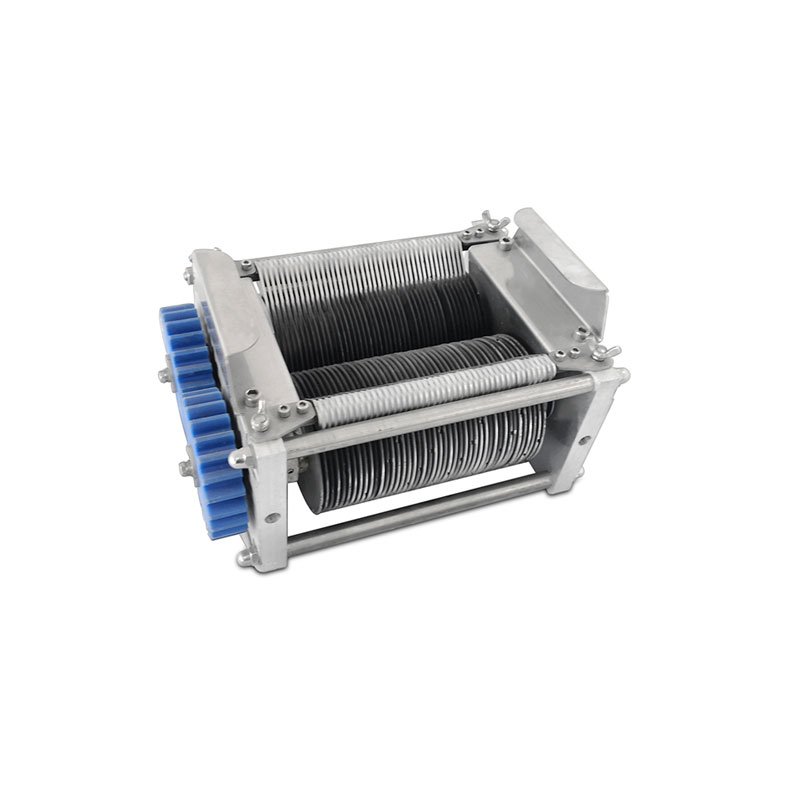
The published design allows the knife assembly to be removed for cleaning or replacement.
Special quenching is described to support a clean cut while limiting damage to food fibers.
A waterproof safety-switch feature is listed for operator protection around the cutting area.
QSJ-360 technical specifications
| Model | Power | Capacity | Inlet | Cut size | Knife groups | Net weight | Dimensions |
|---|---|---|---|---|---|---|---|
| QSJ-360 | 1.5 kW | 700 kg/h | 300 × 90 mm | 3–15 mm | 2 | 120 kg | 610 × 585 × 1040 mm |
The official overview mentions 3–30 mm and customized knife sets, while the exact model table publishes 3–15 mm. This page treats 3–15 mm as the standard documented range. Any wider spacing must be confirmed as a quoted knife-set option. Voltage, product temperature and cutting speed are not published for the exact model.
Match the knife group to the finished ingredient
Knife spacing is a hardware selection, not merely a screen setting. Define every required strip or slice width before quotation and confirm which groups are included. Also request spare-blade pricing, change tools, safe storage, inspection tolerances and sharpening or replacement policy.
The official application includes pork, beef, mutton, fish, fat and elastic foods such as preserved mustard. Do not assume one knife geometry gives equal results across lean muscle, soft fat and fibrous vegetables. Representative testing is the correct basis for approval.
Validate usable output, not headline capacity alone
Prepare a real trial batch
Send product dimensions, species, fat percentage, connective-tissue condition and surface/core temperature. Run at least lean, fatty and difficult products when one machine will serve several recipes.
Measure the finished cut
Record strip width distribution, complete cuts, joined strands, tearing, compression, smearing and product loss. Weigh only acceptable output when checking the published 700 kg/h capacity.
Plan operator handling
Because QSJ-360 is manually fed, safe piece presentation and collection affect practical throughput. Confirm loading height, receiving container, operator count and maximum continuous duty.
Verify cleaning access
Lock out power before dismantling. Time removal, washing, inspection, reassembly and restart of both knife groups, inlet, discharge chute and internal food-contact surfaces.
A distinct compact machine—not a reduced LC conveyor model
QSJ-360 should remain separate from LC-340/500 in the product system. LC uses interchangeable conveyor cutting heads and offers wider 340 or 500 mm belts. QSJ-360 uses a small top inlet and two simultaneous knife groups inside an upright cabinet. The operating method, product envelope and sanitation sequence are different even though both families can produce fresh-meat strips.
No stable exact-model video was found across the reviewed HELPER sources. A current factory run should be requested for QSJ-360 instead of embedding footage from a visually similar cutter.
QSJ-360 FAQ
What is the documented standard cutting range?
The exact QSJ-360 table states 3–15 mm. The broader 3–30 mm overview is treated as a possible customization claim pending written confirmation.
Can QSJ-360 cut strips directly?
Yes. The two knife groups operate together so compatible prepared pieces can be shredded directly.
Can it process bone-in products?
No bone-cutting capability is published. Submit only boneless meat within the 300 × 90 mm inlet unless the factory approves a specific trial.
Is an exact machine video available?
No stable exact QSJ-360 video was verified. Request a current factory video or witnessed product trial before purchase.
Configure QSJ-360
Send product, dimensions, temperature, required cut widths and acceptable kg/h, operating schedule, electrical supply and sanitation standard.
Ready to discuss your project?
Use our single online inquiry form to send your product, capacity, utility and layout requirements.
Go to contact form