
Standardize the cut
Sort by anatomy and size; trim joints according to the validated upstream cutting specification.
Automate the repetitive separation of meat and bone from compatible chicken thighs and chicken scapula products. Sixteen rotary extrusion stations support high output while aiming to preserve usable meat integrity.
The TGJ-16 is designed around chicken-leg geometry. Operators present prepared thighs or compatible scapula products to sixteen indexed extrusion heads, where controlled mechanical action pushes the bone away from surrounding meat. The objective is a distinct deboned portion and a separate bone—not mechanically separated meat paste.
Uniform incoming anatomy is central to performance. Bird size, cut location, joint trimming, temperature, skin condition, bone breakage and loading orientation influence meat damage and residual meat on the bone. The published capacity should therefore be validated across the actual supplier and weight range.
Sort by anatomy and size; trim joints according to the validated upstream cutting specification.
Orient each piece on the appropriate fixture while keeping hands outside automatic-motion pinch zones.
The carousel indexes through controlled extrusion, allowing meat and bone to leave through defined paths.
Inspect meat tears, cartilage, bone fragments, residual meat and accepted pieces per hour.
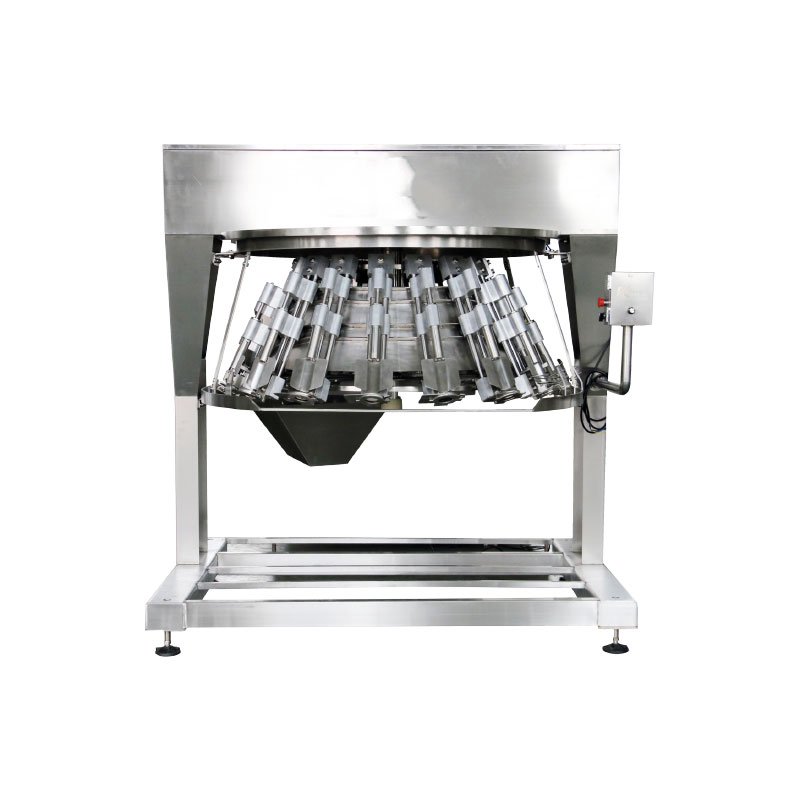
The official machine image shows a circular array of angled extrusion assemblies under an enclosed upper drive housing. This layout allows loading and separation activities to repeat around the carousel rather than relying on a single reciprocating station. A central lower funnel supports controlled collection from the process area.
The source does not publish station pitch, cycle speed, fixture dimensions, required air supply or number of loading operators. Confirm whether extrusion is electrically, pneumatically or mechanically actuated and request the complete utility schedule.
| Equipment | Chicken leg deboning machine |
|---|---|
| Model | TGJ-16 |
| Published capacity | 6,000–7,500 pieces/hour |
| Extrusion heads | 16 |
| Power | 0.55 kW |
| Machine weight | 750 kg |
| Overall dimensions | 1850 × 1600 × 1920 mm |
| Protection level | IP65 |
Weigh prepared input, accepted meat, residual meat on bones, trim, rejects and process losses.
Grade tears, holes, skin damage and shape against the requirements of the final product.
Inspect for breakage, splinters and retained fragments that could transfer into the meat stream.
Define acceptable joint and cartilage retention with photographs and a numerical sampling plan.
The official page describes a low chicken-damage rate but does not publish a percentage or grading method. Build the acceptance standard around the intended use: whole-muscle portions may require stricter appearance limits than diced or further-processed products. Record results by bird-weight class and supplier.
The deboner cannot compensate for inconsistent joint cuts or mixed anatomy. Define incoming specifications for product weight, temperature, bone length, cut position and allowable breakage. Provide ergonomic trim stations, controlled accumulation and orientation before the machine.
At discharge, keep meat and bone streams physically separated and protected from cross-contamination. Determine whether collection bins, belts or inspection tables fit below and around the frame without restricting operator access or sanitation.
TGJ-16 handles individual anatomical pieces and aims to retain a recognizable deboned portion. The QGJ series compresses prepared bone-bearing material to recover mechanically separated meat through a perforated separation element.
Choose TGJ when portion identity, whole-muscle appearance and individual bone removal matter. Choose QGJ when recovering comminuted meat from frames or mixed bone-bearing material is the process objective.
The exact HELPER TGJ-16 product page exposes the official machine image and technical schedule but no stable model-specific video. QGJ meat-bone separator footage and generic poultry deboning clips were not substituted because they demonstrate different mechanisms.
Before purchase, request an unedited operating video showing loading, a complete carousel cycle, meat discharge, bone discharge, reject handling, stopping and cleaning. A witnessed product trial remains more valuable than promotional footage because it uses the buyer's actual weight and anatomy range.
The machine combines rotary indexing with multiple extrusion mechanisms. Verify fixed and interlocked guards, safe loading openings, emergency stops, restart prevention and stopping time. Define procedures for misloads, trapped product, broken bones and fixture cleaning. Operators must not reach between stations while motion is enabled.
IP65 is a published enclosure claim, not a complete sanitation method. Confirm which components carry the rating, permitted spray pressure, chemicals and water direction. During cleaning validation, isolate energy, open approved access points and inspect fixtures, rods, carousel interfaces, the central funnel, upper guards and lower frame. Reassembly must restore alignment and safety functions.
Define trial lots by supplier, thigh or scapula type, weight range, temperature, skin-on/skinless condition and upstream cut method. Record gross pieces loaded, accepted deboned pieces, rejects, residual meat, broken bones, fragments, meat damage, stoppages, loading labor and accepted pieces per hour.
Test the smallest, nominal and largest products for sustained runs. Verify all sixteen stations individually so one poorly aligned head is not hidden by the average. Demonstrate stop controls, guard interlocks, misload recovery, cleaning, fixture removal and restart. Agree acceptance limits, spare fixtures, wear parts and operator training before dispatch.
The exact official page lists chicken thighs and chicken scapula. Drumsticks, turkey legs or other anatomical cuts require separate fixture and performance confirmation.
The published range is 6,000–7,500 pieces per hour. Confirm staffing, preparation, loading and accepted-output definitions during a sustained trial.
No. It debones individual anatomical portions. The QGJ series is the separate equipment family for mechanically separated meat.
No stable model-specific video was exposed by the exact official page. This page uses the exact official machine image and does not substitute QGJ or generic deboning footage.
Receive a TGJ-16 review covering preparation, fixtures, staffing, yield, portion quality, hygiene and FAT.