
Pink or brown lettuce cut edges often develop where cutting, cracking or compression has injured the tissue. The response can become visible after processing. Start by locating the discoloration and comparing the same lot through the line; changing a cutter setting alone will not address every cause.
This guide concerns fresh-cut salad production. It separates injury investigation from incoming-material disorders and packaging problems. For the complete preparation route, see washing, cutting and dewatering fresh-cut vegetables.
First locate the affected tissue


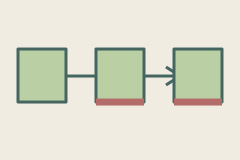
Original explanatory illustrations; not photographs of factory defects.
A thin discolored boundary at a new cut suggests investigating injury. Broken midribs and compressed patches call for a wider handling review. Generalized pink ribs, scattered brown spots, field tipburn and water-soaked tissue are different observations. UC Davis distinguishes these disorders; color alone cannot identify their cause.
Photograph the whole piece and the affected area before trimming it away. Mark whether the mark was present on receipt. Otherwise, damage arriving with the crop can be incorrectly attributed to the processing equipment.
Why an acceptable cut can discolor later
Wounding changes the tissue's metabolism, including processes involving phenolic compounds. In a 2018 laboratory study of butterhead lettuce, researchers observed localized browning and cell death around cuts and bruises. That supports investigating injury; it does not establish commercial machine settings or a guaranteed storage life.
An immediate visual check therefore answers only part of the question. A comparison after a defined cold hold can reveal differences that were not obvious at discharge. Use the same observation interval for both samples; do not compare one treatment immediately and another the following day.
Trace the first change through the line
| Point | What to compare |
|---|---|
| Incoming leaves | Lot, lettuce type, maturity, existing discoloration and cracked ribs. |
| After cutting | Clean cuts versus torn margins, crushed ribs and fines. |
| After washing and drying | New bruising, broken pieces, surface water and handling delays. |
| After controlled holding | Location and extent of discoloration, using matched packs and elapsed time. |
Keep traceable sample identifiers. For example: “Lot L1, romaine, cut exit, 09:10” and “Lot L1, dryer exit, 09:18.” Record actual product temperature, sampling time and the later inspection time. These are example labels, not results. Retain the cutting and drying settings used for each sample.
If defects increase between stages, inspect that interval first. If every sample changes similarly during holding, widen the review to raw material, cooling and package conditions. This narrows the investigation without claiming that timing proves a single cause.
For example, intact ribs at cutter discharge but fresh cracks after basket unloading direct attention to loading, drying and unloading. Repeat that comparison on matched material before concluding. If the cracks were already visible in incoming leaves, review reception and earlier handling instead. These are hypothetical investigation routes, not measured factory findings.
Improve the process through controlled comparisons
At cutting, inspect blade condition, feed presentation and discharge for tearing or compression. Isolate energy before inspecting hazardous areas. During a trial, change one permitted setting at a time and compare both cut quality and accepted output. The DGN-01 and DGN-02 vegetable cutter page provides an equipment starting point; suitability requires a representative product trial.
At washing and drying, check gentle handling as well as water removal. Compare equal loads and note new damage after unloading. With the SG-50 and SG-70 salad spinner, discuss the product, loading and permitted cycle with the supplier. More intense spinning is not a universal remedy for discoloration.
Include cut-to-cool delay, holding temperature and the actual package in the comparison. UC Davis's response to a commercial processor emphasizes that raw-material selection, processing, drying, packaging and temperature control work together. Do not borrow whole-head storage claims or a gas mixture from another lettuce product. A package change needs product-specific assessment.
Questions production teams ask
Why does browning appear after packing rather than at the cutter?
The injury response develops over time. A delayed appearance does not locate the original injury. Compare earlier retained samples under matched holding conditions, and include the package and temperature history in the investigation.
Will romaine and iceberg behave the same way?
No. UC Davis reports that cut or broken romaine midribs may discolor faster than iceberg pieces, and romaine varieties differ. Keep type and cultivar consistent within a comparison, then assess additional lots separately.
Will a new cutter or a longer drying cycle solve the problem?
Only if the relevant process cause is addressed. Compare damage before and after each operation. Evaluate cutting, drying and handling together rather than treating equipment replacement or extra cycle time as proof of improvement.
Can color confirm that a batch is safe to sell?
No. Appearance is a quality observation, not a microbiological release test. Keep food-safety decisions within the plant's validated controls and applicable requirements; a visually acceptable sample does not replace those checks.
Sources and scope
Checked 9 November 2026. The comparison procedure is editorial guidance, not a validated HELPER process or a shelf-life claim.
- UC Davis: Can you help us with our fresh-cut lettuce? Marita Cantwell; original answer date unspecified, footer updated 17 May 2023. Commercial problem and multi-stage response.
- UC Davis: Romaine and Loose-Leaf Lettuce, updated September 2025; Crisphead Lettuce, updated February 2026. Commodity and injury differences; intact-head storage claims are not transferred to cut salads.
- Iakimova and Woltering: The wound response in fresh-cut lettuce involves programmed cell death events, Protoplasma, 22 February 2018. Laboratory butterhead lettuce injury study; not a commercial equipment trial.