
Bitter carrots are not automatically a washing or peeling-machine problem. Investigate the incoming lot and its storage history, including exposure to ethylene from other produce. Growing conditions and handling can also affect flavor. Compare like-for-like material before changing brush settings or treating extra peeling as the solution.
Why shared storage belongs in the investigation
UC Davis commodity guidance identifies ethylene exposure as a cause of bitter-compound formation in carrots. It also identifies preharvest stress as another possible cause of bitterness. A flavor complaint therefore needs more than one explanation on the checklist.
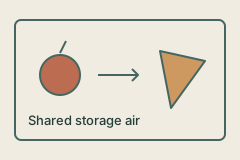
Check transport, storage and staging. Illustration, not a measured exposure.
University of Georgia Extension warns against storing carrots with ethylene-producing crops such as apples and cantaloupes. A cold room can maintain its temperature while still presenting a commodity-compatibility problem. Temperature compliance alone does not answer the ethylene question.
Trace the route before the processing line: supplier holding, mixed transport, receiving, shared stores and production staging. Record what is known about neighboring produce and time in each location. Mark missing information as unknown; a nearby apple pallet is a lead, not a measurement proving the cause.
Whole roots, cut pieces and peeled carrots are different samples
Record whether the complaint concerns unpeeled roots, washed roots, cut pieces with skin, or peeled sticks. Include whether the sample was raw or cooked. Comparing an incoming raw root with a cooked finished portion changes several factors at once.
In Abe and colleagues' controlled study, transverse carrot sections exposed to ethylene developed bitterness and tissue changes. Its experimental atmosphere and preparation do not establish identical responses for every peeled product. Do not translate a research exposure into a factory holding limit or a packaging-gas recipe.
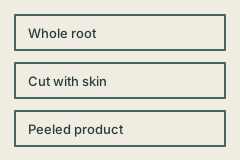
Cutting and peeling are separate changes. Compare the same finished form.
The practical starting point is incoming whole-root history. A problem noticed after peeling may have begun earlier. Equally, one incoming sample cannot exclude a later handling issue. Maintain sample identity through the relevant operations.
Use observations to choose the next check
| Pattern | Next investigation |
|---|---|
| Complaint follows one incoming lot across different runs | Review supplier history, growing conditions where available, transport and shared storage. |
| Difference appears between matched preparation routes | Compare preparation, handling damage, waiting time and actual sample conditions. |
| Carrots share storage with ethylene-producing produce | Review segregation, room arrangements and exposure history with the storage team. |
| White surface, decay or unexplained off-odor accompanies the complaint | Record these separately and refer suspect material for quality assessment. |
Use sensory comparisons only within the plant's approved quality procedure, on samples eligible for that assessment. Do not taste suspect or decayed stock to decide whether it is safe. Photographs document condition, but neither a photograph nor an orange surface measures flavor or ethylene exposure.
Improve prevention before intensifying peeling
Separate raw-carrot storage from incompatible ethylene-producing commodities. Review shared-room and transport arrangements rather than relying on different pallet labels. Preserve the required cold chain, hygiene and appropriate air circulation; any storage modification should fit the site's approved system.
UMass Extension also links carrot bitterness with wounding and bruising during washing. Check rough handling, impacts and accumulation as investigation points. This association does not prove a specific machine caused a particular complaint.
At the JX root vegetable brush washer and peeler, define the required washed or peeled finish. Compare only permitted processing conditions and include edible-material loss. A more polished surface is not evidence that bitterness has been corrected. Inspect moving components only with the equipment safely isolated.
A filled record with useful boundaries
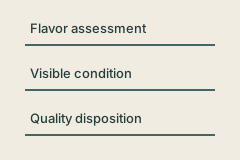
Flavor, appearance and lot disposition answer different questions.
Example only: “Lot C15, received Monday 08:30; unpeeled roots; transport history unknown; shared room R2 with apples until Tuesday 09:00. Complaint recorded on peeled raw sticks at 10:10; approved comparison sample A from the same lot prepared by the reference method. QA review pending.” These times illustrate traceability, not an exposure threshold.
Add the comparison method, sample labels, preparation state, holding conditions and assessor's recorded finding. Keep appearance and damage notes separate. For pale, dry-looking surfaces, consult the carrot white-blush guide; it addresses a different defect. The wash–cut–dewater guide covers wider process interfaces.
Frequently asked questions
Can apples stored nearby make carrots bitter?
Ethylene from apples is a recognized cause of carrot bitterness. Review shared storage and transport, but do not treat proximity alone as proof of the cause of an individual complaint.
Does every bitter carrot have an ethylene problem?
No. Preharvest stress and handling can also matter. Investigate lot history and compare equivalent samples rather than assigning one cause from taste alone.
Will washing longer or peeling deeper solve it?
Neither is a guaranteed correction. Evaluate the actual finished form under the approved quality procedure, including yield. Preventing unsuitable storage exposure is a separate task from surface preparation.
Is white blush evidence of bitterness or spoilage?
No. White blush is a surface-quality issue and does not measure flavor. Unexplained discoloration, decay or off-odor requires its own assessment; visual appearance cannot authorize lot release.
Sources and scope
Checked 15 November 2026. Historical technical guidance and research support the causes described; the comparison procedure, diagrams and filled record are editorial examples, not HELPER trial results. No universal exposure, storage-life or rework limit is inferred.
- UC Davis: Carrot, Suslow, Mitchell and Cantwell, June 2002, USA. Commodity guidance distinguishes preharvest stress, ethylene response and surface disorders.
- UGA Extension: Commercial Production and Management of Carrots, Bulletin 1175, full review 25 April 2012, USA. Mixed-load and storage compatibility section; historical sanitizer recipes are not adopted.
- UMass: Optimal Storage Conditions and Ethylene Sensitivity of Fall Storage Crops, Brown, Cavanagh, Hazzard and Sideman; updated Higgins, 11 January 2018, USA. Storage compatibility and handling considerations.
- Abe, Yoshimura and Chachin: Production of Bitter Compounds Induced by Ethylene Treatment in Fresh-Cut Carrots, 1996, Japan, DOI 10.2503/jjshs.65.193. Original abstract describes controlled transverse-section experiments; no gas-treatment recipe or claim about all peeled products is inferred.