
Label the process location before comparing brine samples. Fresh make-up brine describes the prepared batch before product contact. Injector feed describes liquid being supplied to the needles. Return brine describes recovered liquid after the injection step. In a recirculating arrangement, feed may contain fresh and recovered brine. A bottle labelled only “tank sample” loses this distinction.
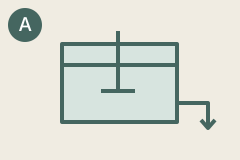
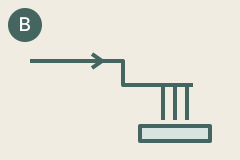
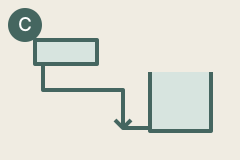
Illustrative locations. Confirm the actual flow diagram and approved sampling points for your line.
Follow the liquid through your actual arrangement
Start with the brine preparation tank. Record the batch identity, recipe revision and preparation status. Then trace the supply to the injector and any recovery path. Separate vessels are possible, but a tank name alone does not identify its contents. Ask where fresh make-up joins recovered liquid and where filters sit relative to that junction.
GEA's patent EP3996513B1 illustrates one arrangement in which recovered brine is filtered, collected with fresh brine, then supplied to the injector. It describes potential protein, fat, bone and cartilage material in the return. This example explains why locations differ. Confirm the installed layout against the equipment drawing.
For a preparation batch already showing grains or a deposit, start with the tank residue guide. For particles reaching needles, follow the filtration and needle compatibility guide.
Give every bottle enough context
Use the plant's approved collection method, container, identification and handling instructions. Collect through designated accessible points. If a proposed point requires reaching into moving equipment or opening a pressurized line, refer it to the responsible engineering and QA staff. Agree the point before collecting.
| Field | What to write |
|---|---|
| Identity | Sample ID, collection date, operator, recipe revision and brine batch. |
| Exact location | A, B or C plus the actual point name. State upstream or downstream of the named filter. |
| Timing and state | Clock time, elapsed run time, startup or steady running, and relevant pause, refill or changeover. |
| Product context | Product type and meat lot, including a lot change during continued circulation. |
| Observations and tests | Appearance, temperature with units, test method, instrument and reported result with its measurement basis. |
| Follow-up | QA review, action reference and the person responsible for disposition. |
“B, feed after filter F1” is more informative than “injector tank.” Keep raw observations separate from the suspected cause. Write “visible particles in C” when that is what was observed, then document any identification separately. Include the time between collection and examination when it matters to the method.
Make the comparison answer one question
Consider this illustrative record. A01 comes from fresh batch BR07 before startup. B01 comes from the designated feed point during startup. C01 comes from the return point later in the run. Their labels describe three different process histories. A difference between A01 and C01 cannot, by itself, identify the filter as the cause.
To investigate a change across a filter, QA can define a comparison using its identified upstream and downstream points under a documented operating state. To investigate change during the run, use the same defined point and method at the scheduled times. Record fresh additions and product changes between observations. These comparisons answer different questions.
A December 2004 Canadian poultry-plant study sampled circulating brine before and during processing and reported changes in bacterial numbers after processing began. Its observations support recording collection time and operating context. The study's times and counts are specific to that investigation.
Keep the result tied to its intended decision
For each test, state what it measures. A visual observation, optical reading and microbiological result answer different questions. See the Brix and salt concentration guide for reporting measurement identity.
For US official meat and poultry establishments, 9 CFR 417.2 requires a process flow chart and hazard analysis, with monitoring and verification requirements specified in the HACCP plan where applicable. Have the responsible team determine the controls and disposition for the actual process. A sample comparison alone cannot authorize continued reuse.
When discussing injector equipment, bring the marked flow diagram and sample labels. Ask the supplier to identify accessible sampling points, fresh-addition connections and the filter locations. This turns “the brine changed” into a specific equipment discussion.
Frequently asked questions
Can a mixing-tank sample replace a feed sample?
Only if the approved procedure establishes that it represents the required location and condition. Fresh make-up and a feed containing recovered liquid have different histories.
What if the line has no return loop?
Mark the return as absent. Identify the actual fresh supply and feed points. Use the installed arrangement to plan the record.
Does clear filtered brine establish that reuse is safe?
Appearance alone cannot establish microbiological status. Apply the plant's validated controls and QA disposition procedure.
Can we use any nearby valve for sampling?
Have engineering and QA confirm its purpose, accessibility and approved collection method first. Label the exact point consistently in the drawing and records.
Sources and scope
The record layout is an editorial example for discussion with the plant team. It describes process locations and excludes a universal sampling schedule or reuse limit.
- GEA Food Solutions Bakel BV, EP3996513B1, published 2 October 2024. One example of a brine recovery, filtering, make-up and feed arrangement.
- Gill and colleagues, Microbiological conditions of moisture-enhanced chicken breasts prepared at a poultry packing plant, Journal of Food Protection, December 2004. Author abstract reviewed; results are specific to the studied Canadian plant.
- 9 CFR 417.2, Hazard Analysis and HACCP Plan, eCFR text checked 8 November 2026, displayed current through 5 November. Applies to US official meat and poultry establishments.