
A vacuum reading needs a number, a unit and a pressure reference. −0.08 MPa gauge is not 0.08 MPa absolute. First identify the reference on the instrument or its manual; then convert the units. Comparing numbers without that step can make the same chamber condition look different, or different conditions look identical.
This guide helps production and purchasing staff compare vacuum-mixer or tumbler records. It explains the notation, not the correct processing vacuum for a recipe. HELPER instrument types and display settings must be confirmed for the supplied configuration.
Read the reference before the scale
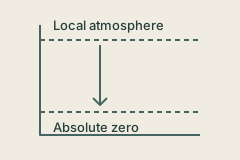
WIKA explains that gauge pressure is referenced to ambient atmosphere, while absolute pressure uses an evacuated reference. A negative gauge value means pressure below the surrounding atmosphere. Zero gauge means equal to that atmosphere; it does not mean an empty chamber.
Look for “gauge,” “relative,” “g,” “absolute,” “abs” or “a” in the documentation. A bare “MPa” identifies a unit, not the reference. A vacuum label or a minus sign is a useful clue, but obtain the instrument definition before comparing supplier specifications.
Use this conversion order
Absolute pressure = gauge pressure + local atmospheric pressure. Put all three quantities in the same unit first. Keep the negative sign on a negative gauge reading. To reverse the calculation, subtract local atmosphere from absolute pressure.
| Unit relationship | Same pressure quantity |
|---|---|
| 1 MPa | 1,000 kPa = 10 bar |
| 1 bar | 100 kPa = 1,000 mbar |
| 1 mbar | 100 Pa = 0.1 kPa |
NIST's pressure table and Leybold's unit reference support these conversions. Changing kPa to mbar changes the unit only. It does not turn a gauge measurement into an absolute measurement.
Example A: −0.08 MPa gauge
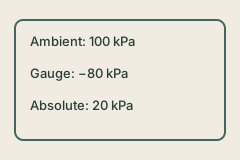
Assume local atmospheric pressure is 100 kPa absolute, chosen to keep this teaching example simple. The instrument reads −0.08 MPa gauge.
- Convert the reading: −0.08 × 1,000 = −80 kPa gauge.
- Add local atmosphere: −80 + 100 = 20 kPa absolute.
- Convert the result: 20 ÷ 0.1 = 200 mbar absolute, or 0.020 MPa absolute.
By contrast, 0.08 MPa absolute is 80 kPa absolute. Under this example's atmosphere, that would be −20 kPa gauge. Omitting the reference therefore changes the meaning substantially. These numbers are arithmetic examples, not recommended HELPER settings.
Example B: a different atmospheric pressure
Now assume local atmosphere is 85 kPa absolute and a gauge reads −60 kPa. Absolute pressure is −60 + 85 = 25 kPa absolute, equal to 250 mbar absolute. Using 100 kPa instead would incorrectly produce 40 kPa absolute.
Altitude and weather affect ambient pressure. Use the applicable local absolute atmospheric pressure; do not substitute a weather report's sea-level-adjusted value without checking its meaning. If the instrument directly measures absolute pressure, do not add atmosphere again.
Make the production record comparable
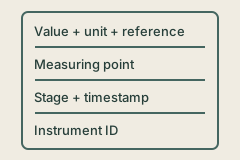
Use an explicit entry such as: “Chamber port; hold stage, 60 seconds after pump start; −80 kPa gauge; ambient 100 kPa absolute; calculated 20 kPa absolute; instrument ID V-01.” This is an illustrative record, not a required hold time or a real factory test.
Retain the original reading alongside the calculation. Add the batch, timestamp, instrument range, verification status and whether the machine was empty or loaded. Busch's measurement overview distinguishes sensor technologies and measuring ranges; different instruments should not be assumed interchangeable.
For a ZKHM-650 vacuum mixer or GR-500 vacuum tumbler inquiry, request the pressure reference, unit and measuring location. Do not infer the chamber reading from a pump specification. After reconciling notation, use the vacuum-mixing parameter guide for recipe trials, or the mixing-defect guide for abnormal operation.
Resolve an incomplete quotation
Suppose one offer says “vacuum 0.08 MPa” and another says “200 mbar absolute.” Do not rank them immediately. Ask the first supplier whether its number is a signed gauge reading, an absolute pressure or a stated vacuum magnitude. Under Example A, a confirmed −0.08 MPa gauge reading and 200 mbar absolute describe the same pressure, but that equivalence says nothing about the time needed to reach it.
Next separate the requested operating pressure from the pump's ultimate pressure, the instrument's full scale and an alarm threshold. Write each in its own field. Ask which value applies during the actual process stage and where it is measured. This avoids turning a component specification into an unsupported promise about the complete machine.
Frequently asked questions
Is a more negative gauge reading a stronger vacuum?
At the same ambient pressure, yes: it represents lower absolute pressure. That does not establish better dough or meat quality. The processing endpoint still needs a validated trial.
Can absolute vacuum pressure be negative?
Not for the gas-pressure vacuum measurements discussed here. A negative display may be gauge pressure or indicate a measurement issue. Confirm the reference and follow the instrument instructions before diagnosing the machine.
Does 80% vacuum equal −80 kPa?
Not without its definition and reference. Ask how the percentage is calculated and which atmospheric value is used. Prefer an explicitly referenced pressure when comparing quotes or batch records.
Should I change the machine setting if two readings disagree?
First check units, references, timestamps and measuring points. If the difference remains, use the approved instrument-verification and machine procedures. A conversion calculation alone cannot prove leakage or authorize adjustment.
Sources and scope
Checked 12 November 2026. This is a measurement-notation guide, not a HELPER instrument specification or a validated process recipe.
- WIKA: Difference between gauge pressure and absolute pressure measurement, Michèle Beyer; manufacturer explanation, Germany, article date not displayed. Reference definitions and atmospheric effects.
- NIST: Pressure and Gas Flow Unit Conversions, US government measurement reference; accessed pressure table, not gas-flow assumptions.
- Leybold: Glossary of units, undated manufacturer technical reference, Germany/global. Pressure-unit conversions only; historical regulatory statements are not applied.
- Busch: Vacuum Gauges, undated manufacturer measurement overview, Germany/global. Sensor categories and ranges, without assuming installed HELPER hardware.