
Ends and pieces, diced bacon and bacon bits describe different aspects of a product. Short, irregular pieces are not automatically uniform dice. Diced does not mean cooked, and bits does not automatically mean either cooked meat or imitation flavouring. The names can overlap on the same product. Read form, declared cooking state and ingredient identity separately before comparing offers or replacing an ingredient.
1. Start with the form being supplied

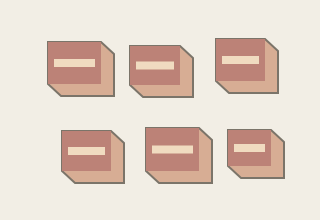

Original shape concepts, not actual samples, measured size distributions or HELPER cutting results. Colour does not establish product state.
One named pork product sold by ROCK Farmhouse describes shorter ends and irregular pieces created during bacon trimming, with variation in size, shape and thickness. [1] That is a useful example of the form, not a universal specification for every supplier’s ends-and-pieces product.
By comparison, Hormel product 20036 specifies a 3/8-inch diced raw product. [2] The number belongs to that SKU; it does not prove that every particle has three identical dimensions or establish a permitted tolerance. Neither description states a fixed lean-to-fat proportion. The raw-material receiving guide covers lot and raw-material checks.
2. Small pieces can be raw or fully cooked
Bits is not a reliable cooking-state instruction. Hormel’s raw diced product is also described on its official page as raw bacon bits. Oscar Mayer’s Real Bacon Bits page, by contrast, explicitly identifies its product as fully cooked and made from pork bacon. [2] [3]
| Product example | What the source declares | What not to assume |
|---|---|---|
| Hormel 20036, diced bacon | Raw bacon, with a stated diced size. [2] | The word bits makes it an already-cooked topping. |
| Oscar Mayer Real Bacon Bits | Fully cooked pieces made from real pork bacon. [3] | Every product called bits has the same state, recipe or storage instructions. |
| McCormick Imitation Bacon Bits | A bacon-flavoured imitation based on textured soy flour. [4] | A bacon-like appearance means it contains pork bacon. |
These are examples of separate products, not interchangeable grades. Follow the actual product’s preparation and storage directions. Use the smoked, fully cooked and RTE explanation for the wider terminology; this comparison does not prescribe cooking limits or storage life.
3. Check what creates the bacon flavour
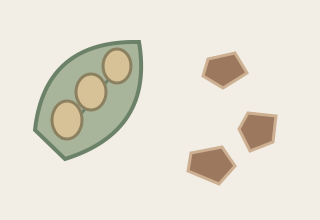
McCormick describes its imitation product as flavoured textured soy flour and lists that ingredient on the page. [4] Oscar Mayer identifies the cited real-bacon product as pork bacon. [3] The distinction comes from the declaration and ingredient list, not from brown colour or crumb size.
Also identify the animal source when buying meat-based products. Godshall’s offers a specifically named beef-bacon ends-and-pieces product in a ready-to-cook format. [5] Its beef description should not be silently substituted for pork, or treated as a statement about every ends-and-pieces product.
Use the current ingredient list to identify the formulation, including the named meat or plant ingredients. Compare that declaration with the ingredient required by the finished product; a similar flavour description is not sufficient.
4. Compare the ingredient’s job before replacing it
Illustration A: an ingredient cooked in the recipe
A specification calls for raw diced pork bacon. Buying fully cooked crumbles changes both the supplied form and processing stage; the names alone do not establish an equivalent substitution.
Illustration B: an already-cooked topping
A specification calls for fully cooked real-bacon pieces. A raw diced item or a soy-based imitation answers a different requirement, even if each package uses the word bits.
Teaching comparisons, not HELPER production trials or instructions for a particular recipe.
Compare the specified shape, ingredient source, declared state and intended role together. Keep the weight basis consistent: raw input and cooked topping weights are different stages. The yield guide explains those weighing boundaries.
For a cutting discussion, describe the required finished form and the condition of the incoming material. The meat cutting equipment range is a starting point; a product name does not establish a machine’s size tolerance or suitable configuration. Return to the bacon production overview for the full route.
Frequently asked questions
Are bacon ends and pieces the same as diced bacon?
Not necessarily. The cited ends product contains irregular pieces; the cited diced product states a cut size. Compare the actual form and specification.
Are bacon bits always fully cooked?
No. Hormel describes the cited raw diced product as raw bacon bits. Read the explicit product-state declaration and preparation directions.
Are all bacon bits made from meat?
No. The cited Oscar Mayer product uses real pork bacon, while the cited McCormick imitation uses textured soy flour. Read the ingredient list.
Does real bacon always mean pork in this comparison?
Identify the source explicitly. The examples include pork bacon and a separately named beef-bacon product; do not treat their descriptions as interchangeable.
Does a diced size guarantee identical cubes?
The stated size alone does not establish a dimensional tolerance or the distribution of particle sizes. Use the complete product specification.
Do these names guarantee a fixed fat content?
No fixed lean-to-fat proportion follows from these form descriptions alone. Check the relevant product information instead of judging from the name.
Sources and scope
Reviewed 4 November 2026. Named manufacturer and supplier examples describe their own products, not universal trade grades or HELPER customer cases. Original drawings explain form and ingredient origin; they are not real samples, measured tolerances or factory results. Read the current specification for the product being purchased.
- [1] ROCK Farmhouse / Prairie Farmstead Pork product listing, undated. Its own description of shorter ends, irregular pieces and variation.
- [2] Hormel Foodservice, product 20036, undated. Named raw diced bacon, also described as raw bacon bits.
- [3] Oscar Mayer / Kraft Heinz, Real Bacon Bits Mega Pack, undated. Fully cooked real pork-bacon example and ingredient declaration.
- [4] McCormick Imitation Bacon Bits, undated. Textured-soy-flour product description and ingredient list.
- [5] Godshall’s Food Service, Beef Bacon Ends & Pieces, undated. Named ready-to-cook beef product.