
Industrial Canned Luncheon Meat Line
Connect controlled meat preparation with quantitative can filling, hermetic closing and validated thermal processing—around your recipe, can format and required saleable output.
Define the equipment scopeConceptual project visualization. Final equipment arrangement, guarding and interfaces follow the signed engineering schedule.A production system, not one catalogue machine
Canned luncheon meat changes state several times before it becomes a shelf-stable packaged product. Frozen or chilled meat must be reduced to a controlled particle size, emulsified or mixed to the recipe target, transferred without damaging texture, portioned into the selected can, closed correctly and thermally processed against a validated schedule. The useful capacity of the line is therefore set by the slowest accepted operation—not by the unloaded speed printed on any individual machine.
HELPER’s publicly listed scope describes automatic stainless-steel canned meat lines for chicken, beef and pork. The published listings use several commercial titles for the same project family, so this page treats them as one configurable production-line system rather than separate products.
One continuous product route
Critical controls: temperature · texture · net weight · seam · lethality
- 01 / PREPARETrim & reduceReceive, inspect, temper, grind or flake meat to the agreed inlet condition.
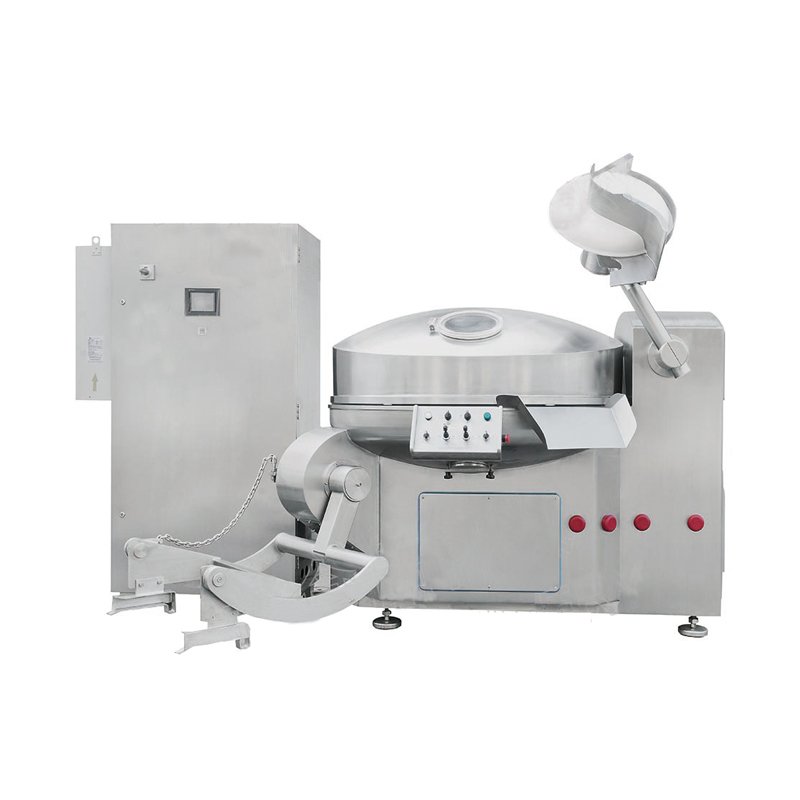
- 02 / BUILD TEXTUREChop & emulsifyControl particle size, protein extraction, temperature and ingredient addition.
- 03 / STANDARDIZEVacuum mixDistribute meat, fat, water, seasoning and inclusions with controlled air removal.
- 04 / PORTIONFill cansTransfer and dose product to the defined target weight with managed headspace.
- 05 / CLOSEExhaust & seamPrepare the container closure and verify a hermetic double seam.
- 06 / STABILIZERetort & coolApply the validated thermal schedule, cool, dry, inspect and release.
Build the line around the accepted product
- Raw material preparation
- Frozen-block breaking or tempering, grinding, fresh-meat handling and lifting selected from incoming block size, temperature and daily batch plan.
- Texture development
- Vacuum bowl cutting, chopping, emulsifying and mixing configured for smooth luncheon meat, visible-particle recipes or inclusions.
- Transfer and filling
- Hygienic transfer, buffer hopper and quantitative filling coordinated with product viscosity, can geometry, fill temperature and allowable weight variation. For pumpable minced or emulsified products, review the ZKG-6500 quantitative vacuum filler →
- Container handling
- Empty-can supply, indexing, filling, headspace management, lid placement, seaming and seam inspection matched to the selected container supplier.
- Thermal process interface
- Basket loading, retort transfer, cycle recording, cooling and unloading defined with the process authority and site utilities.
- End-of-line
- Can drying, coding, inspection, secondary packing and pallet flow are included only when listed in the signed project scope.
Engineering decisions that control the quotation
- 1.0
Define the product
Send the meat species and formulation, incoming meat temperature, target texture, inclusion size, emulsification requirement, salt and water-addition sequence, final net weight and finished-product quality standard. A photograph is useful; a representative sample and recipe trial are better.
- 2.0
Define the container
Identify can shape, material, internal dimensions, nominal fill weight, lid and seam specification. Rectangular and round cans require different handling, indexing and change-parts. The container supplier’s drawings should be frozen before filling and seaming interfaces are released.
- 3.0
Balance accepted output
State kilograms per hour, cans per minute, hours per shift, changeover frequency and planned sanitation time. Capacity must be measured as accepted sealed cans at the line discharge, using representative product—not as the nominal speed of an empty conveyor.
- 4.0
Validate safety and shelf life
The customer and qualified process authority must define the scheduled thermal process for each recipe and container. Retort temperature, pressure, come-up time, holding time, cooling and record retention are product-specific food-safety controls, not generic machine settings.
- 5.0
Fit the factory
Provide the floor plan, ceiling height, product and personnel routes, drainage, power, compressed air, water, steam, cooling-water quality, ventilation and lifting access. Separate raw preparation from post-retort handling and maintain service clearance around every machine.
Published facts and project-dependent values
| Product family | Canned luncheon meat / canned meat processing line | Current HELPER Alibaba commercial family |
|---|---|---|
| Applicable meat | Pork, beef and chicken; recipe-specific | Published application range |
| Automation | Automatic line; exact transfer and control level configured by project | Published family + engineering boundary |
| Contact construction | 304 stainless-steel language published for the line | Final material certificates and non-contact construction to be listed in proposal |
| Capacity | To be confirmed from recipe, can format and accepted cans per minute | No single reconciled standard value published |
| Can formats | Round or rectangular subject to container drawings and change-parts | Project-dependent; not a universal standard configuration |
| Electrical and utilities | Configured for destination factory and selected modules | Issue one consolidated utility schedule before order |
| Thermal processing | Retort interface and validated product schedule | Process authority approval required; no generic cycle claimed |
Acceptance should follow the can, not the motor
A useful FAT proves that representative product can pass through the selected preparation and filling modules while remaining inside agreed limits. Record product temperature, texture or particle distribution, batch consistency, fill-weight distribution, headspace, visible defects, seam measurements, accepted cans per minute, start-up waste, stoppages and recovery.
SAT repeats the critical tests after installation with site utilities and trained operators. It should also verify cleaning access, recipe changeover, safe isolation, alarm handling, traceability of process records and the handover of drawings, manuals, wear parts and preventive-maintenance tasks.
Buyer questions
Is this one standard machine or a complete customized line?
It is a project-engineered line. The exact equipment list depends on recipe, raw-material condition, can format, required output, thermal process, available utilities and the customer’s scope for packaging and automation.
Can the same line make pork, beef and chicken luncheon meat?
The published product family covers those applications, but recipes may require different grinding, chopping, mixing and heat-processing conditions. Changeover, allergen control and halal segregation requirements must be defined during engineering.
Can you quote capacity from kilograms per hour alone?
No. We also need can net weight, cans per minute, batch size, retort loading pattern, shift hours, cleaning allowance and the definition of accepted output. These determine whether the line is balanced.
Does HELPER provide the can seamer and retort?
They can be treated as integration modules in a turnkey scope, but included brands, specifications and responsibilities must be listed in the signed proposal. Public listings do not establish one universal standard equipment schedule.
What should we send for an accurate proposal?
Send the formula and sample, incoming meat condition, target texture, can and lid drawings, net weight, hourly and daily output, required shelf-life process, factory layout, utilities, destination standards and any preferred upstream or downstream equipment.