
Start with the product envelope
Share the minimum and maximum cross-section, length, weight and firmness. An irregular piece needs a different review from a uniform cylindrical product.
Meat Processing Equipment
Repeatable food-grade string tying for formed meat and compatible food bundles.
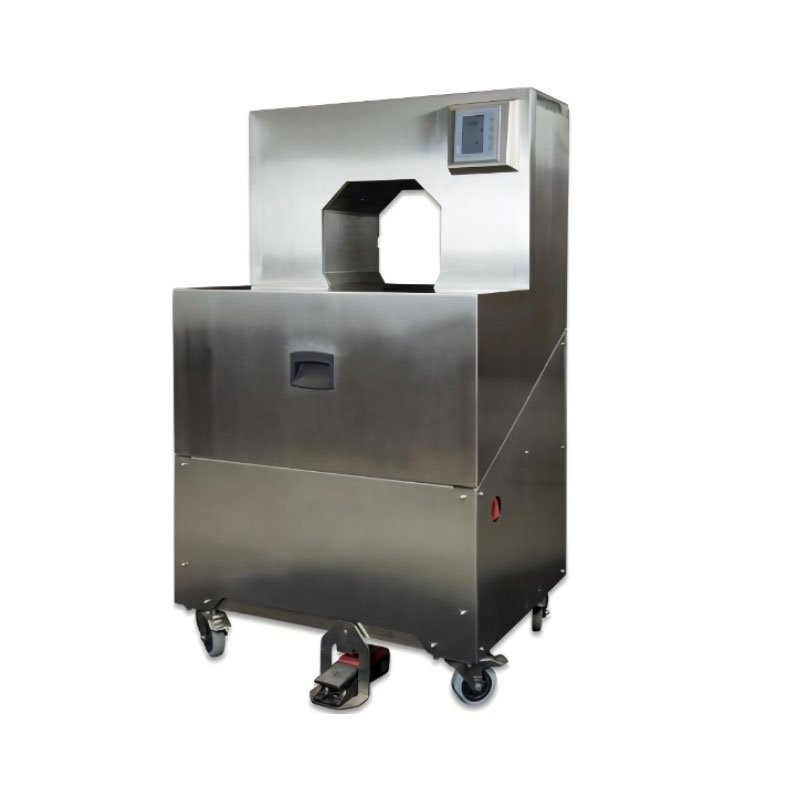
This category covers external string binding of formed products. The KJJ-230 record includes meat products such as pork loin and chops, together with other compatible bundles. The purpose is to hold the required shape and presentation through later handling. It is a different operation from twisting a filled sausage casing or closing a casing with an aluminum clip.
Share the minimum and maximum cross-section, length, weight and firmness. An irregular piece needs a different review from a uniform cylindrical product.
Describe loop spacing, number of loops, knot position and acceptable string tails. Include a reference photograph of the required appearance.
State whether the tied product will be cooked, smoked, chilled, frozen or packed. The string specification and finished tie need to suit that route.
The published cycle figure on the KJJ-230 page describes individual ties. A long product with several loops requires more tying cycles than a short product with one loop. Operator presentation, advance between positions, string handling and rework also affect finished pieces per hour. Give the team a product mix and shift pattern rather than converting the maximum cycle figure directly into plant output.
Provide the proposed food-contact string specification, diameter, spool format and intended process exposure. The machine interface and the product application both need confirmation.
Ask to compare tie position, knot consistency and product deformation across representative samples. Include the least uniform and most delicate products.
Review product support, incoming and outgoing trays, operator position and service access with the equipment proposal. Operating and safeguarding instructions must come from the supplied machine documentation.
Send product photographs from more than one angle, typical size variation, the target tie pattern and a description of later processing. The KJJ-230 detail page provides the published technical schedule and demonstration context. Use that information to request a trial or configuration discussion; do not assume that every listed application uses the same tooling or settings.
The listed machine is a string-tying station. Cutting and portioning are separate duties and should be specified separately.
The local KJJ-230 record also lists compatible non-meat bundles. Suitability depends on shape, firmness, string response and the required finished appearance; review a sample before selecting the application.
Send the incoming material, finished product, required output and available factory information. Include the page or model reference so the discussion starts with the right equipment duty.
Send project requirements