
Noodle traditions / 苏式汤面
Suzhou-style noodle soup
Fine wheat noodles, carefully prepared broth and a topping that can change with the season.
Explore how Suzhou builds a bowl, then see what to measure when developing a fine noodle for a shop or production line.
Explore the bowl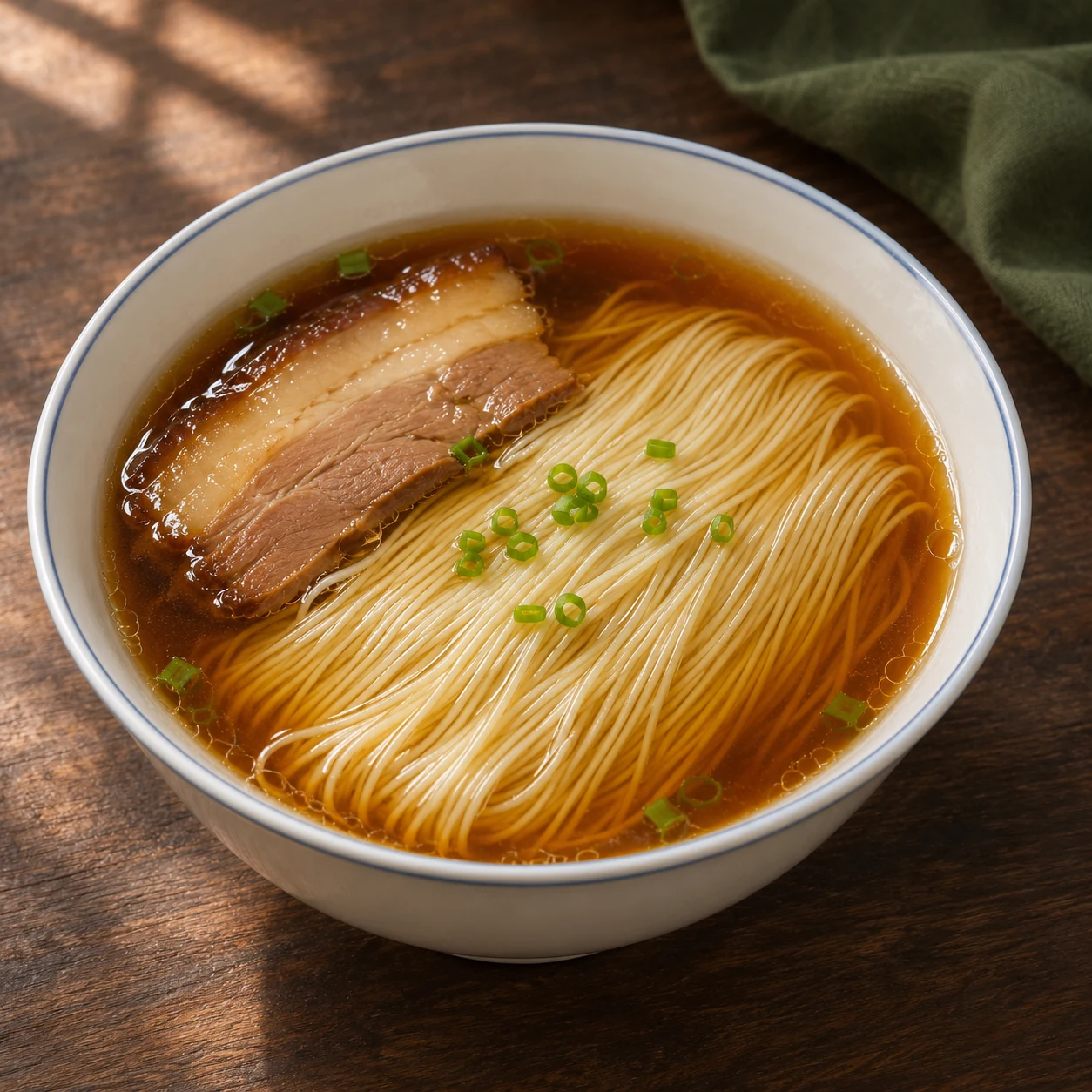
01 / The bowl
Noodles, broth and toppings
Suzhou’s intangible cultural heritage entry describes noodle preparation, boiling and lifting, broth preparation and topping preparation as distinct parts of the craft.
- 01Noodles
- Fine strands are a starting point for this style. Cook a portion and judge its bite in the broth you plan to serve.
- 02Broth
- Red and white broths are two traditions to explore. Recipes and seasoning vary by shop.
- 03Toppings
- Known as jiaotou (浇头), toppings include braised pork, eel and seasonal specialties such as san xia.
At the noodle shop. Diners can specify firmer or softer noodles, more or less broth and their preferred garnishes.
02 / Noodle dough
From wheat flour to fresh strands
Start with wheat flour and water for a fresh, uncooked noodle. In a sheeting trial, mix by weight, rest the dough, roll it in stages and cut it to the shape you want to serve.
- Mix
Weigh the flour and water and record the batch recipe.
- Rest
Compare rest times and check how readily the dough feeds into the rollers.
- Roll
Reduce the sheet thickness in stages and check it across the width.
- Cut
Match the cutter to the strand profile and set the portion weight.
Check the diameter of a round strand. For a flat strand, check both the cut width and sheet thickness. Use a reference bowl to set the target bite before choosing a cutter.
03 / Broth
Prepare the stock and seasoning separately
In the traditional method described in Suzhou’s draft craft guide, the cook prepares a stock and a separate braising liquor, then seasons each bowl at service.
- 01Simmer the stock
- The draft guide gives examples including pork bones, eel bones and river snails. Skim the stock as it simmers.
- 02Prepare the braising liquor
- The seasoned liquor, called mulu (母卤), helps give the broth its character. Soy sauce and rock sugar are examples from the draft guide’s red-broth preparation.
- 03Season the bowl
- Add the seasoning and any scallions or garlic greens to the serving bowl, then pour in hot stock. Adjust the amount of broth and greens to order.
04 / Toppings
Four toppings to look for
Prepare the topping separately and choose it to suit the broth or serving style.
- Braised pork 焖肉
- Choose pork belly from the rib section and braise it until tender. The meat can be served with the noodles or on the side.
- Fried fish 爆鱼
- Fried fish is a classic pairing for Kunshan’s red-broth Aozao noodles.
- Braised duck 卤鸭
- Braised duck is a classic pairing for Kunshan’s white-broth Aozao noodles.
- Three-shrimp topping 三虾
- This seasonal topping combines shrimp meat, roe and the rich paste from the heads. One local preparation stir-fries the topping and serves it with tossed noodles.
05 / Bowl assembly
Boil, lift, arrange and serve
Have the seasoned broth ready in the bowl while the noodles cook.
- Boil
Cook a portion of fresh noodles in a separate pot of boiling water.
- Lift & drain
Use a noodle strainer to lift the strands quickly and let the cooking water drain.
- Arrange
Set the strands into the broth in a neat raised curve, known as a crucian carp’s back.
- Serve
Place the topping over the noodles (gaijiao) or serve it on a separate dish (guoqiao).
06 / Noodle production
From dough to fine strands
A planning sequence for a sheeted wheat noodle. Choose the delivery format before sizing equipment.
- 01
Mix
Record the flour, water and other ingredients by weight.
- 02
Rest
Trial the rest stage and check how the dough feeds into the rollers.
- 03
Sheet
Roll in stages and check sheet thickness across the width.
- 04
Slit & portion
Set strand width, cut length and portion weight against the target bowl.
- 05
Finish
Choose handling and packing for fresh raw portions, or test cooking and cooling for a precooked format.
07 / Trial checklist
Test the noodle in the broth you will serve
Start with a reference bowl. Record the flour, water-to-flour ratio, any additions such as alkali, and the cooking time and endpoint. Repeat the same test when you change the flour, cutter or line speed.
Discuss a noodle trial- Before cooking
- Measure raw width, thickness, cut length and portion weight. Note sticking and breakage during handling.
- At service
- Check bite and strand separation at serving time and after your expected wait in hot broth.
- After storage
- Repeat the cooking test after a representative pack-and-hold trial for the intended delivery format.
08 / Further reading
Sources and related guides
- Suzhou noodle-making craft guide (public consultation draft) · Ingredients, stock, seasoning and bowl assembly
- Suzhou Culture and Tourism · A local preparation of three-shrimp tossed noodles
- Suzhou Intangible Cultural Heritage · Suzhou-style noodle soup making
- Suzhou Municipal Government · Local noodle styles and toppings
- Fresh, dried and frozen noodles · Production and handling options
- Japanese ramen guide · Broth, noodles and production