
Needle treatment
The catalog lists a 656-needle tenderizing head.
A needle tenderizing machine for mechanical treatment of meat before further processing.
View specifications Request a quotation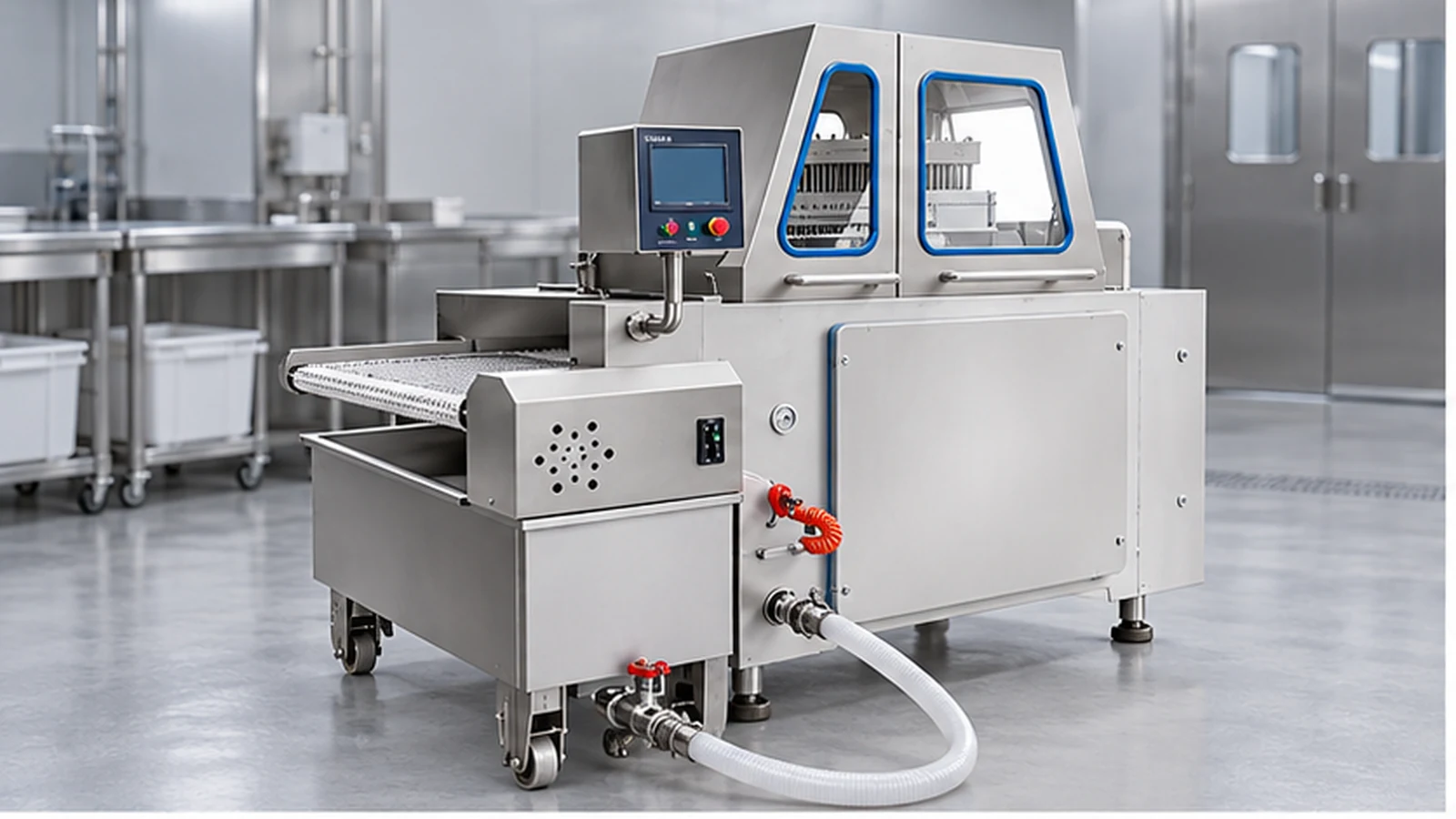
The catalog lists a 656-needle tenderizing head.
Step-fed material passes beneath the reciprocating head.
Prepare material within the listed thickness range.
Position tenderizing before the appropriate downstream processing stage.
| Model | HDJ-656 |
|---|---|
| Capacity | 2500–3500 kg/h |
| Power | 3.53 kW |
| Needles | 656 |
| Stroke frequency | 15–55 cycles/min |
| Conveyor step | 30–60 mm |
| Product thickness | 5–45 mm |
| Weight | 350 kg |
| Dimensions | 2100 × 600 × 1716 mm |
The HDJ-656 row does not specify brine injection pressure or an injection percentage. Its tenderizing specification must not be substituted for a ZN brine injector.
Capacity depends on the material and process. Confirm the selected configuration, utilities and acceptance conditions in the quotation.
HDJ-656 uses a 656-needle reciprocating head to puncture meat carried by a step conveyor. It is intended to change the physical structure of the product before marination, tumbling, forming or another defined downstream step.
The model schedule lists needle count, stroke frequency, conveyor step and product thickness, but it does not publish injection pressure or injection percentage. Tenderizing performance and brine uptake are separate acceptance questions.
The listed 2,500–3,500 kg/h is a catalog capacity range. Product dimensions, loading density, conveyor step, stroke setting and required puncture coverage determine accepted production output.
Run the thinnest and thickest commercial products within the listed 5–45 mm range. Include irregular pieces and normal surface moisture to see whether feeding remains controlled.
Define required puncture coverage and inspect tearing, compression, surface marks, bone contact and product deformation. The target should reflect the next process rather than maximum needle action.
Record stroke frequency and conveyor step for every accepted product. Test restart after a pause and confirm that loading does not create overlapping pieces or unguarded hand access.
Confirm access for cleaning beneath the head and conveyor, needle inspection and replacement, broken-needle control, drainage and reassembly. Include these checks in the plant's documented sanitation procedure.
Provide meat type, piece length and width, thickness range, temperature, bone condition, incoming orientation, target kilograms per hour and the downstream process. Add required puncture coverage, available 380 V supply, conveyor height, room layout and cleaning chemistry. Samples should represent both the easiest and most difficult products planned for the line.
Compare tenderizing and brine-injection equipment · Review the downstream tumbling stage
Send the product, incoming condition, required output and available factory space. Include the required electrical supply and the machines before and after this operation.
Contact HELPER