
270 Dough Sheet Conveyor & Flour Duster
Support the dough sheet between working stages and apply flour at the agreed transfer point. Plan conveying and dusting together around the sheet condition required by the next machine.
Discuss the 270 transfer unit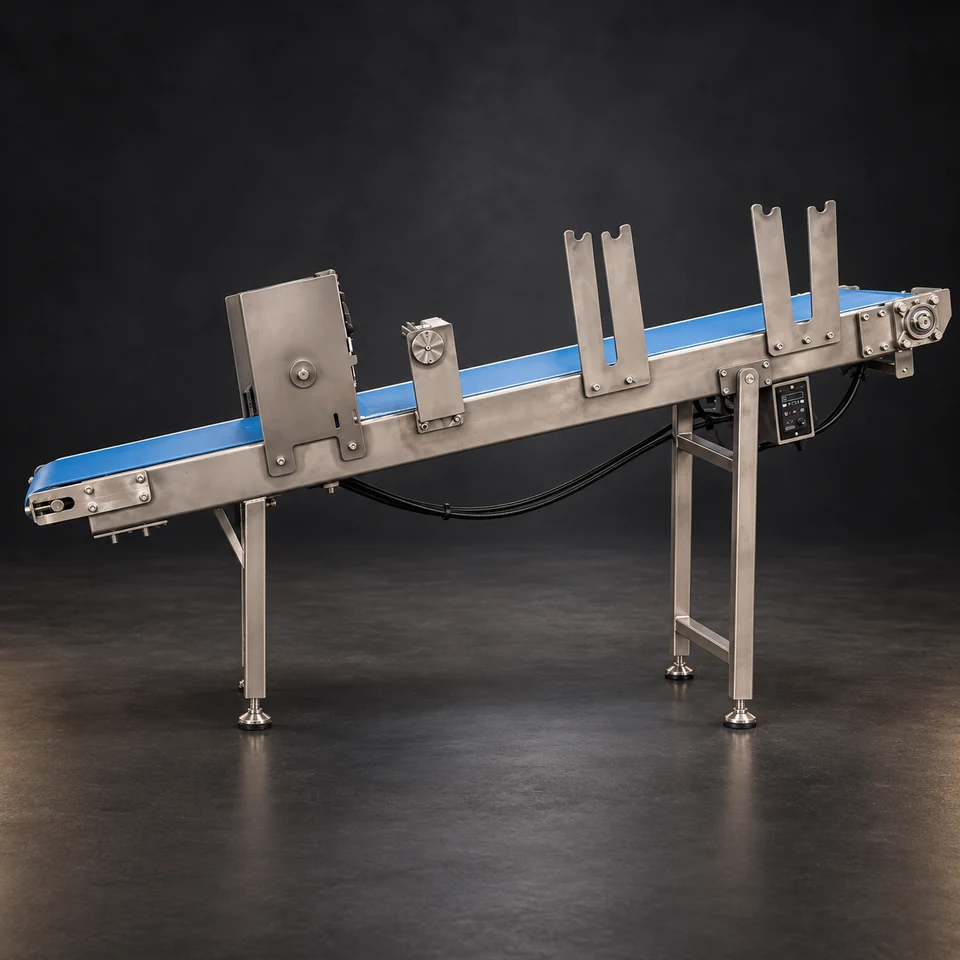
- Working function
- Dough sheet transfer and flour dusting
- Unit boundary
- Conveyor and dusting assembly; adjacent rolling machines excluded
Keep the sheet supported between stages.
The belt carries the dough sheet from the preceding working stage toward the next receiving point. Specify inlet and outlet heights, travel direction and the supported sheet width from the actual equipment layout.
Coordinate belt movement with the connected machines so the sheet transfers without unnecessary pulling or accumulation. The illustrated incline is a configuration view; it does not establish a rated lifting height or speed.
Set dusting around the next operation.
Flour dusting can help manage sticking during dough-sheet handling. Select the flour, application point and amount through a trial with your recipe and downstream process.
Check distribution across the usable sheet width and inspect the resulting sheet surface. More flour is not automatically better: agree the required handling condition and consider its effect on the following operation and cleaning requirements.
Upstream: receive the prepared dough sheet.
The conveyor may receive a sheet from the 270 compound sheeting machine or another specified rolling stage. Confirm the discharge position, sheet thickness, width and condition at the inlet.
Review the transfer gap and support at the belt entry. Include how the preceding machine starts and stops, and how sheet flow is coordinated during changes in operating conditions.
Downstream: deliver the required surface condition.
The outgoing sheet passes to the next specified rolling, forming or handling stage. Agree its height, direction, support and surface flour condition at the handover.
The named units are possible connection points to assess, rather than a fixed sequence for every dough product. Confirm whether the next stage accepts the selected dusting material and application level.
Review the unit configuration.
The unit view shows a narrow blue belt, stainless side rails, upright mounting and dusting components, end adjustment and bearing areas, a small control box and supporting legs.
Confirm the installed dusting assembly, refill access, belt specification, guarding and cleaning access on the selected machine drawing. The illustration is intended to identify this unit; hidden internal parts and performance values are not established by it.
Information needed for selection.
- Product, recipe range and incoming sheet condition
- Sheet width, thickness and supported transfer length
- Inlet and outlet heights and direction of travel
- Flour type and required dusting location
- Operating speed and controls at both interfaces
- Cleaning method, refill access and factory layout
270 is the owner-supplied configuration designation. Confirm working width, dimensions, power, speed and output in the approved technical specification.
Check conveying and dusting in a trial.
Run representative dough and inspect tracking, belt entry and exit, flour distribution and sheet release. Observe both edges for sticking, stretching or unwanted folds, and review the sheet after the next processing stage.
Record the recipe, sheet condition, conveyor setting and dusting adjustment with the observations. Agree cleaning and safe access arrangements before finalizing the installation.
Common planning questions.
Is the 270 compound sheeter included?
No. This page covers the conveyor and flour dusting unit. The compound sheeter and other connected machines are separate units.
Is this the same as the 1.5 m lifting conveyor with flour duster?
They are separate listed configurations. This 270 sheet-transfer unit has its own arrangement and interfaces; a 1.5 m height specification must not be carried over to it.
Is a fixed flour application rate specified?
No application rate is supplied here. Confirm adjustment range and acceptance criteria with the selected flour, sheet and product trial.
Plan the sheet handover.
Send your sheet condition, dusting requirement, transfer layout and the machines on both sides.
Request the 270 conveyor configurationSee this unit in the 270 line.
Review how the sheeting, sheet-transfer, noodle-forming and nesting units are arranged together.
Explore the 270 line →