
270 Compound Dough Sheeting Unit
A compact compound sheeting stage for the selected dough-processing route. Review the feed hopper, roller arrangement and material handover as one machine unit.
Discuss the 270 configuration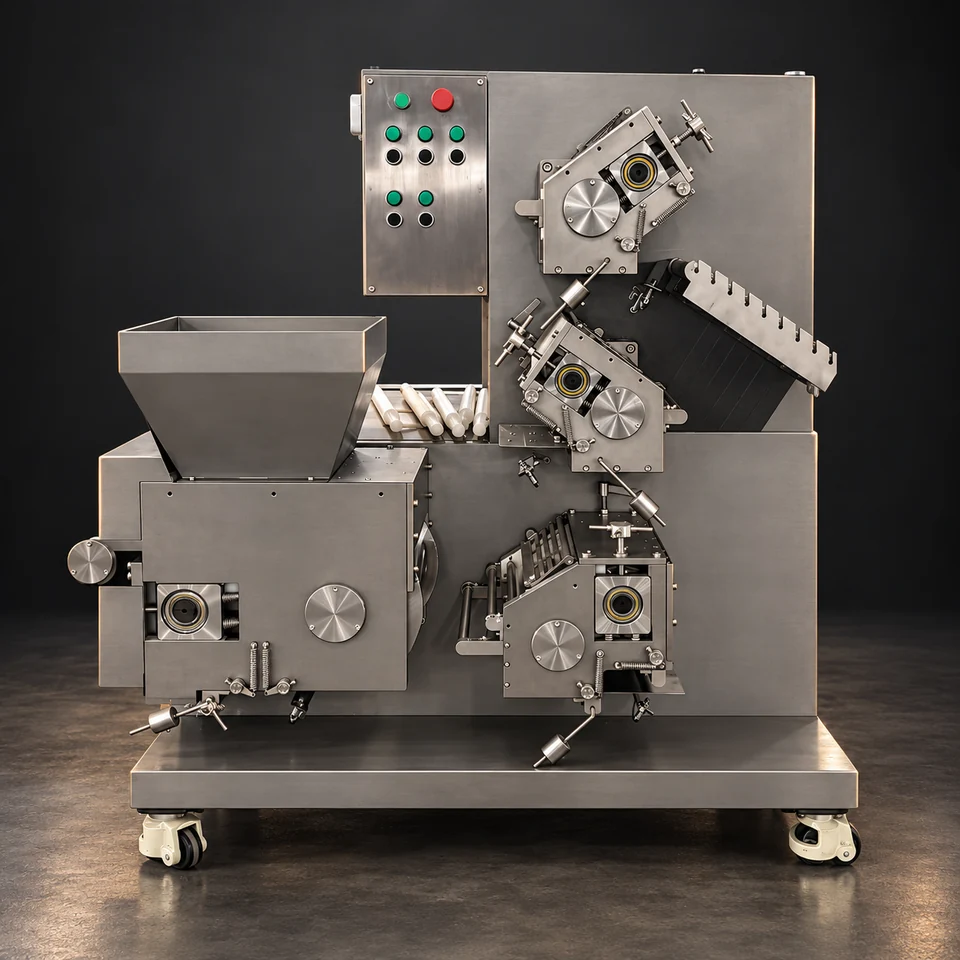
- Working function
- Compound dough sheeting and rolling
- Unit boundary
- Main machine with feed hopper; external transfer conveyor excluded
Build the sheet-forming stage around your dough.
The 270 compound sheeting unit brings the hopper and roller assemblies together within one machine body. Define the incoming dough condition and the sheet required by the following stage before choosing the operating setup.
For a compound sheeting task, confirm how material is fed, formed and combined through the selected roller arrangement. The image identifies the machine layout; the exact internal route and operating sequence require the configuration drawing.
A clearly defined machine boundary.
The illustrated unit includes the integrated hopper, button control panel, main body, exposed roller adjustment mechanisms and wheeled base. The blue conveyor shown beside the original machine is a separate transfer unit and is excluded from this page's machine scope.
Plan discharge support, guarding and service access at the machine boundary. Confirm which transfer equipment is included in the quotation and which equipment belongs to the surrounding line.
Upstream: prepare material for the hopper.
A mixing stage supplies dough with the condition required for feeding and sheet formation. Depending on the recipe and process, a resting stage or a separate feeding arrangement may be specified before this unit.
Confirm batch delivery, feed consistency, dough condition and access for loading. Match the feed method to the actual inlet rather than assuming every mixing or transfer unit connects directly.
Downstream: define the outgoing sheet.
The outgoing dough sheet may continue to a specified rolling, resting or forming stage. Confirm the required width, thickness, continuity and support at that handover.
If a separate conveyor bridges the next machine, agree its direction, height and speed coordination. A conveyor connection is a separate layout choice; it is not included automatically with the 270 sheeting machine.
Information needed for selection.
- Finished noodle or dough-sheet product
- Recipe range and incoming dough condition
- Feed method and material delivery pattern
- Required outgoing sheet width and thickness
- Roller duty and the next working stage
- Layout, utilities, cleaning and access requirements
270 identifies this machine configuration. Confirm usable roller width, dimensions, power, speed range and capacity on the approved specification; numerical performance values are not supplied here.
Check the sheet in a material trial.
Use representative dough to observe feeding, sheet continuity, edge condition and release from the roller area. Inspect how the sheet transfers to the following unit without unsupported spans or unwanted stretching.
Record the recipe, incoming material condition, roller settings and outgoing sheet measurements. Evaluate the result after the next process step using agreed acceptance criteria.
Common planning questions.
Is the blue conveyor included?
No. The external blue conveyor is outside this machine unit's scope. Specify any required conveying connection separately in the layout and quotation.
Does 270 establish a capacity or roller width?
This page uses the owner-supplied 270 designation. Confirm working width, output and all other numerical specifications from the selected machine's technical drawing and data sheet.
How does this differ from the other compound sheeter?
This is a separate 270 machine configuration with its own hopper, roller arrangement and unit boundary. Compare the required feed condition, sheeting duty and downstream interface before selecting between configurations.
Define your sheet-forming requirement.
Send your product, incoming dough condition, outgoing sheet target and the machines before and after the 270 unit.
Request the 270 configuration