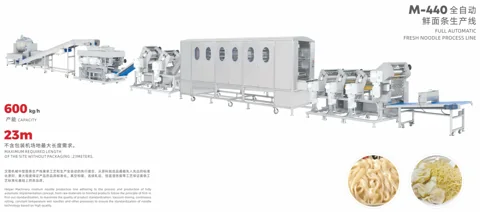
A process unit is a defined operation. It can be a separate machine, part of a connected section, or an integrated function. Open a unit to see its job, incoming material, outgoing condition, neighboring units and related HELPER equipment.
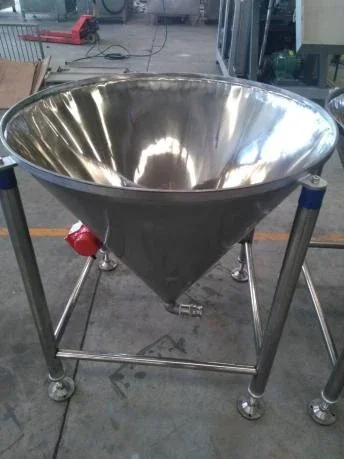 Unit 01
Automatic Flour Feeding Unit
Move the dry ingredient from its loading position to a compatible dough mixer. Transfer is a different duty from weighing: a feeding system does not automatically define or verify the recipe batch.
- Receives
- Released flour at the loading point
- Passes to the next unit
- Flour delivered to the mixer charging connection
Function & connections →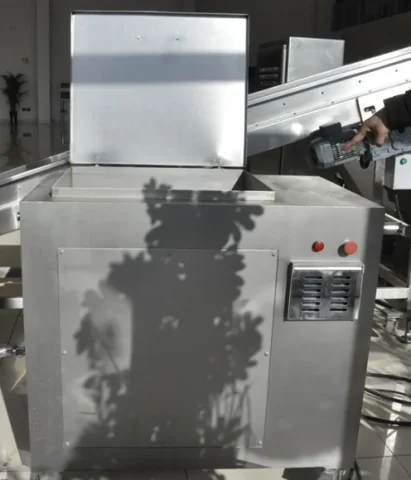 Unit 02
Automatic Water Dosing Unit
Control the quantity of water added to the mixer. Liquid dosing and preparation of a salt solution are separate functions, even when their equipment is connected in one recipe system.
- Receives
- Available process water or an approved liquid recipe
- Passes to the next unit
- A measured liquid addition to one mixer batch
Function & connections →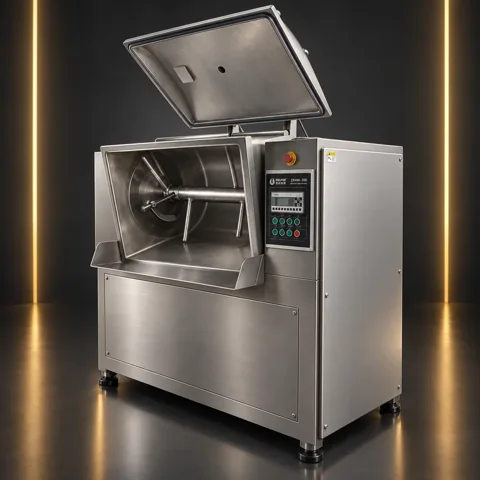 Unit 03
Dough Mixing Unit
Combine the ingredients into the dough condition needed by the next unit. A mixing unit includes the loading and discharge sequence as well as the mixing action; vacuum operation is a selected configuration, not the definition of every mixer.
- Receives
- Defined flour batch and liquid additions
- Passes to the next unit
- Mixed dough crumbs or a cohesive dough mass
Function & connections →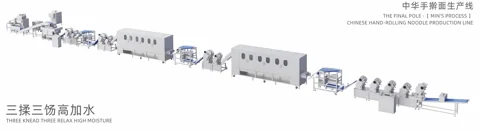 Unit 04
Dough Resting & Conditioning Unit
Provide an intentional holding stage between mechanical operations. Resting may occur as crumbs after mixing or as a sheet after combining; those positions are different process arrangements and must be named on the line drawing.
- Receives
- Freshly mixed crumbs or a prepared dough sheet
- Passes to the next unit
- Conditioned material ready for the next forming pass
Function & connections →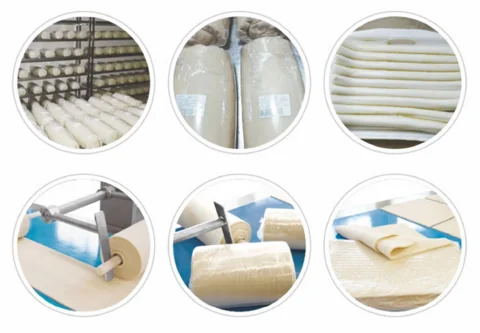 Unit 05
Compound Dough Sheeting Unit
Form and combine dough into a band. Initial sheet formation, joining layers and reducing an established sheet are distinct duties even when they share a compact machine frame.
- Receives
- Mixed crumbs or initial dough sheets
- Passes to the next unit
- A joined dough band for further conditioning or reduction
Function & connections →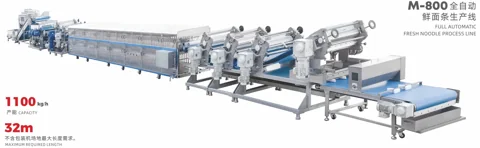 Unit 06
Continuous Dough Rolling Unit
Reduce an established dough band through a coordinated rolling sequence. The measured outgoing sheet, rather than the dial setting alone, is the interface handed to the cutter.
- Receives
- An established dough band
- Passes to the next unit
- A sheet at the specified final thickness for cutting
Function & connections →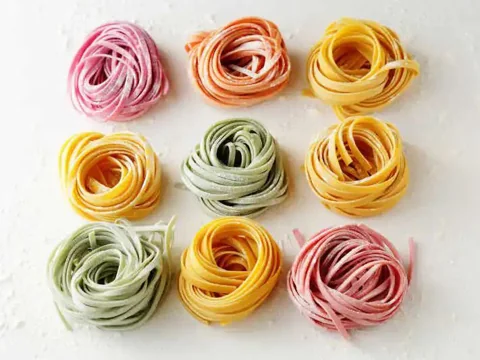 Unit 07
Noodle Slitting & Cutting Unit
Convert the dough sheet into strands and establish the required length. Slitting sets strand width; upstream rolling establishes sheet thickness. Length cutting is a separate timing or mechanical duty within the cutting arrangement.
- Receives
- A supported sheet at the target thickness
- Passes to the next unit
- Strands at the selected width and cut length
Function & connections →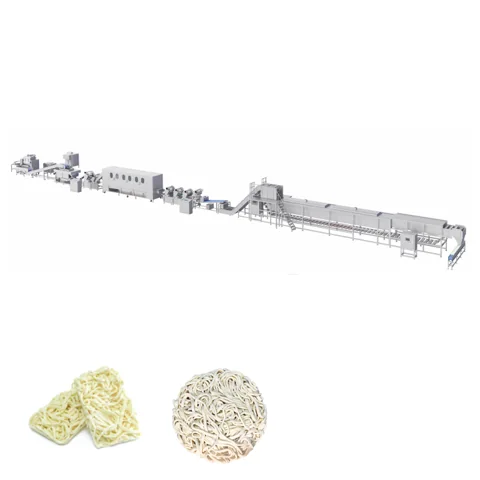 Unit 08
Noodle Portioning & Transfer Unit
Organize product into the amount and shape accepted by the next operation. Cutting a noodle to length is not the same as weighing or portioning it for a bag, cooking basket or freezer belt.
- Receives
- Separated noodle strands or a defined cooked product stream
- Passes to the next unit
- Portions presented at the next machine pitch
Function & connections →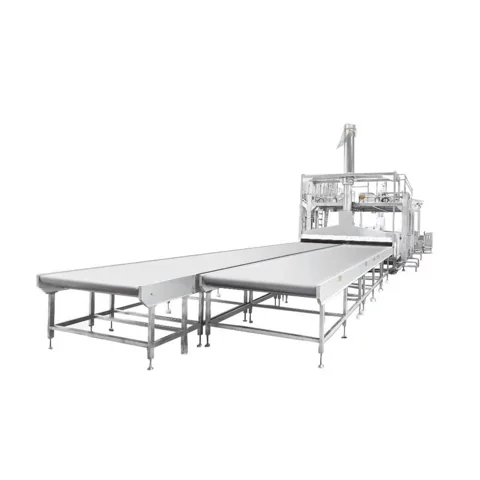 Unit 09
Noodle Cooking & Steaming Unit
Apply the required thermal process using the specified cooking method. Boiling and steaming are alternative operations with different transfer, water and steam interfaces; they are not interchangeable names for one standard tunnel.
- Receives
- Formed strands or supported noodle portions
- Passes to the next unit
- Thermally processed noodles for the selected route
Function & connections →Unit 10Noodle Cooling & Draining Unit
Remove the heat and, where applicable, surface water that the following operation cannot accept. Cooling after boiling may use a different arrangement from cooling dry noodles before packing.
- Receives
- Hot cooked noodles or product discharged from a dryer
- Passes to the next unit
- Product at the agreed next-stage condition
Function & connections →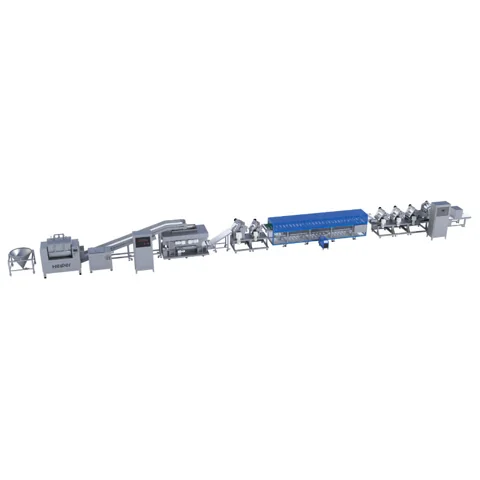 Unit 11
Noodle Drying Unit
Remove moisture under the conditions required by the selected product. A raw dried noodle and a steamed, non-fried instant noodle enter drying in different states; they should not share an assumed process recipe.
- Receives
- Raw noodles or cooked noodle forms specified by the recipe
- Passes to the next unit
- Dried product ready for finishing and packaging
Function & connections →Unit 12Noodle Freezing Unit
Freeze the product after the selected forming, cooking and cooling route. Raw frozen noodles and pre-cooked frozen noodles are different products; the presence of a freezer does not make their preceding process identical.
- Receives
- Defined portions at the agreed freezer inlet condition
- Passes to the next unit
- Frozen portions meeting the agreed discharge condition
Function & connections →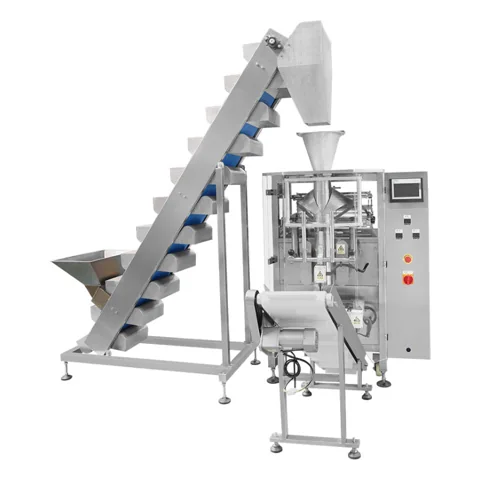 Unit 13
Noodle Packaging Unit
Receive the noodle product, form or receive its package, fill it and close the pack using the selected machine configuration. Portion measurement, coding, inspection and case handling are separate scope items unless included in the offer.
- Receives
- Prepared portions in the specified product condition
- Passes to the next unit
- Sealed and identified packs for the selected distribution route
Function & connections →