
Upper housing and guide area
The long upper body and guide area organize the sheeting section. Inlet access, product path and the final roller arrangement should be reviewed on the approved layout.
An individual machine body for the compound-sheeting stage of a noodle or wrapper production route. Define the incoming dough, sheet-forming duty and connection to the next working unit around your product.
Discuss your sheeting unit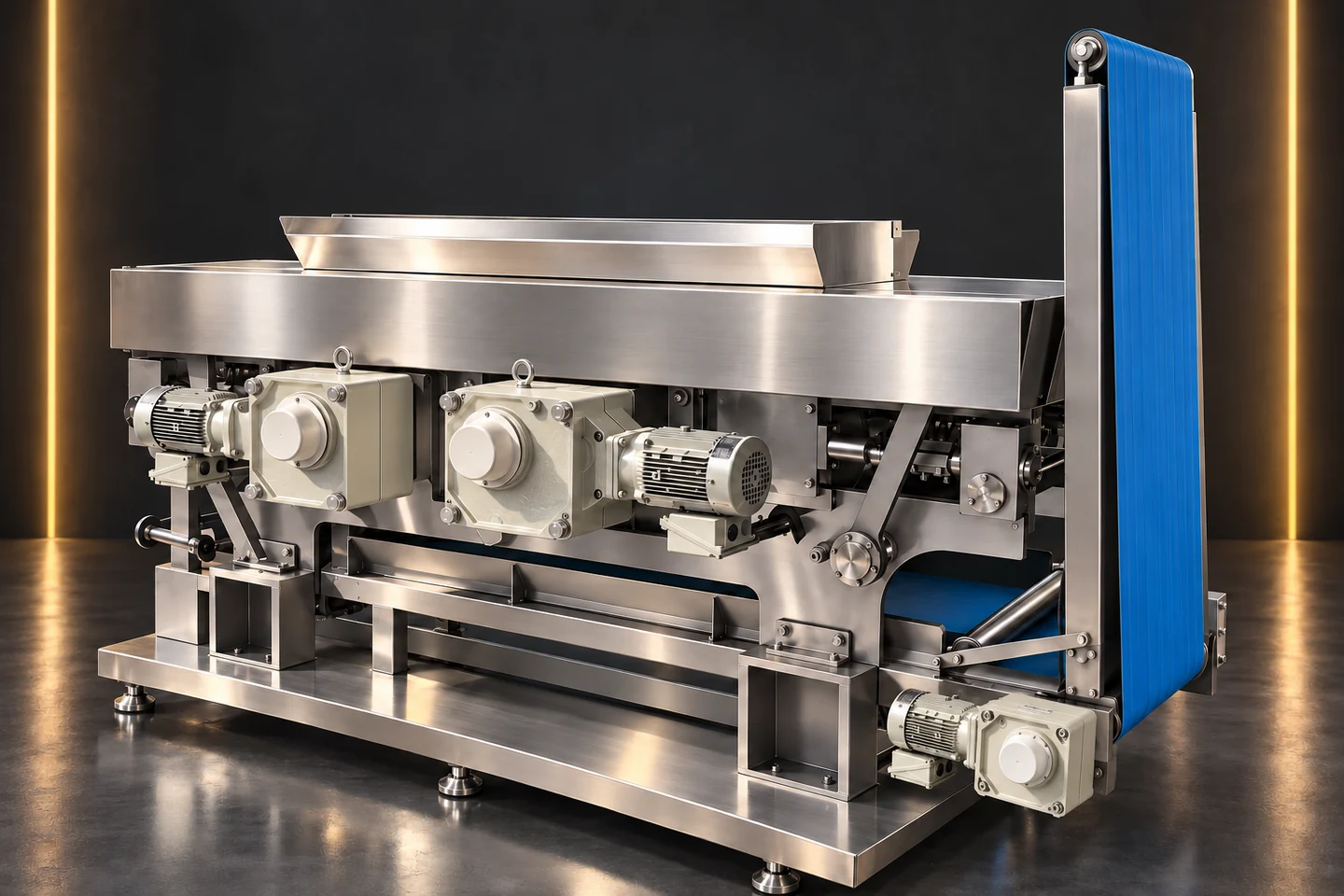
Compound sheeting brings dough preparation and sheet formation together at the start of a rolling route. Depending on the agreed arrangement, the duty may involve forming mixed dough into initial sheets and bringing sheets together before further reduction. The inlet arrangement must match whether the preceding unit delivers dough crumbs, an initial band or prepared sheets.
Combining layers and progressively reducing thickness are separate process decisions. Combining can help establish the band structure; subsequent rolling brings the sheet toward the thickness needed for cutting or forming. Their sequence depends on flour, hydration, resting and the required finished product.
This page covers the standalone compound-sheeter body shown above. The existing MY compound dough sheeter family describes a wider multi-stage system with its own published configuration. Its power, dimensions, speed and finishing functions do not define this individual machine.
Use this unit when engineering a connected section, replacing a specific working station or discussing a modular line. Confirm what is included in the supply before deciding which adjacent machines are still required.
This is a planning route. Some operations may be integrated or omitted after trials; it is not a fixed sequence for every product.
The mixer and any conditioning equipment should deliver material at a repeatable condition. Define batch transfer, crumb consistency, feeding frequency and the inlet height. A conveyor connection alone does not establish compatible feeding behavior.
Browse vacuum dough mixers →The outgoing band may enter a sheet-resting section or a progressive rolling unit. Match usable width, support, transfer height and speed coordination. Final noodle slitting or wrapper forming belongs to its specified downstream equipment.
Explore the compound-sheeting working unit →The long upper body and guide area organize the sheeting section. Inlet access, product path and the final roller arrangement should be reviewed on the approved layout.
The supplied reference shows prominent geared motors along the drive side and a smaller lower conveyor drive. Access space must accommodate inspection and maintenance.
The blue conveyor assembly is shown raised vertically in the reference. Its operating position and transfer direction require confirmation. Allow for leveling, guarding and the surrounding work area.
Explore the body from different sides, then look closer at the feed chamber, rollers, adjustment handwheels and conveyor drives. Select an image to inspect it at a larger size.
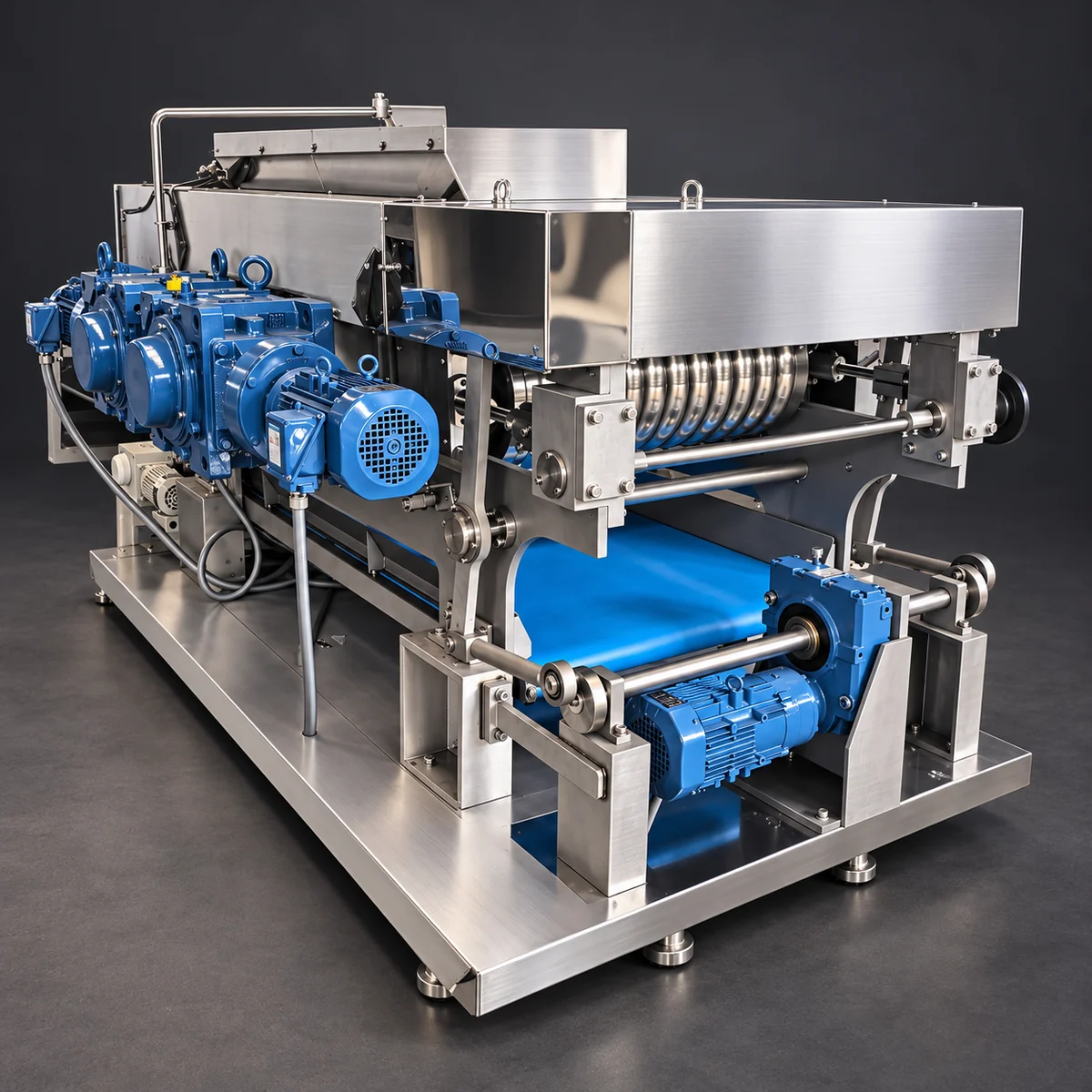
Three-quarter view of the machine body, drive assemblies and conveyor.
View larger image ↗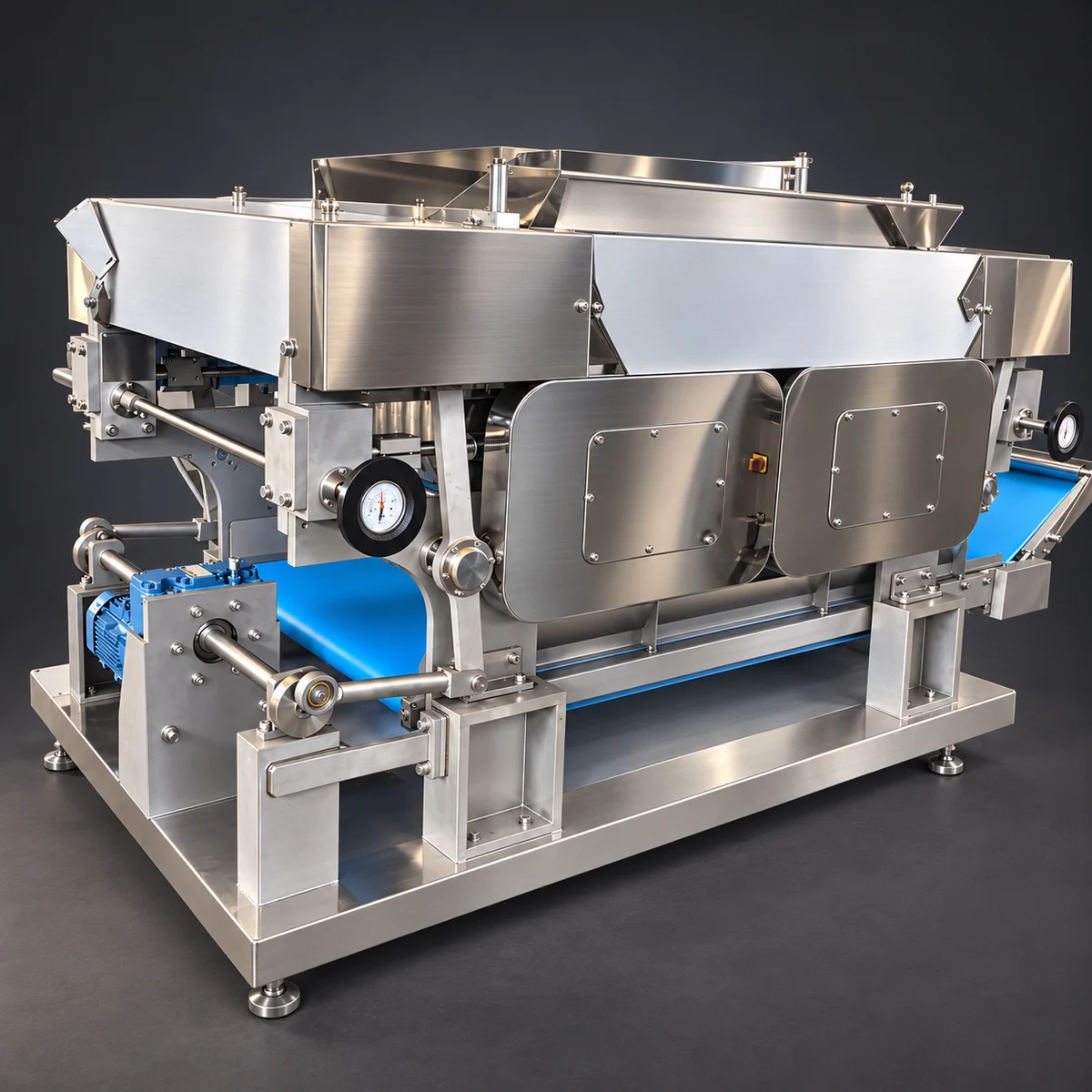
Opposite side with access covers, adjustment handwheels and supporting frame.
View larger image ↗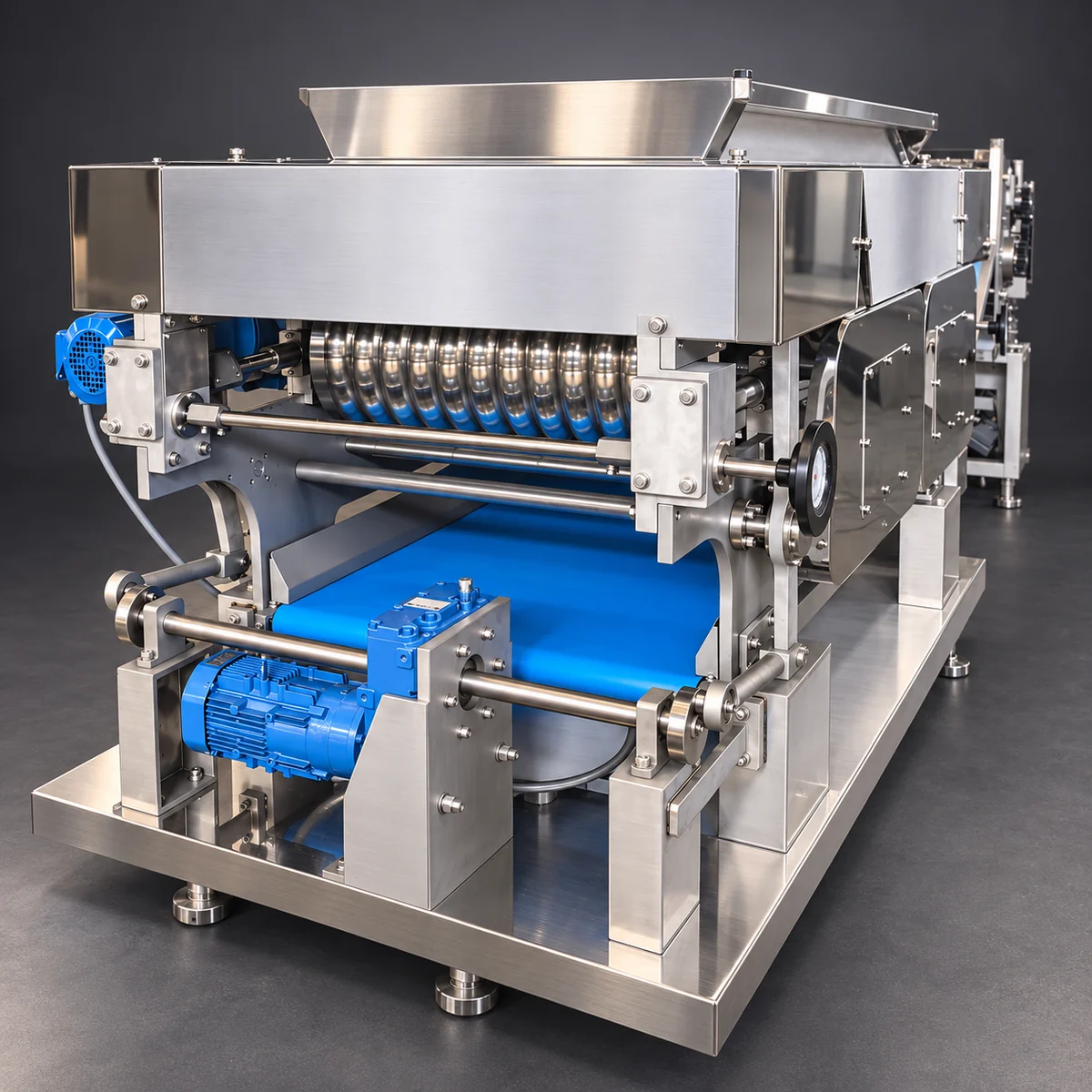
A view along the machine from the conveyor end toward the sheeting body.
View larger image ↗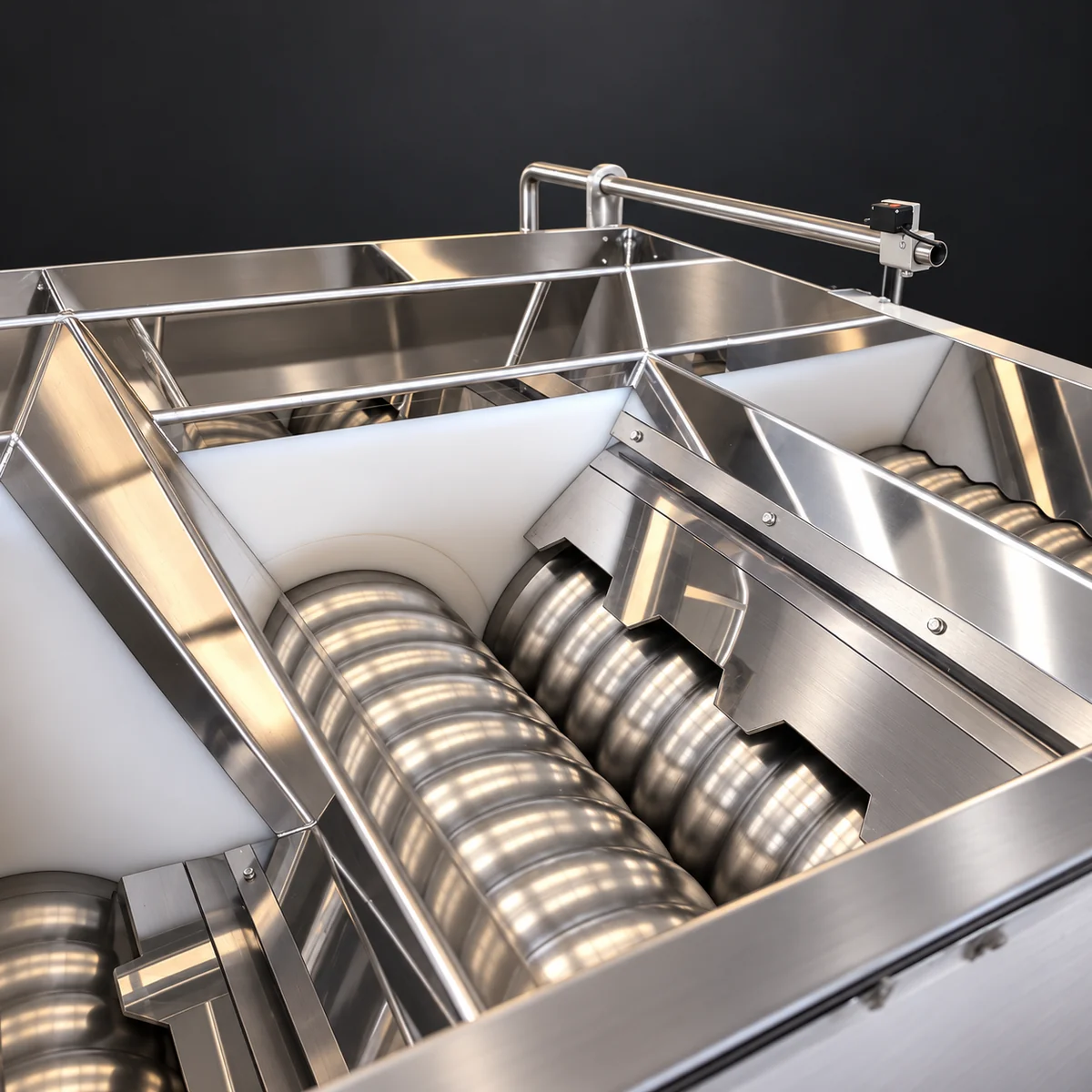
Overhead view of the feed chamber, white side guides and corrugated rollers.
View larger image ↗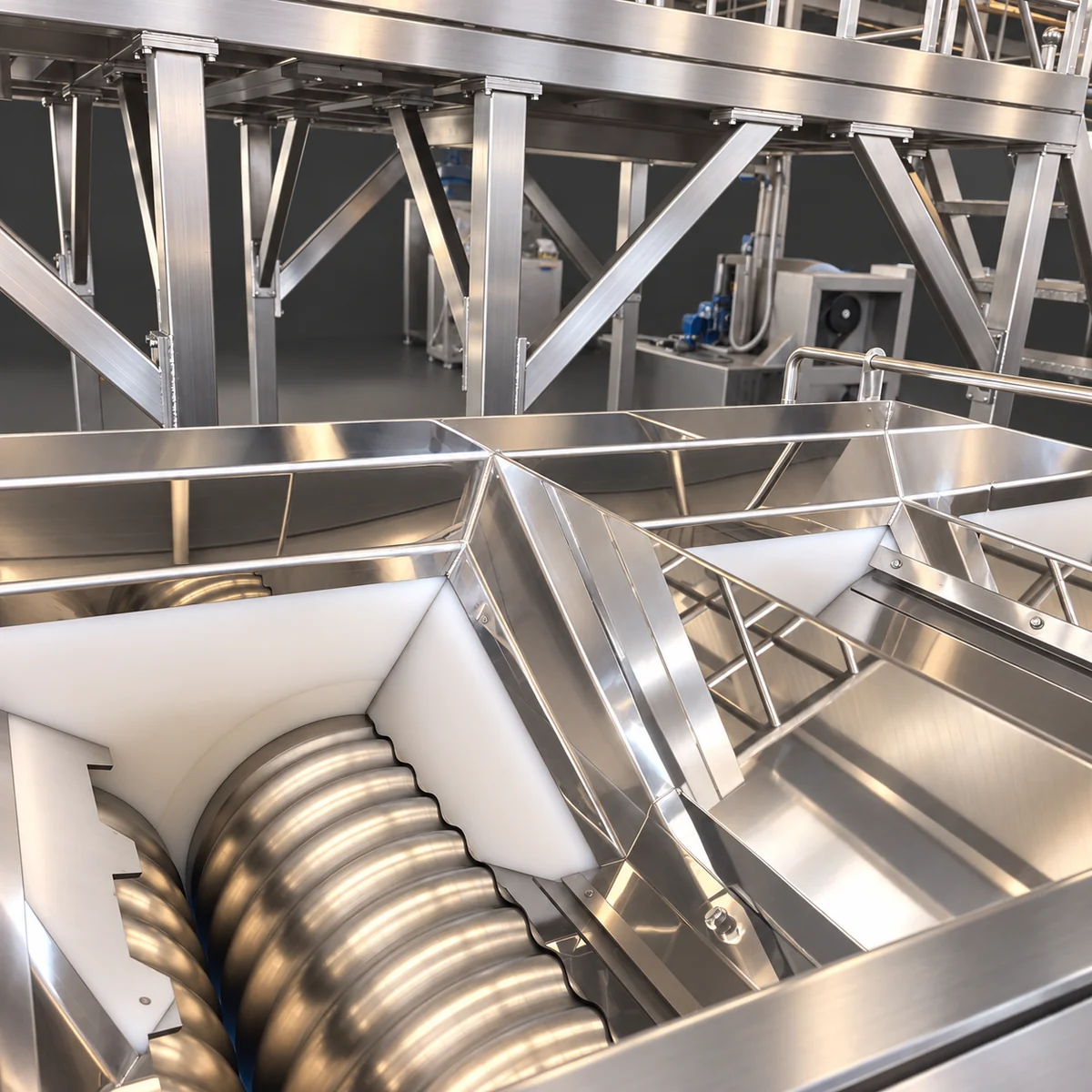
A second overhead angle showing the roller entrance and stainless guide surfaces.
View larger image ↗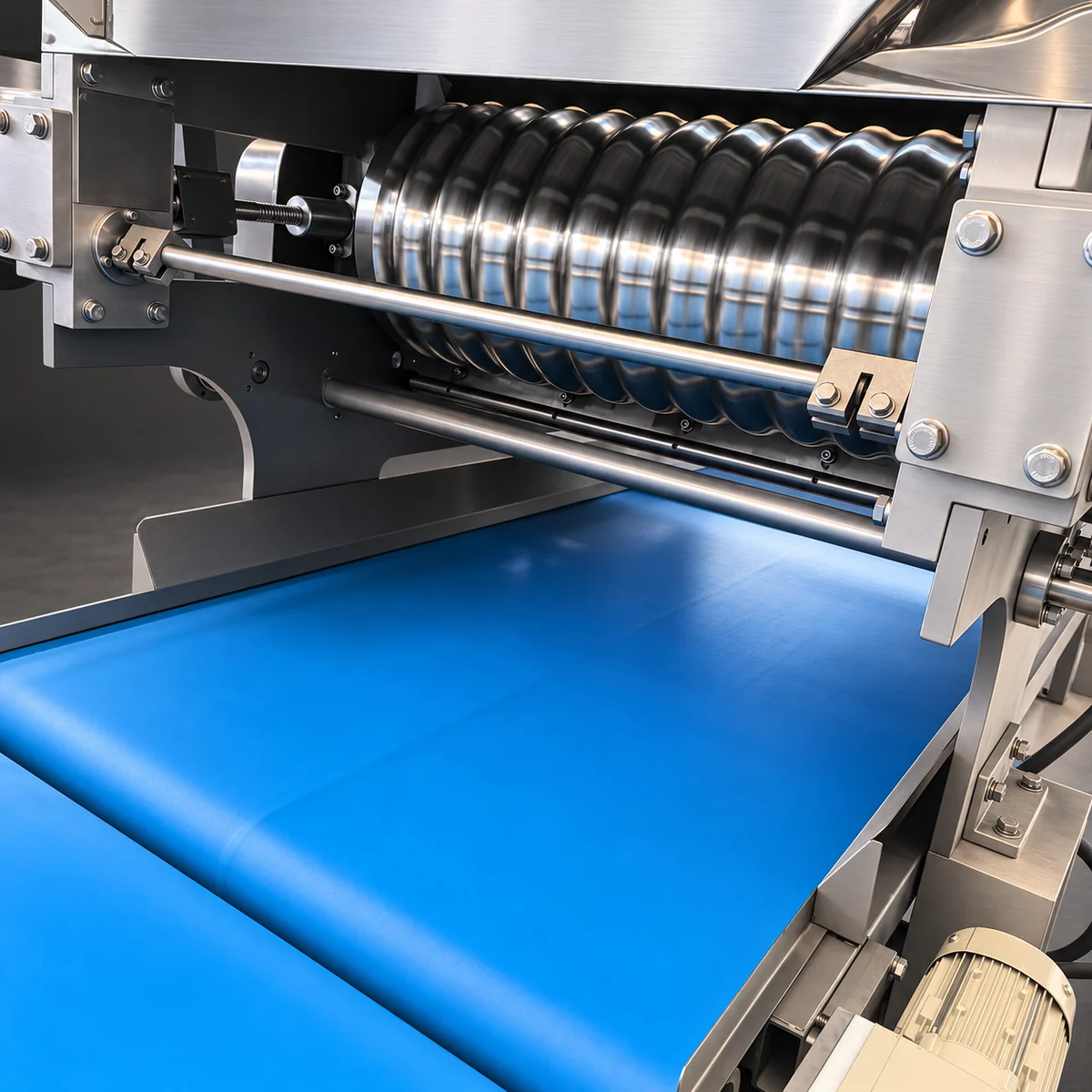
Corrugated roller, support crossbars and blue conveyor at the transfer area.
View larger image ↗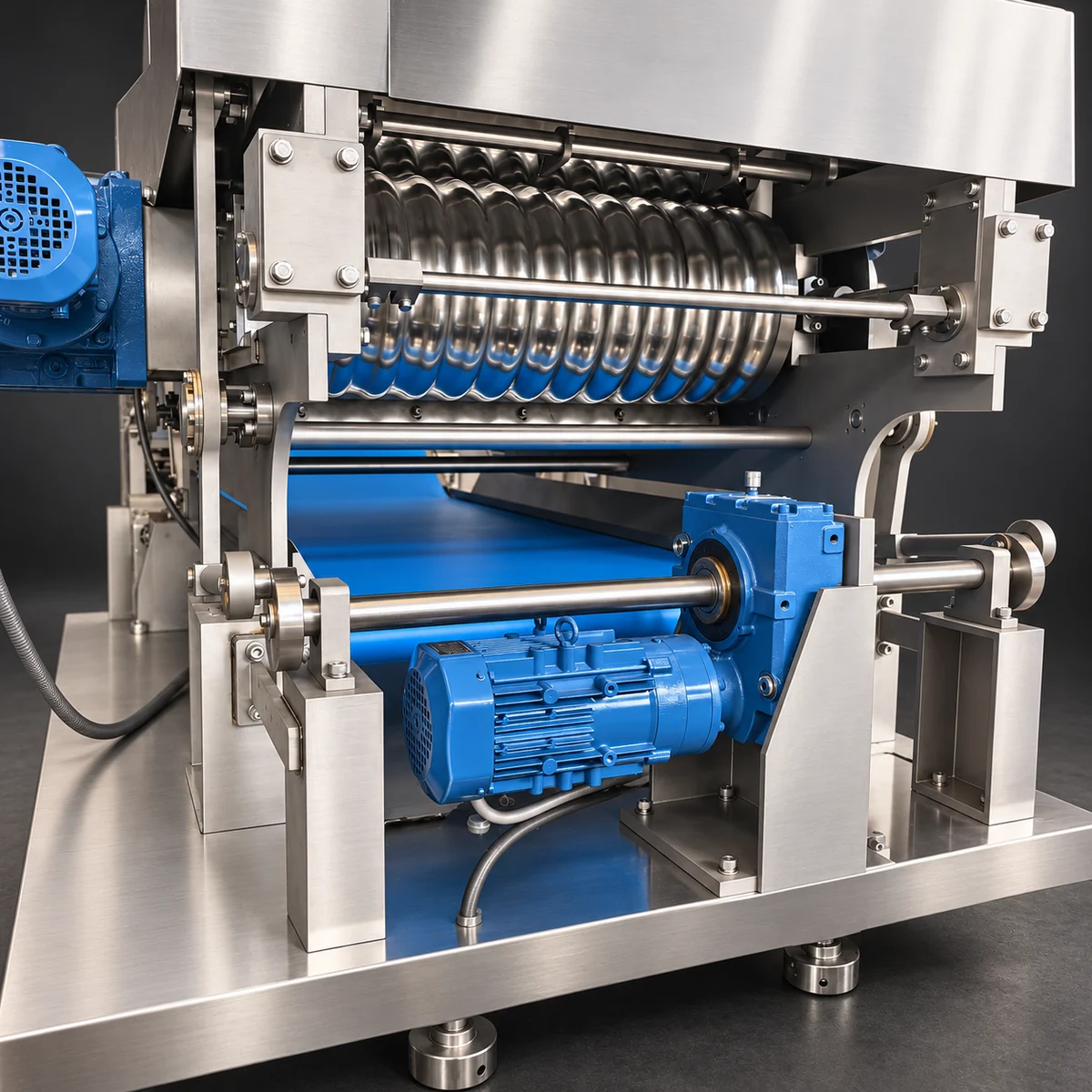
End view showing the roller assembly, conveyor shaft and blue geared drive.
View larger image ↗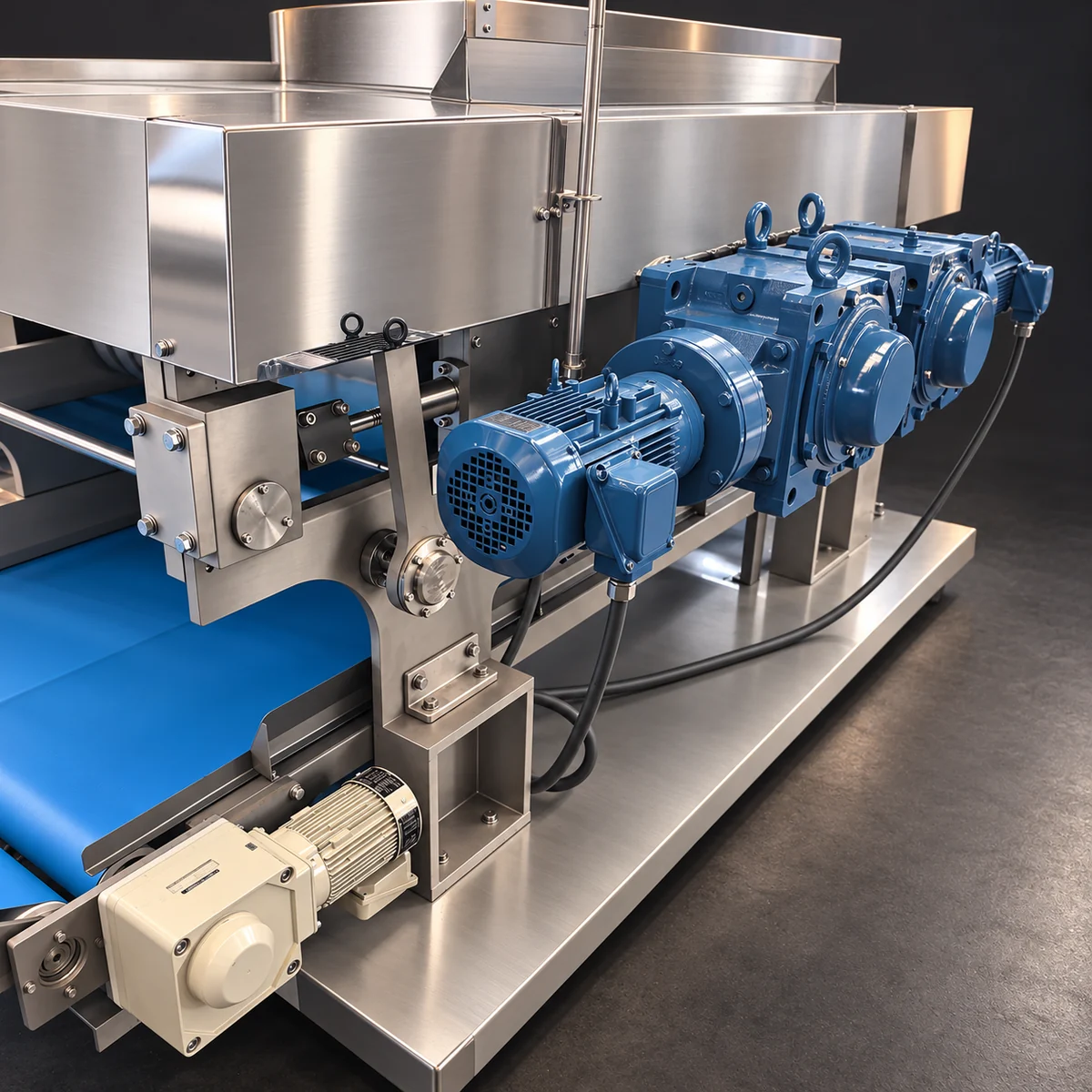
Drive-side arrangement with blue geared motors and the lower conveyor drive.
View larger image ↗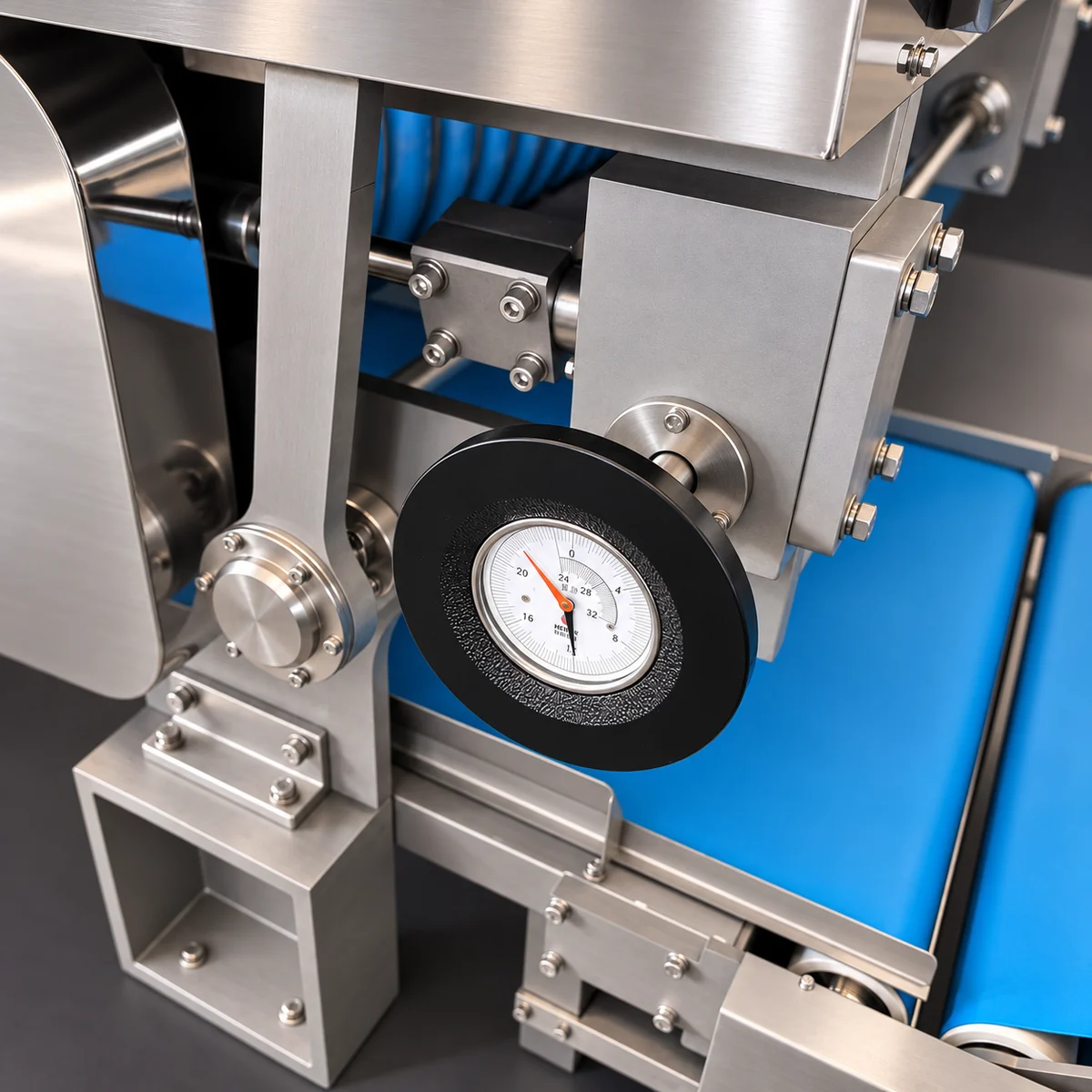
Handwheel and its mounting bracket beside the conveyor.
View larger image ↗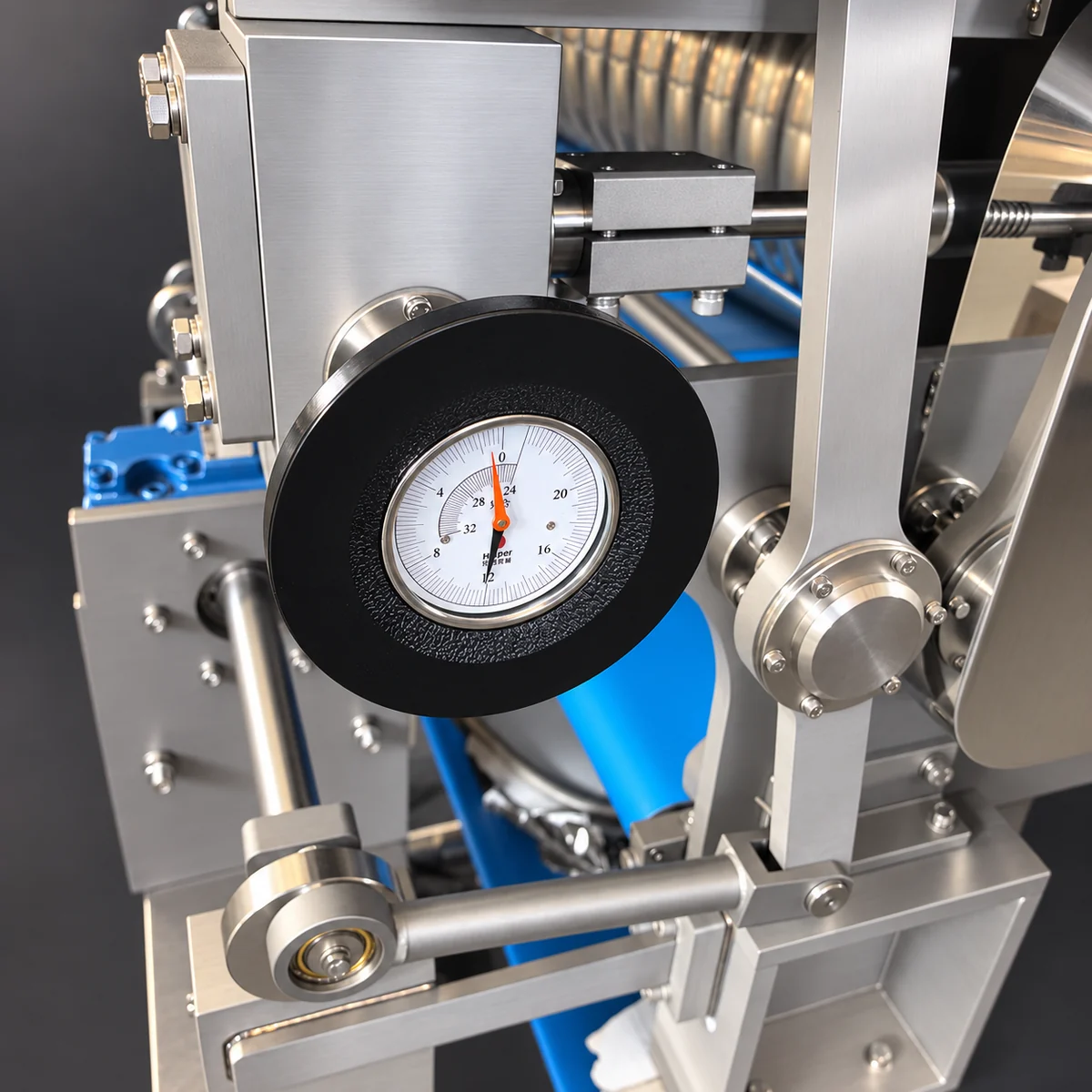
Handwheel, bearing support and surrounding frame from the opposite angle.
View larger image ↗Start with the noodle, dough sheet or wrapper you want to make. Send a recipe range, representative sample, target usable band width and the required good output at the end of the connected section. Working width alone does not determine hourly output.
Describe the existing mixer, transfer system and downstream rollers. Include a layout with available floor space, service access and the intended feeding and discharge heights. Electrical supply, control interfaces and stop coordination belong in the agreed equipment scope.
Numerical specifications are finalized for the selected configuration. No dimensions or capacity are inferred from the photographs.
Watch continuity across the full width, edge integrity, alignment and how the band enters the next operation. Record sticking, tearing or uneven feeding under the intended recipe. Include stop-and-restart behavior rather than assessing only a short uninterrupted run.
Evaluate the downstream sheet after its required resting and rolling steps. Roller gap and actual sheet thickness can differ because dough responds elastically. Agree the sampling points and acceptance criteria before the test.
Confirm how operators reach product-contact areas, remove residues and inspect conveyor and drive assemblies. Select cleaning methods for the actual materials and electrical protection. Isolate energy before access; inspection and service follow the supplied operating instructions.
Troubleshooting sheet tearing, sticking and uneven thickness →
This listing is for a compound-sheeting working unit. Mixing, conditioning, final thickness reduction and cutting or forming must be assigned to the agreed route. Do not assume that slitting, rewinding or packaging is included.
Review material condition, usable width, heights, transfer support and controls against the existing equipment. Compatibility is established through the agreed layout and trial, rather than a matching width name alone.
No. Flour, hydration, resting and finished-product requirements affect the route. Establish the combining and reduction sequence with representative dough.
Send the product and recipe range, required band width, target output, upstream and downstream machine details, factory layout and electrical supply. State whether you need one machine body or a complete connected section.
Compound versus single-pass dough sheeting · Sheet thickness and roller-gap planning
Yamato's manufacturer guides explain dough combining and progressive sheeting. These are general process references, not performance specifications or settings for this HELPER machine.
Share your incoming dough condition and the band required by the next unit. We can review the machine scope and its place in your line.
Request a configuration reviewAll dough sheeting equipment → · Explore all flour-food working units →