
Automatic Dough Sheet Winding Unit
Wind a prepared dough sheet into a roll as it passes through a dedicated conveyor-based unit. Review the two-station arrangement and watch the supplied workshop demonstration.
See the dough sheet at the winding stage.
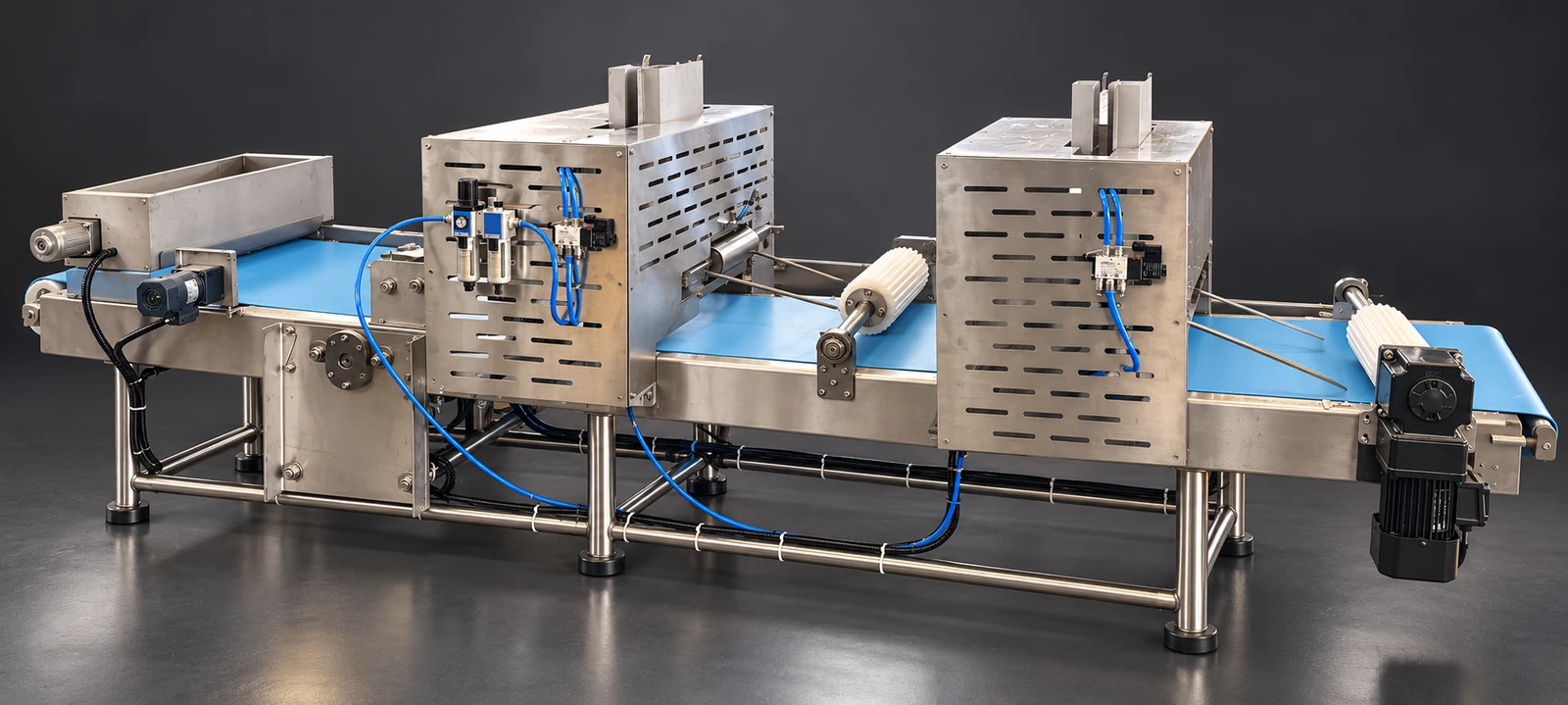
The supplied video gives a close view of the dough sheet, conveyor and winding mechanism during a workshop demonstration. Compare the real machine with the overall product illustration above.
The original portrait framing is preserved, with no crop of the working area. Use the player controls to pause or enlarge the view.
A winding stage with supported transfer.
The photographed unit has two enclosed working stations along a blue conveyor. Visible components include slotted stainless housings, guide rods, ribbed rollers, geared drives, pneumatic lines and a tubular supporting frame.
Confirm how the two stations operate in your selected configuration, together with the supplied controls, guards, cleaning access and roll discharge arrangement.
Start with the required roll.
Specify the incoming sheet width, thickness and length, its recipe and surface condition, and the required finished roll dimensions. Use a representative dough sample to check winding, release, sticking and consistency.
Agree the intended next operation and how each roll will be supported at discharge. Working width, speed, power, air demand and capacity must be confirmed in the technical specification.
Connect the preceding sheeting stage.
Coordinate conveyor height, dough-sheet presentation and delivery rate with the preceding machine. Review any flour application against the required roll surface and recipe.
Winding and noodle nesting are different tasks.
This unit is identified for winding a dough sheet. Gathering individual noodle strands into nests uses a different working unit; select the process according to the product you want to make.
Show us your dough sheet and target roll.
Send a product photo, recipe range, sheet dimensions, target roll dimensions and the machines before and after this unit. Include your layout and available electrical and compressed-air supply.
Request a winding configuration