
270III Compound Dough Sheeting Unit
Combine the feed hopper and roller assemblies in one standalone sheeting machine. Define the incoming dough and the outgoing sheet required by the following operation.
Discuss the 270III unit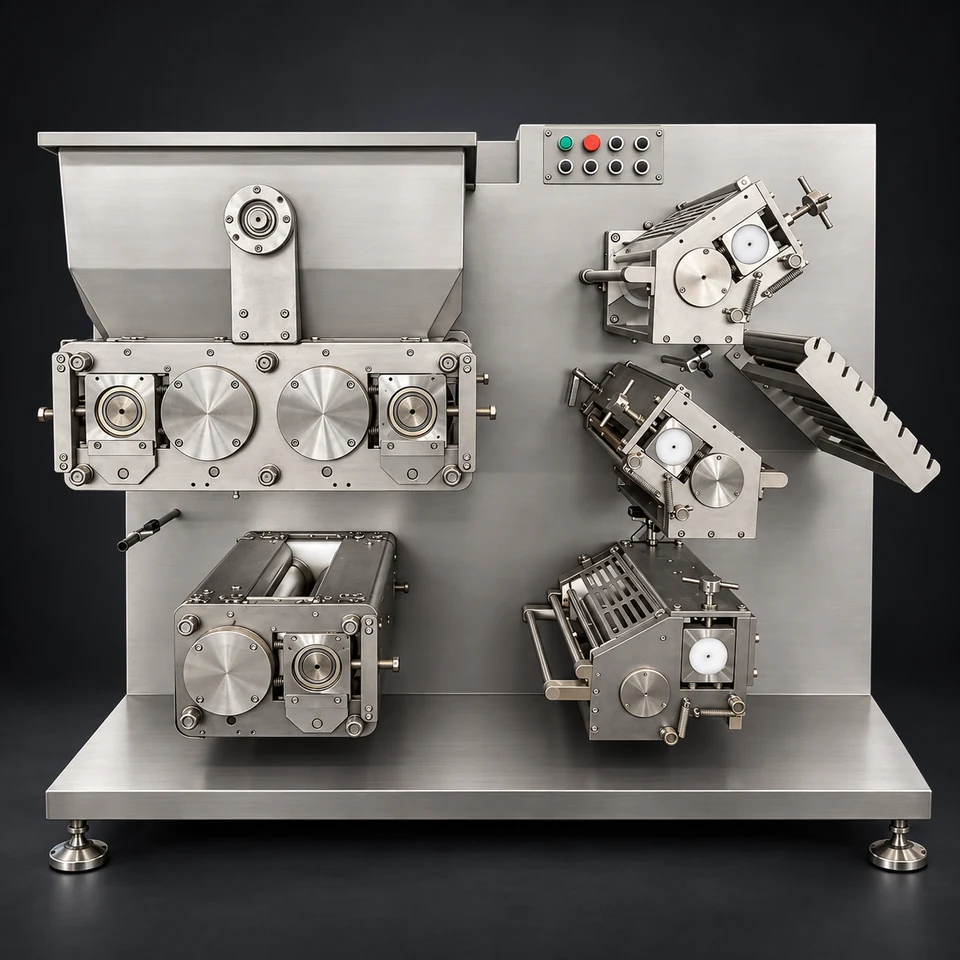
- Model
- 270III compound dough sheeter
- Unit boundary
- Standalone machine with hopper and roller assemblies
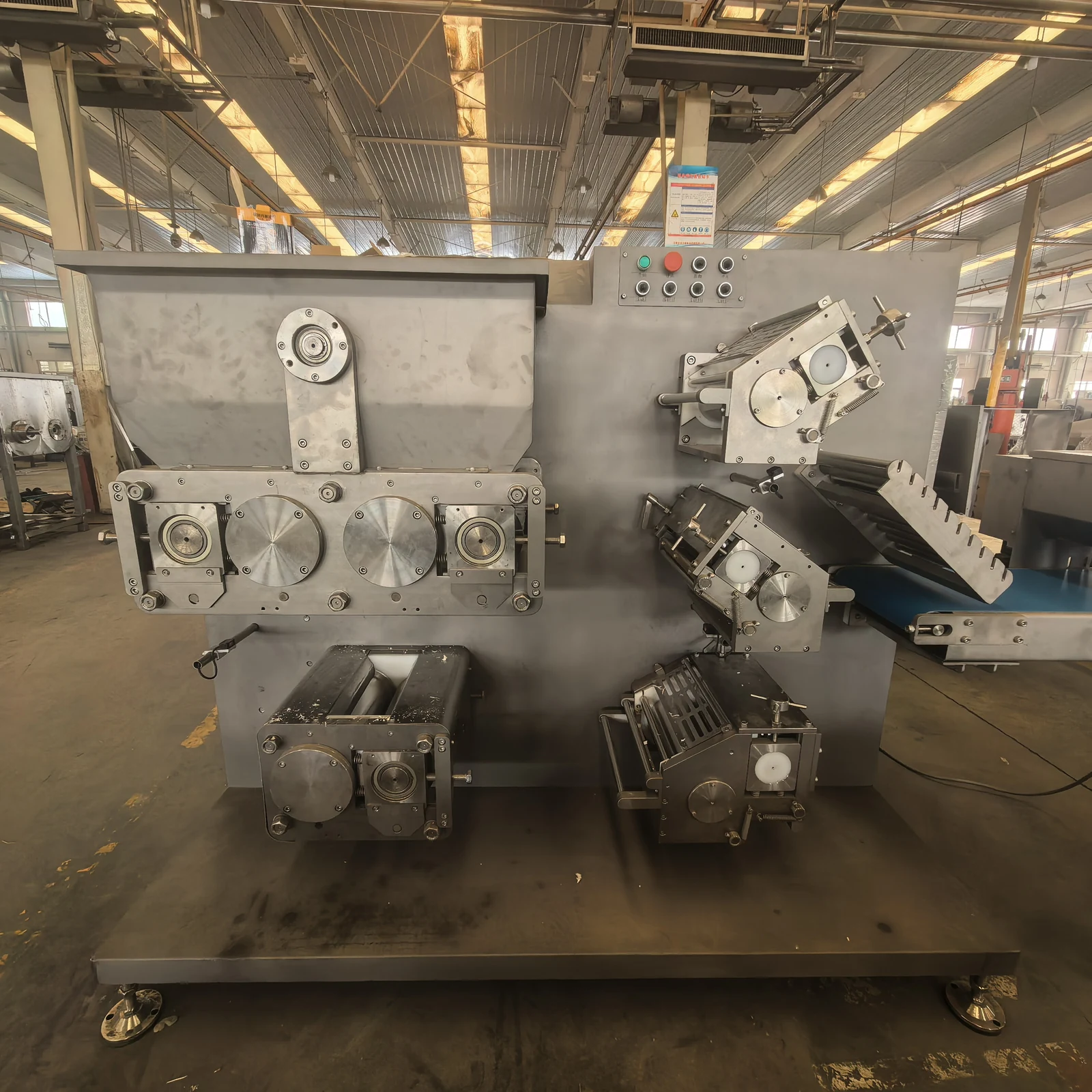
Inspect the actual 270III arrangement.
The supplied photograph shows the large feed hopper on the left, the push-button panel above the working area, the roller assemblies and adjustment mechanisms, and the supporting base with adjustable feet.
This is a standalone machine, rather than a complete noodle production line. The blue conveyor visible beside it belongs to the surrounding transfer arrangement. Confirm any conveyor connection separately in the layout and quotation.
Define the material at both sides of the unit.
Incoming dough
Provide the flour or starch recipe, water addition relative to flour weight, dough condition and planned loading method. Coordinate batch delivery from the mixer with the material accepted by the hopper.
Review the dough mixing stage →Outgoing sheet
Specify the required sheet width, thickness, continuity and the next rolling or forming operation. Agree transfer height, direction, supported span and speed coordination at the discharge.
Review the smooth-roller unit →Confirm working width, capacity, speed, power, dimensions and the final guard configuration in the selected machine's technical specification. The model designation alone does not establish these values.
Check the sheet with your dough.
Use representative material to review hopper feeding, sheet continuity, edge condition, roller release and transfer to the following stage. Record the recipe, incoming condition, roller settings and outgoing sheet measurements for an agreed acceptance trial.
Choose the correct configuration.
Compare the 270III with the 270 sheeting unit by the hopper arrangement, base, roller duties and process interfaces. Confirm the configuration shown in the quotation and technical drawing.
Compare the 270 sheeting unit →Plan the standalone sheeting stage.
Send your product, recipe range, incoming dough condition, required outgoing sheet and neighboring machines. Include the factory layout, electrical supply and cleaning requirements.
Request configuration