
Direct answer
A food plant steam system should be sized from a time-based list of end users, not by adding brochure values without context. Separate continuous demand, startup peaks and cleaning demand; define pressure and steam quality at each user; then evaluate generation, distribution, end use and condensate recovery as one system.
Build a steam load schedule
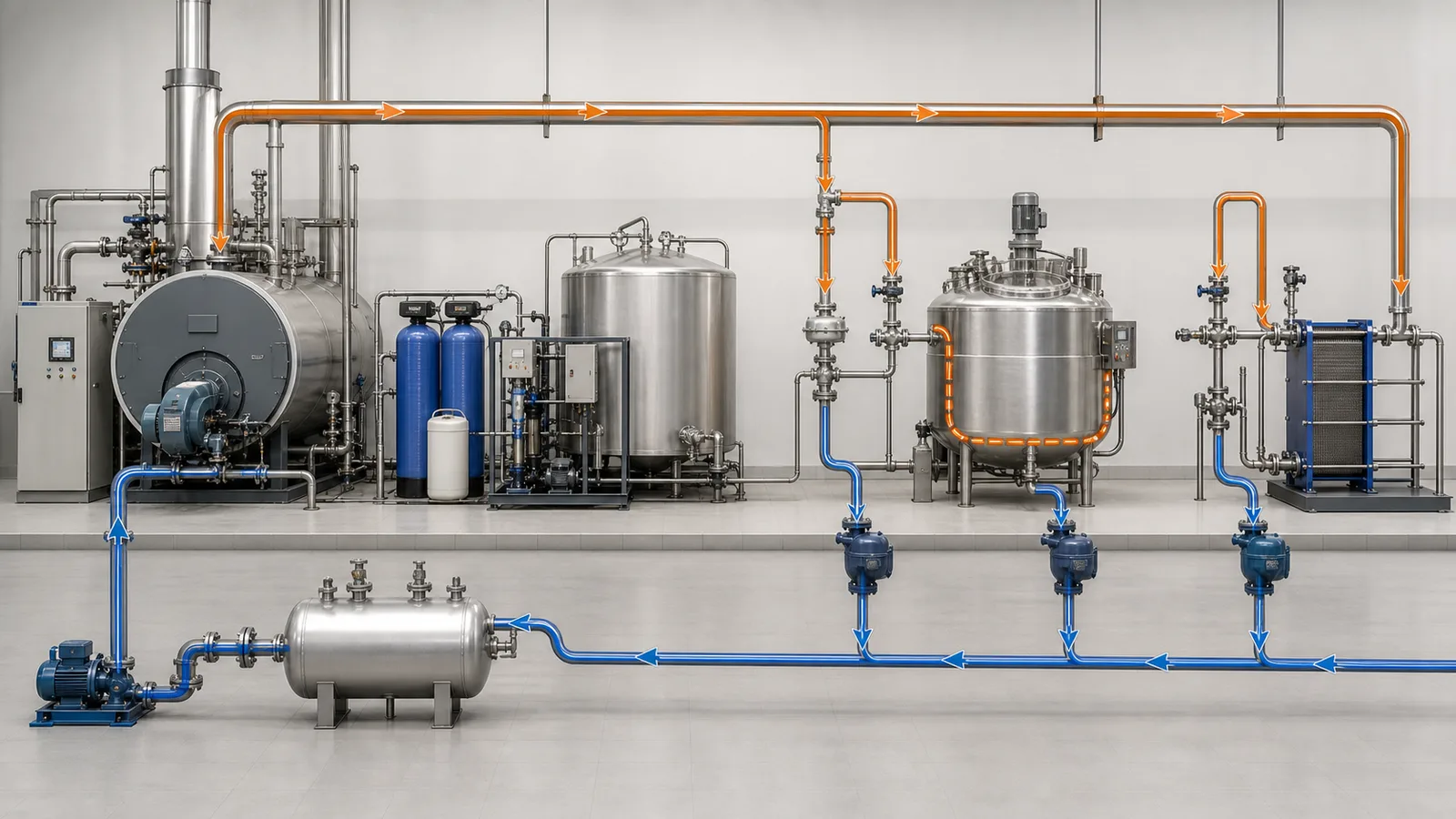
The U.S. Department of Energy describes steam systems as generation, distribution, end use and recovery. A reliable project brief needs all four. Oversizing only the boiler does not fix undersized piping, wet steam, poor pressure control or blocked condensate return.
Classify each user
| User type | Typical data | Planning issue |
|---|---|---|
| Continuous indirect heating | Product flow, inlet and outlet temperature, specific heat, exchanger efficiency. | Stable base load plus process variation. |
| Batch heating | Batch mass, heat-up time, vessel mass, hold time and cycle schedule. | High startup peak may overlap other batches. |
| Direct injection | Required product heat, steam condition and permitted condensate addition. | Steam becomes an ingredient and requires food-safety review. |
| Cleaning and hot water | Tank volume, target temperature, recovery and cleaning schedule. | Short demand can coincide with production changeover. |
Use an energy balance for process demand
For preliminary sensible heating without phase change, process duty is mass flow multiplied by specific heat and temperature rise. Convert useful duty to steam mass using the usable enthalpy released by steam and condensate under the actual pressure and return condition. Include heat exchanger efficiency and piping loss separately rather than hiding every uncertainty inside one arbitrary multiplier.
Steam project checklist
Boiler capacity is not process steam demand
Boiler selection also considers fuel, efficiency, feedwater temperature, blowdown, standby philosophy, local emissions and statutory requirements. The process calculator can estimate end-use demand, but a qualified boiler and steam-system engineer must establish installed capacity.
Estimate true steam cost
Cost per tonne should include fuel and boiler efficiency plus water, treatment, electricity, labor, maintenance, blowdown and capital assumptions appropriate to the plant. Condensate return can reduce water, chemical and heating requirements. Comparing only fuel price can misstate savings.
Common mistakes
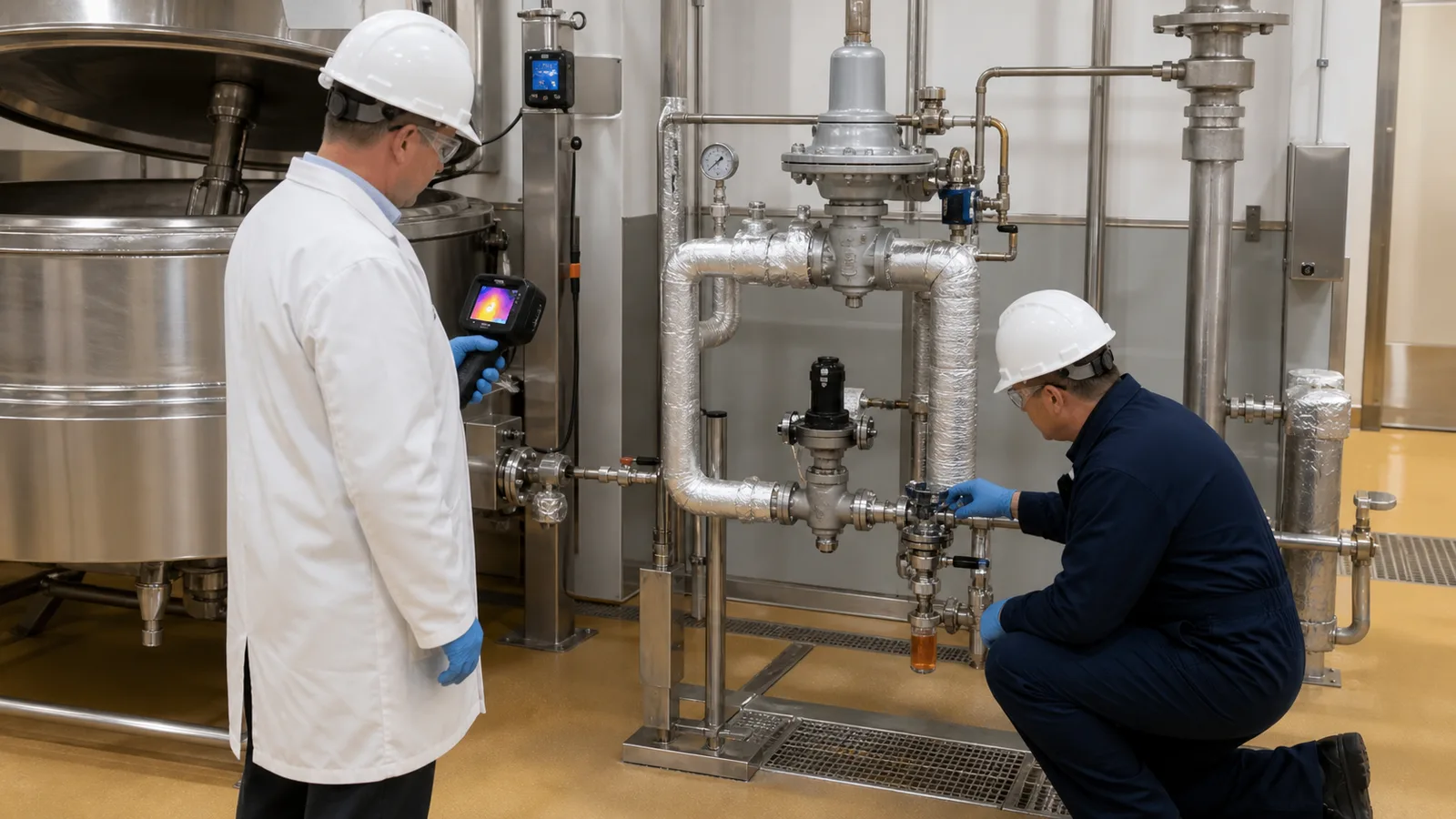
- Adding maximum loads that never occur together, or ignoring peaks that do.
- Specifying boiler pressure without checking pressure at the remote equipment connection.
- Ignoring vessel and piping warm-up during startup.
- Allowing condensate backpressure or failed traps to reduce exchanger performance.
- Using direct steam in food without defining steam quality and ingredient implications.
- Selecting a boiler from a web calculator without local professional and statutory review.
Prepare the process side before speaking to the boiler supplier
List every steam user, schedule, connection pressure, continuous demand, peak demand and condensate condition.
Estimate process steam demandPrimary sources and further reading
- U.S. Department of Energy Steam Systems - technical publications covering system assessment, cost, pressure, heat transfer and efficiency.
- Improving Steam System Performance: A Sourcebook for Industry - generation, distribution, end use, recovery and improvement opportunities.
- DOE Better Plants Steam Resources - industrial steam system training and sourcebook access.
Scope note: This guide is educational engineering information. It does not replace a site-specific hazard analysis, applicable law, a purchased standard, or review by qualified food-safety and engineering professionals.