
Three-Tier Noodle Air-Cooling Conveyor
Combine supported noodle transfer with fan-assisted air cooling across three conveyor tiers. Plan the inlet condition, required outlet condition and material handover as part of your selected noodle process.
Discuss your cooling stage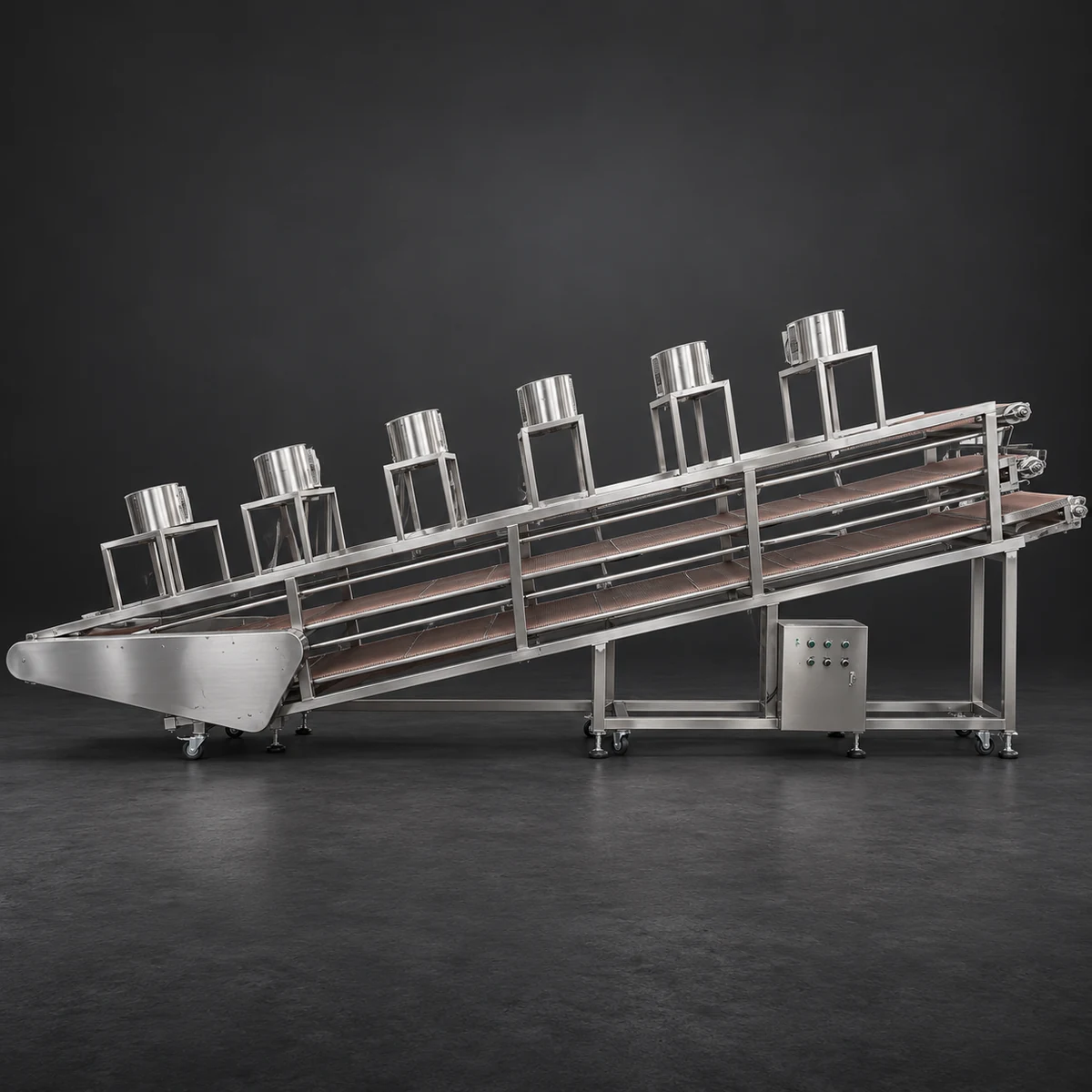
- Working function
- Noodle conveying with fan-assisted air cooling
- Arrangement
- Three conveyor tiers with overhead fans
Inspect the fans, belts and three-tier construction.
Walk around the cooling conveyor.
This supplied workshop video shows the actual conveyor assembly, overhead fans and mesh belts from a moving camera viewpoint. Use the player to pause and inspect the construction.
The original portrait view is preserved. This equipment walkthrough does not establish a measured noodle cooling result.
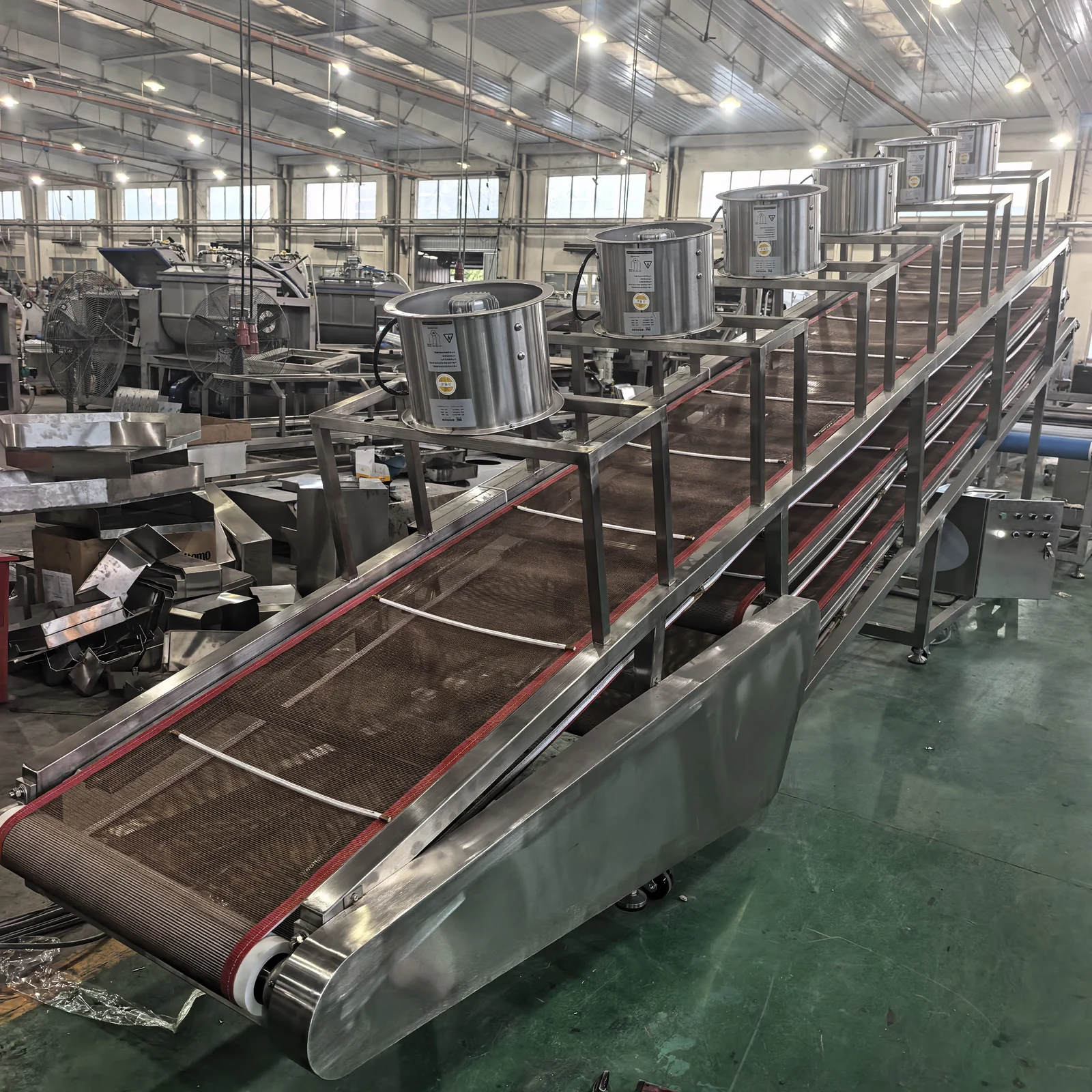
Conveyor and fan arrangement
A lengthwise view shows the mesh conveying surface, overhead fan row, support posts and control cabinet.
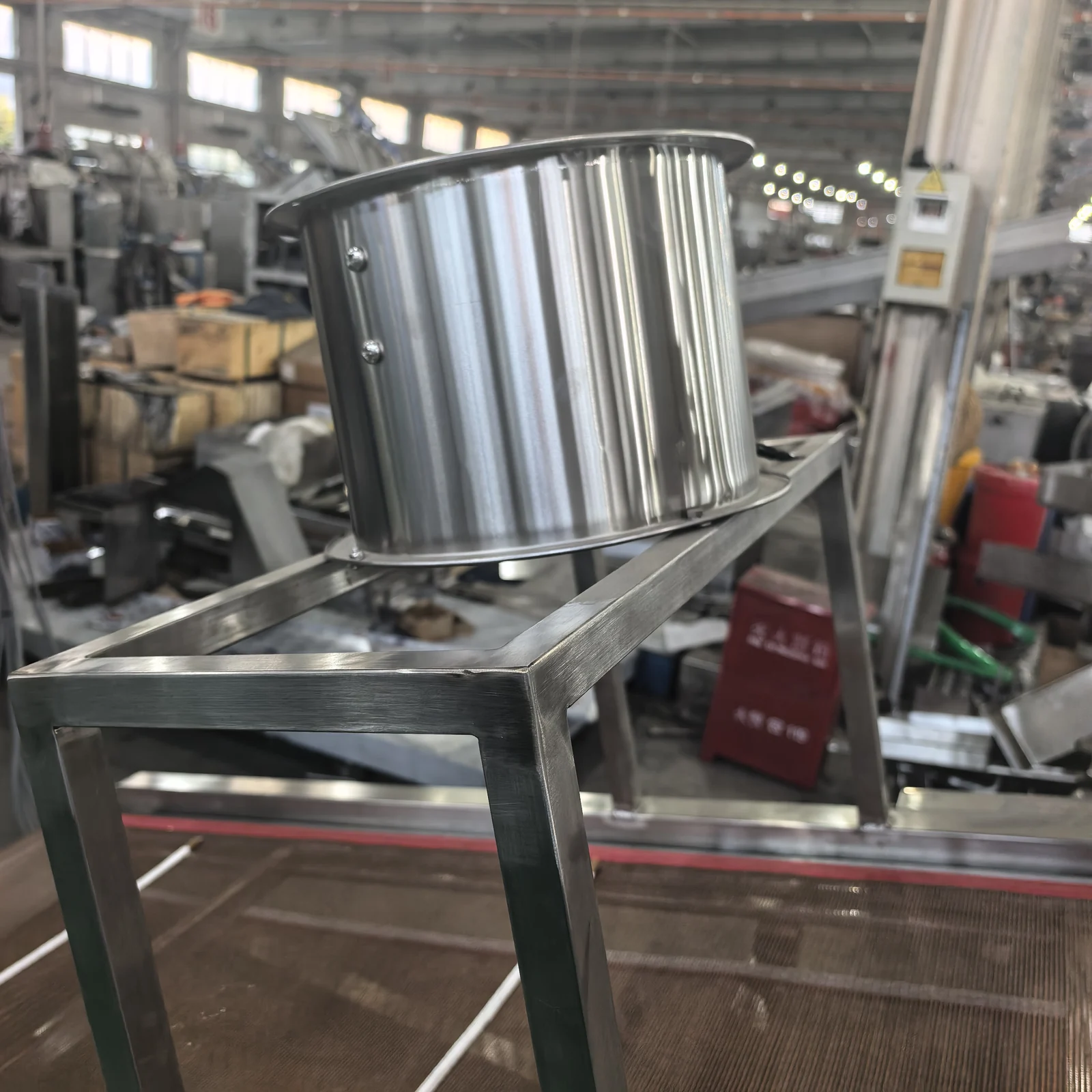
Overhead fan housing
Close-up of a cylindrical fan housing and its stainless mounting frame above the conveyor.
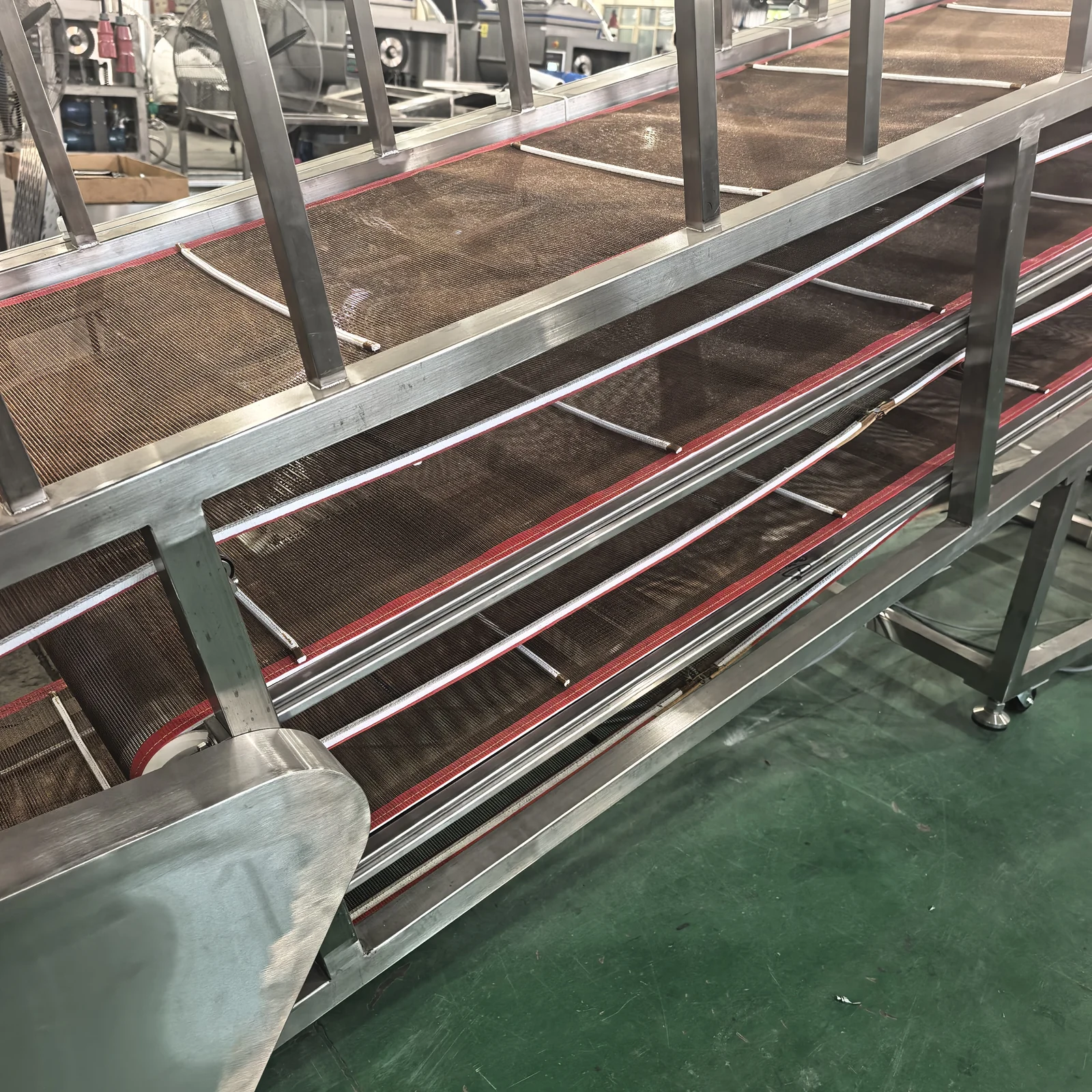
Three stacked mesh belts
The side view shows the three conveyor tiers, mesh surfaces, belt edges and the supporting stainless frame.
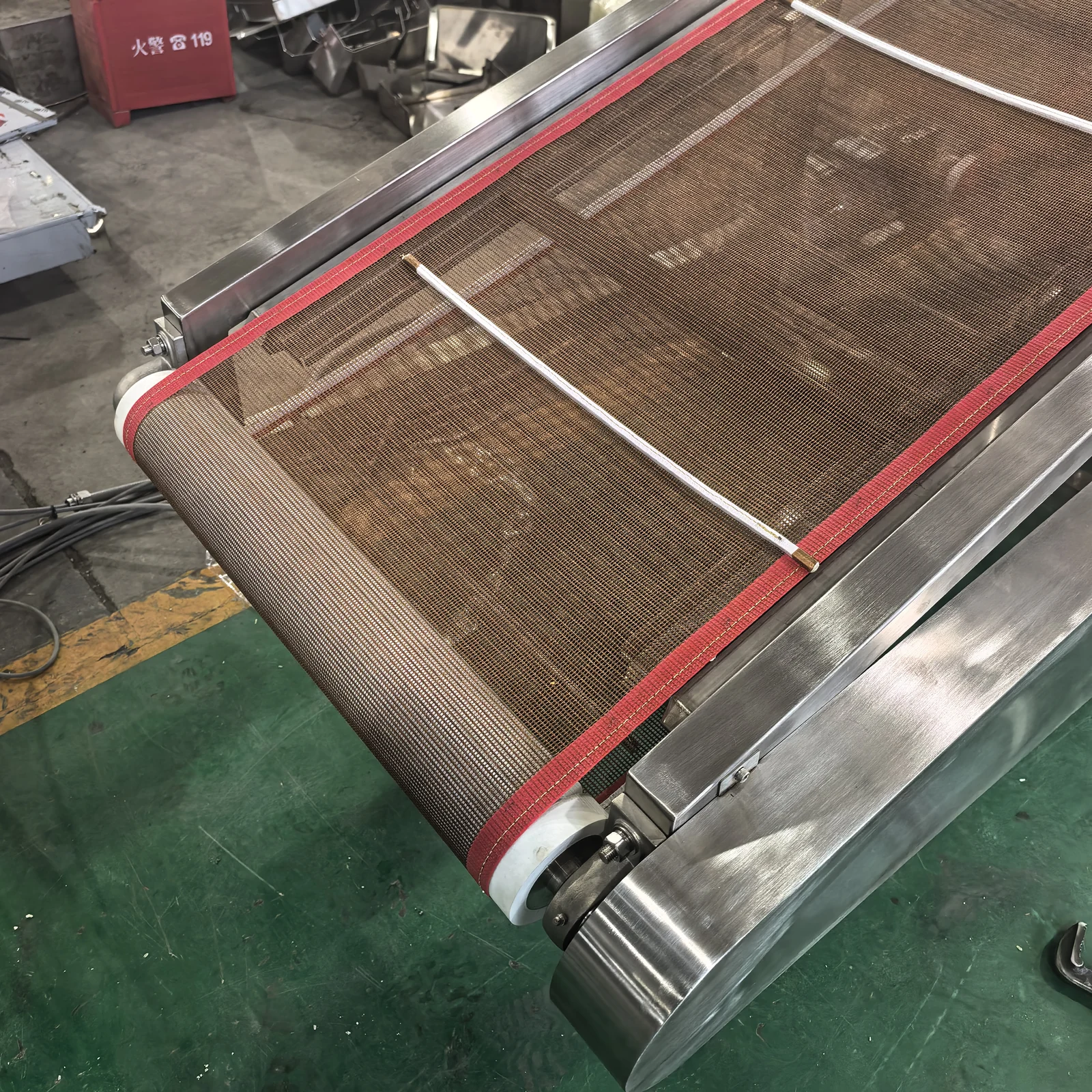
Mesh surface and end roller
A closer view of the mesh belt, red edging, transverse strip and belt return around the end roller.
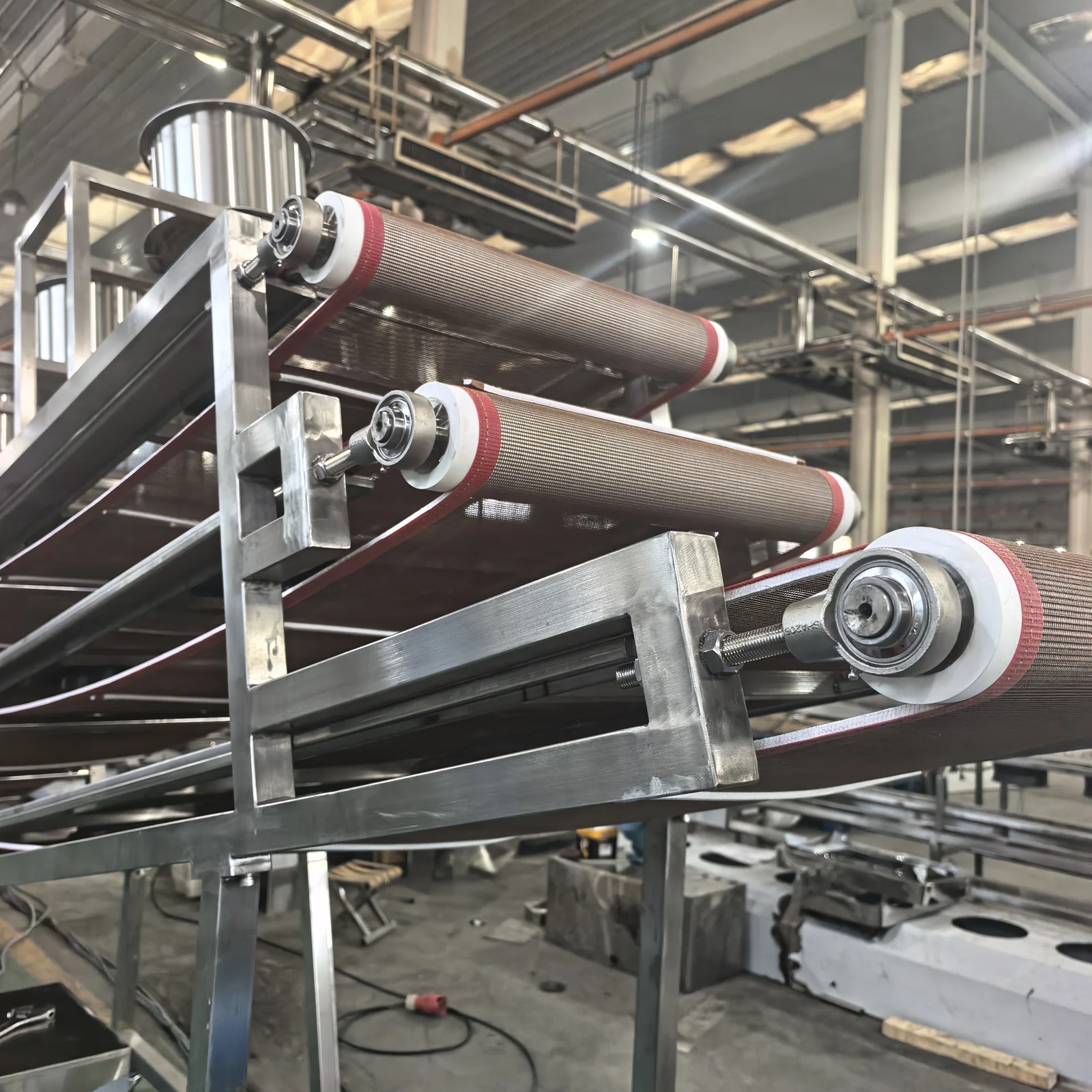
Tier ends and adjustment hardware
An end view shows the three belt levels with their rollers, bearing positions and threaded adjustment hardware.
All five photographs are original workshop records. Click a photograph for the larger view. Confirm final guarding, cleaning access and the supplied configuration against the machine specification.
Give the cooling stage a defined material path.
The unit combines three stacked conveyor decks in an inclined stainless frame. Mesh belts support the noodles, while fans mounted above the conveyor provide airflow for the cooling duty.
The photographed arrangement includes end rollers, supporting legs, leveling feet or casters and a low-mounted control cabinet. Confirm the belt direction on each tier and the transfer points from the approved layout.
Match airflow and residence time to the noodles.
Specify noodle type, recipe, inlet temperature, product loading and required outlet condition. Conveyor speed, effective travel path and airflow must be reviewed together with the surrounding air conditions.
Confirm the achievable cooling result through a representative product trial. The unit name does not establish a fixed outlet temperature, cooling time, drying result or production capacity.
Inspect the unit in the workshop.
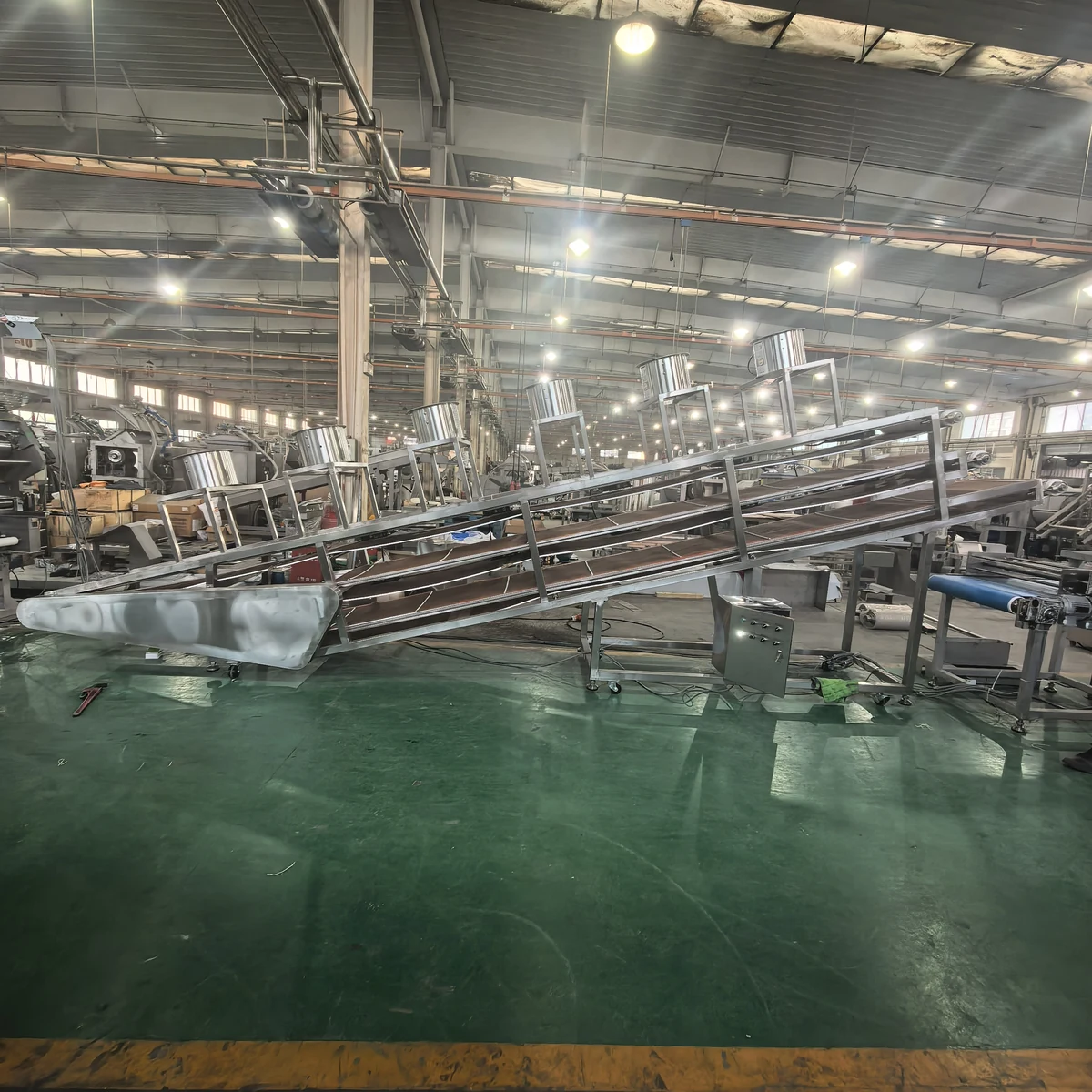
The original photograph shows the long three-tier assembly, overhead fan housings, frame and control cabinet in the production area. Click the image to inspect the larger view.
Neighboring machines, loose workshop items and the separate small blue conveyor are outside this unit's illustrated scope. Confirm final guarding, electrical installation and supplied accessories in the quotation.
Coordinate the inlet and discharge.
Identify the machines before and after cooling. Agree feed height, noodle distribution, product support and delivery rate at the inlet, then define the discharge height and handling method required by the next operation.
Check belt-to-belt handovers for sticking, unwanted stretching, strand damage and accumulation with the actual product.
Prepare the cooling requirement.
- Noodle type, dimensions and condition at the inlet
- Required product flow and loading pattern
- Inlet temperature and target outlet condition
- Workshop air temperature and humidity
- Available floor space and transfer heights
- Electrical supply, cleaning access and service clearance
Confirm belt width, overall dimensions, fan specification, speed range, power and capacity on the selected technical drawing and data sheet.
Questions to settle before selection.
Does air cooling mean refrigeration?
Fan-assisted air cooling does not by itself establish a refrigerated-air system. If chilled or conditioned air is required, specify that requirement and confirm the included equipment separately.
Can the outlet temperature be fixed from this photograph?
No. Assess the required duty using the incoming noodles, product load, residence time, airflow and ambient conditions. Agree the result through a material trial.
Is this a complete noodle line?
This page describes one cooling and conveying unit. Upstream processing, additional transfer equipment and downstream packaging are separate scope items unless included in the offer.
Define the noodle condition you need at discharge.
Send your product details, inlet temperature, required outlet condition, target flow and layout. We can then review the cooling stage and its connections.
Request a cooling conveyor configuration